
Please take a moment to read my pastor’s essay.



The Odyssey—the original poetry and the modern film—is not really about adventure, although it has an abundance of it. It’s also not primarily about virtues in some abstract way, whether the kill-your-enemies or love-your-enemies type. The Odyssey is about home. Odysseus wants to return to his place but comes to see that his obstacle is not merely geographical. He must become a different kind of person, the kind of man who can receive home as gift rather than as trophy. And at almost every step of the path, those who imaginatively walk with him can feel the ache.
Some of us are pulled toward nostalgia, looking to something better in the past. And some of us are pulled toward discontentment, looking to something better in the future. Regardless of where we turn, we all recognize something is missing. And all kinds of people—politicians, marketers, tech lords—are there to say, “You want to get home, and I can get you there.”
But it never works.
That’s because homesickness points in contradictory directions all at once. //
The ancient problem says “I can’t get home.” The modern problem says “I got home—it isn’t home.” One longs for return, and one longs for escape. These are not two problems but one. No matter which way we turn, we don’t know what home is. That’s why Homer still rings true, even in the era of IMAX and SpaceX.
And that’s what makes the Christian story stranger than the pagan ones. Odysseus spends 20 years trying to get back to Ithaca. Jesus has spent 2,000 years (so far) telling us to stop mistaking Ithaca for Eden.
The Bible is full of odysseys: Abraham leaves Ur. The Israelites leave Egypt. The apostles set out to “the ends of the earth” (Acts 13:47). When describing examples of faith, the Book of Hebrews says none of them “received the things promised” (11:13, ESV throughout).
These pilgrimages were not about answering the longing for home with a return to something past. We want a place prepared for us, a place to belong, a place to be known, a place to be loved. But our longing for that can sometimes leave us nostalgic for the wrong thing. The Israelites hungered in the wilderness. They responded to that with nostalgia for slavery: “We remember the fish we ate in Egypt that cost nothing, the cucumbers, the melons, the leeks, the onions, and the garlic” (Num. 11:5).
The longing wasn’t wrong. As a matter of fact, God said the hunger was necessary. The emptiness was in order that “he might make you know that man does not live by bread alone, but man lives by every word that comes from the mouth of the Lord” (Deut. 8:3). As C. S. Lewis reminded us, “Creatures are not born with desires unless satisfaction for those desires exists. A baby feels hunger: well, there is such a thing as food. A duckling wants to swim: well, there is such a thing as water.”
All of that should lead us to ponder: “If I find in myself a desire which no experience in this world can satisfy, the most probable explanation is that I was made for another world.” Identifying the ache is not the end, but it’s a start.
The Odyssey, Homer’s and Nolan’s, assumes the greatest human tragedy is losing the home you once had. The Bible says Abraham was looking for a city he had never seen (Heb. 11:13–14). The Odyssey doesn’t answer the question; it reminds us how to ask it. And that’s not nothing. But once we start asking those questions, we might find a whole Trojan horse full of meanings about which we could never start to ask or even think (Eph. 3:20). Asking those questions just might lead us somewhere else, to a better story than even Homer or Hollywood can tell.

Encounter the Faith and Wisdom of C.S. Lewis
C.S. Lewis’s writings bring the great questions of the Christian faith to life. Through his imaginative and invigorating style, Lewis answers these questions in ways that are compelling to those outside Christianity and energizing to those within the Christian faith.
In this free, seven-lecture course, Professor Michael Ward—a leading scholar of C.S. Lewis—will explore Lewis’s:
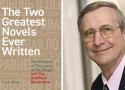
What do British fantasy epics, Russian family dramas, ancient philosophy, and Christian apologetics have in common? This might sound like the setup of a joke or riddle, but it’s the premise of the latest book from philosophy professor and prolific author Peter Kreeft.
Now 89 years old, Kreeft has penned over 100 books on philosophical and religious topics. He’s been a professor of philosophy at Boston College for over 60 years. Over his scholarly career, Kreeft has taken an unusual position, namely, applying philosophy to Christian apologetics. As a Calvinist in childhood who converted to Catholicism during his college years, he believes in the unity of different denominations and often uses nonsectarian language which can apply to all Christians and non-Christians alike.
Last year his latest book was published: “The Two Greatest Novels Ever Written: The Wisdom of ‘The Lord of the Rings’ and ‘The Brothers Karamazov.’” In this simple yet profound book, Kreeft uses two renowned fictional classics to pierce the mysteries of philosophical truths and theological concepts.
While it may seem illogical to use two complex novels to delve into the even more complex fields of philosophy and religion, this brilliant scholar manages to simplify the books and the concepts in 15 short chapters. //
Anyone earnestly seeking the truth will likely be enriched by reading this thoughtful analysis. Wrapping such inspiring philosophy in an analysis of two fictional novels isn’t a gimmick. The very point of the book is that art is the most powerful vehicle for truth. In the Introduction, Kreeft writes:
“Beauty is the point of the arrow that first pierces the heart, which is also the first door we open to God, however anonymously. … The arrows of beauty enter the heart in order to break it. … The heartbreak is art’s holy task. It’s like digging: It creates a space for truth and goodness to fill.”
Titling this article has proved more difficult than writing it. I considered everything from “21 Smug People Talk About A Subject None Of Them Understands, Least of All Jordan Peterson” to “Jordan Peterson Debates The Existence Of A God, But Not One Any Of Us Have Ever Heard of.” //
Brian, an outlier insofar as he appeared to be in his 40s, asks a timeless question: What is the purpose of life? Proverbs 3:5-6, Matthew 6:33, and Mark 12:30-31 are all helpful here. The Westminster Confession of Faith has something to say on the matter, too.
Peterson instead offers a program for self-improvement as if life were just one big gym membership.
Kumari wants Peterson to explain sin and hell.
If ever there was a time for Peterson to give a coherent answer, this was it. He talked of “improvement” as a means of avoiding hell. Neither the words of the Christian vocabulary — repentance, forgiveness, grace, redemption, restoration, etc. — nor their meanings were ever brought to bear. Peterson does speak of sin, but only as “miss[ing] the target,” which he proceeds to do completely.
There are very reasonable answers to all these questions. But Peterson, as lost as anyone in the room, knew none of them. Instead, one by one, twenty atheists were sent away with nothing for their souls.
And it’s souls I am concerned with here. For the Christian, these are issues of eternal significance, not clever repartee. //
I have debated and dialogued with many atheists — Richard Dawkins, Daniel Dennett, Christopher Hitchens, Michael Shermer, Peter Singer, etc. — and more than a few Muslims on the question of God in venues ranging from CNN and Hyde Park to Al Jazeera and a Seattle concert hall, and my opponents all had this in common: They were very clear on the fact that they were atheists or Muslims. There is genuine integrity in that. For my own part, I made it very clear that I was there, not to win an argument, but to win their souls. So, I find it nauseating that these young people, however misguided they might be, owned their convictions while Peterson played coy. //
You simply cannot engage this age group flippantly as Peterson does. They are too sincere for that. They are too ready to put legs to their professors’ crackpot ideas.
A humorous but true story to illustrate my point: Years ago, my students, seeing that I collected rocks from historical sites, made note of the fact and decided to act. Shortly thereafter they were bringing me marble they had chipped off the Parthenon, pieces of the Great Wall of China and the Palace of Versailles, and even a cobblestone they had pulled right out of Red Square (no small feat, I can tell you). I had unwittingly created a class of vandals!
Too often, however, the results are less amusing. The ranks of Antifa, BLM, and every civilization-destroying revolution since the dawn of time are full of young people like those who “surrounded” Peterson here. If you would teach them, you must be prepared to lead them to truth. To do otherwise is morally irresponsible. And this raises a question:
To what, exactly, was Peterson trying to convert them? Deism? New Age mysticism? Jordan Petersonism? Certainly not Christianity. //
But Zina won’t be put off. Wanting to know if her soul is in danger, she circles back and tries to get a straightforward answer: “What I’m saying is that your interpretation of the Bible — if you cannot tell us again if these historical events happened or not, that can be a deciding factor if someone is damned to hell for eternity or if they go to heaven, right?”
Peterson: “I don’t concern myself so much with that particular question.”
And with that, ladies and gentlemen, the curtain was drawn back on all of Jordan Peterson’s theological ramblings to reveal a man who knows not a damn thing on this subject worth a moment more of Zina’s time. His seemingly agonized stream-of-consciousness talk about God and the Bible is just so many donuts in the parking lot, leading his audiences absolutely nowhere. Remember, from a Christian perspective, the goal is the cross of Jesus Christ. It isn’t to make you religious or spiritual or to give you warm and fuzzy feelings about God or an appreciation for the Bible as a religious text. Hell will be full of such people. The objective is nothing short of the cross. Eternal life. And as Zina discovered, Peterson can’t get you there.
As an old seminary professor of mine used to say, “If your audience cannot see Jesus at the end of your teaching, you get an F.” So, where was Jesus in any of this? His name was mentioned twice in 90 minutes, and it’s more than a little telling that it wasn’t Peterson who did it on either occasion; it was Zina, and Peterson moved the discussion away from him with all possible haste.
Zina later made this astute observation: “Jordan Peterson’s framework for understanding Christianity is probably not the one that the Bible intended us to use.”
It fascinates me that Peterson offers himself as an authority on the Bible while missing its central message so comprehensively. The Book of Job, a Peterson favorite, contains a warning that he apparently missed. It comes from the Lord in the last chapter of that book, and it’s a reminder to us that any who dare speak of him had better do so accurately:
“My anger burns against you and against your two friends, for you have not spoken of me what is right.”
Almost nothing Peterson says about God is right. That should give his audiences pause, if not Peterson himself.

This is the story of how Billy Graham—a man used by God to reach millions of people for Jesus Christ—was himself born again. Quotes are taken from his autobiography, Just As I Am.

The Spiritual Workouts God Intends For Us Chris
Now, I’m not saying that using Bible tracts to evangelize is totally fruitless. I’m sure there are more cases than I know where one of these has led a person to the Savior. They do contain very vital information, present the Gospel in a concise manner and they offer an easy way to share the Good News. The problem is, in most cases, people are just not interested.
They look at the cover, see it’s something that looks “religious,” and without giving it a second thought, toss it away. Some do this because they think they already know who God is, what “Christianity” is all about and believe they’re “good” with God…but they have no interest in pursuing what they perceive as “religion” or learning anything more than they think they already know.
People also have extremely short attention spans, and Bible tracts often contain a lot of information in very small type font, packed into a very small booklet. And while these same people will spend countless hours scrolling through nonsense on social media, all those words in tiny print look intimidating. People know they’d have to take time to read that “fine print,” and they’re just not interested…any more than they’re interested in political fliers or other junk mail that comes in their mailbox. //
So how do we reach the lost? The most effective way, obviously, is having a deep, meaningful one-on-one conversation with someone who’s not only willing to listen, but also engage in discussion, ask questions, be open about what you’re sharing and then, by God’s grace, develop a craving for the truth and the many revelations His Book contains…we want them to want to study God’s Word for themselves.
But situations and opportunities like this are rare. If ever you’re blessed to have such an divine appointment, don’t waste it. “…and be ready always to give an answer to every man that asketh you a reason of the hope that is in you…”
Still, the printed word holds great power. When presented in an appealing way, the printed word can literally change hearts, minds and lives. Unlike digital things that are constantly changing; here today and gone tomorrow, the printed word is printed, tangible and not going away.
‘For this really to stick, it is not emotion that’s going to win the day. It’s the message of the gospel, which will not change.’ //
“What has to change is our response to the gospel. We have to bow the knee to God as our Creator, and we have to bow the knee to God as our Redeemer. We have to say, ‘I want lasting change in my life. I’m no longer autonomous. Jesus is the Lord of my life. He’s my Savior.’ That will change culture.” //
“If this generation is going to come to understand Jesus Christ as proclaimed in Scripture, a lot of questions are going to have to be answered, and they need to have a safe place to ask those questions,” Rasmussen told The Federalist. “It takes a while to get through those questions, but that’s what discipleship is.”

anon-9s7n
19 hours ago
God has given her everything she needs for today. And by the time tomorrow is here, she’ll have everything she needs for tomorrow. And when she’s able to look ahead more than one day at a time, he’ll have prepared the way with everything she needs for then.
We are seeing a significant transition begin. Not just in the US, but around the world. Charlie talked a lot about how young men should follow Jesus, get married, become fathers, and lead their families. God couldn’t start with young women. He needed the young men to have an opportunity to get squared away.
But what if His plan is that now He will use Erika to reach the young women in a way Charlie couldn’t? They really need it. They are being deceived by feminism and so many other voices.
And if that is His plan, then she’s got this, because He’s got her.
I want you all to know, while Charlie died far too early, he was also ready to die. There was nothing - nothing - he was putting off. There was nothing that was too hard or too painful, nothing that he just felt like he didn't want to do it. He left this world without regrets. He did 100 percent of what he could every day.
But I want you to know something. Charlie died with incomplete work, but not with unfinished business. //
She shared that one secret to a strong marriage while Charlie was traveling so frequently was their tradition of love notes. Every Saturday, he wrote one for her, she said, "and he never missed a Saturday. And in every single one of them, he'd tell me what his highlight was for the week, how grateful he was for me & our babies. He’d always ended by asking the most beautiful question. He ended by asking, 'Please let me know how I can better serve you as a husband.'"
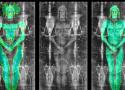
Perhaps the most famous "holy relic" is the Shroud of Turin, an old linen cloth that retains a distinct impression of the body of a crucified mine (both front and back). The legend is that Jesus himself was wrapped in the shroud upon his death around 30 CE, although modern scientific dating methods revealed the shroud is actually a medieval artifact dating to between 1260 and 1390 CE. A 3D designer named Cícero Moraes has created a 3D digital reconstruction to lend further credence to the case for the shroud being a medieval forgery, according to a paper published in the journal Archaeometry.
Moraes developed computer models to simulate draping a sheet on both a 3D human form and a bas-relief carving to test which version most closely matched the figure preserved in the shroud. He concluded that the latter was more consistent with the shroud's figure, meaning that it was likely created as an artistic representation or a medieval work of art. It was certainly never draped around an actual body. Most notable was the absence of the so-called "Agamemnon mask effect," in which a human face shrouded in fabric appears wider once flattened.

Rome carved borders in stone. Priests built walls from law and fear. Prophets thundered from mountaintops, hoping the ground would open.
But Jesus moved differently. He never staked a claim on land. He never petitioned for favor. He never drew a boundary he would not cross.
He spoke of a kingdom that cannot be mapped. A reign that begins between two heartbeats. A fire hidden under cold ash.
They wanted a king with banners and cavalry. He offered a seed pressed into dirt.

The authority of Scripture is a key issue for the Christian Church in this and every age. Those who profess faith in Jesus Christ as Lord and Savior are called to show the reality of their discipleship by humbly and faithfully obeying God’s written Word. To stray from Scripture in faith or conduct is disloyalty to our Master. Recognition of the total truth and trustworthiness of Holy Scripture is essential to a full grasp and adequate confession of its authority.

Our statement of faith, mission, and resources are grounded in the historical, conservative Christian faith.
-
We affirm the Bible to be the inspired, inerrant, and the only infallible and authoritative Word of God. We affirm the Chicago Statement on Biblical Inerrancy.
-
We affirm that there is one God, eternally existent in three distinct persons: Father, Son, and Holy Spirit.
-
We affirm the deity of our Lord Jesus Christ, His virgin birth, His sinless life, His miracles, His vicarious and atoning death through His shed blood, His bodily resurrection, His ascension to the right hand of the Father, and His personal return in power and glory.
-
We affirm that for the salvation of lost and sinful people, regeneration by the Holy Spirit is absolutely essential.
-
We affirm the present ministry of the Holy Spirit by whose indwelling the Christian is enabled to live a godly life.
-
We affirm the resurrection of both the saved and the lost: they that are saved unto the resurrection of life and they that are lost unto the resurrection of damnation.
-
We affirm the spiritual unity of believers in our Lord Jesus Christ.

Historian teams up with Chris Tomlin and Hillsong’s Ben Fielding to adapt rare music dating back to the third century. //
Early conversations between Dickson and Fielding eventually led to a collaboration with Grammy-winning worship artist Chris Tomlin, culminating in the production of a new worship song, “The First Hymn,” and a documentary about the discovery and study of the papyrus fragment containing the hymn.
In my work with legal historian Professor Mark David Hall, we’ve shown that despite a widespread misunderstanding of the role of Christianity in our founding and decades of bad Supreme Court rulings, such displays are constitutional — a lesson the ACLU and others who challenged the Louisiana law are likely to learn soon.
While the founders were uniformly opposed to government imposing religion, they did think religion, especially Christianity, was extremely important to the founding of the country. They understood that humans are created in the image of God and instilled with dignity. And if people have dignity, they must have rights to protect that dignity. This is the religious inspiration for the huge number of rights enumerated for all citizens at the founding of the republic.
The founders also believed that to ensure the success of the American experiment, people needed to use those rights responsibly. Put bluntly, they must be moral. George Washington said in his Farewell Address, “Of all the dispositions and habits which lead to political prosperity, religion and morality are indispensable supports.” For a republican form of government to work, you must have a moral people, meaning a religious people.
What about Thomas Jefferson, you may ask? He is held up as the poster child for the strict separation of church and state, famously informing the Danbury Baptist Association in 1802 that the First Amendment created a “wall of separation between Church & State.”
The purpose of Jefferson’s letter was to reassure the Baptist congregation that the government wouldn’t interfere with their church, not that religion would have no place in the actions of government. He did not think the Constitution kept the government out of the business of religion altogether. For instance, as governor of Virginia, he invited his fellow Americans to join him in prayer. Jefferson also made the War Department and Treasury Department buildings available for church services. So, in his own political life, Jefferson didn’t act as if there were a wall of separation between church and state. //
Shortly after Gov. Jeff Landry signed the Louisiana law mandating displays of the Ten Commandments in classrooms, the American Civil Liberties Union sued. It claimed the Ten Commandments are not a source of American law and that having the displays would unconstitutionally expose some people to a religion they don’t believe in. A few months later, a federal judge ruled in the ACLU’s favor, and the state appealed to the Fifth Circuit Court of Appeals. Professor Hall and I submitted an amicus brief in support of Louisiana with the appellate court.

Charles C. W. Cooke @charlescwcooke
·
The fact that this piece got through the Times's editorial process without anyone saying, "um . . . guys?" shows exactly why the press always seems so clueless about the country it is supposed to cover. https://x.com/mkhammer/status/1917386705264312688
Mary Katharine Ham @mkhammer
This is real. People wear crosses and the NYT is ON IT.
Last edited
9:49 AM · Apr 30, 2025 //
Tom Bevan, co-founder and CEO of RealClearPolitics, made an excellent point:
The author probably doesn't know a single person who wears one, which is why it's treated as a novelty.
Exactly. Why else would not only the author, but New York Times editors as well, think that the absurd article fell into the "all the news that's fit to print" category?
Finally, Charles C. Camosy, an associate professor of theological and social ethics at Fordham University, put the cherry atop the laughable sundae.
In certain bizarrely isolated contexts, public displays of religiosity (even something as common as cross necklaces) are so uncommon that they become successful pitches for New York Times stories.
There’s nothing Christian about Never Trumpers’ smear tactics against faithful believers. //
This year’s award for best use of shame-and-smear tactics, however, goes to French. Since the election, he has taken off the gloves. The Trump presidency is the result not of many constituencies that used to vote Democrat stitched together. No, this presidency and what French terms “chaos and cruelty” are the gifts of the white evangelical church, whom he calls to “repentance.”
What makes French’s arguments inflammatory is that he willfully ignores the failings of Democrats. French chastises the current administration for pardoning “their own thugs” but will not mention Biden pardoning his influence-peddling son or many others, apparently by autopen. America has failed to live up to its ideals, but when searching for an example, French retreats to Jim Crow and slavery. What about the left’s recent and glaring failures to live up to ideals, like selling the body parts of babies or saddling children’s futures with unnecessary school closings? The last four years hold a plethora of possibilities for failed American ideals.
When asked if he could find anything notable in Trump’s policies, French reluctantly cited a more controlled border. Nothing else good to see here. He lays the failures of this administration squarely at the feet of conservative Christians. But he takes no responsibility for the sins of the radical Democrat leaders he supported. French wraps his finger-pointing in compassion and Jesus language.
As a marriage therapist and a Christian, this sort of shaming, where one party must always be “the bad one,” is a bright red flag. This is the kiss of death in relationships, and it’s a deep disservice to the church.
It is also especially odd coming from Christians. Our theology insists all human nature is flawed and thus no one has a corner on goodness or truth. We see through a glass darkly until Jesus returns. It might be a good idea to cut each other some slack, clean up our own backyard, and work harder to “preserve the unity of the Spirit in the bond of peace.” Since we are sitting in the same pews, and all that.
Are there any real and credible statistics supporting a menacing movement by Christians seeking to theocratize America with neo-Naziism? //
What fills the dark vacuum remaining when Christian culture is chased away? Look around you and see the bombardment of Western civilization once founded upon God’s Word and Christ’s church. God is the sovereign Lord of all human institutions and history, and faith in God’s providence has never justified a retreat from vocational obligations in the public sphere and the gifts of God of which we are called to be godly stewards.
Furthermore, Christians who criticize and discourage active Christian political participation indirectly embrace a national anti-Christian religion that unabashedly pursues the demise of the Kingdom of God and the gospel on earth. Which is a greater threat to church and society: the rhetorical phantom of Christian nationalism, or the real phenomenon of Christian apathy?
*A longer version of this article first appeared in the theology journal Gottesdienst.