High prices are caused by a bottleneck at the refinery level and is not due to supply. Here are a few short-term solutions. //
Believe it or not, today the issue is not a lack of crude. There is plenty of that. Instead, the issue centers on a relative lack of refining capability due to a series of concurrent, unfortunate events. //
This issue has been a long time in the making. Since 2020, 11 domestic refineries have closed or been “repurposed to renewables,” representing a loss of production of about 900,000 barrels a day. Remaining refineries have limited capacity to pick up the slack, so if another is lost, it is difficult to mitigate the price damage that results.
It doesn’t help that the last U.S. refinery with significant downstream unit capacity was built in 1977. //
Right now, there are a few “idle” refineries (New Jersey and Nevada) that if engaged would combine to produce about 25,000 barrels a day. It would be relatively easy and quick to put them back into operation.
There are also four U.S. refineries that are listed as closed, but could reopen if business owners and regulators worked together (Benicia, Los Angeles, Houston, and Belle Chasse). They could produce around 750,000 barrels a day. These actions would mitigate a significant portion of the shortfall. At this point, every gallon is valuable.



Fast forward to today, and using LCOE to argue for the “low cost” of wind and solar has become one of the clearest indications that someone is either disingenuous, misinformed, or relying on an outdated understanding of power systems.
While the battle is not over, policymakers, regulators, and analysts increasingly recognize that the cost of generating electricity and the cost of reliably serving customers every hour of the year are not the same thing. As a result, many of the institutions that spent years promoting LCOE comparisons are now developing their own firming-cost and full-system-cost methodologies to address the shortcomings of their previous analyses.
Success has many fathers, but we like to think we have a legitimate claim to being pivotal players in turning the tide in the war on the LCOE.
In truth, LCOE should never have garnered the media attention that it did.
The issue has never been the LCOE itself, which was not designed to compare the value of dispatchable, fuel-based resources with intermittent, weather-based resources. In fact, many of the organizations publishing LCOE studies at the time explicitly warned against doing so.
The problem was how the metric was (mis)used by wind and solar advocates to peddle the fiction that wind and solar were the cheapest forms of energy. //
The LCOE ignored several things to simplify cost comparisons, such as cost variations throughout a plants lifespan, discount rates variations, performance variations, and most importantly, it didn’t assess system costs to incorporate new resources, such as transmission requirements. This is why it was called the “cost of the busbar,” because it was the cost of electricity generated before hitting the transmission and distribution systems.
It also ignored the value of the electricity produced, as well as the cost of maintaining reliability using intermittent resources—which is understandable for the time, but would have huge implications going forward.
This distinction is critical because electricity generated at different times does not have the same value. Dispatchable generators can generally produce electricity when it is most needed, while wind and solar generate electricity when weather conditions permit. LCOE ignores these differences entirely, treating every megawatt-hour as if it were equally valuable.
In other words, the LCOE was a cost-of-generating metric, as opposed to a cost-of-serving (or system-cost) metric. //
This was the first edition of what we now call the Always On Levelized Cost of Energy (AO-LCOE). For the first time, we were directly incorporating the costs of backup generation, transmission, overbuilding, and curtailment into the cost of wind and solar themselves, rather than pretending those costs existed somewhere else.

Inside of New York, there are two grids. //
There are two electric grids: the physical one and the policy one. For New Yorkers, these two grids have been working against each other for a long time. The result is electricity and infrastructure that is increasingly more expensive and less reliable. Understanding this, and demanding better policies, is the only way to fix the problems that our two grids are facing.
And there’s no more important place for people to learn about these issues than in the Hudson Valley, which has always been a bellwether for the nation’s infrastructure and energy issues. And so, last week, we hosted Meredith Angwin, a celebrated energy researcher, chemist and author of 2020’s Shorting the Grid, for an audience of about 30 residents, some of whom traveled from over two hours away for the talk at a historic church in Hurley, NY. //
Angwin’s first slide made the distinction the whole evening kept returning to: there is a physical grid and a policy grid, and almost everything you read in the newspaper or from politicians is about the policy grid. //
The fatal trifeca consists of an over-reliance on renewables that start and stop on their own schedule; backing them with just-in-time natural gas delivered by pipeline, where homes have priority over power plants; and counting on imports from neighbors who are usually having the same weather you are.
Norway halts exports to Britain when the reservoirs run low, she noted: “Every now and again Norway says: sorry. We don’t have it, so you can’t have it.”
On batteries, she pointed to our recent charging-mix work: New York’s batteries are not filled by wind and sun, because there isn’t remotely enough of either on the grid. They’re filled by the ordinary mix, with extra gas firing up on the margin, and lose energy on the round trip. //
We joined Angwin up front to answer: About half of the increase is fuel: when Indian Point’s 2,000 carbon-free megawatts closed in 2021, the void was filled not by “cheap renewables” but by two new gas plants, Cricket Valley and CPV Valley, which now run at 75–80 percent capacity factors, so Hudson Valley bills ride the gas market.

Korean researchers working with Samsung Heavy Industries have cleared a key hurdle in their efforts to develop designs for a containership powered by molten salt nuclear reactors. The American Bureau of Shipping (ABS) granted basic design approval, an AiP, for the project, reports the Korea Atomic Energy Research Institute.
The Korea Atomic Energy Research Institute is working jointly with the Korea Research Institute of Ships & Ocean Engineering and Samsung Heavy Industries on the design of a 15,000 TEU vessel with nuclear power.
The companies point to the safety and efficiency achieved through the use of molten salt. It combines nuclear fuel with the molten salt, which is a safety feature as it would harden if the reaction failed, encasing the nuclear material. //
The key feature of their concept is two Small Modular Reactors (SMRs) employing the molten salt technology. They point to a redundancy with the two reactors as well as a power system design to efficiently manage the reactors’ output against the ship’s power demands. They also incorporated a surplus power storage capability that could provide power when needed. //
ABS reviewed and verified the technical feasibility and safety of the technology and design. The receipt of the Approval in Principle (AiP), the group said, is a “confirmation of the potential of marine nuclear technology.”

The state’s energy policy went off the rails last decade, when Albany set unreachable climate goals, then forced electric utilities to implement them. //
Mamdani has fiercely defended that 2019 climate law at every turn, even as the negative consequences have piled up.
When Mamdani entered the Assembly in early 2021, Con Edison and others were tearing up a century-old playbook that had successfully balanced reliability and cost.
Suddenly the utility companies had to pull double-duty as climate crusaders — and as Albany’s bagmen to pay for their multi-trillion-dollar boondoggle.
That distracted utilities from their near-term maintenance obligations on the geriatric grid, as they spent ratepayer cash and untold attention on an abstract push toward economy-wide electrification. //
Assemblyman Mamdani was among the most extreme voices pressing energy policy even further in the wrong direction, particularly when it came to the actual generation of electricity.
He fiercely opposed allowing private companies to upgrade their power plants — something that could have reduced greenhouse emissions and trimmed electricity costs, if Albany hadn’t blocked the way.
Instead, the air in New York City is dirtier, electricity prices are higher and the grid is more fragile because of green policies Mamdani himself championed.

In theory, a civilian power reactor could be used to provide weapons grade plutonium; but this is such a difficult and expensive route, that with almost no exceptions the current weapons states have elected to use special purpose reactors to do this.
The 1968 Non-Proliferation Treaty (NPT) recognized the problem; but, unlike current anti-proliferation activists, the NPT took a constructive attitude. The deal was simple: in return for full access to the wonders of nuclear power, you will forego making a bomb and allow our inspectors full access to all your nuclear facilities. Unfortunately, the weapons states, led by the USA, have violated the letter and spirit of this treaty over and over, and in process they have gutted the treaty and made it much more difficult for nuclear power to solve the Gordian Knot. We have turned Eisenhower's solemn pledge into a grotesque lie. Maybe we should take a look at the Non-Proliferation Treaty. //
In 1977, the Carter administration threatened to stop fuel shipments to any nation that undertook reprocessing.\cite{cohen-1990}[p 235-236] Hard to imagine a more flagrant violation of the NPT. Nor a more counter productive one. Overnight, countries that thought they had a treaty, which said they could rely on the US to be their nuclear fuel supplier, knew this was not the case. They now had a strong incentive to become self-sufficient.
Any country who is a signatory to the NPT should invoke her inalienable rights. Buy or build enrichment facilities. Recycle fuel if she wants. Just forego a nuclear weapons program and let the IAEA inspect whatever they want. This is not only her inalienable right, but the NPT shows that the USA and all the other signatories recognize that it is her inalienable right.
The bases for declaring the start of a “Golden Era of Nuclear Power” are a set of achievements that only a few could imagine just a year ago. After 50 years without starting any novel reactors in the United States, a handful of exciting new projects have achieved substantial completion. Those projects reached their current state just 14 months after President Trump issued an Executive Order with the audacious goal of achieving criticality for three new reactors by July 4, 2026. The Reactor Pilot Program (RPP) participants were announced just 10 months ago. //
Three new power and heat production reactors from three young ventures – Antares, Aalo and Deployable – have been constructed or installed at the Idaho National Laboratory. Antares’s Mark-0 successfully completed its initial startup, reaching criticality on June 1, becoming the INL’s 53 reactor. Aalo Atomics’s Critical Test Reactor and Deployable Energy’s Unity Nuclear Battery (UNB) are within days of achieving initial criticality. During the celebration, Sec. Wright gave a progress report on the imminent reactor startups: //
Though the celebration event was INL-centric, the speakers also mentioned additional activity that is underway in other locations. Two more reactors are at a similar development stage in Lockhart, TX (Oklo Isotopes’s Groves) and Orangeville, UT (Valar’s Ward 250). After starting operations on June 18, Valar increased the Ward 250’s power to its rated level of 100 kWt and also tested the system at its short term maximum power of 250 kWt. It is conducting a carefully planned sequence of operational and safety tests. Oklo Isotopes’s Groves is complete and close to starting up.
The leaders of the Radiant Nuclear’s Kaleidos DOME testing program chose to skip the race for early criticality in favor of assembling a more complete, full scale power plant. Radiant’s plan is to go critical and then promptly move to full power operations. The final reactor that is under construction at INL, Oklo’s Aurora-INL, is a significantly larger reactor – 75 MWe – that should be ready to operate in 2028. //
Three of the new reactors at INL took advantage of existing facilities and buildings, the other two at INL and the two outside INL are building new facilities from scratch. It has been a very long time since five new reactors were simultaneously under construction at INL. It’s possible that it has never happened before. //
As one senior official stated, he is happy that the new default attitude is to say “yes” or to find a way to the point where “yes” is the right answer.
That same senior official also noted that these new reactors represented a completely different paradigm from the one that produced the first 52 reactors built at Idaho National Laboratory. Instead of government funded, government directed and private company supported projects, all of the new ones are privately funded and privately directed with the support of laboratory experts and the oversight of the government officials at the Department of Energy.

In a Thursday blog post, Amazon claims its data centers withdrew “about 2.5 billion gallons” globally in 2025. That number sounds incredibly large at first glance, but it looks downright puny compared to the 117 trillion gallons of water withdrawn in the US alone in 2015. It’s also useful to compare Amazon’s number to stats from more water-intensive areas, from the 3.3 trillion gallons used annually on US lawns and landscaping to the 1.3 trillion gallons a year used in California almond orchards to the 531 billion gallons a year used just for US golf courses.
Amazon is just one company, of course, and a relative latecomer to reporting its data center water usage numbers. Google data centers withdrew about more than 6.1 billion gallons of water in 2024, on top of about 2.75 billion gallons from Microsoft and about 1.4 billion gallons from Meta in the same year.
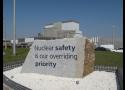
People are always pestering me for concrete examples of the cost of NRC style regulation. I turn them off by telling them it doesn’t work that way. It’s about incentives and motivation. What are the sticks and what are the carrots? Suppose you tell a football player, your overriding priority is not getting hurt. If you get hurt or do anything that might get you hurt, you are out of football for life. Now go out there and win this game.
When you go from a competitive environment where it’s build better/cheaper or die to an environment which is ruled by an autocratic regulator’s goal to prevent a release, everything goes to hell. Paperwork and process trumps substance erecting massive barriers to entry. Cheap becomes “unsafe”.
Everybody’s motivation gets wrong headed, not just the regulators. Incumbents work harder on protecting and deepening their artificial paperwork moat than they do on their product. Workers forced to follow ridiculous, wasteful procedures and sit around waiting for a series of sign offs on an obvious fix rationally decide if the bosses don’t care about doing the job right neither should they. Fixed price contracts become infeasible. The vendors’ goal becomes milk each project for as much money as possible for as long as possible. And the next thing you know, plants take three or four times as long to build as they should and cost five or more times what they should.
My inquisitor walks away shaking his head and saying to himself, where are the facts, he doesn’t have a real argument. //
But an important factor is that getting rid of open racking is at least three times as expensive as it should be because of the paper work required to build a simple steel and concrete can.
In short, NRC style regulation is the reason every nuclear power plant in the US uses dense-packing, which is by far the most likely, non-weapons path to a Chernobyl or larger sized release in the USA. Such a release coupled with the NRC’s immoral, indefensible defense of LNT will cause panic, evacuation, and exile that will shake the country to its roots. Is that a big enough cost for you?

If you don’t pursue safety in a way that is cost effective, you are killing people. -- [David Okrent, Past chairman, Advisory Committee on Reactor Safeguards]
Suppose early in 1979, you asked yourself what is the most definitive experiment we could do to learn about the radioactive harm associated with a nuclear power plant release. The obvious answer: a big release would be that experiment. But you would immediately reject that idea on both ethical and economic grounds. Since then we’ve inadvertently run that experiment three times. Let’s look at the results. //
Three Mile Island, Chernobyl, Fukushima //
So we did the definitive experiment. The result: even in a very large power plant release, dose rates to the public are almost never higher than the dose rates our bodies know how to handle. Nature had to equip us with those repair systems to cope with the onslaught of DNA damage from our internal metabolic processes, which damage our DNA at a rate that is at least 25,000 times higher than the damage rate from average background radiation.
Nuclear power plant casualties are extremely expensive economically, which means it’s in the operators’ interest to build robust plants and operate them prudently. But from a public, radiation point of view almost all releases will produce no detectable harm, and the very worst releases are no worse than a bad refinery fire at killing the public.
This puts nuclear in the same category as wind and solar, when it comes to directly killing people per TWh of electricity, and orders of magnitude less directly deadly than coal plants. But it’s the indirect deaths that really count. The easiest way to kill a lot of people is to make them poorer. With a few exceptions, wind and solar will do that. Nuclear will too unless it is as cheap as coal. Nuclear has been cheaper than coal, and can be cheaper again; but only if we regulate nuclear in a way that eliminates barriers to entry and forces the vendors to compete on an even playing field. Right now we are doing exactly the opposite. We are killing people.
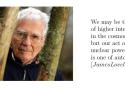
The Rockefeller Foundation and its allies decided to argue that radiation produced genetic damage and that damage was unrepairable. Radiation damage just keeps building up. Therefore, the harm was proportional to the total dose, regardless of how rapidly or slowly that dose was incurred. This is like saying taking 365 tablets of aspirin at once is the same as taking 1 tablet per day for 365 days. This no repair hypothesis is called the Linear No Threshold model or LNT.
If LNT is correct, then the Banners could aggregate the tiny increases in dose rate due to test fallout over hemispherical populations and over decades to argue that Bomb testing was invisibly killing millions of people worldwide. The Foundation expertly (and unscrupulously) promoted LNT with all its resources.
"For the first time in more than four decades, a new privately developed non-light-water reactor has reached criticality in the United States. Thank you to President Trump for his bold leadership and thank you to the bold scientists and entrepreneurs at Antares and Idaho National Laboratory who helped make this moment possible. I look forward to seeing continued progress in the American nuclear renaissance." //
Hallen
10 hours ago
American nuclear spent decades going nowhere, buried under regulatory delays and cost overruns.
This is the most important sentence in the article. It's true.
America could have been running on clean, ultra safe, abundant, reliable nuclear power by now if it were not for the climate alarmists and people who loved the movie "The China Syndrome". The EPA and other agencies have made it so difficult, to the point of being almost impossible, to develop nuclear power that advances came at a snail's pace.
The climate alarmists and Democrat officials saw the huge potential for massive funding shifts that could be manipulated for both personal gain and to develop Democrat power bases in "sustainable" energy. What they deemed unilaterally to be solar and wind. In my opinion, they intentionally hamstrung both fossil fuel development and nuclear development.
Look at the cost now. All those data centers everyone are overreacting over would be a non-issue for power consumption issues if we had these reactors. (they really aren't a problem either way, but it wouldn't be a talking point either). Powering EVs wouldn't be a worry.
The left has caused this problem. Even a little win like this one seems huge because of it.
I hope this trend continues and we can see more of this.
The article also doesn't mention the type of reactor. It's very important.
It's a sodium heat-pipe-cooled advanced microreactor. It's cooling mechanism is self-contained and does not need external water supplies for cooling. It means it can be used on things like submarines and a spaceships. It's also going to be used to power military bases to keep them secure and off the civilian grid.
These types of reactors can also be used in clusters to power remote locations so they don't need to be connected to the grid. That means lower infrastructure costs and independence. It could drive development in remote, harsh areas where people could live if they could get power and water. These types of reactors could drive that kind of development which would be a huge benefit to housing costs.
The future could be that your home is way out in the desert with a grand view and few if any other homes visible from your location. You'd connect to the urban areas via high speed tunnels using your EV or even autonomous aircraft. Half an hour and you're in Phoenix or Denver or Boise or Reno. It could be pretty cool.
Sean Duffy’s MARAD initiative may look like another Trump-era energy dominance announcement, but beneath the politics lies a serious industrial question: can the United States build the regulatory, shipyard, insurance and port framework needed to make nuclear-powered merchant ships commercially viable before Asia takes the lead? //
The real story behind the announcement made by U.S. Transportation Secretary Sean P. Duffy and the Maritime Administration on 7 May is not that America has discovered nuclear propulsion. It is that Washington has finally recognized maritime nuclear power as a shipbuilding, logistics, insurance, port-access and national-security race, and has decided to enter it. MARAD’s Request for Information, with comments due by 5 August 2026, asks industry to help develop a U.S.-built, scalable, commercially viable SMR model for marine transportation. That is a materially different ambition from funding a reactor demonstration. It is an attempt to build a complete commercial ecosystem. //
Shipping is uniquely suited to nuclear propulsion. The energy density argument for maritime nuclear propulsion is more compelling than for almost any other transport sector. A modern ultra-large container ship consumes between 250 and 350 tonnes of fuel per day at sea. Over a 25-year operational life, fuel can represent billions of dollars in lifecycle cost. Bunker storage, fuel treatment systems, purifier rooms, sludge handling, emissions scrubbers and the growing infrastructure of alternative-fuel compliance consume enormous volumes of space, capital and crew time. Nuclear propulsion potentially eliminates most of that complexity, a reactor fuelled for two decades or more fits within a containment space that returns cargo volume to its owners and voyage economics to their prior simplicity. //
Thorium, increasingly discussed as an alternative fuel cycle, offers further advantages. Thorium-232 converts under neutron bombardment to fissile uranium-233, is three to four times more abundant than uranium in the earth’s crust, produces significantly less long-lived radioactive waste, and is far less susceptible to weapons proliferation. Molten salt reactor designs, which dissolve thorium in liquid fluoride salt that also acts as the coolant, operate at atmospheric pressure rather than under the high-pressure steam conditions of conventional light-water reactors, removing explosive decompression risk. An approval in principle for a nuclear-powered LNG carrier using molten salt technology was granted in 2025. //
The United States now accounts for approximately 0.1 per cent of global commercial ship production. A single Chinese state shipbuilder built more vessels by tonnage in 2024 than the entire U.S. industry has produced since 1945. //
The U.S. has become marginal in commercial construction outside naval programmes, which is precisely why the MARAD announcement repeatedly frames SMR development as a mechanism for rebuilding domestic yards, creating strategic engineering employment, and reconnecting maritime and defence industrial capacity. //
While Europe debates how to tax shipping emissions, the United States is beginning to ask who will build and power the next generation of ships altogether.
South Korea is not waiting for that question to be answered. HD Hyundai has unveiled a 15,000 TEU-class SMR-powered containership concept and is working with ABS on nuclear-electric propulsion systems potentially supplying up to 100 megawatts. China has explored molten salt reactor ship concepts and is investing heavily in thorium-based systems. Russia already operates the only nuclear-powered commercial vessels in service, alongside its Arctic icebreaker fleet.
Transporting oil by pipelines is significantly safer for workers and carries lower risk of spills than moving it by train or truck, a new report from the Fraser Institute says. Analyzing data from Canada’s National Energy Board and the US Department of Transportation going back to the year 2000, the report’s authors find that pipelines result in fewer spillage incidents and personal injuries than road and rail in North America. //
The evidence is clear: transporting oil by pipeline is safe and environmentally friendly. Furthermore, pipeline transportation is safer than transportation by road, rail, or barge, as measured by incidents, injuries, and fatalities- even though more road and rail incidents go unreported. //
There are 825,000 kilometres of pipeline in Canada and about five times that much in the US. In the US from 2005 to 2009, there were more “serious” incidents, injuries and fatalities resulting from the shipment of oil by road and rail than by pipeline.
Accounting for the superior safety and environmental performance of pipelines is the “genius” of the technology, which has the shipping container remain static while the commodity moves. According to the report, there are an average of 20 spills per billion ton-miles in trucking, two in rail shipping, and 0.6 in pipelines. Pipeline spills release more oil, however, than either road or rail spills. The report maintains that despite the relatively higher quantities of oil released, it is still “miniscule” when taken in the context of the total quantities being shipped each day.
The ten-year average for the frequency of liquid leaks is “approximately three leaks per 1,000 km of pipeline” the report says, citing the Canadian Association of Petroleum Producers for that statistic.
Fatalities for pipeline workers averaged 0.2 per year from 2000 to 2009, it says. The rate of rail-related fatalities, by contrast, was 91 in 2010 and has a five-year average of 81. Measured by ton-miles, the rate of injuries associated with shipping by pipelines was just 0.00687 injuries requiring hospitalization per billion ton-miles; rail caused 30 times that many injuries.

A core part of the energy transition and of the solutions to meeting energy needs, nuclear energy is a strategic resource that is often a subject of debate. This section aims to respond to the main questions and misconceptions by presenting nuclear energy as clearly as possible. The goal is for everyone to form their own opinion.
The capacity of nuclear energy to ensure our energy independence and to guarantee the production of low-carbon electricity is invaluable for tackling the climate emergency.
- A Low-carbon energy – Yes, it emits the least greenhouse gases!
- Constant and controllable energy
- Competitive energy – Least expensive!!
- Energy that is essential to the electricity mix
- Energy that is vital for tomorrow’s world
- Energy that is sparing in its demand for raw materials – It saves natural resources!
- Energy that preserves health – It does NOT emit fine particles, nitrogen dioxide, sulfur dioxide, nitrates or phosphates into the atmosphere!
The plume escaping the reactors? Water vapor. That’s it.
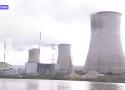
Nuclear power is the most reliable and cleanest form of energy. //
Belgium has accepted reality and embraced nuclear power 20 years after passing phase-out legislation.
The Belgian government intends to acquire all of the “nuclear operations in the country” from the French energy group Engie.
“By doing so, the Belgian Government is taking responsibility for Belgium’s long-term energy future, with the objective of building a financially and economically viable activity that supports security of supply, climate objectives, industrial resilience and socio-economic prosperity,” Engie and the Belgian government said in a joint statement.
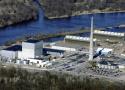
Belgium is reversing its decades long phasing-out course, seeking more energy independence by reviving its nuclear plants.
The Belgian government signed on Thursday a Letter of Intent to acquire Electrabel's (ENGIE) entire nuclear operations in the country.
Such a move would reverse the phase-out of nuclear energy legislation adopted in the early 2000s amid safety concerns.
Belgian Prime Minister Bart De Wever stated that the country is aiming to reduce its reliance on fossil fuels and gain greater autonomy in managing its own energy supplies.
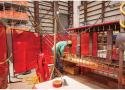
I’m an engineer. That means I was put here to design and build things. The last thing I want to do is harp about a misguided regulatory system, which has turned a providential gift which should lift humanity to new heights into a drag on ratepayers and taxpayers and a haven for parasites and grifters. I need a break. A chorister has asked me if we could build a conventional big PWR in a shipyard. This would combine the low technical risk of a 75 year old technology with the amazing productivity of a world class shipyard. This question gives me a chance to go back to what I should be doing instead of moonlighting as an ineffective JV Jeremiah. //
But we are still below a 100 million dollars for steel and ballast. According to KHNP numbers, all the stuff inside the turbine hall will cost about 400 million. and the the Nuclear Steam Supply System will cost 1.5 billion.\cite{choi-2017} (Both numbers are far higher than they should be.) We are talking about 2 billion dollars for a 1.4 GW plant.
This is all back of the envelope. It will have to be confirmed by doing the actual design. But thanks to recent advances in heavy lift capability, if and only if we go to all steel construction, I’m confident that technically we could build a 1 GW+ Pressurized Water Reactor in a shipyard, and gain the astounding productivity that the world class yards have had to develop in the fiercely competitive environment that they face. We could quickly get back to $2000/kW and less using the same basic technology that the late 1960’s plants used. Build times will start out at around two years and quickly come down to one year. The TG will be the long lead time component.
But this is all dreaming. Shipyard productivity depends on three basics:
1) No one can unilaterally dictate the rules. Everybody involved knows the rules and the rules can’t change in the middle of the game.
2) Total freedom to build the ships the way the yard wants to and change that process as it sees fit, as long as the ships perform to spec. This includes freedom to buy equipment and material from anybody willing to provide it. And freedom to decide on its own quality enforcement system.
3) Intense competition over an extended period, not just between the yards, not just between the yards’ vendors and the vendors’ vendors, but also between the Classification Societies.
We have chosen to not allow these three basics to exist for nuclear power.
Until we build nuclear plants like the Koreans build commercial vessels, attempting to build plants, big or small, in a yard, will accomplish nothing but screw up the yard. Pass the Nuclear Reorganization Act.

Dr. Harrison “Jack” Schmitt, 90, an Apollo 17 astronaut who spent three days on the moon in 1972, told The Post this week that there is a superfuel locked within the lunar dust that could provide Earth with an abundance of clean and safe energy for generations.
“I’ve been working on this for many decades — harvesting the light isotope of helium-3 from the moon,” said Schmitt, who is from New Mexico and lives in Albuquerque.
Schmitt is one of just 12 humans to ever walk on the moon, and four who are still alive. Buzz Aldrin, Charlie Duke and David Scott are also all in their 90s.
Since his Apollo 17 commander, Gene Cernan, died in 2017, Schmidt has been the last man alive to step off the lunar surface.
He also stands out for another reason: Unlike the other Apollo astronauts, who came from the military, Schmitt was a geologist and the only trained scientist to make the historic trip. //
“The question is, will that momentum keep going forward?”
Schmitt says he believes it will through a viable business model for interlunar travel — fueled by an industry involving the reaping of helium-3.
Helium-3 is a key ingredient needed to run nuclear fusion reactors, which operate with extreme efficiency and without the dangerous radioactive waste today’s fission-based power plants create.
But helium-3 is extremely rare on Earth — so rare that it’s rationed by the federal government — meaning fusion reactors have never been viable on a large scale.
But the moon is believed to be ripe with it, since the sun has been bombarding its atmosphere-free surface with the isotope for billions of years and building it up in the grey lunar dust.