Roberts Flight Information Region (Roberts FIR), located off the west coast of Africa, has selected Aireon’s space-based automatic dependent surveillance-broadcast (ADS-B) data to navigate and surveil aircraft in the combined upper airspace of its three member States, joining a growing number of African countries opting for the revolutionary product.
The Roberts FIR, which is headquartered in Liberia, is a tripartite organization responsible for the control and safety of air navigation in the combined upper airspace of Guinea, Liberia and Sierra Leone, with a total size of 770,777 square km. Each Member state manages its portion of the airspace from the ground to 3000 ft. Mean Sea Level (MSL).


When Steve and Olivia visited their friends in Liberia, they simply saw it as a fun trip. They had no desire to become global workers—the thought had not even crossed their minds.
“I had no intention of becoming a missionary. I don’t like to go to other places and do new things,” Steve said. “So we went, and it was not a fantastic trip.”
Between the intense heat, power outages, and a few difficult experiences, nothing about the visit made Steve and Olivia eager to return. And yet, God was quietly at work, preparing a path they never expected.
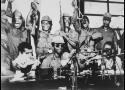
In 1971, Rev. Dr. William R. Tolbert Jr. became President of Liberia following the death of President William V. S. Tubman Sr. Departing from his predecessors, Tolbert sought to root out corruption and close the divide between the ruling class of America-Liberians, and the indigenous majority who had been marginalized since the republic's founding in 1847. Tolbert's reforms faced resistance from two fronts: entrenched elites and Western powers who saw their influence diminished, and the ethnic majority who regarded his agenda as too halting. By the late 1970s, domestic hardships set Tolbert's presidency in crisis. On April 12, 1980, the unrest erupted into a full-scale military coup when soldiers stormed the Executive Mansion killing President Tolbert and ending more than a century of Americo-Liberian rule. This was followed by the public executions of thirteen cabinet members on April 22, 1980. This is the untold story of Africa's least known reformer and the enduring societal aftermath of his murder.

Liberia’s aviation safety systems have come under critical review following an urgent inspection tour of the Roberts International Airport (RIA) and the Liberia Civil Aviation Authority (LCAA) by House Speaker Richard N. Koon.
The Speaker’s visit was prompted by reports of malfunctioning navigation and safety equipment that have left Liberia’s only international airport vulnerable and below international standards. The tour also followed revelations that the country “failed miserably” during a 2022 audit conducted by the International Civil Aviation Organization (ICAO). ///
The airport collects a lot of money for every passenger. Why doesn't that fund all this?
Ep. 2.05 When You Comin' Back, Range Rider?
Republic of Liberia Government Boeing 727-25, registration EL-GOL, c/n 18253/11 built in 1963 for Eastern Air Lines.
Please note the Beechcraft King Air hidden by the stairs and cars.

Liberia's former President William Tolbert has had a symbolic reburial, 45 years after he was murdered during a coup and his body was believed to have been dumped in a mass grave.
Ten days after the president's killing, following trials by a kangaroo court, 13 of his cabinet were stripped, tied to stakes and then executed by a firing squad on a beach next to an army barracks in the capital, Monrovia.
None of the 14 corpses has been found but each man got a state funeral at a ceremony attended by President Joseph Boakai and other dignitaries.
The event was seen as an act of reconciliation and part of a process of the country coming to terms with its violent recent past.
"It is an act of national conscience. It is a moment to acknowledge historical wrongs and to reaffirm collective commitment to the truth, justice and reconciliation," President Boakai said. //
Doe himself met a violent death at the hands of rebels in 1990. His reburial in his home town last week was also ordered by the president.
"This is not just a burial; it is a moment of national reflection, a time to reconcile with our history, to heal from our wounds, and to remember with respect and purpose," Boakai said at Doe's funeral.
For the families of those executed in 1980, Tuesday's ceremony was both an act of remembrance and a way of bringing some respect to those who died.

The Government of Liberia has officially launched the new Visa on Arrival (visaonarrival.lis.gov.lr) and Re-entry Permit (reentryvisa.lis.gov.lr) Issuing System in collaboration with the Liberia Immigration Service (LIS) and the project contractor - consortium CETIS, one of the Europe’s leading companies in security printing and identity management, and ZIP SOLUTIONS, on 11 March 2025. Following the successful launch of the modern digitalized Work Permit Issuing System in 2022, this new system marks another significant step forward in Liberia’s efforts to modernize and digitalize public administration. This new system is designed to simplify the process for foreigners entering Liberia and enhance the effectiveness of border controls at Monrovia-Roberts International Airport - whether as tourists, business visitors, or investors. These initiatives are expected to result in increased tourism and business travel, which are crucial to the country’s economic growth.

It has become commonplace in Liberia for people to arbitrarily create streets, towns, and places with willy-nilly names. Streets without logical naming conventions hinder efficient navigation and hamper effective police and fire responders in critical situations.
To ensure meaningful, consistent, and practical street names, cities nationwide must adopt naming policies that include public consultation, historical relevance, community engagement, and clear guidelines. Such measures will maintain order.

A female pygmy hippopotamus calf was born at the Metro Richmond Zoo in early December, marking the third calf of the endangered species to be born at the zoo in the last five years, officials said.
The mother hippo Iris gave birth to the yet-to-be-named calf on Dec. 9 and the zoo is currently holding a contest to name the new calf. //
The new baby had a neonatal exam and weighed in at 15 pounds, a mere fraction of the 600 pounds officials say fully grown pygmy hippos can boast. //
When the hippo was declared endangered in 2015, there were only about 2,500 mature ones left, and even then officials were pulling that from a 1993 population estimate, according to the Zoological Society of London.
The Susu club is a universal feature of the Liberian workplace. Hardly any agency, trading firm, or NGO is without a Susu Club. The Susu club comes in two variety, the non-profit and the commercial. The non-profit is the more benign of the two. It is normally organized rather informally. The employees of a company, or even a section of a company agree to form a Susu club and will pay a certain amount of their salary to the club cashier every month. In an non-profit Susu, the percentage of the salary pledged tends to be higher than in a commercial Susu. The drivers of one NGO operating in Liberia pay 70 USD, about one third of their salary, into their Susu account every month. But every month one of them is the lucky one. He will receive the combined input of the other Susu members. In this particular Susu club the payout is 700 USD. The next month it is another persons term to collect the 700 USD. So, the Susu club is in effect, a revolving loan given by the paying members to the receiving member. The advantage for the member is that, once or twice a year, depending on the structure of the Susu club he gets paid 700USD instead of his regular salary of 250 USD.
The tallest structure of Africa is still located close to Monrovia. One of the three remaining antennas of the defunct Omega Navigation system is located in Paynesville, in the greater Monrovia area. Omega was a US – Navigation system operating in the Very Low Frequency (VLF) band, between 10 and 14 kHz. It was used both for navigation as well as for submarine communication. Omega was operated from 1970 until 1997 when GPS proved more accurate.
Due to the extreme wavelength, Omega needed very long antennas. The transmitter in Paynesville used a umbrella antenna suspended on a 417m high mast.
Until the new Elysian Airline, whose fate is far from certain, started to operate, the only way to fly anywhere in Liberia was by using the United Nations choppers. True, the Mi-8 were old and badly in need of paint, but nevertheless they offered the only way around. Most of the Mi-8 used in service of the United Nations Mission in Liberia (UNMIL) are operated by UT Air, a firm whose safety record is not the best. When UT Air runs short of men and machines, choppers from the Ukrainian aviation unit are also used. The way to tell the difference is by looking at the hips of the crew. If they wear big ugly holsters with automatics in it, they are from the Ukrainian Aviation.
Ugly, lout and ungainly as the choppers might be, they were still the only game in town. But access to the flights was restricted.
Neither the great plans that William R. Tolbert had for the transformation of Liberia, nor his plans for Bensonville, which he renamed Benton, came to fruit. The mansions of the presidential clan have been reduced to rubble, and Benton is again called Bensonville.
The only building which has survived intact up to this day is the Mt.Zion Praise Church, where Tolbert frequently took the pulpit. //
Yak Dorzon on January 8, 2009 at 7:44 pm
Tolbert renamed it Bentol, not Benton, Mr Foreigner. There was a logic to his megalomania – the “Ben” was for Bensonville and the “tol” was for Tolbert. Not satisfied, he went further and made Bentol the capital of Montserrado county.

Last month, in a basement office in Monrovia, I watched a teacher with 15 years of experience fail a sixth-grade math test. She wasn’t an outlier—she represented the norm in a nation that ranks 155th out of 156 countries according to the 2023 World Bank Human Capital Index. After a decade of traversing Africa’s education landscape, from Ethiopia’s ambitious reforms to Rwanda’s digital revolution, I can confidently state that Liberia isn’t just failing at education. We’re actively manufacturing ignorance. //
The most dangerous thing in Liberia isn’t poverty—it’s the slow death of our potential. //
The truth is more damning: we’re not failing because we’re poor. We’re poor because we’ve institutionalized failure.

Liberia gained its independence on this day in 1847. Rightfully claiming its title as Africa’s oldest democratic republic, Liberia gained its independence well over a hundred years before the rest of Africa.
The never-before-colonized nation was founded in 1822 by former slaves and free-born blacks who resettled from the United States. The independence declaration of Liberia was done by its first black governor Joseph Jenkins Roberts, who later on became the country’s first elected president.
To commemorate their independence day, Face2Face Africa takes you through a list of the presidents of Africa’s oldest democratic republic.
In accordance with the 2015 Electricity Law of Liberia (ELL), LERC is empowered under Section 3.3 to issue Regulations designed to implement the law. Therefore, the Commission prescribed these Regulations:
Electricity Licensing Handbook.pdf - 1166kb
The Electricity Sector of Liberia has been characterized by monopoly of generation, transmission, and distribution services, and there has also been a fusion of roles, where policy, regulation and operation were combined.
Regulatory functions of the energy sector were relegated to the Ministry of Lands, Mines and Energy (MLME), Ministry of Commerce and Industry (MoCI), Liberia Electricity Corporation (LEC), Rural and Renewable Energy Agency (RREA), Liberia Petroleum Refining Company (LPRC), National Oil Company of Liberia (NOCAL), and the Environmental Protection Agency (EPA). State-owned operators including the LEC and micro-utilities have been self-regulating. The result has been high electricity cost and inadequate services, which are major constraints to Liberia’s economic growth and poverty reduction.
To address the situation, the National Energy Policy (NEP) of Liberia was approved in 2009. It provides among others, liberalization of the sector and separation of policy, regulation, and operation.
The National Energy Policy led to the enactment of the 2015 Electricity Law of Liberia (ELL) on October 26, 2015. The ELL provides the legal basis for the establishment of the Liberia Electricity Regulatory Commission (LERC) as the National Regulator. LERC is an independent agency with respect to its budget, management, staffing and the exercise of its duties and authorities as prescribed in Section 13.3 of the Law.
LERC’s function, as regulator, is to issue licenses, approve tariffs, ensure liberalization of the sector, improve service delivery, protect consumers and create a vibrant electricity sector.
Visa Application Form
Portfolio
- School Management Software
- Hotel Management
- Inventory management
- Susu Club Management
- Accounting Software etc…
Our products are all cloud based.

Some hippos are a little smaller — and lighter — than others, including the endangered West African Pygmy Hippopotamus, which is found mostly in Liberia. The status of that animal makes it all the more interesting that the Attica Zoological Park in Athens, Greece, has recently had a pygmy hippo born in captivity.