Toronto-based Hydrostor Inc. is one of the businesses developing long-duration energy storage that has moved beyond lab scale and is now focusing on building big things. The company makes systems that store energy underground in the form of compressed air, which can be released to produce electricity for eight hours or longer. //
Unlike some other long-duration storage companies, Hydrostor has proven its technology. The company has operated a small, 1.75-megawatt plant in Goderich, Ontario, since 2019, which can run for about six hours at a time. Compressed-air storage existed before Hydrostor—plants in Germany and Alabama have been around for decades and use variations on this approach.
Hydrostor’s system uses a supersize air compressor that ideally would run on renewable electricity. The system draws air from the environment, compressing it and moving it through a pipe into a cavern more than 1,000 feet underground. The process of compressing the air produces heat, and the system extracts heat from the air and stores it above ground for reuse. As the air goes underground, it displaces water from the cavern up a shaft into a reservoir.
When it’s time to discharge energy, the system releases water into the cavern, forcing the air to the surface. The air then mixes with heat that the plant stored when the air was compressing, and this hot, dense air passes through a turbine to make electricity.


Under the new plan, however, all such habitats would be categorically off-limits as soon as it is discovered that the land is occupied by a listed species. Any potential impacts to endangered species habitats that are discovered in the course of site surveys (usually after millions of dollars have already been expended on the project application) would kill the project entirely.
The permitting risk, already prohibitive for many new projects, could put whole states beyond the reach of all but the most hardy (or foolish) developers. The solar energy areas under the new solar plan overlap substantially with areas containing multiple endangered and threatened species. This endangered species exclusion alone would eliminate virtually all new solar development in Utah, Nevada, and Arizona, which lead the nation in solar capacity per acre. //
Even for the 14% of BLM land left available for solar project development after all these exclusions, the new plan imposes onerous permitting requirements. These include some 600 mandatory design elements.
Some of these verge on the comical. BLM proposes a blanket prohibition on “grading” (leveling out land), which is indispensable for access roads, utility-scale batteries, transmission poles, and construction staging. The plan also prohibits development within 200 feet of ephemeral streams (those that come into existence, for example, after heavy rainfall, and then go away) and requires 75% residual vegetation around the development.
These requirements will be impossible to meet economically for many projects, and even where possible, would significantly expand the amount of land required per unit of electricity, thus defeating the goal of conservation. //
Most surprisingly, the new plan does not address any of the major problems that years of experience have revealed in the permitting process for solar and other energy projects on BLM land. On the contrary, it makes the permitting challenges even worse for existing projects applications, which are not “grandfathered” in any respect. Many solar project applications already in process will have to start over, and many of those applicants will prefer to cut their losses instead.
Many projects’ applications have been pending for years, and companies have already negotiated operational and power-purchase agreements of various kinds and would be bankrupted by having to start over.
This demonstrates a problem with heavily regulated sectors: Officials feel all too free to “move the goal posts” with little concern for the enormous losses they are causing developers and investors and little understanding that these are social losses that impact everybody.
For Americans to avoid a prolonged period of energy scarcity in the high-demand decade ahead, the nation will require a significant expansion in electricity generation. The bulk of that will need to come from nuclear and fossil sources, which are significantly more abundant, “energy dense,” and reliable than renewable sources like solar and wind. //
The new solar plan is being promoted as a partial solution, but even a brief review shows clearly that it will only make those problems worse. The plan is a clear sellout to left-wing environmentalists. And it shows that while those environmentalists hate fossil fuels, they don’t particularly love renewable energy—or energy of any kind.
They mean to save the planet for what they think is the planet’s sake, not for our sake. And if in the process they plunge the world into energy scarcity—a much grimmer fate than all the doomsday climate scenarios put together—in their minds, that’s just too bad for us.
In more than 20 countries, with 40 Powerships, Karpowership has with more than 6,000 MW installed capacity. With our fleet composed of Powerships, FSRUs, LNG Carriers, Support Ships we provide universal access to power for people and communities on 4 continents around the world.
in 2020 a third addendum was signed to increase the capacity to 65 MW. Karpowership is operational in the country since 2018 and has been supplying 80% of Sierra Leone’s total electricity needs. ///
LNG
Billionaire Elon Musk said this month that while the development of AI had been “chip constrained” last year, the latest bottleneck to the cutting-edge technology was “electricity supply.” Those comments followed a warning by Amazon chief Andy Jassy this year that there was “not enough energy right now” to run new generative AI services. //
“One of the limitations of deploying [chips] in the new AI economy is going to be ... where do we build the data centers and how do we get the power,” said Daniel Golding, chief technology officer at Appleby Strategy Group and a former data center executive at Google. “At some point the reality of the [electricity] grid is going to get in the way of AI.” //
Such growth would require huge amounts of electricity, even if systems become more efficient. According to the International Energy Agency, the electricity consumed by data centers globally will more than double by 2026 to more than 1,000 terawatt hours, an amount roughly equivalent to what Japan consumes annually.

In 2023, China really knocked the wind out of the sails (hah) of the renewable-energy crowd. In that year, China built some new coal-fired electrical generation facilities. In fact, they built a lot of coal-fired electrical plants — as in...more than twice that of the rest of the world combined.
China ramped up coal power capacity last year, according to new analysis, despite a pledge to "strictly control" the dirtiest fossil fuel.
The country added 47.4 Gigawatts (GW) of new coal power in 2023, more than double the amount added by the rest of the world combined.

The 23 million-acre petroleum reserve on the North Slope was set aside as an emergency oil supply, originally for the U.S. Navy, by President Warren Harding.
In 1976, in accordance with the Naval Petroleum Reserves Production Act, administration of the reserve was transferred to the Department of the Interior’s Bureau of Land Management (BLM) and renamed the NPR-A.
President Joe Biden is on the verge of locking down half of it, making it unavailable for oil and gas development. He intends to do so with a new rule that is proposed by the Biden Administration through the Bureau of Land Management, a division of the Department of Interior.
Glistening in the dry expanses of the Nevada desert is an unusual kind of power plant that harnesses energy not from the sun or wind, but from the Earth itself.
Known as Project Red, it pumps water [8000] feet into the ground, down where rocks are hot enough to roast a turkey [380F]. Around the clock, the plant sucks the heated water back up to power generators [3.5 MW]. Since last November, this carbon-free, Earth-borne power has been flowing onto a local grid in Nevada. //
But geothermal enthusiasts have dreamed of sourcing Earth power in places without such specific geological conditions—like Project Red’s Nevada site, developed by energy startup Fervo Energy.
Such next-generation geothermal systems have been in the works for decades, but they’ve proved expensive and technologically difficult, and have sometimes even triggered earthquakes. Some experts hope that newer efforts like Project Red may now, finally, signal a turning point, by leveraging techniques that were honed in oil and gas extraction to improve reliability and cost-efficiency.
The advances have garnered hopes that with enough time and money, geothermal power—which currently generates less than 1 percent of the world’s electricity, and 0.4 percent of electricity in the United States—could become a mainstream energy source. Some posit that geothermal could be a valuable tool in transitioning the energy system off of fossil fuels, because it can provide a continuous backup to intermittent energy sources like solar and wind.

A new energy bill passed by the Florida legislature, which DeSantis is certain to sign, bans offshore wind turbines and prioritizes reliable, affordable electricity over utopian renewable fantasies. According to experts at the Energy Research Institute, this bold move represents a reasoned pushback against the climate activist agenda that has destabilized power grids across America. //
Institute for Energy Research
@IERenergy
·
Follow
Texas and California produce more renewable energy than all other states, but they also lead the nation in power outages.
instituteforenergyresearch.org
https://t.co/2c8kn8dGX8
As Renewable Energy Increases in the Generation Mix, Power Outages Grow
3:10 PM · Mar 25, 2024
A microgrid is a group of interconnected loads and distributed energy resources that acts as a single controllable entity with respect to the grid. It can connect and disconnect from the grid to operate in grid-connected or island mode. Microgrids can improve customer reliability and resilience to grid disturbances.
Advanced microgrids enable local power generation assets—including traditional generators, renewables, and storage—to keep the local grid running even when the larger grid experiences interruptions or, for remote areas, where there is no connection to the larger grid. In addition, advanced microgrids allow local assets to work together to save costs, extend duration of energy supplies, and produce revenue via market participation.

RNC Research @RNCResearch
·
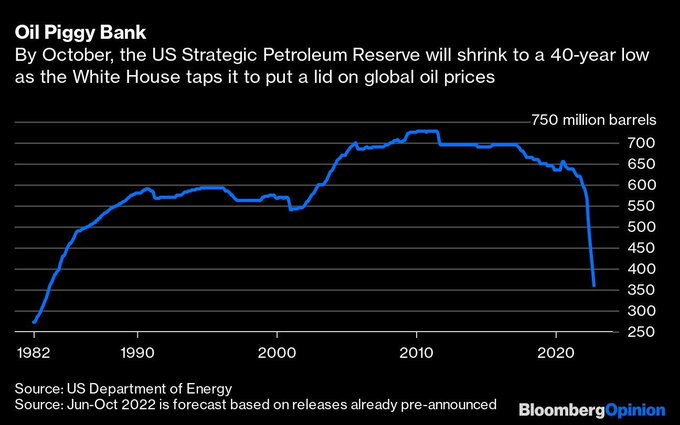
In 2022, Biden claimed he had "a plan to refill the Strategic Petroleum Reserve" after draining it to its lowest level in four decades.
Today, they cancelled that plan because oil is too expensive.
10:51 AM · Apr 3, 2024 //
Not only are they paying more after they drained it, but they left it at its lowest point in 40 years, endangering our security for political reasons. It currently holds about 363 million barrels, down almost 600 million from the beginning of 2022. //
Brianna Lyman @briannalyman2
·
Donald Trump wanted to fill the Strategic Petroleum Reserve in March of 2020 when oil was $24 a barrel.
Schumer called it a big oil bailout.
Biden will now pay about TRIPLE to fill the reserves after draining them to keep gas prices artificially ‘low’ for votes.
5:06 PM · Oct 19, 2022 //
Viscount Montgomery of Arkansi
10 hours ago
“Nearly 1 million barrels of oil from the most recent sale, which was announced on June 14 2022, went to Unipec America, Inc. Unipec is a Houston-based subsidiary of Sinopec, an oil company owned by the Chinese government.”
DonR Viscount Montgomery of Arkansi
10 hours ago
Virtually 100% of the oil they bought wound up in China's SPR, because they understand why having a bunch of oil handy is a good idea. As far as why, well 10% for the big guy comes to mind.

Gordian Knot News is now up to 100 some posts. They range in importance from fundamental to trivial; in writing quality from pretty good to tech manualese. But it is impossible to figure out either importance or readability from the title.
So I've prepared a list of links, which groups the posts by subject and gives them a grade. The same post can show up multiple times.
A means you must read this to stay in the choir.
B means you should read the piece.
C means read this if you have nothing better to do.
D means don't waste your time.
In many cases, there is a very similar PDF on the Flop Book site, in which case I have also included a link to display that file.

Fear campaigns have led to tight regulation of nuclear power plants and nuclear waste, which means that to see dry fuel casks you have to jump through hoops with security clearance, over-the-top security checks, supervised visits and so on.
I think we should normalise nuclear waste by putting it in public places that allow people to see it. In the Netherlands, COVRA (The Central Organisation For Radioactive Waste) stores all of the country’s high-level waste and is also a public museum and art gallery that hosts many exhibitions.
Inside COVRA: the art of preservation
On a panel in Paris last year, I called nuclear power plants national monuments, and I believe that they are, because they represent clean air, good jobs, and high-quality lifestyles. I think we should decorate nuclear power stations like the mural on the Cruas-Meysse cooling tower in France. We should celebrate what humankind can achieve with clean energy: a high quality of life for everybody, without the negative impacts of burning fossil fuels.

Ryan Maue
@RyanMaue
·
Follow
Wow. Guyana's president tells the climatists to shove it.
Anas Alhajji
@anasalhajji
A must watch!
This is my hero!
He is Mohamed Irfaan Ali, President of Guyana.
#Oil #Guyana
Embedded video https://twitter.com/RyanMaue/status/1773813984015127005
4:46 PM · Mar 29, 2024 //
BBC host Stephen Sackur essentially asked him during an interview isn't it a bad thing for you guys to extract $150 billion of oil and gas off your coast because of the carbon emissions that would ultimately be released into the atmosphere?
Ali's response is just pure gold. He stops Sackur cold and then just rips him a new one. //
First, Ali tells him they have a huge forest in Guyana that basically makes them carbon neutral because of how large it is, "a forest we have kept alive."
Sackur says, "Does that give you the right to release all of this carbon...."
Ali interrupts him, "Does that give you right to lecture us on climate change?"
"I will lecture YOU on climate change!" he said, pointing his finger at Sackur. Then he ripped him to pieces, using their own terms on him.
"Because we have kept this forest alive, that stores 90.5 gigatons of carbon. That you enjoy. That the world enjoys. That you don't pay us for...That you don't see a value in...Guess what? We have the lowest deforestation rate in the world." He said even with the greatest amount they could extract, they would still be "net zero." //
There was a little bit more that didn't make the above clip, where Ali explained the importance of paying for the development of the country.
Sackur complained that Greenpeace said the world needs to keep the majority of the world’s remaining fossil fuels in the ground.
But Ali was not having it.
“You just said that we are 6-feet below sea level. Who is going to pay for the infrastructure? Who is going to pay for the drainage and irrigation? Who is going to pay for the development and advancement of our country?” The President questioned. //
anon-pabn
a minute ago
That is perfect. We need to shame these climate alarmist, hypocrites. Set aside the current arguments, they are telling little Guyana not to drill after the rest of the world has drilled and prospered because of it. What balz! Drill, Baby, Drill. And congrats on your forest....better than any other countries efforts

Nika4h @nikit2h
·
Replying to @crit_architect
A hailstorm this month has damaged thousands of solar panels at the 350-MW Fighting Jays Solar Farm in Fort Bend County, Texas, “Golf ball”-sized hail fell in the area on March 15, and aerial footage captured from a helicopter offered a glimpse at the extent of the damage
11:05 PM · Mar 26, 2024 //
Corey Thompson @Roughneck2real
·
BREAKING: Hail storm in Damon texas on 3/24/24 destroys 1,000’s of acres of solar farms.
Who pays to fix this green energy? @StateFarm? @FarmBureau? @Allstate?
Or you the taxpayer?
3:06 PM · Mar 25, 2024 //
Daniel Turner, the executive director of energy watchdog group Power the Future, was even more emphatic about the need to proceed carefully with solar power:
"There's this enormous shell game happening by the Biden administration, by the environmental left, presenting wind and solar as perfectly green, clean, and carbon-neutral," Turner told Fox News Digital. "They use all of these buzzwords. But they're none of that and they also have enormous drawbacks. And it's doing the American people a great disservice to obfuscate these very obvious shortcomings."
He noted that, because solar panels are largely manufactured in China, the destruction of solar farms could be leveraged in geopolitical disputes between the U.S. and China.
"Why would we expect them to race to our aid when our grid is down nationwide, and they are the ones holding the goods that we need to get back up?" Turner said.

The 4,000-acre solar farm called Fighting J's near [Needville, Texas] took a beating during hailstorms on March 16.
"My concern is the hail damage that came through and busted these panels we now have some highly toxic chemicals that could be potentially leaking into our water tables," said Kaminski
"There's numerous makeup in the chemicals on this thing," Fugua said. "The majority of them are cancer-causing."

Consider uranium: the underrated element of awe //
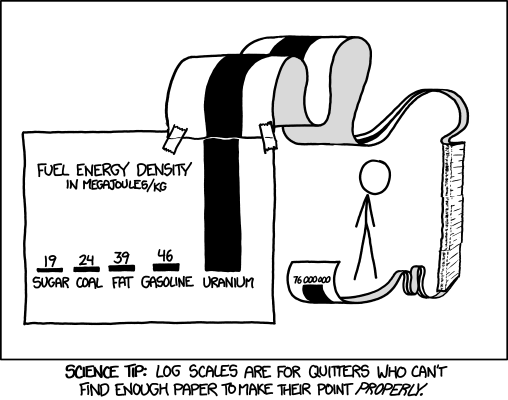
Back to energy density: uranium metal really packs a punch. It is 1.67 times more dense than lead, and 1 kilogram of uranium-235 contains 2 to 3 million times the energy equivalent of 1 kg of oil or coal. This means that a relatively small quantity of nuclear fuel can produce significant amounts of energy through fission. How does uranium compare to other fuels? Calculations vary a little, but through fission, 1 kg of enriched uranium corresponds to roughly 10,000 kg of mineral oil or 14,000 kg of coal. That’s a lot of raw material that can be left in the ground. //
A single nuclear fuel pellet in a typical reactor creates about the same amount of energy as one tonne of coal. //
nuclear energy stands its ground. It’s reliable and dependable, with the highest capacity factor of all energy sources, which means that power plants produce maximum power more than 92% of the time during the year. That’s almost twice as much as natural gas and coal and nearly three times more than wind and solar farms.
Since less raw material is needed to create the same amount of power, nuclear energy also has a very small land footprint compared to the alternatives. More land is required to mine the coal and dig the metals and minerals used in wind turbines and solar panels out of the ground, and for the sites they are built on, which makes it the most land-efficient source of energy. //

Cyril R says:
March 3, 2024 at 7:34 AM
A good writeup Michael. A couple of poimts though.
Actually water without precise chemistry control is very corrosive. All reactors require good chemistry control (there’s no such thing as pure helium). Davis Besse shows that borated water isn’t too nice either. And 155 bar borated water at 320C doesn’t qualify as “no hazard”.
Fluoride salts are stable, don’t generate hydrogen, and corrosion control rests on having the salt reducing toward the structural alloy rather than the passivation layer required with water. Fluoride salts also do not cause stress corrosion. So it ends up a simple matter of allowance thicknesses.
I like LWRs. Much better than coal plants. But they are basically glass cannons. The power goes out, the core melts down, generating explosive hydrogen in the process that detonates the containment and spreads radionuclides all over the country. Or someone thinks there is water in the core when there isn’t and the core melts down. A glass cannon like that just begs for military grade bureacracy not unlike a nuclear missile silo. Said bureaucracy is very expensive and results in all manner of bloat that inflated prices and build times. With advanced reactors focussing on inherent safety you at least have a case for a more rational regulatory approach.
A 3000 MWt LWR gets you 1000 MWe. An advanced reactor of 3000 MWt gets you 1500 MWe. That’s a quarter billion bucks a year more revenue.
By the way, 3 outages in 10 years is very good. Solar power stations have 365 outages a year.
During the Atomic Energy Commission’s (AEC) earliest years, the General Advisory Committee was sometimes viewed as a source of discouraging, delaying advice. Made up of selected members of the scientific establishment, the group habitually sought more studies and inserted costly delays aimed at making the perfect next step instead of taking steps that were good enough to support practical learning.
A March 8, 1952 New York Times article titled “Atomic Delay Laid to A.E.C. Advisers: Even Dr. Conant Should Yield to Men With Faith in Goal, Coast Chemists are Told,” provides a well-positioned person’s insights into the disappointingly slow process of developing power reactors. //
Pitzer gave the AEC a backhanded slap by calling it “reasonably efficient by general governmental standards,” and stated that its monopoly in atomic energy had delayed atomic reactor development.
He described how material production reactors, with their complex chemical processing systems, had been built in less than three years during wartime. During that time of rapid progress, he said, if there was a disagreement about which of two courses of action were best, both of them were followed.
In the succeeding years, following either route needed to be preceded by an “exhaustive series of preliminary studies” that added layers of cost to the project. Salaries, overhead and other cost components always accumulate during delays.
He noted how it took six years from the end of the war to build anything that could generate electricity, and even then it was a tiny reactor that produced just 100 kilowatts of power in December, 1951.
“The slowness,” Dr. Pitzer declared, “did not arise from a lack of designs for power reactors which reputable scientists and engineers were willing to build and test. It came rather from an unwillingness of the commission to proceed with any one of these designs until all of the advisers agreed that this was the best design.”
The speaker likened the present setup, with a multitude of committees advising the Atomic Energy Commission, to an automobile equipped with a separate brake lever for every passenger.

The US Department of Energy (DOE) has proposed new energy efficiency standards for distribution transformers. Almost all transformers produced under the new standard would feature amorphous steel cores that are, according to the DOE, significantly more energy efficient than those made of traditional, grain-oriented electrical steel. //
Portland General Electric has two critical points in its response to the delusional DOE.
First, Mandating a complete overhaul of transformer production during a severe shortage is basically insane. //
Second, the amorphous core transformers are significantly larger, leading to a host of technical issues that would jack up energy costs even more. //
An example for size comparison is that a 25KVA pole mounted amorphous core transformer is roughly the size of a 50KVA steel core transformer. This illustrates how much larger the new amorphous core transformers would need to be.
…This triggers a host of related issues that utilities would need to address. //
There is only one Grain-Oriented Electrical Steel (GOES) core maker in the United States (Butler Works, owned by Cleveland-Cliffs). That plant says that the rule is placing its operation in jeopardy.