
Evangelist of lean software and devisor of 9 programming languages and an OS was 89 //
In his work, the languages and tools he created, in his eloquent plea for smaller, more efficient software – even in the projects from which he quit – his influence on the computer industry has been almost beyond measure. The modern software industry has signally failed to learn from him. Although he has left us, his work still has much more to teach.


The story of the Comanches and the Red River War, whose 150th anniversary we mark this year, shows the absurdity of the ‘noble savage’ narrative. //
The Comanche were just as much imperialists as the Europeans ever were. Though Europeans could certainly be violently cruel, their culture at least censured violence against civilians — indeed, when stories of federal troops massacring defenseless Indians traveled east, the American people were horrified. The same cannot be said of the Comanche, whose brutality was an indelible component of their cultural identity.
It’s true as much today as it was 150 years ago that the West can learn from indigenous peoples such as the Comanche, who were not only tremendous horsemen and students of the natural world, but incredibly resourceful in finding a use for practically every part of the buffalo, which, with the horse, served as the cornerstone of their society. But that doesn’t mean we should embrace a simplistic, starry-eyed conception of native peoples, or a benighted, self-hating understanding of our own civilization.
The C programming language was devised in the early 1970s as a system implementation language for the nascent Unix operating system. Derived from the typeless language BCPL, it evolved a type structure; created on a tiny machine as a tool to improve a meager programming environment, it has become one of the dominant languages of today. This paper studies its evolution.
A short while ago, we told the story of the Boeing 757, pound-for-pound the most overpowered twin-jet passenger airliner of the jet age of aviation. It was and still is the kind of jet that can legitimately impress fighter jets with its climb-to-altitude capabilities thanks to two colossal engines. If all that's true, think of the Airbus A340 as the complete opposite. Despite sporting four engines instead of two, the A340 is notorious worldwide for being an absolute pig. For better or worse, the A340 is like a Geo Metro in the sky. //
In time, Airbus's two factions advocating for either a twin or quad-jet arrangement for its new airframe conceded four engines were more marketable internationally than two. The only question remaining was what on Earth would power the new jet. Therein lay the future A340's true weakness, its engines.
The engine in question was the Franco-American CFM International CFM56 high-bypass turbofan engine. With well north of 30,000 examples produced since 1974, the CFM56 is one of the most prolific engines of the jet age. Everything from the DC-8 to multiple Boeing 737 iterations and all of the associated military variants therein have made use of the CFM 56 over the last 50 years. //
The last of the 377 A340s delivered to airline customers was completed in 2012. With the completion of Airbus' A380 jumbo jet program in 2021, it's doubtful whether Airbus will ever again field another wide-body, quad-jet airliner again. With the industry shifting ever more towards more efficient twin-jets, the A340 will forever remain a curious footnote in aviation history. https://www.airbus.com/en/who-we-are/our-history/commercial-aircraft-history/previous-generation-aircraft/a340-family //
it's yet to see a fatal accident in three decades of commercial service.

The Notre Dame cathedral in Paris has been undergoing extensive renovation in the wake of a devastating 2019 fire. Previously hidden portions of its structure have revealed the use of iron reinforcements in the earliest phases of the cathedral's construction, making it the earliest known building of its type to do so. //
“Compared to other cathedrals, such as Reims, the structure of Notre Dame in Paris is light and elegant,” Jennifer Feltman of the University of Alabama, who was not involved in the research, told New Scientist. “This study confirms that use of iron made this lighter structure at Paris possible and thus the use of this material was crucial to the design of the first Gothic architect of Notre Dame.”

Who would win: the world's fastest computer circa 1976, or a $35 single-board computer from 2012? //
"In 1978, the Cray-1 supercomputer cost $7 million, weighed 10,500 pounds and had a 115 kilowatt power supply. It was, by far, the fastest computer in the world," Longbottom writes of the device, designed as the flagship product of Seymour Cray's high-performance computing company. "The Raspberry Pi costs around $70 (CPU board, case, power supply, SD Card), weighs a few ounces, uses a five watt power supply and is more than 4.5 times faster than the Cray 1." //
The same benchmark tests show even bigger gains for newer devices in the Raspberry Pi family, as you'd expect: the Raspberry Pi 400, the newest device in Longbottom's performance table, showed a performance gain of up to 95.5 times the Cray-1's results — in a device which fits on the palm of your hand, rather than becoming a very expensive piece of uncomfortable office furniture.
There is much we can learn by studing Rome’s descent into oblivion. //
The addictive tendencies of indolence and ceaseless entertainment discouraged the once-fecund Romans from family life, and birth rates plummeted. By the beginning of the second century A.D., to have even three children was quite exceptional. //
Whether or not America is Rome, the imperium is as much a cautionary tale as it is an ancient marvel. Concurrent with some of its most remarkable achievements, Rome was already steadily decaying within. Even while it continued accumulating territories, its citizens were growing ever weaker and incapable of self-government. The armies it used to expand and defend its borders became less Roman and, as a result, less allegiant to the citizens they swore to defend. It was, after all, a Roman mercenary army that sacked the eternal city in 410 A.D.
“States have always shown themselves completely incapable of restoring their moral foundations once they have allowed them to weaken,” Daniel-Rops opined. If so, it would be good to reflect on Rome, but perhaps less so for her glories than for what lessons we may learn from her descent into oblivion.

The brainchild of one ambitious American astrophysicist during the course of U.S. nuclear tests yielded the first manmade object in Earth’s orbit. The four foot round steel cap was launched into orbit in late August 1957 by the United States, beating the USSR’s Sputnik 1 to orbit by one month and nine days, scoring a major victory in the space race for the Americans. This feat has gone largely unrecognized by most historians. //
Operators
United States – Originally launched from the Nevada Test Site in 1957, the Pascal B Cap remains in service in Earth’s orbit despite its unknown location. //
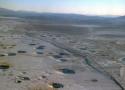
A manhole cover launched into space with a nuclear test is the fastest human-made object. A scientist on Operation Plumbbob told us the unbelievable story. //
Robert Brownlee was on the Operation Plumbbob team that launched an object in space before Sputnik.
They put a manhole cover above a nuke underground, and the explosion shot the iron cap into space.
The fastest human-made object was part of the US government's nuclear testing in the 1950s.
But the very first underground nuclear tests were a bit of an experiment — nobody knew exactly what might happen.
The first one, nicknamed "Uncle," exploded beneath the Nevada Test Site on November 29, 1951.
Uncle was a code for "underground."
It was only buried 17 feet, but the top of the bomb's mushroom cloud exploded 11,500 feet into the sky. //
The underground nuclear tests we're interested in were nicknamed "Pascal," during Operation Plumbbob in 1957. //
Brownlee said he designed the Pascal-A test as the first that aimed to contain nuclear fallout. The bomb was placed at the bottom of a hollow column — 3 feet wide and 485 feet deep — with a 4-inch-thick iron cap on top.
The test was conducted on the night of July 26, 1957, so the explosion coming out of the column looked like a Roman candle. //
Brownlee wanted to measure how fast the iron cap flew off the column, so he designed a second experiment, Pascal-B, and got an incredible calculation. //
Brownlee replicated the first experiment, but the column in Pascal-B was deeper at 500 feet. They also recorded the experiment with a camera that shot one frame per millisecond.
On August 27, 1957, the "manhole cover" cap flew off the column with the force of the nuclear explosion. The iron cover was only partially visible in one frame, Brownlee said.
When he used this information to find out how fast the cap was going, Brownlee calculated it was traveling at five times the escape velocity of the Earth — or about 125,000 miles per hour. //
Pascal-B's estimated iron cover speed dwarfs the 36,373 mph that the New Horizons spacecraft — which many have called the fastest object launched by humankind — eventually reached while traveling toward Pluto. //
"After I was in the business and did my own missile launches," he told Insider in 2016, "I realized that that piece of iron didn't have time to burn all the way up [in the atmosphere]."
Mere months after the Pascal tests, October 4, 1957, the Soviet Union launched Sputnik, the world's first artificial satellite. While the USSR was the first to launch a satellite, Brownlee was probably the first to launch an object into space. ///
Now exceeded by the Parker Solar Probe...
At its closest approach [to the sun] in 2024, its speed relative to the Sun was 690,000 km/h (430,000 mph) or 191 km/s (118.7 mi/s), which is 0.064% the speed of light.[7][9] It is the fastest object ever built on Earth.[
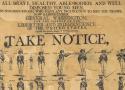
Most everyone, other than the liberal arts faculty in most major universities and a disturbing number of high school history teachers, is familiar with Washington’s crossing of the Delaware on the night of December 25-26, 1776, and the stunning surprise victory that ensued in the streets of Trenton, New Jersey.
What is often lost in the telling of the narrative is the tactical sophistication that George Washington was developing by the winter of 1776-77 and a little-known battle, one which I think shows Washington at his finest, that took place on January 2, 1777.

IBM found themselves in a similar predicament in the 1970s after working on a type of mainframe computer made to be a phone switch. Eventually the phone switch was abandoned in favor of a general-purpose processor but not before they stumbled onto the RISC processor which eventually became the IBM 801. //
They found that by eliminating all but a few instructions and running those without a microcode layer, the processor performance gains were much more than they would have expected at up to three times as fast for comparable hardware. //
stormwyrm says:
January 1, 2024 at 1:56 am
Oddball special-purpose instructions like that are not what makes an architecture CISC though.
Special-purpose instructions are not what makes an architecture RISC or CISC. In all cases these weird instructions operate only on registers and likely take only one processor bus cycle to execute. Contrast this with the MOVSD instruction on x86 that moves data pointed to the ESI register to the address in the EDI register and increments these registers to point to the next dword. Three bus cycles at least, one for instruction fetch, one to load data at the address of ESI, and another to store a copy of the data to the address at EDI. This is what is meant by “complex” in CISC. RISC processors in contrast have to have dedicated instructions that do load and store only so that the majority of instructions run on only one bus cycle. //
Nicholas Sargeant says:
January 1, 2024 at 4:00 am
Stormwyrm has it correct. When we started with RISC, the main benefit was that we knew how much data to pre-fetch into the pipeline – how wide an instruction was, how long the operands were – so the speed demons could operate at full memory bus capacity. The perceived problem with the brainiac CISC instruction sets was that you had to fetch the first part of the instruction to work what the operands were, how long they were and where to collect them from. Many ckock cycles would pass by to run a single instruction. RISC engines could execute any instruction in one clock cycle. So, the so-called speed demons could out-pace brainiacs, even if you had to occasionally assemble a sequence of RISC instructions to do the same as one CISC. Since it wasn’t humans working out the optimal string of RISC instructions, but a compiler, who would it trouble if reading assembler for RISC made so much less sense than reading CISC assembler?
Now, what we failed to comprehend was that CISC engines would get so fast that they could execute a complex instruction in the same, single external clock cycle – when supported by pre-fetch, heavy pipelining, out-of-order execution, branch target caching, register renaming, broadside cache loading and multiple redundant execution units. The only way that RISC could have outpaced CISC was to run massively parallel execution units in parallel (since they individually would be much simpler and more compact on the silicon). However, parallel execution was too hard for most compilers to exploit in the general case.

A hundred years ago, the ’20s were roaring and President Calvin Coolidge did things the current president and Congress would do well to emulate.
Coolidge won a landslide victory running on a platform of limited government, reduced taxes and less regulation.
He followed through on all three, creating an economic boom. (Where have you gone, Silent Cal, our nation turns its lonely eyes to you).
Coolidge also signed an immigration law that regulated the number of foreigners who could come to America.

The era of mainframe computers and directly programming machines with switches is long past, but plenty of us look back on that era with a certain nostalgia. Getting that close to the hardware and knowing precisely what’s going on is becoming a little bit of a lost art. That’s why [Phil] took it upon himself to build this homage to the mainframe computer of the 70s, which all but disappeared when PCs and microcontrollers took over the scene decades ago.
The machine, known as PlasMa, is not a recreation of any specific computer but instead looks to recreate the feel of computers of this era in a more manageable size.

Aleksandr Solzhenitsyn dedicated his book about the end state of communism ‘to all those who did not live to tell it.’ //
My parents emigrated from the Soviet Union. From what they told me, I developed a deep reluctance to being frog-marched to Kolyma courtesy of unilateral disarmament peaceniks, who are nowadays called “woke” with alternate grievances but the same collectivist Borg mentality. //
In part I’s fourth chapter, Solzhenitsyn encourages humility about human vulnerability to evil. “If only there were evil people somewhere insidiously committing evil deeds, and it were necessary only to separate them from the rest of us and destroy them. But the line dividing good and evil cuts through the heart of every human being. And who is willing to destroy a piece of his own heart?” //
In part VII’s third chapter, Solzhenitsyn excoriates apologists for Soviet misrule: “All you freedom-loving ‘left-wing’ thinkers in the West! … As far as you are concerned, this whole book of mine is a waste of effort. You may suddenly understand it all someday — but only when you yourselves hear ‘hands behind your backs there!’ and step ashore on our Archipelago.” He knew his disclosures would meet that era’s version of cancel culture. //
The will to dominate runs deep in the human psyche. Archipelago reminds us such despotic cruelty became commonplace in living memory with few held accountable.
Moreover, such atrocities continue today behind barbed wire in western China, North Korea, and elsewhere on the globe. Solzhenitsyn warns us all of the consequences should resistance to totalitarianism fail.

Vivek said we hadn't been perfect as a country, that we had slavery for 160 years, and we had a Civil War fought over it. "Some people learned that later than others," he said, taking a shot at fellow GOP candidate Nikki Haley and her Civil War comments controversy, as the audience laughed. //
"The question is what do we do about it now," Ramaswamy said. He spoke about it getting small enough to "atrophy into irrelevance," comparing the question to an immune system reacting to the virus that's no longer so powerful and starting to attack the body's organs. "That's what I see happening in the country," he explained.
"Today, the best way to stop discrimination on the basis of race is to stop discriminating on the basis of race," Vivek declared. He thought we'd created more racism in the name of "anti-racism." "If we drive with our eyes in the rear-view mirror, we're just going to keep crashing the same car and recreating the thing we wanted to eradicate." //
The growing problem today is revenge racism. It's at the heart of everything from DEI policies to demands for reparations. This isn't about equality or even equity. It's about punishment and suffering.
Concorde Turbo-Jet Engine, Complete with Afterburner
A Rolls-Royce Olympus Turbojet engine 593-610, fitted with afterburner.
Complete with serial numbered mobile stand.
The Internet started in the 1960s as a way for government researchers to share information. Computers in the '60s were large and immobile and in order to make use of information stored in any one computer, one had to either travel to the site of the computer or have magnetic computer tapes sent through the conventional postal system.
Another catalyst in the formation of the Internet was the heating up of the Cold War. The Soviet Union's launch of the Sputnik satellite spurred the U.S. Defense Department to consider ways information could still be disseminated even after a nuclear attack. This eventually led to the formation of the ARPANET (Advanced Research Projects Agency Network), the network that ultimately evolved into what we now know as the Internet. ARPANET was a great success but membership was limited to certain academic and research organizations who had contracts with the Defense Department. In response to this, other networks were created to provide information sharing.
January 1, 1983 is considered the official birthday of the Internet. Prior to this, the various computer networks did not have a standard way to communicate with each other. A new communications protocol was established called Transfer Control Protocol/Internetwork Protocol (TCP/IP). This allowed different kinds of computers on different networks to "talk" to each other. ARPANET and the Defense Data Network officially changed to the TCP/IP standard on January 1, 1983, hence the birth of the Internet. All networks could now be connected by a universal language.

PhilipStorry Ars Scholae Palatinae 19y 998 Subscriptor++
So why aren’t banks jumping at the opportunity to cast off their mainframes and move to the cloud? Risk and conversion cost. As a rule, banks are risk-averse. They are often trailing adopters for new technology and only do so when under competitive or regulatory pressure.
And more importantly, IBM understands this.
Would it be cheaper to run your processes on someone's cloud? Maybe. Will you spend the next two decades tweaking and rewriting as those cloud services get changed or replaced? Definitely.
I'd love to see a proper study into how much a 1990's/2000s Java replacement for an old Mainframe COBOL program has cost so far in terms of redevelopment for later JVMs and other maintenance. Has anyone seen such a thing?
If there's one thing IBM offers it's a kind of platform stability that can be measured in decades. You're not going to worry so much about what works with the latest OS version - this isn't that kind of environment.
Is that a good or a bad thing? We'll see both views in the comments here. But IBM's mainframes are the extreme expression of "If it's working today, it will work for years to come". And for some processes, that stability is very attractive - much more attractive than the costs of constant improvement and the risks it brings.
A brief comparison of z/OS and UNIX
z/OS concepts
What would we find if we compared z/OS® and UNIX®? In many cases, we'd find that quite a few concepts would be mutually understandable to users of either operating system, despite the differences in terminology.
For experienced UNIX users, Mapping UNIX to z/OS terms and concepts provides a small sampling of familiar computing terms and concepts. As a new user of z/OS, many of the z/OS terms will sound unfamiliar to you. As you work through this information center, however, the z/OS meanings will be explained and you will find that many elements of UNIX have analogs in z/OS.