
I have a friend who works in the security sector. He always plays Red Team - so let's call him Reddy. His job is to look at systems, understand them, and then dream up ways to exploit and compromise them.
I recently asked for his opinion on the SAVE Act. No surprise, like the overwhelming majority of Americans, he is all for it - but his reasoning was less about preventing individual illegal aliens from voting but about reversing a deliberate systemic compromise of election system integrity by Democrats over the last two decades.
Reddy thinks Blue State voting systems are deliberately designed to enable fraud on an industrial scale, and California's electoral system is the model at or near full maturity.
He contends (and I agree with his analysis) that Democrats in California and their allied NGOs have successfully built up a huge bank of false registrations and jiggered their ballot handling and counting rules so they can always "find" enough votes on election night, or even after, (when they know the margins) to make sure they never lose.



Someday there is going to be a movie made about this rescue mission in Iran.
But man, what a morale booster for our military to know that the Secretary of War and Commander-in-Chief will blow up $300 million worth of our own military aircraft to rescue one US soldier.
No man left behind!
God bless our troops!
Military personnel matter to President Trump. At $300 million a troop the 1.3 million people in uniform means they are worth 390 trillion dollars (a million times a million is a trillion).
To Joe Biden, they were worth nothing.
He left 13 behind to die in Afghanistan and he looked at his watch repeatedly when their bodies came home.
But for a moment, look at our military’s rescue through the eyes of the enemy.
Iran had two men downed inside Iran and somehow its military was unable to find them, while the military from a nation thousands of miles away rescued them. It was like a groundball going through a fielder’s legs and costing his team a World Series game.
The rescue feels like victory because it is.

"Now, these are not routine operations. They were high-risk, high-stakes missions conducted in the heart of enemy territory.
"This was not just barely into Iran. This was deep into Iran, involving coordinated strikes to suppress threats, deception tactics to protect our teams, and full synchronization across air, ground, and special operations.
"The Iranians are still asking themselves right now, how did the Americans do this?"
Of the first mission, Hegseth said:
"The first mission, the first of two, was an audacious daylight thunder run right up the middle.
"It was authorized in less than two hours from that pilot going down, when we knew where he was, and it was authorized in the middle of the night because anybody that’s worked for this man knows he’s up in the middle of the night." //
"I looked up at my screen when the final mission was complete inside our SCIF, our secure facility.
"And we have a running VTC, a running coordination cell, and the top of it read 45 hours and 56 minutes.
"For 45 hours and 56 minutes, we held that call open for coordination.
"From the moment our pilots went down, our mission was unblinking.
"The call never dropped.
"The meeting never stopped.
"The planning never ceased."
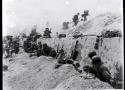
The Normandy Invasion consisted of 5,333 Allied ships and landing craft embarking nearly 175,000 men. The British and Canadians put 75,215 troops ashore, and the Americans 57,500, for a total of 132,715, of whom about 3,400 were killed or missing, in contrast to some estimates of ten thousand.
The foregoing figures exclude approximately 20,000 Allied airborne troopers. Extensive planning was required to move all these troops.
The U.S. VII Corps sustained 22,119 casualties from 6 June to 1 July, including 2,811 killed, 13,564 wounded, 5,665 missing, and seventy-nine captured.
American personnel in Britain included 1,931,885 land, 659,554 air, and 285,000 naval—a total of 2,876,439 officers and men. While in Britain they were housed in 1,108 bases and camps.

These are just individuals, they just use computers, and they just want to steal your data and make money. They're not mythical. They don't have superpowers. //
And thus, the Dark Web Roast was born. It's a regular blog complete with memes, mockery, and a Ricky Gervais' "they're just jokes" inspired disclaimer: "While these incidents are genuinely amusing, they represent real criminal activities causing significant harm. This content is for threat intelligence and educational purposes only."
The most recent edition features a ransomware gang that bulk-drafted and scheduled their extortion attempts like a content calendar: "Considering the sheer, numbing volume of their posts, it's a solid bet that their 'victims' are probably just fake sites they spun up themselves for content, because nothing screams legitimacy like inflating your stats with phantom compromises," the researchers wrote. //
But public mockery (as with LockBit), and infiltration like the FBI did with Hive's ransomware network, can fracture trust among cyberthieves. And this fragmentation can help defenders dismantle criminal operations and keep people and data safe. //
The video shows an administrator skimming the most valuable secrets and cryptocurrency keys for personal gain, while passing only less lucrative data to customers. Trellix learned about this incident during a briefing with Dutch police.
"They said to us, 'We found out that this admin is also stealing from his own customers,'" Fokker remembers. After the Europol press release came out, Trellix unleashed the snark in a Dark Web Roast.
"We basically said you're stupid if you work with him, because he's just getting rich, and we just make fun of him," Fokker said. "We don't know if the impact was measurable, but still, we had an opportunity to run with that story and make a complete fool out of this admin. So that's something." ®

The cost of high-performance GPUs, typically $8,000 or more, means they are frequently shared among dozens of users in cloud environments. Three new attacks demonstrate how a malicious user can gain full root control of a host machine by performing novel Rowhammer attacks on high-performance GPU cards made by Nvidia.
The attacks exploit memory hardware’s increasing susceptibility to bit flips, in which 0s stored in memory switch to 1s and vice versa. In 2014, researchers first demonstrated that repeated, rapid access—or “hammering”—of memory hardware known as DRAM creates electrical disturbances that flip bits. A year later, a different research team showed that by targeting specific DRAM rows storing sensitive data, an attacker could exploit the phenomenon to escalate an unprivileged user to root or evade security sandbox protections. Both attacks targeted DDR3 generations of DRAM. //
On Thursday, two research teams, working independently of each other, demonstrated attacks against two cards from Nvidia’s Ampere generation that take GPU rowhammering into new—and potentially much more consequential—territory: GDDR bitflips that give adversaries full control of CPU memory, resulting in full system compromise of the host machine. For the attack to work, IOMMU memory management must be disabled, as is the default in BIOS settings. //
A separate mitigation is to enable Error Correcting Codes (ECC) on the GPU, something Nvidia allows to be done using a command line. //
Kevin G
Ars Scholae Palatinae
21y
1,483
Thursday at 2:54 PM
#12
New
The ECC functionality on nVidia cards can take a pretty big performance hit as they do not include extra DRAM for ECC. Thus on a 32 GB workstation GPU, the amount of usable memory is reduced down to a 28 GB. Thus if you were using that extra memory and flipped on ECC, performance tanks as the remaining 4 GB gets paged out to host CPU memory. Beyond that, the ECC algorithm itself as the where the parity data for ECC resides is some what configurable. If itis on the same memory controller (which generally means the same memory chip as often there is only one chip per memory channel), then the calculation is done inside the memory controller relatively quickly. This of course comes at the higher integrity risk of losing data if a memory chip fails but this does protect against random bit flips. The other ECC algorithm is more akin to software RAID5 which rotates where the parity data resides across the chip and across the various internal memory controllers. Thus to compute ECC, one memory controller has to wait for another control to read that information and pass it down which is big performance penalty.
What this article doesn't cover is HBM which can both have extra stacks of memory in a channel as well as extra bits of parity on each die in the stack. Most ECC leverage the extra memory on the die plus rotating where the parity data resides. The end result is effectively the same as having an extra DRAM chip on a DIMM. (For those who don't know, an 8 GB ECC DIMM will contain ten 1 GB memory chips but the extra 2 GB is used exclusively for ECC and does not alter the usable capacity.)
HBM controllers are rather complex and the reason why capacities like 141 GB exist is due to a single die failure in one of the many stacks. Instead of disabling a wholes stack and reducing the memory capacity down to 120 GB, only the explicitly broken die is disabled.

Earlier this week, Bloomberg reported that “almost half of the US data centers planned for this year are expected to be delayed or canceled” because developers can’t import enough transformers, switchgear, and batteries to build out the power infrastructure that every data center needs.
These parts, which China has primarily manufactured for US manufacturers “for decades,” used to take between 24 and 30 months to get delivered prior to 2020. Now, they can require wait times up to five years, Bloomberg reported. That lag could matter, since China is reportedly about five years behind the US in the AI race.
Rather than rely on China, Trump would prefer that the US manufacture its own equipment. However, currently, “US manufacturing capacity for these devices cannot keep up with demand,” Bloomberg reported.

At Friday’s hearing of the Colorado Senate Business, Labor, and Technology committee, lawmakers voted unanimously to move Colorado state bill SB26-090—titled Exempt Critical Infrastructure from Right to Repair—out of committee and into the state senate and house for a vote.
The bill modifies Colorado’s Consumer Right to Repair Digital Electronic Equipment act, which was passed in 2024 and went into effect in January 2026. While the protections secured by that act are wide, the new SB26-090 bill aims to “exempt information technology equipment that is intended for use in critical infrastructure from Colorado’s consumer right to repair laws.” //
“I can point out at least five problems with the bill as drafted,” Gay Gordon-Byrne, the executive director at the Repair Association, said during the hearing. “The definition of critical infrastructure is completely inadequate. The definition that has been proposed in this bill is not even a definition.” //
Repair advocates also say that limiting this kind of repairability is the exact opposite of keeping devices secure. If something goes wrong with a critical piece of technology, the people using it need to fix it and not have to wait for manufacturer approval.
“There’s a general principle in cybersecurity that obscurity is not security,” iFixit CEO Kyle Wiens said in the hearing. “The money that’s behind the scenes, that’s what’s driving the bill.” //
DarthSlack Ars Legatus Legionis
12y
23,110
Subscriptor++
So critical infrastructure is, well, critical, right? Like you need it to keep working because if it stops you're in a world of hurt? So isn't that the stuff you really, really, really want to be able to repair when it breaks and not sitting on your ass waiting for some clownshoes to show up and charge you a small fortune to turn a screw or apply a patch?
Into the woods my Master went,
Clean forspent, forspent.
Into the woods my Master came,
Forspent with love and shame.
But the olives they were not blind to Him,
The little gray leaves were kind to Him:
The thorn-tree had a mind to Him
When into the woods He came.
Out of the woods my Master went,
And He was well content.
Out of the woods my Master came,
Content with death and shame.
When Death and Shame would woo Him last,
From under the trees they drew Him last:
'Twas on a tree they slew Him -- last
When out of the woods He came.

Excors Ars Centurion
12y
365
Subscriptor++
Resistance said:
I thought the current trajectory has the spacecraft and everything near it returning to Earth?
Yes - NASA says the translunar injection burn was also the deorbit burn. It's a very long deorbit trajectory, and there's six opportunities for correction burns to ensure a safe reentry angle and splashdown location, but they're already on their way to Earth. And they've skipped the first two correction burns because the trajectory is close enough to optimal.
If I'm interpreting this paper right, the requirement is to reach the entry interface with a max downrange error of 25.6km (figure 4), with up to 20 m/s delta-v of corrections, so this is just about fine-tuning. I presume that means anything that's still floating near the spacecraft, and not flying off at many m/s, is close enough to the optimal trajectory that it's still going to impact the Earth.
One can get away with “roughing it” when using the bathroom during trips to the Moon. Going to Mars, requiring months in space, is a different matter. If the toilet breaks on the way to Mars, there is a non-zero chance the crew is dying. So it’s great to try out these systems now, on Orion. This really is the purpose of this test flight, to make sure life support systems work for the crew, to identify problems, and to implement fixes in the future.
In the big picture, the Artemis II mission continues to go splendidly. The deputy manager of the Orion program for NASA, Debbie Korth, said Saturday that the spacecraft is performing “remarkably well,” and that the vehicle’s overall performance has “pleasantly surprised” the engineers working on the program.
Everything is going so well, in fact, that much of the focus has been on frozen urine. And considering all of the things that could go wrong with a dangerous deep space journey like this, a wee problem like this seems like a big win. //
Zapfenzieher Wise, Aged Ars Veteran
15y
137
Go, Artemis, go!
Oh, wait ... 😋
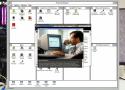
A retro computing connoisseur has installed and booted Microsoft Windows 3.1X on a Ryzen 9 9900X and RTX 5060 Ti PC system. That’s a 1992 OS working on a bare-metal 2024 Zen5 CPU and 2025 Blackwell GPU. The full story contains a few nuances, but basically, a system and OS separated by over 30 years of huge advances kind of play nicely together. //
This Asus motherboard’s ‘classic BIOS’ functionality doesn’t get in the way of users tinkering with old OSes like Windows 3.1X when the built-in Compatibility Support Module (CSM) is enabled. Moreover, we noticed Omores initially prepared the system using a Windows 95 boot floppy to create the bootable DOS FAT16 partition necessary for setup.
Open the Command Prompt as Administrator and run the Tasklist command; it will show you a list of all the running processes.
To view the processes, type Taskview and hit Enter.
To kill any particular process, use the Taskkill command. For example, to kill Chrome, run the command as:
Taskkill /IM chrome.exe /F
Where /F is used to kill the process forcefully. You can also kill any particular process by using its ID; the tasklist command displays the process ID’s as well. You can see the PID column in the screenshot. To kill any process using its ID, run the command as:
Taskkill /PID 2704 /F
Our thoughtfully curated collection of books for teens is designed to empower, inspire, and educate our world’s biggest asset: our children. These books encourage critical thinking, personal growth, and a deep understanding of how the world works — helping teens confidently navigate their futures.

I don’t remember where I first encountered Asch. It was around 2012, when I ordered The Nazarene on Kindle and read it. I’ve since re-read it 3 more times, I found it so moving. Similarly with The Apostle, and Mary. Who would have thought an early 20th century observant Jewish author would write a series of well-researched fictional books (historical novels), together referred to as the “founders of Christianity” series. Unknown to most, Asch was well versed in what’s called “The Oral Tradition” or the Aggadah of the Jews. He used this knowledge to great effect in weaving many hundreds of stories of peoples and communities in first century Palestine - into these three magnificent books.
Historical novels, as a genre of course, vary widely in their faithfulness to history and accuracy. It is my clear impression that these are highly accurate and consistent with historical events; they are certainly consistent with both the Old and the New Testaments. The particular skill of Asch is to conform Biblical and historical events into the everyday lives of individuals (both historical and fictional) as they actually lived at this critical period of history. Many of the eternal elements of human nature are portrayed - credibly and beautifully.
I have come away with some important understandings which ring so very true. In large part, that’s because Asch wrote with a dedication to accuracy. His understanding arose not only from study of Torah (“The Law”) but also from tradition whose history was woven into every aspect of his own life, from birth through childhood and adulthood in Jewish ghettos in Poland. He has given me understanding far beyond the bare bones version I had from reform Jewish/secular upbringing.
The most powerful understanding I have from these three monumental books derives from the ancient Hebrews’ expectation of the Messiah. There is much discussion throughout these books as to the nature of the Messiah: was He to be temporal or secular? Of this world or the Kingdom of Heaven? A revolutionary or savior? For the Jews alone or for the gentiles as well?
In ways I find myself unable to yet articulate, I have some sense of the earliest cleavages which took place between Observant Jews and “Messianists” in Jesus’ time. There were many divisions between Jews already in existence. The divisions were both worldly (whether and/or how to defeat Roman occupation) and spiritual (those “strong in the law” vs. “unclean” Jews who failed to adequately observe the many, many burdensome strictures of the law). Divisions between Pharisees and Saducees were a continuous undertone.
Among these disputes, and woven throughout all three books, is the question of whether the Messiah was only for the Jews or for the gentiles as well. This was an especially divisive question among the most religious Jews of all schools of thought. One view said that strictly following Torah (the Law) kept Jews pure and at a safe distance from the “abominations” of the gentiles - idol worship, child sacrifice, prostitution/sexual perversions, etc. Since the Jews, they said, submitted to the burdens imposed by the law, they were “entitled” to the Messiah. Among other viewpoints (beyond the scope here), was the notion that the Jews’ observance of the law, was merely God’s way of using the Jewish people as the soil in which the Messiah might be born. These ideas are fleshed out repeatedly in all the books, and I find, very thought provoking.
The Apostle, the story of Saul, then Paul of Tarsus, is especially revealing of all the subtleties which lead to the great historical division between Christians and Jews. I have to say the totality of having read these books - again, many of the events take place in the mundane, everyday lives of the characters set in that time and place - has profoundly revised my understanding of history.
This entry is intended to replace the default FreeBSD MTA agent with one that is easier to manage. Because of its simplicity we are going to use SSMTP as it takes very few configuration lines.
As a Linux server administrator, having a reliable email notification system in place is crucial. Whether you’re dealing with unattended upgrades, monitoring RAID arrays, or any other server-related alerts, getting quick notifications can make a world of difference. Here’s a quick guide to setting up sSMTP, a lightweight and straightforward alternative to postfix or other full-fledged mail transfer agents (MTAs).
Why sSMTP instead of postfix?
sSMTP is lightweight, easy to configure, and perfect for scenarios where you just need outgoing email functionality. It’s particularly well-suited for sending notifications from Linux servers without the overhead of a fully-fledged MTA like postfix.
Keybase is a safe, secure, and private app for everything you do online.
Chat with friends and family. Share photos, videos, and top secret documents. Collaborate to get work done, or don’t.
Whatever you do, your data is your data. Private stuff stays private. Accounts are secure against spoofing, phishing, and scamming. You can chat, share, and collaborate safely.
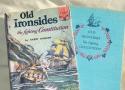
Landmark books make these curiosities possible by taking children along on the journey, whether signing the Constitution or laying rails on the transcontinental railroad. Along the way they meet people who changed or shaped our country.
Now considered vintage (because of their age), these books were the first among historical, non-fiction books written for the middle grade reader. They were originally published by Random House in the 1940s, 50s and 60s in two categories: American and World. There are 122 titles in the American series and 63 titles in the World series all penned by award-winning authors (for example C. S. Forester, Margaret Cousins, James Daugherty and Sterling North) individually contracted to write for the series.
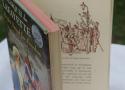
Teaching history chronologically? Wanting to learn more details about the life of an inventor or reformer? Why not add some living books, real books about real events and real people, to your study?
I compiled this chronological listing of Landmark books for two reasons. First, we have always intertwined the teaching of American and world history, reading a piece of historical fiction or biography and posting a representative picture on our time line which stretches the length of our hallway. Most recently, however, we joined a small living history co-op which teaches world history chronologically, focusing on a specific time period each year. We were curious if any of the books we had on our shelves would fit into our upcoming school year. We thought of our Landmark books.
Having a shelf full of Landmark books, I decided to arrange them chronologically (as best I could) so we can research and read from the time period which we will be studying. For those children in my family who prefer the “this looks interesting” method of learning, this chronological listing will be used as reference, should he or she try to place a specific event or person on our family timeline.