
Almost no one ever writes about the Parker Solar Probe anymore.
Sure, the spacecraft got some attention when it launched. It is, after all, the fastest moving object that humans have ever built. At its maximum speed, goosed by the gravitational pull of the Sun, the probe reaches a velocity of 430,000 miles per hour, or more than one-sixth of 1 percent the speed of light. That kind of speed would get you from New York City to Tokyo in less than a minute. //
However, the smallish probe—it masses less than a metric ton, and its scientific payload is only about 110 pounds (50 kg)—is about to make its star turn. Quite literally. On Christmas Eve, the Parker Solar Probe will make its closest approach yet to the Sun. It will come within just 3.8 million miles (6.1 million km) of the solar surface, flying into the solar atmosphere for the first time.
Yeah, it's going to get pretty hot. Scientists estimate that the probe's heat shield will endure temperatures in excess of 2,500° Fahrenheit (1,371° C) on Christmas Eve, which is pretty much the polar opposite of the North Pole. //
I spoke with the chief of science at NASA, Nicky Fox, to understand why the probe is being tortured so. Before moving to NASA headquarters, Fox was the project scientist for the Parker Solar Probe, and she explained that scientists really want to understand the origins of the solar wind.
This is the stream of charged particles that emanate from the Sun's outermost layer, the corona. Scientists have been wondering about this particular mystery for longer than half a century, Fox explained.
"Quite simply, we want to find the birthplace of the solar wind," she said.
Way back in the 1950s, before we had satellites or spacecraft to measure the Sun's properties, Parker predicted the existence of this solar wind. The scientific community was pretty skeptical about this idea—many ridiculed Parker, in fact—until the Mariner 2 mission started measuring the solar wind in 1962.
As the scientific community began to embrace Parker's theory, they wanted to know more about the solar wind, which is such a fundamental constituent of the entire Solar System. Although the solar wind is invisible to the naked eye, when you see an aurora on Earth, that's the solar wind interacting with Earth's magnetosphere in a particularly violent way.
Only it is expensive to build a spacecraft that can get to the Sun. And really difficult, too.
Now, you might naively think that it's the easiest thing in the world to send a spacecraft to the Sun. After all, it's this big and massive object in the sky, and it's got a huge gravitational field. Things should want to go there because of this attraction, and you ought to be able to toss any old thing into the sky, and it will go toward the Sun. The problem is that you don't actually want your spacecraft to fly into the Sun or be going so fast that it passes the Sun and keeps moving. So you've got to have a pretty powerful rocket to get your spacecraft in just the right orbit. //
But you can't get around the fact that to observe the origin of the solar wind, you've got to get inside the corona. Fox explained that it's like trying to understand a forest by looking in from the outside. One actually needs to go into the forest and find a clearing. However, we can't really stay inside the forest very long—because it's on fire.
So, the Parker Solar Probe had to be robust enough to get near the Sun and then back into the coldness of space. Therein lies another challenge. The spacecraft is going from this incredibly hot environment into a cold one and then back again multiple times.
"If you think about just heating and cooling any kind of material, they either go brittle and crumble, or they may go like elastic with a continual change of property," Fox said. "Obviously, with a spacecraft like this, you can't have it making a major property change. You also need something that's lightweight, and you need something that's durable."
The science instruments had to be hardened as well. As the probe flies into the Sun there's an instrument known as a Faraday cup that hangs out to measure ion and electron fluxes from the solar wind. Unique technologies were needed. The cup itself is made from sheets of Titanium-Zirconium-Molybdenum, with a melting point of about 4,260° Fahrenheit (2,349° C). Another challenge came from the electronic wiring, as normal cables would melt. So, a team at the Smithsonian Astrophysical Observatory grew sapphire crystal tubes in which to suspend the wiring, and made the wires from niobium.


The Starship launch system is about to reach a tipping point, Gwynne Shotwell said, as it moves from an experimental rocket toward operational missions.
"We just passed 400 launches on Falcon, and I would not be surprised if we fly 400 Starship launches in the next four years," Shotwell said at the Baron Investment Conference in New York City. "We want to fly it a lot."
That lofty goal seems aspirational, not just because of the hardware challenges but also due to the ground systems (SpaceX currently has just one operational launch tower) as well as the difficulty of supplying that much liquid oxygen and methane for such a high flight rate. However, it's worth noting that SpaceX will launch Starship four times this year, twice the number of Falcon Heavy missions. An acceleration of Starship is highly likely. //
"Starship obsoletes Falcon 9 and the Dragon capsule," she said. "Now, we are not shutting down Dragon, and we are not shutting down Falcon. We'll be flying that for six to eight more years, but ultimately, people are going to want to fly on Starship. It's bigger. It's more comfortable. It will be less expensive. And we will have flown it so many more times.". //
As Starlink has come online, it has significantly increased the valuation of the privately held company. A decade ago, SpaceX was valued at about $12 billion, and this grew to $36 billion in 2020. Most recently, the company was valued at about $255 billion. //
DDopson Ars Tribunus Militum
22y
2,397
Subscriptor++
daddyboomalati said:
Can someone unpack this for me? I cannot understand how a massive rocket is a better choice than the Falcon 9 for medium-weight payloads. My only thought is that it delivers multiple satellites at once. I do it all the time in Kerbal Space Program, but is this a thing in real life, or an eventual likelihood?
It's simpler than that. Starship costs less to launch than F9.
Each F9 launch expends a second stage that costs roughly $20M to fabricate. They do recover the $40M booster and the $6M fairings, but they have to fabricate a new second stage for every launch. And that second stage consumes one Merlin engine, but that's only a relatively small fraction of the stage's cost, on account of SpaceX's spectacular efficiency at manufacturing rocket engines for <$1M, literally hundreds of times cheaper than, eg, the RS-25 engines NASA buys.
The cost to fuel a Starship is on the order of a few million, possibly in the $2M or $3M ballpark (this was estimated in a prior thread), probably more when including their current fueling logistics costs, possibly a bit less at scale when they are manufacturing their own LOX and can amortize various bits of fueling infra over a consistent level of demand.
Ground logistics add additional costs (control center staff, ground crew, amortized share of launch complex, etc), but these are hard to estimate. Dividing the entire Boca Chica facility cost over ~5 test launches would produce an unfavorable number, but that's silly. The ground facilities should amortize fairly well as the launch cadence increases. And this stuff is probably mostly comparable between the two platforms.
Sticking with relatively conservative numbers, I expect their all-up internal marginal cost per Starship launch to be well under $10M per flight, much less than the cost of fabricating a new F9 second stage.
Launching Starship is thus cheaper than launching F9.
Now that's an internal cost that we may never learn with precision, and SpaceX will make a business decision about what price to charge to their customers. They may create very attractive rates for rideshares. They will likely maintain high prices for "white glove" launch contracts that include significant payload preparation and other services, especially DoD and NASA, which already typically pay more per F9 launch contract than the sticker price on the website for "just a launch". //
rocket bodies, satellites, space debris in earth orbit

Q: What is the highest apogee of a satellite in Earth orbit they need to avoid? Ignore any satellites in Solar or lunar orbit.
A: There are over a hundred satellites in Molniya orbit, a few tens in Tundra orbit and a handful in really high earth orbits. The first two of those go above geostationary orbit; there are examples of the last with perigee of at least 375,000km. //
James Webb Space Telescope, at the Earth-Sun L2 point, is roundly a million miles from Earth, but still gravitationally bound to the Earth-Moon system.
Other than that, there are very few if any permanent satellites beyond the "graveyard orbits" used to park expired geostationary satellites. These are typically only a few hundred kilometers higher than geosynchronous, however, so roundly if they're well beyond the 24 hour orbital period, they'd be well clear of anything we put up intentionally and left there. //
Then there is stuff, mostly debris, that is more critical, because by nature those pieces are very fast, the orbit is not stable, so it changes a little every round and the kinetic energy would be able to penetrate any hull that is not specifically designed to withstand such impacts. For example, this debris of an Iridium satellite - at the time of writing at altitude ~366,000km and counting, spiralling outwards at 1km/s (the map does not mention a size or weight though. But it is big enough to be trackable obviously).
After nearly every flight, the upper stage of this rocket breaks apart in orbit. //
A new debris field of nearly 1,000 objects would be a significant addition to the approximately 46,000 objects Space Command tracks in Earth orbit. According to statistics compiled by Jonathan McDowell, an astrophysicist who monitors global launch and spaceflight activity, this would rank in the top five of all debris-generation events since the dawn of the Space Age.
The Thousand Sails constellation aims to provide global internet access. It is one of two planned Chinese systems to challenge U.S. projects including Starlink. Thousand Sails is also intended to secure finite orbital slots and frequencies, and provide national internet coverage and data security. //
The Long March 6A rocket used for Tuesday’s launch combines liquid propellant core stages with solid rocket boosters. The launcher can carry 4,500 kg to a 700-km sun-synchronous orbit. The rocket’s upper stage appears to have suffered debris issues in orbit. //
Like Starlink, China's Qianfan satellites have an easy-to-pack flat-panel design.

DDopson Ars Tribunus Militum
22y
2,038
Subscriptor
ROOT1803 said:
Serious question: With this much material floating around in orbit, would re-purposing it be something that is feasible? Or is it just irredeemably junk for the most part?
It's infeasible to recover and utilize.
This came up in a previous thread, where I said:
...
On orbit recycling aspirationally saves some launch mass, the cheaper half of the equation, but it forces you to engineer a vast array of complicated system elements for the recovery process and then use in-space manufacturing and assembly processes that will certainly never be cheaper than their terrestrial equivalents where we can walk over to the machine in our shirt-sleeves and clear out a broken milling bit, call the parts warehouse down the road, and have a replacement bit installed same afternoon. The economic network effects are very very difficult to overcome, far harder than any one of the individual engineering problems. //
HuntingManatees Wise, Aged Ars Veteran
11m
100
andygates said:
The problem is that the stuff isn't particularly special, it's just big empty beer cans. The cost is in getting it up there. And it'd be more straightforward (and less expensive) to bring it down than to tugboat the stuff to a space junkyard.Actual orbital mechanics are left as an exercise for the Kerbals.
I actually spent an unhealthy amount of time in KSP trying to retrieve space junk using a series of giant folding claw mechanisms that would -- in theory -- latch onto dead satellites and then burn for reentry.
This resulted in two or three successful de-orbiting missions, but I gave up after I caught myself tasking my Kerbals with sending up fresh claw ships to retrieve previously-launched claw ships that had run out of fuel.

Our beloved NTP protocol appears to work in a deep space environment (as tested in a simulation with a 4 hour RTT):
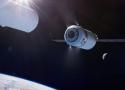
The space agency did consider alternatives to splashing the station. //
NASA has awarded an $843 million contract to SpaceX to develop a "US Deorbit Vehicle." This spacecraft will dock to the International Space Station in 2029 and then ensure the large facility makes a controlled reentry through Earth's atmosphere before splashing into the ocean in 2030.. //
"This decision also supports NASA’s plans for future commercial destinations and allows for the continued use of space near Earth."
NASA has a couple of reasons for bringing the space station's life to a close in 2030. Foremost among these is that the station is aging. Parts of it are now a quarter of a century old. There are cracks on the Russian segment of the space station that are spreading. Although the station could likely be maintained beyond 2030, it would require increasing amounts of crew time to keep flying the station safely.
Additionally, NASA is seeking to foster a commercial economy in low-Earth orbit. To that end, it is working with several private companies to develop commercial space stations that would be able to house NASA astronauts, as well as those from other countries and private citizens, by or before 2030. By setting an end date for the station's lifetime and sticking with it, NASA can help those private companies raise money from investors. //
The station, the largest object humans have ever constructed in space, is too large to allow it to make an uncontrolled return to Earth. It has a mass of 450 metric tons and is about the size of an American football field. The threat to human life and property is too great. Hence the need for a deorbit vehicle. //
volcano.authors Smack-Fu Master, in training
6y
73
flerchin said:
The idea that SpaceX wouldn't even bid unless it was fixed price, and then came in well under the estimates for cost-plus is wild.
It's almost as though the cost-plus era has some political baggage that challengers like to point out.
RTWAP Smack-Fu Master, in training
1y
12
afidel said:
I assume SpaceX prefers the firm fixed price contract because it reduces the army of paper pushers needed and the amount of time that engineers and technicians need to waste documenting their work on the contract? I guess if you can actually execute correctly it's more profitable to just submit a bill and get paid than to do the old cost plus change order malarkey.
My speculation is that it enforces a certain discipline in the requirements. SpaceX isn't going to just happily go down every rabbit hole of dithering on requirements and possible changes because unless it's a costed and signed change order they'd be losing money on it. And anyone at NASA looking to change things knows it requires a highly visible contract change ($$$), not just a larger bill from the contractor. //
Tridus Ars Tribunus Militum
17y
2,189
Subscriptor
afidel said:
I assume SpaceX prefers the firm fixed price contract because it reduces the army of paper pushers needed and the amount of time ....
Yeah, exactly. They're not paying people handle the paperwork end of cost-plus.
Also if they think they can do it for significantly under that, the potential profit margin is higher since they'll get paid that no matter what it actually costs them to do it. It takes a high degree of confidence to want to go this way, but if any space company has the experience with this type of contract to make it work, it's SpaceX.
It REALLY showcases the differing mindset and abilities between them and a company that won't bid on fixed price contracts like Boeing, though.

“Safety tends to not be on the front burner until it really needs to be on the front burner.” //
Since the beginning of the year, landowners have discovered several pieces of space junk traced to missions supporting the International Space Station. On all of these occasions, engineers expected none of the disposable hardware would survive the scorching heat of reentry and make it to Earth's surface.
These incidents highlight an urgency for more research into what happens when a spacecraft makes an uncontrolled reentry into the atmosphere, according to engineers from the Aerospace Corporation, a federally funded research center based in El Segundo, California. More stuff is getting launched into space than ever before, and the trend will continue as companies deploy more satellite constellations and field heavier rockets.

"They're the largest satellite operator in the world." //
We discussed Starlink's rapid road to profitability—it took just five years from the first launch of operational satellites—and the future of the technology.
One of the keys to Starlink's success is its vertical integration as a core business at SpaceX, which operates the world's only reusable rocket, the Falcon 9. This has allowed the company not just to launch a constellation of 6,000 satellites—but to do so at relatively low cost.
"At one point, SpaceX had publicly said that it was $28 million," Henry said of the company's target for a Falcon 9 launch cost. "We believe today that they are below $20 million per launch and actually lower than that... I would put it in the mid teens for how much it costs them internally. And that's going down as they increase the reuse of the vehicle. Recently, they've launched their 20th, maybe 21st, use of a first-stage rocket. And as they can amortize the cost of the booster over a greater number of missions, that only helps them with their business case." //
SpaceX was founded as a launch company in 2002, first with the Falcon 1 and then the Falcon 9 and Falcon Heavy rockets. But it is clear today that a significant portion of the company's revenue, if not a majority, comes from its Starlink satellite internet business. So is it still primarily a rocket company?
"I think today they're a satellite communications company," Henry said of SpaceX. "I think it's interesting that Stéphane Israël from Arianespace—in the early days, like 2015, 2016 when Starlink was just announced—would try to court customers and say, 'Do you want to fund your competitor?' And no one really took him seriously. Now people are taking him very seriously. [SpaceX is] the largest satellite operator in the world. They have literally more than doubled the number of consumer subscribers for satellite internet in the world.. This is a humongous, nearly unrivaled impact that they've had on the industry."
Kerbal Space Program is a computer game in which the player can build spacecraft, aircraft, and spaceplanes to their own design and use them on missions, both robotic and with crews, to explore the planetary system of the star Kerbol. The space program is conducted on behalf of the Kerbals, inhabitants of planet Kerbin, and the player manages the space program, advancing in technological capability, ambitiousness of missions, and size and skill of the kerbonaut corps. //
One thing which is certain is that after you've spent some time with Kerbal Space Program you will develop an intuition about orbital mechanics which few people, even authors of “hard” science fiction, have.

Russia vetoed a United Nations Security Council resolution Wednesday that would have reaffirmed a nearly 50-year-old ban on placing weapons of mass destruction into orbit, two months after reports Russia has plans to do just that.

The Flight Data Subsystem was an innovation in computing when it was developed five decades ago. It was the first computer on a spacecraft to use volatile memory. Most of NASA's missions operate with redundancy, so each Voyager spacecraft launched with two FDS computers. But the backup FDS on Voyager 1 failed in 1982.
Due to the Voyagers' age, engineers had to reference paper documents, memos, and blueprints to help understand the spacecraft's design details. After months of brainstorming and planning, teams at JPL uplinked a command in early March to prompt the spacecraft to send back a readout of the FDS memory.
The command worked, and Voyager.1 responded with a signal different from the code the spacecraft had been transmitting since November. After several weeks of meticulous examination of the new code, engineers pinpointed the locations of the bad memory.
"The team suspects that a single chip responsible for storing part of the affected portion of the FDS memory isn’t working," NASA said in an update posted Thursday. "Engineers can’t determine with certainty what caused the issue. Two possibilities are that the chip could have been hit by an energetic particle from space or that it simply may have worn out after 46 years." //
"Although it may take weeks or months, engineers are optimistic they can find a way for the FDS to operate normally without the unusable memory hardware, which would enable Voyager 1 to begin returning science and engineering data again," NASA said.

Starlab is a joint venture between the US-based Voyager Space and the European-based multinational aerospace corporation Airbus. The venture is building a large station with a habitable volume equivalent to half the pressurized volume of the International Space Station and will launch the new station no earlier than 2028.
"SpaceX's history of success and reliability led our team to select Starship to orbit Starlab," Dylan Taylor, chairman and CEO of Voyager Space, said in a statement. "SpaceX is the unmatched leader for high-cadence launches and we are proud Starlab will be launched to orbit in a single flight by Starship." //
Starlab will have a diameter of about 26 feet (8 meters). It is perhaps not a coincidence that Starship's payload bay can accommodate vehicles up to 26 feet across in its capacious fairing. However, in an interview, Marshall Smith, the chief technology officer of Voyager Space, said the company looked at a couple of launch options.
"We looked at multiple launches to get Starlab into orbit, and eventually gravitated toward single launch options," he said. "It saves a lot of the cost of development. It saves a lot of the cost of integration. We can get it all built and checked out on the ground, and tested and launch it with payloads and other systems. One of the many lessons we learned from the International Space Station is that building and integrating in space is very expensive." //
phat_tony Ars Centurion
17y
263
Subscriptor
This is exactly what most space companies should be doing now - assuming Starship is going to work, and start planning based on the sea change that's going to create. There are still so many companies trying to duke it out in small launch where clearly the overwhelming majority of them have no chance of making it. Pivot to take advantage of the fact that everything about space launch is about to change. Figure out what we could do with a 120 ton satellite the size of a space station that we can't do now and build that satellite. Figure out what we could do with swarms of micro satellites that isn't cost effective now if they were 1/10 the cost to get to orbit. Space tugs. Commercial refueling depots. Tourism. Space stations. Solar-system wide internet as a service... NASA has a huge bandwidth problem on the Deep Space Network... even if they aren't asking for proposals, it may be a case of "if you build it, they will come."
I don't know, but when there's a two order of magnitude change pending on the most fundamental constraint of a sizable industry, that's when new players make it and old players can't adapt and break. It's like the advent of microchips, or the internet. Trying to compete with the company that's inventing the two order of magnitude improvement is the last business bet you want to make. Capitalizing on the implications is exactly what you want to do. //
pavon Ars Tribunus Militum
16y
2,100
Subscriptor
Very excited about this, finally picking up where Skylab left off. It had 350m3 pressurized volume in a single Saturn V launch, compared to the 1000m3 of ISS with 15 pressurized modules taking over a decade to assemble.
If you ever get a chance to visit Space Center Houston, you can walk through mockups of both an ISS module and Skylab, and the difference was viscerally striking to me. One was a series of hallways, like the corridors of datacenter, while the other was this spacious open area. The ISS design might be more efficient for the experiments they actually do on the ISS, and for moving about in freefall, but I can't help but imagine there were lost opportunities due to being restricted to such narrow tubes.


The brainchild of one ambitious American astrophysicist during the course of U.S. nuclear tests yielded the first manmade object in Earth’s orbit. The four foot round steel cap was launched into orbit in late August 1957 by the United States, beating the USSR’s Sputnik 1 to orbit by one month and nine days, scoring a major victory in the space race for the Americans. This feat has gone largely unrecognized by most historians. //
Operators
United States – Originally launched from the Nevada Test Site in 1957, the Pascal B Cap remains in service in Earth’s orbit despite its unknown location. //
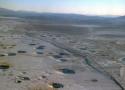
A manhole cover launched into space with a nuclear test is the fastest human-made object. A scientist on Operation Plumbbob told us the unbelievable story. //
Robert Brownlee was on the Operation Plumbbob team that launched an object in space before Sputnik.
They put a manhole cover above a nuke underground, and the explosion shot the iron cap into space.
The fastest human-made object was part of the US government's nuclear testing in the 1950s.
But the very first underground nuclear tests were a bit of an experiment — nobody knew exactly what might happen.
The first one, nicknamed "Uncle," exploded beneath the Nevada Test Site on November 29, 1951.
Uncle was a code for "underground."
It was only buried 17 feet, but the top of the bomb's mushroom cloud exploded 11,500 feet into the sky. //
The underground nuclear tests we're interested in were nicknamed "Pascal," during Operation Plumbbob in 1957. //
Brownlee said he designed the Pascal-A test as the first that aimed to contain nuclear fallout. The bomb was placed at the bottom of a hollow column — 3 feet wide and 485 feet deep — with a 4-inch-thick iron cap on top.
The test was conducted on the night of July 26, 1957, so the explosion coming out of the column looked like a Roman candle. //
Brownlee wanted to measure how fast the iron cap flew off the column, so he designed a second experiment, Pascal-B, and got an incredible calculation. //
Brownlee replicated the first experiment, but the column in Pascal-B was deeper at 500 feet. They also recorded the experiment with a camera that shot one frame per millisecond.
On August 27, 1957, the "manhole cover" cap flew off the column with the force of the nuclear explosion. The iron cover was only partially visible in one frame, Brownlee said.
When he used this information to find out how fast the cap was going, Brownlee calculated it was traveling at five times the escape velocity of the Earth — or about 125,000 miles per hour. //
Pascal-B's estimated iron cover speed dwarfs the 36,373 mph that the New Horizons spacecraft — which many have called the fastest object launched by humankind — eventually reached while traveling toward Pluto. //
"After I was in the business and did my own missile launches," he told Insider in 2016, "I realized that that piece of iron didn't have time to burn all the way up [in the atmosphere]."
Mere months after the Pascal tests, October 4, 1957, the Soviet Union launched Sputnik, the world's first artificial satellite. While the USSR was the first to launch a satellite, Brownlee was probably the first to launch an object into space. ///
Now exceeded by the Parker Solar Probe...
At its closest approach [to the sun] in 2024, its speed relative to the Sun was 690,000 km/h (430,000 mph) or 191 km/s (118.7 mi/s), which is 0.064% the speed of light.[7][9] It is the fastest object ever built on Earth.[

An algorithm can spot beaver ponds from satellite imagery. //
Corwin’s beaver obsession met a receptive corporate culture. Google’s employees are famously encouraged to devote time to passion projects, the policy that produced Gmail; Corwin decided his passion was beavers. But how best to assist the buck-toothed architects? Corwin knew that beaver infrastructure—their sinuous dams, sprawling ponds, and spidery canals—is often so epic it can be seen from space. In 2010, a Canadian researcher discovered the world’s longest beaver dam, a stick-and-mud bulwark that stretches more than a half-mile across an Alberta park, by perusing Google Earth. Corwin and Ackerstein began to wonder whether they could contribute to beaver research by training a machine-learning algorithm to automatically detect beaver dams and ponds on satellite imagery—not one by one, but thousands at a time, across the surface of an entire state. //
According to Fairfax, EEAGER’s use cases are many. The model could be used to estimate beaver numbers, monitor population trends, and calculate beaver-provided ecosystem services like water storage and fire prevention. It could help states figure out where to reintroduce beavers, where to target stream and wetland restoration, and where to create conservation areas. It could allow researchers to track beavers’ spread in the Arctic as the rodents move north with climate change; or their movements in South America, where beavers were introduced in the 1940s and have since proliferated. “We literally cannot handle all the requests we’re getting,” says Fairfax, who serves as EEAGER’s scientific adviser.