
Media political commentator Jonathan Turley broached the subject on Wednesday, opining that a third term in office for Trump is "unlikely":
The late Justice Antonin Scalia famously said that Congress does not “hide elephants in mouseholes.” His point was that courts are skeptical of using minor provisions in a statute to achieve sweeping new legal changes.
The challenge of stuffing an elephant into a mousehole came to mind this week after President Donald Trump said that he is “not joking” about considering a third term and that experts told him it is possible under the Constitution.
One often has to take such moments with a heavy dose of skepticism from a president who clearly relished handing snake-in-a-can soundbites to the media just to watch the resulting screams. If so, he was not disappointed. The media went into renewed vapors as commentators pronounced, yet again, the death of democracy.
However, given the president’s statement, it is important to be clear about the basis for this theory, which has long been something of a parlor game for law professors on how a president might be able to circumvent the two-term limitation imposed by the 22nd Amendment. //
Translation: While some on our side relish Trump's role as a master troller, this is one area where trolling, if he is indeed doing so, could potentially hurt both the president and congressional Republicans who defend such talk.
It behooves the wise among us—including Trump, I hope—to understand that while he relishes playing to loyalists, his decisive president election win was made possible by untold numbers of Democrat crossover votes, including record numbers of Black and Hispanic voters, who may not have been huge fans, but voted as much against Harris-Walz as for Trump-Vance. //
etba_ss
an hour ago
There is only one way, legally. A new Constitutional Amendment. If they tried the back door, SCOTUS would rule 9-0 against it, as they should.
A ticket of Vamce-Trump would lose, as the focus would be on subverting the Constitution. The votes you'd lose on that issue would make it unwinnable. Why would Vance be interested in that?
Trump isn't serious. He's trolling. I think it's a foolish troll that offers no reward but risks him being viewed as the tyrant they claim he is by people who aren't crazy about him in the first place.
Some jokes aren't smart to make.


The Heritage Guide to the Constitution is intended to provide a brief and accurate explanation of each clause of the Constitution as envisioned by the Framers and as applied in contemporary law. Its particular aim is to provide lawmakers with a means to defend their role and to fulfill their responsibilities in our constitutional order.
The point of all the injunctions and restraining orders is to preserve the supreme rule of unelected and unaccountable bureaucrats. //
More nationwide injunctions and restraining orders have been issued against Trump in the past month that were issued against the Biden administration in four years. On Wednesday alone, four different federal judges ordered Elon Musk to reinstate USAID workers (something he and DOGE have no authority to do), ordered President Trump to disclose sensitive operational details about the deportation flights of alleged terrorists, ordered the Department of Defense to admit individuals suffering from gender dysphoria to the military, and ordered the Department of Education to issue $600 million in DEI grants to schools.
On one level, what all this amounts to is an attempted takeover of the Executive Branch by the Judicial Branch — a judicial coup d’état. These judges are usurping President Trump’s valid exercise of his Executive Branch powers through sheer judicial fiat — a raw assertion of power by one branch of the federal government against another.

Kennedy then asked the assistant AG nominee to "explain how this works."
You have a plaintiff and you have a defendant. And the plaintiff files a lawsuit and goes in front of a federal judge. a federal judge has a certain jurisdiction ... and subject matter over the parties; the plaintiff and the defendant. They're the only two people in court. How can a federal judge issue an order that affects everybody else — other than those in front of him or her? How's that possible?
Shumate was on it:
It shouldn't be possible, Senator. But district courts do it all the time. I think on the theory that the courts need to enjoin a federal policy from going into effect, and they also will enjoin it nationwide so all non-parties are protected by that injunction. //
John Kennedy @SenJohnKennedy
·
The universal injunction has become a weapon against the Trump admin.
It’s long past time to put an end to this lawless practice.
12:50 PM · Mar 26, 2025. //
anon-l1t0
15 minutes ago
I remember when Obama wanted to make changes in the law but could not get Congress to agree. He found a willing plaintiff to sue the government, and a friendly judge, and then entered into a Consent Decree to accomplish his desired outcome. Then if someone sane objected, Obama simply pointed to the court order and said that his hands were tied by the court. Lawfare working for rather than against the President and his agenda. That is how it is done.

The Supreme Court has become a paper tiger, failing to hold defiant lower courts accountable when they make rogue decisions. //
Lower court federal judges across the country are standing athwart the American people’s will to allow the Trump administration to cut government programs and deport violent gang members from the country. But these unelected judges have a long-running pattern of clinging to their status quo, even in defiance of the Supreme Court, because the high court refuses to rein them in.
The Supreme Court has the responsibility to make sure its subsidiary courts follow its directives — often by taking more cases, and making their precedent unambiguous. Arrogant, active, and open defiance on some of the most important issues, however, has been the norm from these lower courts for years, and a majority on the high court has persistently refused to stop them. //
The Court’s majority again refused to take a case wrongly decided by lower courts, when the Biden administration attempted to fine a Medicare-funded work-around for Dobbs, forcing hospitals in Idaho, which had outlawed almost all abortions, to perform them anyway.
“Shortly before Idaho’s law took effect, President Biden instructed members of his administration to find ways to limit Dobbs’s reach,” Alito wrote in a dissent for Moyle v. United States. “Apparently, the Court has simply lost the will to decide the easy but emotional and highly politicized question that the case presents. That is regrettable.”
It’s not just abortion, it’s Second Amendment rights as well. Lower courts repeatedly waged war against DC v. Heller, the Supreme Court precedent that struck down a law that banned handgun ownership in Washington, D.C., and clarified that the Second Amendment does not just protect a right to self defense for militia purposes.
In a 2018 case that would have allowed the Court to enforce its own precedent, the Court ran away, and had done so for years, Thomas wrote in yet another dissent slamming lower courts for defying the high court.
“Our continued refusal to hear Second Amendment cases only enables this kind of defiance. We have not heard argument in a Second Amendment case for nearly eight years … If this case involved one of the Court’s more favored rights, I sincerely doubt we would have denied certiorari,” Thomas said before listing other rights that the Court would have taken cases on. “The Court would take these cases because abortion, speech, and the Fourth Amendment are three of its favored rights. The right to keep and bear arms is apparently this Court’s constitutional orphan. And the lower courts seem to have gotten the message.” //
The Court used to enforce its precedent, like when lower courts attempted to defy Brown v. Board of Education and its mandate to racially integrate schools. It used to do it because it has always been part of the job — precedential decisions are not ‘one-and-done’ adventures. They will need clarification, parameters set, or clarity for lower courts to tell them the high court meant what it said.
At least one federal judge, James C. Ho of the Fifth Circuit Court of Appeals, has publicly diagnosed at least part of the problem with the court refusing to take cases: A debilitating lack of fortitude among a vast array of federal judges.
In a 2023 speech at the Heritage Foundation, Ho said many federal judges are afraid to make tough decisions, or take tough cases, because they are afraid of public backlash for making the right decision:
If you plan to be faithful to the Constitution in every case, no matter how unpopular that may be, gold stars are not in the cards for you. But that’s the job. Judges don’t swear an oath to uphold the Constitution part of the time: We swear an oath to uphold the Constitution all of the time.
If you’re an originalist only when elites won’t be upset with you—if you’re an originalist only when it’s easy — that’s not principled judging. That’s fair-weather originalism. We’re not binding ourselves to the text if we only follow it when people like the result.
“When you look at the résumé of a typical federal judge, you often see a bunch of fancy credentials,” Ho added to the argument in a 2024 piece for the National Review. “People who have devoted their whole lives to collecting gold stars tend to be motivated by one overarching objective: getting more gold stars. If that’s what drives you, then the threat of public scolding can be a powerful motivator.”
The “booing of the crowd,” Ho said, “is not going away anytime soon,” and if judges cannot handle it, they should probably find other work.
At what point does judicial review turn into judicial rule?
This problem isn’t just about these issues or executive power — it’s about the broader politicization of the judiciary. When a judge blocks a policy because he personally opposes it, rather than because it violates the Constitution, he is no longer functioning as a neutral arbiter. //
Even the Supreme Court has recognized the dangers of this judicial overreach. In Trump v. Hawaii (2018), Chief Justice John Roberts warned lower courts that they do not have the authority to micromanage national security decisions made by the executive. Yet lower courts continue to ignore that warning, issuing nationwide injunctions based on political discomfort rather than constitutional law.
The media will cast Trump’s decision to ignore Boasberg’s ruling as reckless, lawless, or authoritarian. But what’s truly reckless is allowing the judiciary to continue seizing power it does not have. There is precedent for presidents pushing back against judicial overreach. Abraham Lincoln ignored a Supreme Court ruling in 1861 when Chief Justice Roger Taney attempted to block his suspension of habeas corpus during the Civil War. Andrew Jackson famously refused to comply with a Supreme Court decision in Worcester v. Georgia, arguing that the executive branch — not the judiciary — was responsible for enforcement. Both of those decisions were controversial. Both were necessary.
The ACLU is seeking to stop the executive branch from removing five plaintiffs. D.C. District Judge James Boasberg hastily took command and control over the latest iteration of lawfare, emergently agreeing to consider the case and issuing orders camouflaged in legitimacy. Judge Boasberg’s orders, actions, and reactions are laden with plain error.
From the onset, Boasberg failed to recognize his court lacks the jurisdiction to hear this case. Why? The ACLU filed this case in the District of Columbia. The five Venezuelan plaintiffs represented by the ACLU are not detained in D.C., but in New York and Texas. The Supreme Court ruled in Rumsfeld v. Padilla that no court has jurisdiction over a habeas petition unless those filing the petition are detained in the district in which it was filed.
Boasberg was also quick to accept the plaintiffs’ premise that the Alien Enemies Act (AEA) is a power properly exercised only during a time of war. This is patently false. Any plain reading of the law makes it clear that the AEA is an appropriate power to invoke not only during a time of war, but when the president determines there has been an invasion or predatory incursion. Even more persuasive is the Supreme Court’s ruling in Ludecke v. Watkins that the AEA extends beyond wartime. And without a statutory definition of “invasion” or “predatory incursion,” it is the judgment of the president alone to determine if such has occurred. This national security determination is a non-justiciable political question and the Supreme Court has repeatedly informed the intellectually curious that political questions are not reviewable by a court. //
Boasberg has gone too far and too fast to retreat, so this skirmish will continue until the Supreme Court loads up the Article II canons on his position (see what I did there). Through his orders and admonitions, Boasberg has tactlessly given imprimatur to the “legal strategy” of disrupting the Trump presidency at all costs. Boasberg has called DOJ’s response to brash authority as “woefully insufficient,” but, candidly, his stewardship of this case thus far has been nothing more than woeful.
President Trump’s adversaries were determined to take his freedom, his fortune, and even his life. Those efforts thankfully failed. But his enemies remain undeterred.
This is just lawfare by other means.

The solution is clear: either the Supreme Court needs to step in and reassert its unique authority to issue nationwide rulings, or Congress must pass legislation limiting district courts' ability to issue sweeping national injunctions. The current system, where any district judge can effectively veto presidential actions, is unsustainable and undermines our constitutional order.
Trump's administration continues to fight these battles in court, often successfully on appeal. But the time has come to address this abuse of judicial power head-on.

Random US Citizen
3 hours ago edited
He’s not “going to lose” the narrative, he’s already lost it. He lost it back when he manipulated the outcome of the Obamacare case by ignoring the plain wording of the statute and decided the the word “penalty”—those seven literal letters—meant “tax.” Everything he’s done after that has just proved that he is a politician, not a judge. The damage he has done to the reputation of the judiciary through his blatant political maneuvering is incalculable. It’s rather ironic that insiders claim he is doing this to protect the court from a reputation for being political. But the Supreme Court has gone from one of the most trusted institutions in the country to one that is at a historic low of trust.
John Roberts has no one to blame for this but himself. His constant refusal to decide constitutional matters before the court in favor of remanding them over minor issues is part of the problem. His willingness to join the conservatives on the bench in important decisions merely so he can write tepid opinions is another. His need to make choices based on political calculations is a third. But most damaging is his unwillingness to admit the reality that lower court judges are making decisions based on their personal politics and take action. His claim that “There are no ‘Obama judges’” in the face of this reality was proof that he’s not serious about his job as a justice.
Either that, or someone is holding his kids hostage.
jester6 Random US Citizen
8 minutes ago
As I wrote in another thread, SCOTUS's power to declare actions of the Executive and Legislative branches unconstitutional is not found in the text of the Constitution. That power comes from a 1803 court decision called Marbury vs Madison. SCOTUS granted themselves that power, and the other branches aqueised.
However, for most of our history, it was only SCOTUS who challenged the Executive or Legislative branch openly. Over the last 40 years the Circuits began to do it. And now, since 2016, the District courts are playing at the game. These judges are operating on the idea that power of the judiciary iis sacrosanct; infact the judiciary is the weakest branch if government in our system. It has no real power over the other branches if they decide to ignore it.
Thanks to the actions of these district judges, the entire judiciary is now part of our political process. Sooner or later, the traditional political branches are going to start treating the judiciary as political players. The judiciary has very little power to withstand that onslaught.
Not only can Trump simply ignore the judiciary, Congress can wipe out all courts but SCOTUS with a simple majority vote, and there is nothing the judiciary can do. Congress can also simply remove jurisdiction on certain matters from the courts with a majority vote.
If Trump decided to ignore the courts tomorrow, their only hope would be for Congress to impeach Trump... and the judiciary has made enemies of so many people in Congress, there is zero chance the Senate would vote two-thirds to remove Trump from office. The bottom line is Roberts has let these district judges put the entire judiciary into a precarious position.
These judges are like a 50 year old man reffing a football game who decides he wants to play running back... they've picked up the ball but they have not considered what it will feel like when a 300 pound 25 year old linebacker takes them down. They are foolishly assuming the protections that went with their role as ref will continue when they play the game. If they don't reverse course, they will find out that is a bad assumption. //
1776-2023RIP
3 hours ago
It is Roberts job to rein in these out of control judges.
Like everything else, he’s failing at this. He pontificates that “for over 200 years…blah, blah”.
But he doesn’t acknowledge that no president has ever faced this level of litigation. This is Judicial tyranny. Nothing less.
The Judicial Branch ( headed by the Supreme Court ) is a coequal ( not superior) branch of government.
The Executive Branch ( The President) is a coequal ( not inferior) branch of government.
Sometimes they are in conflict. It would then be up to the other Co-equal branch ( the Legislature) to resolve the conflict. That is our system under the constitution.
Reminder the Supreme Court has gotten many, many things wrong over the years. The “Dred Scott decision “ being a notable one. Abraham Lincoln famously ignored this ruling. He was right to do so.
Just because a court ( even the SC) says it so, doesn’t mean it has to be so. Otherwise, a rogue supreme court could simply rule that every action a president took is unconstitutional. Effectively neutering the President, and arrogating Executive Powers to themselves. This is judicial tyranny and Justice Roberts should put an end to it. Before Trump does. //
Mike Rogers
2 hours ago edited
Roberts gets ONE chance. Either the court takes one of these challenges to article 2 and rules in favor of the constitution or Trump can remind the nation that the judiciary cannot control the presidency and plow on with the people’s agenda.
There is a big difference between contract law and the (unfortunately) painful procedures for firing civil servants, and ruling on policy which is outside the purview of ANY judge.
During Trump 1.0 Roberts was concerned about maintaining the legitimacy and relevance of the Supreme Court, but Trump 2.0 can destroy both if he does not guide the court to adhere closely to the constitution. //
anon-jzmf
3 hours ago
Justice Roberts wants courts and judges to be seen as neutral arbiters sitting on a serene plane high above the excesses of politics. But John, if you want your fantasy to come true, your courts and judges have to actually sit above politics, and many judges do not. If a significant number of judges decide to become activists, making their venues "political courts," then the political branches will inevitably respond to the politicization of those courts. Get ready, Johnny, because it's coming and coming hard. //
Jeff Bartlett
2 hours ago
You miss the point. Trump is whining about impossible impeachments when he should be doing this:
- Sue EOs in pro-Trump courts: Trump wins, uses as cover to proceed while
rulings conflict. - Use Lincoln precedent: remove judges for violating Article 3, Section 1, Clause 1.
- Charge judges with treason: acting w/o jurisdiction (US v Will, Cohens v Virginia). //
A federal judge has no power to usurp Executive Branch authority or dictate foreign policy to the president. //
In response, Boasberg called a hearing on Monday demanding to know exactly what time those planes took off, when they left U.S. airspace, and when they touched down in El Salvador — again, as if he, a lone federal judge, has authority to direct counter-terrorism operations that fall under the exclusive authority of the Executive Branch. The administration said simply that these were operational questions that it was not at liberty to discuss in a public setting. (In a jaw-dropping display of arrogance, Boasberg shot back that that his judicial powers “do not lapse at the airspace’s edge.”)
Just prior to that hearing, Attorney General Pam Bondi laid out the administration’s view of the larger question of whether the federal courts even have the power to intervene in this case. In a response and motion to vacate, Bondi argued that the plaintiffs in this case “cannot use these proceedings to interfere with the President’s national-security and foreign-affairs authority, and the Court lacks jurisdiction to do so.”
Bondi went on to explain that “just as a court assuredly could not enjoin the President from carrying out a foreign drone strike or an overseas military operation, or from negotiating with a foreign power to coordinate on such an operation, nor could a court lawfully restrict the President’s inherent Article II authority to work with a foreign nation to transfer terrorists and criminals who are already outside the United States.” The president’s invocation of the AEA, in other words, is non-justiciable and unreviewable.
What the administration is expressing here is a view of judicial and executive powers that more closely conforms to how the Founding Fathers understood them. Put simply, the Founders didn’t think the judiciary was the sole arbiter of what is and is not constitutional. While the courts, headed by the Supreme Court, indeed have an independent power to interpret and apply the Constitution, that doesn’t mean they are supreme over the other two branches, or the states for that matter. //
James Madison stated plainly the reasoning behind this more expansive view of separation of powers clearly in Federalist No. 49: “The several departments being perfectly co-ordinate by the terms of their common commission, neither of them, it is evident, can pretend to an exclusive or superior right of settling the boundaries between their respective powers.”
That means the judiciary can’t simply dictate to the Congress or the president what they must or must not do according to the Constitution. As legal scholar Michael Paulsen has written, “the power of constitutional interpretation is a divided, shared power incident to the functions of each of the branches of the national government — and to instruments of state governments, and of juries, as well — with none of these actors literally bound by the views of any of the others.” According to this view, the Constitution itself, not the Supreme Court, is the supreme law of the land.
If that sounds like a radical view of the Constitution and the separation of powers, that’s only because we have strayed so far from how our constitutional system was first established, and have imported the alien concept of judicial supremacy that elevates the role of the courts over and above the political branches and the states.
It wasn’t always this way. Abraham Lincoln, for example, understood that the Executive Branch was not necessarily bound by the rulings issued by the Supreme Court but had its own inherent power to interpret the Constitution. Lincoln and the Congress both famously asserted what we might call constitutional supremacy in their defiance of the Supreme Court’s Dred Scott decision, by enacting and enforcing laws prohibiting slavery in federal territories — something Dred Scott expressly forbade. Lincoln also defied a Supreme Court decision purporting to limit his authority as commander-in-chief to hold enemy prisoners during the Civil War.

CHIEF JUSTICE JOHN ROBERTS on Trump world's calls to impeach James Boasberg, who ruled against the president on the Alien Enemy Act:
"For more than two centuries, it has been established that impeachment is not an appropriate response to disagreement concerning a judicial decision.
"The normal appellate review process exists for that purpose.". //
Musicman
2 hours ago
Roberts is the reason we are having this controversy. For years now, under Trump's first and now second term, District judges have been issuing orders that extend beyond their districts. Roberts has had numerous opportunities to reign in those judges and has failed to do so. Yes, there is an appellate process, but SCOTUS should make it clear that only the SUPREME COURT is a co-equal branch of government. Congress is a co-equal branch, but Congressmen are not. If a district court judge rules against a Presidential action, it should be stopped from enforcing that ruling until SCOTUS confirms that ruling (which it can do by refusing to hear the case) or overturns it. But Roberts cannot simply stand by and allow District Court after District Court to run the Executive Branch.
laker 7w7o7r7d7s
2 hours ago
Article 3 created ONLY the supreme court. everything else was put into place by Congress & the President.
Kids have figured out that America’s failing liberal institutions have left them surrounded by a harmful cultural and political order that can’t justify itself. //
But in the clip from the debate that was most widely shared, a young Hispanic guy asks Seder about his objections to supposed religious fundamentalists and then, as the kids say, he proceeds to absolutely own Seder. Essentially, the question put before Seder is this: If he objects to traditional religious values as a foundation for guiding America’s collective political and legal decisions, what does he think should be the basis for morality? //
Presumably, Seder knew this debate would be hostile, but he seems genuinely shocked a kid would cut right to matters of first principles and question the assumptions of moral authority underpinning bog standard boomer liberalism. But this shouldn’t have been entirely unexpected. When it comes to political punditry, there’s a pretty basic test for whether or not you take someone seriously: How does that person justify the use of political power to implement the policies they favor?
What Seder was asked was far from a trick question; rather, it’s basic American civics. This is exactly the question that the Declaration of Independence addresses, as the founders knew that any attempt to legitimize the rejection of their present government would start with establishing why the government they were proposing was more just and morally superior. In that sense, it wasn’t just a declaration — it’s an explanation of the basis of morality, and how England’s governance was illegitimate for not respecting it. So our founding document is a fairly succinct and compelling natural law argument for a government that recognizes all men are created equal and endowed by our creator with inalienable rights that cannot be abrogated, let alone by a king who claims the “divine right” to tax people on a whim.
Of course, the actual structure of American governance is more complicated than that because we have to define and apply those rights, and the most just way to do that involves consent of the governed. So our system hinges on allowing an element of democracy, while putting enough checks in the system to ensure the tyranny of the majority doesn’t overwhelm the God-given rights of individuals. We don’t always get the balance right, but that’s the basic idea. And there’s no getting around the fact that having objective notions of morality, traditionally represented by a belief in God, is foundational to our whole system. You may not like the structure of American governance, but you’d think a guy who’s been doing liberal talk radio and podcasts for over twenty years would recognize why the question he was asked was so important and have a coherent way to answer it.
As Chris Rufo observes, “The remarkable thing here is that the Left’s ‘debate champ’ doesn’t see the entire setup, which means he’s ignorant of basic Christian theology, the natural rights theory of the American founders, and the criticism from Nietzsche to Weber to Foucault. Just doesn’t know any of it.” There’s also an element of blatant hypocrisy here as well. “Seder objects to religion because it ‘imposes’ values on everyone,” notes professor and First Things editor Mark Bauerlein. “It is, however, a dream to think that imposition of values is NOT a precondition of every social order. (Foucault’s prime critique of liberalism is that it presumes such.)” //
In other words, it’s safe to assume Seder is defending the dominant liberal order imposing its values on everyone because it’s what he knows and what he prefers, not because he can articulate why it’s justifiably “moral.” Nor is our current liberal order necessarily a matter of consent or democracy. This is pretty evident in the left’s approach to social issues. Gay marriage flailed in nearly every referendum it faced, and only became legal after the Supreme Court made it legal by decree, using a decision that has all the defensible legal and moral rubric one would expect to find on the back of a cereal box. And when a more conservative Supreme Court overturned Roe v. Wade, the left screamed in unison they actually preferred it when nine unelected judges conjured up a new right to murder children in the womb that half the country found morally abhorrent, rather than letting such a controversial issue be decided by be democratic means.
And when liberals couldn’t exercise raw power to get their way in courtrooms and legislative chambers, they leveraged the economic might of corporate America to enforce their agenda. Despite the fact BLM was a scam literally run by communists who explicitly stated the nuclear family was an obstacle to “social justice,” corporations were alternately bullied and praised into giving BLM and related causes $83 billion even as the movement burned cities to the ground.
The problem is that you can only arbitrarily impose values on people from the top down for so long before there’s political and cultural backlash.

This sequence of events tees up a court fight that challenges the ability of the Trump administration to use the Alien Enemies Act to rid the US of known members of terrorist groups.
The deportation of TdA members is one of at least three sets of court cases that, in my opinion, put the US on the cusp of a constitutional crisis due to activist and anti-Trump judges using an imagined ability to impose nationwide orders stopping the administration from acting. So far, a judge has ordered probationary employees rehired, another has ordered the government to spend money according to his rather than the administration's timetable, and now this judge has decided that illegal aliens who are members of a terrorist group can stay in the US; //
Spartan Conservative
an hour ago
I believe this is the key sentence to this post:
While the J6 defendants had to beg for help or rely on public defenders who may not have had much sympathy for them, somehow, the airborne terrorists, like Hamas provocateur Mahmoud Khalil, were able to come up with high-powered and very expensive legal help on very short notice to keep them from being speedily deported.
Like Orwell said, "some of us are more equal than others." Follow the money path going into those lawyers' pockets.
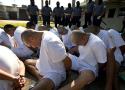
DC Judge Who Tried to Stop Deportations Gets a Harsh Message From El Salvador's President – RedState
the president invoked the Alien Enemies Act of 1798 against the vicious Venezuelan gang Tren de Aragua which has been terrorizing cities across the country—and then the administration sent at least one planeload of members of the “Foreign Terrorist Organization” back to their country of origin.
It didn’t take long for Obama appointed Chief U.S. District Judge James Boasberg to kneecap the effort. Not only did he issue a temporary restraining order preventing the deportation of any Venezuelans, but he also ordered that the plane (or planes; it’s unclear) return the gangsters to the U.S.
The actions against the president began even before he signed the order. Mind-boggling:
Hours before the proclamation was signed, a lawsuit was filed by the American Civil Liberties Union, Democracy Forward and the ACLU of the District of Columbia, claiming it could be used to deport any Venezuelan in the country, regardless of whether they are a member of TdA.
At a hearing Saturday afternoon, Chief U.S. District Judge James Boasberg of the D.C. Circuit granted a temporary restraining order preventing the deportation of the five Venezuelans, who had already been in federal custody for two weeks.
Two planes that may have been en route to deport illegal immigrants were ordered returned by the judge. However, it is unclear as of Saturday night if they have done so. //
Bukele is a tough character whose uncompromising stance on law and order has transformed El Salvador from the most dangerous to the safest country in Central America; see El Salvadorian Hardman, President Nayib Bukele Wins Blowout Re-Election Victory – RedState. I'd much rather have Venezeuelan terrorists held in El Salvador than detained in America, and if it costs less in the process, that's a bonus. //
I remain of the view that this is a test case the Trump Admin has purposely triggered in order to RE-establish POTUS authority to use the AEA [note: Alien Enemies Act] to address the consequences of the Biden Admin "Open Border" policy. That policy allowed millions of unvetted migrants to enter the country illegally. The ability of the Administration to deport a substantial number of those illegal aliens is limited by the physical facilities necessary to arrest, detain, and hold them while deportation proceedings take place. Having the ability to execute mass deportations of the worst criminal offenders without going through the processes set forth in other federal statutes would increase significantly the pace by which large numbers of such individuals could be removed without burdening the facilities we do have.
...
What makes me think this is a test case is that the complaint was filed before President Trump issued an Executive Order stating that he would be using the AEA to remove these five individuals. The exercise of authority under the AEA begins with a Presidential “Proclamation” that certain factual circumstances have arisen, and extraordinary Presidential authority granted by Congress is being invoked to respond to those circumstances.
At the time the complaint was filed, no such proclamation had been issued by President Trump, but the Complaint was specific to an extent that would be highly unlikely if the Plaintiffs’ attorneys had not been given a preview of what it was likely to say.

Activist Nation: Judge Orders Plane Carrying Gangsters Kicked Out by Trump to Turn Around – RedState
the president invoked the Alien Enemies Act of 1798 against the vicious Venezuelan gang Tren de Aragua which has been terrorizing cities across the country—and then the administration sent at least one planeload of members of the “Foreign Terrorist Organization” back to their country of origin.
It didn’t take long for Obama appointed Chief U.S. District Judge James Boasberg to kneecap the effort. Not only did he issue a temporary restraining order preventing the deportation of any Venezuelans, but he also ordered that the plane (or planes; it’s unclear) return the gangsters to the U.S.
The actions against the president began even before he signed the order. Mind-boggling:
Hours before the proclamation was signed, a lawsuit was filed by the American Civil Liberties Union, Democracy Forward and the ACLU of the District of Columbia, claiming it could be used to deport any Venezuelan in the country, regardless of whether they are a member of TdA.
At a hearing Saturday afternoon, Chief U.S. District Judge James Boasberg of the D.C. Circuit granted a temporary restraining order preventing the deportation of the five Venezuelans, who had already been in federal custody for two weeks.
Two planes that may have been en route to deport illegal immigrants were ordered returned by the judge. However, it is unclear as of Saturday night if they have done so.

On its face, the administration's application for a partial stay simply asks the Supreme Court to narrow the scope of the injunctions as to birthright citizenship (rather than decide the merits of the argument at this juncture). But the application also seeks to strike at the heart of an even larger issue — the explosion of universal injunctions being issued in recent years.
The rationale is spelled out succinctly in the application's next-to-last paragraph:
There are “more than 1,000 active and senior district court judges, sitting across 94 judicial districts.” DHS, 140 S. Ct. at 600-601 (Gorsuch, J., concurring). Years of experience have shown that the Executive Branch cannot properly perform its functions if any judge anywhere can enjoin every presidential action everywhere. The sooner universal injunctions are “eliminated root and branch,” “the better.” Arizona, 40 F.4th at 398 (Sutton, C.J., concurring)
If nothing else, the Trump administration is prompting a thorough examination of the separation of powers and the scope of executive authority.

I'm not one to use the term "Constitutional crisis" loosely, but if this ruling stands, I think we are at that point. Alsup's decision means federal agencies cannot legally respond to a White House directive to reduce their headcount. It also changes the legal status of probationary and term appointments to tenure rather than how they have been traditionally viewed. IANAL, but I think the ability of the American Federation of Government Employees to intervene on behalf of employees who are not represented by a bargaining unit in an employment matter is highly suspect.

On Thursday, President Trump issued an executive order that cut federal ties with the Spygate incubator and major Democrat law firm Perkins Coie. The president did so based on the firm’s partisan dishonesty, and because it openly discriminates based on sex and race.
This is a good legal basis for refusing to work with any company, and it should be extended to every legal entity in the country. Top of the list should be the American Bar Association, which also advocates for and engages in unlawful racial and sexual discrimination and is a highly partisan actor on behalf of the Democrat Party and other anti-Constitution activists.
The ABA deeply affects the U.S. lawyer pipeline and licensing system, accrediting law schools, rating judges, and weaponizing lawyer discipline. Its rabid leftism means the ABA systematically ratchets the entire U.S. legal system against the U.S. Constitution.
That’s an existential threat to the country, as most recently illustrated by the dozens of federal judges the ABA helped advance who hate our supreme law so much they rule that the elected executive cannot control the unelected executive branch. With judges like those the ABA advances, the United States will quickly discard what remnants of our constitutional order persist. //
“The ABA’s public actions grew increasingly partisan throughout the Biden presidency and now into the early days of Trump’s second term. The organization justified President Biden’s preposterous assertion that the Equal Rights Amendment had been ratified; claimed that bar associations have a First Amendment right to engage in racial discrimination; and sued President Trump for slashing USAID subsidies,” Fragoso notes.
By endorsing race and sex discrimination, presidents unilaterally changing the Constitution, and forbidding elected executive control of unelected executive bureaucrats, the ABA has disqualified itself as a legal organization or any kind of legitimate player in American public life. No elected official who has made a public vow to preserve and protect the Constitution should give this anti-American pressure organization the time of day.
These judges aren’t applying law; they’re rewriting it.
Justice Samuel Alito, joined by Justices Clarence Thomas, Neil Gorsuch, and Brett Kavanaugh in dissent, saw through this charade. His words cut to the core of the issue: “Does a single district court judge who likely lacks jurisdiction have the unchecked power to compel the government of the United States to pay out (and probably lose forever) 2 billion taxpayer dollars? The answer to that question should be an emphatic ‘No,’ but a majority of this court apparently thinks otherwise. I am stunned.” //
The separation of powers doctrine enshrined in the Constitution assigns distinct roles to each branch of government. The executive, led by the president, has broad authority over foreign affairs and the execution of federal funds, especially when Congress has not explicitly mandated their disbursement. Trump’s foreign aid pause, enacted on his first day back in office, was a legitimate exercise of that authority, aimed at reevaluating programs he deemed wasteful.
Yet the Supreme Court’s decision allows the judiciary to override this discretion, effectively seizing control of the purse strings — a power reserved for Congress and the executive. In joining the leftist justices, Chief Justice John Roberts and Justice Amy Coney Barrett have tipped the scales toward judicial supremacy, blurring the lines between the branches and weakening the presidency.
President Trump should seriously consider defying this order. History offers precedent: Andrew Jackson famously ignored the Supreme Court’s 1832 ruling in Worcester v. Georgia, declaring, “John Marshall has made his decision; now let him enforce it.” Jackson’s stance was controversial, but it underscored a truth: the Supreme Court has no army, no purse, no means to enforce its will beyond the executive’s cooperation.
If Trump refuses to pay, he’d be asserting the executive’s constitutional primacy over foreign policy and federal spending, forcing a reckoning on the judiciary’s overreach. The risks — legal challenges, political backlash, Democrats later making the same play — are real, but so is the cost of compliance: a precedent that emboldens activist judges to micromanage the executive at every turn.
Critics will cry “rule of law,” but what law demands $2 billion be paid “posthaste” without due process or legislative clarity? The Administrative Procedure Act cited by Judge Ali doesn’t grant judges carte blanche to issue billion-dollar edicts. Aid groups argue the freeze caused harm, but their remedy lies with Congress, not the courts. The Supreme Court’s failure to check this abuse sets a dangerous stage for future administrations — Republican or Democrat — to be hamstrung by unelected judges wielding unchecked power.
The $2 billion order isn’t just about foreign aid; it’s about who governs. The judiciary has crossed a line, and the executive must push back. Trump should stand firm, not out of defiance, but to defend the Constitution. As Alito warned, the Supreme Court’s misstep “imposes a $2 billion penalty on American taxpayers” and rewards “an act of judicial hubris.” It’s time to reject that hubris and restore the balance of power. //
Curtis Hill is the former attorney general of Indiana.

The dispute originated in Mexico's suing seven major U.S. gun makers and one gun wholesaler for billions of dollars in damages caused by the gun violence in Mexico's drug trade. Mexico is also demanding changes in the way guns are sold in the United States so Mexican narcotrafficantes can't acquire them. None of this is to say that Mexico doesn't have a gun violence, or more accurately, a rule-of-law problem. Mexico has one gun store but has a firearm homicide rate of 16.87 per 100,000. The US has nearly 78,000 licensed gun sellers and a firearm homicide rate of 5.9 per 100,000. So the problem isn't access to guns. //
The case was very significant for two reasons. It is the first major test of the 2005 Protection of Lawful Commerce in Arms Act that largely indemnifies gun manufacturers and resellers from lawsuits as long as they follow applicable laws and regulations. If the Supreme Court doesn't uphold the immunity claims in this case, American gun rights will disappear because manufacturers and firearms dealers will be sued into oblivion. The second reason the case is important is that Mexico's theory could be applied to any product that has the potential to be misused. Liquor distillers could be held liable for drunk-driving deaths.