Just who are the greatest aerospace engineers of all time? The ability to fly has long been an ambitious quest for mankind. Many centuries have been spent trying to master the art, as such there have been many aerospace engineers with a profound and lasting impact. Here at MNB Precision we have compiled a list of both the greatest engineers and the greatest aerospace engineers. Ranging from the most famous and prominent to some lesser known yet still crucial figures, these are some of the best professionals in the field.


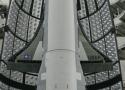
The space plane will also advance the development of a new navigation technology based on electromagnetic wave interference. The Space Force news release characterizes this as the "highest-performing quantum inertial sensor ever tested in space."
Boeing has previously tested a quantum inertial measurement unit, which detects rotation and acceleration using atom interferometry, on conventional aircraft. Now, an advanced version of the technology is being taken to space to demonstrate its viability. The goal of the in-space test is to demonstrate precise positioning, navigation, and timing in an environment where GPS services are not available.
"Bottom line: testing this tech will be helpful for navigation in contested environments where GPS may be degraded or denied," Saltzman said in a social media post Monday, describing the flight.
Quantum inertial sensors could also be used near the Moon, where there is no comparable GPS capability, or for exploration further into the Solar System. //
Albino_Boo Ars Praefectus
7y
8,162
The reason why GPS is provide correction in drift on the laser ring gyros on Trident D5 boats. The key thing, which understandably isn't in the public domain, is the drift on quantum gyros. The other thing which I would be interested in is how they keep it cool enough for quantum effect to be in place. That must give the gyro in space a finite life because you can't top up the Helium. //
Lexus Lunar Lorry Ars Praetorian
7y
572
Subscriptor++
Quantum inertial sensors could also be used near the Moon, where there is no comparable GPS capability, or for exploration further into the Solar System.
One advantage of accurate inertial sensors is that they can be used underwater by submarines. This will be useful for our inevitable upcoming war with the Europan Fish People. There will be no GPS (or other satellite navigation or points of reference) under the mile-thick ice sheets. //
dmsilev Ars Tribunus Angusticlavius
15y
6,364
Subscriptor
wagnerrp said:
Well it needs to be a superfluid.... That means just letting the helium boil off isn't even an option.
Atom interferometry doesn't need conventional cryogenics. It uses laser cooling to trap and manipulate the atoms, so the essential requirements are very stable and precise lasers and other optics that are compatible with all the rigors of launch and spaceflight. At the proof-of-concept level, that's been done before; things like laser-cooled Bose-Einstein Condensates have been demoed on ISS, but obviously going from that to a high-precision navigation instrument entailed a lot of engineering development.
normally butters Ars Praefectus
18y
5,207
Control Group said:
Having never heard of Impulse before, I'd love an explainer of their engineering. What makes their system better at in-space maneuvering?
The previous answers are all good, but I'll add that there are historical reasons why liquid kick/deploy stages have seen little investment in the West until recently, whereas the Soviets developed stages like Fregat and Briz which are conceptually similar to Impulse's Mira.
The US invested heavily in upper stages like Centaur which solve the relatively difficult problem of a high-performance cryogenic stage capable of multiple in-flight restarts. Questionable plans to put Centaur inside the Space Shuttle payload bay were abandoned after the Challenger disaster and replaced with a couple of barely-adequate solid-propellant kick stages for payloads going beyond LEO.
The Europeans, meanwhile, took advantage of their near-equatorial launch site in French Guiana to develop launch vehicles optimized for GEO missions with upper stages inserting into GTO directly from the ascent burn, without requiring any restart. Ariane 5 literally doubled down on this concept of operations by specializing in dual-satellite GTO injection missions. In more modern times, Vega has a liquid kick stage, AVUM, but powered by a hypergolic engine of Soviet heritage which was until recently manufactured in Ukraine.
On the US-headquartered side, Rocket Lab's Electron requires a kick stage from their Photon product line for any orbital mission, once again largely to avoid the challenge of restarting cryogenic stages in microgravity. Firefly, in contrast, has developed a restartable second stage, and they are developing a line of orbital transfer stages based on lower-thrust electric propulsion.
So, Impulse Space just doesn't have much competition in this part of the world. Different approaches were taken to the design of expendable upper stages. But in a future with reusable upper stages that don't want to accelerate to higher energies than they need to, separate kick stages are increasingly compelling. Likewise, if military forces begin to see earth orbit as a more kinetic or dynamic combat theater, that would also encourage kick/transfer stage development, for better or worse. //
Chuckgineer Ars Centurion
10y
323
Subscriptor
Bruce Dunn said:
The Mira thrusters are undoubtably pressure fed. With hydrazine, pressure is provided by helium from composite overwrap pressure vessels through often trouble-prone valves. Impulse does not say how the Mira propellants are pressurized, but it is notable that they both have high vapor pressures at near ambient temperatures. I suspect that the propellants are self pressurized, eliminating the mass and complexity of helium pressurization. At 273 K, the vapor pressure of ethane is 2.4 MPa and that of nitrous oxide is 3.2 MPa.
Hi Bruce, the article above (Industry Update: Prevalance of Nitrous-Based In-Space Propellants) verifies your suspicion: "Nitrous and propylene are self-pressurizing and do not require pumps, pressurants or even propellant management devices."
https://www.dawnaerospace.com/latest-news/prevalence-of-nitrous-based-in-space-propellants

Just 10 years ago, a mere thousand or so operational satellites may have orbited our planet, but there will be tens or even hundreds of thousands a decade from now.
Experts have been sounding alarm bells for years that Earth orbit is getting a bit too crowded. So how many satellites can we actually launch to space before it gets to be too much?
Jonathan McDowell is an astrophysicist and astronomer at the Harvard-Smithsonian Center for Astrophysics who studies super-energetic phenomena in the universe such as jet-emitting black holes in galactic centers. In recent years, however, McDowell has gained prominence for his work in a completely different field of space research. In his monthly digital circular called Jonathan's Space Report, McDowell tracks the growing number of satellite launches and the ballooning number of objects in Earth orbit.
The project started with an ambition to "provide a pedantic historical record of the space age," but has, in a way, become a chronicle of the environmental destruction of the near Earth environment. In his frequent media appearances, McDowell has been vocal about his views on the future of the increasingly overcrowded near-Earth space.
"It's going to be like an interstate highway, at rush hour in a snowstorm with everyone driving much too fast," he told Space.com when asked what the situation in orbit will be like if existing plans for satellite megaconstellations such as SpaceX's Starlink, OneWeb and Amazon Kuiper come to fruition. "Except that there are multiple interstate highways crossing each other with no stoplights." //
"There's good evidence that the number of minor collisions is already increasing significantly," McDowell said. "We're seeing debris from objects that shouldn't really be creating debris. They probably have been hit by something small, even if they carry on working afterwards."
While the larger debris fragments over 4 inches in size are regularly tracked, trajectories of the smaller pieces are mostly unknown, and the collisions they can cause come entirely without warning.
Debris experts, however, are most concerned about encounters between two large defunct bodies — dead satellites or used rocket stages. One such close approach, between a decades-old Russian rocket upper stage and a long-defunct Russian satellite, took place on Jan. 27. With neither object being able to maneuver, space traffic guards could only look on with their fingers crossed, hoping the two would miss each other. On this occasion, they did —by a mere 20 feet (6 meters). The incident, described as a close call "worst-case scenario," could have spawned thousands of dangerous debris fragments that would have stayed in orbit for centuries, threatening everything in their path. //
McDowell says that humankind is likely going to discover the natural capacity of near-Earth space "the hard way." Despite the pledges of megaconstellation operators, the astrophysicist doubts that things will remain manageable in the years ahead.
"Five or 10 years from now, we'll have somewhere between 20,000 and 100,000 satellites, and I am very skeptical that at the upper number of 100,000 things can be operated safely," McDowell sai
HomeThe Aerospace Corporation
Reentry Predictions
COSMOS 482 DESCENT CRAFT (ID 6073)
Sharing
Reentry Prediction
Predicted Reentry Time
10 May 2025 06:12 UTC ± 3 hours
Orbit Epoch
09 May 2025 19:55:03.226 UTC
Prediction Ground Track
COSMOS 482 DESCENT CRAFT (ID 6073) Reentry Prediction Image
Yellow Icon – location of object at midpoint of reentry window
Blue Line – ground track uncertainty prior to middle of the reentry window (ticks at 5-minute intervals)
Yellow Line – ground track uncertainty after middle of the reentry window (ticks at 5-minute intervals)
Pink Icon (if applicable) – vicinity of eyewitness sighting or recovered debris
Note: Possible reentry locations lie anywhere along the blue and yellow ground track. Areas not under the line are not exposed to the debris.

If you go through most of your days without worrying about space junk falling on you, there's little reason for serious alarm now. The Aerospace Corporation says any one individual on Earth is "far likelier" to be struck by lightning than to be injured by Kosmos 482. The US government's safety threshold for uncontrolled reentries requires the risk of a serious injury or death on the ground to be less than 1 in 10,000. The Aerospace Corporation projects the risk of at least one injury or fatality from Kosmos 482 to be 0.4 in 10,000 if the descent craft reaches the surface intact.
Marco Langbroek, a Dutch archeologist and university lecturer on space situational awareness, wrote on his website that the risk of public injury from Kosmos 482 is lower than that from the reentry of a SpaceX Falcon 9 upper stage. One of those came down uncontrolled over Poland in February, scattering some debris but causing no injuries.
Langbroek said the reentry analysis suggests the Kosmos 482 descent capsule will impact the ground or water at about 150 mph (242 kilometers per hour), assuming it makes it to the surface in one piece. The lander carries a parachute that would have slowed its final descent to Venus, but it's not likely that the parachute deployment system still works after 53 years in space. //
But what happens in the unlikely event that Kosmos 482 winds up in your yard? "If Kosmos defies the odds and does land in your yard, please don’t touch it!" the Aerospace Corporation said. "It could potentially be hazardous, and it is best to notify your local authorities.
"As for keeping it, don’t get your hopes up," Aerospace says. "There is a United Nations treaty that governs found debris—the 1967 Outer Space Treaty. It states that countries keep ownership of objects they launch into space, even after those objects reenter and return to Earth. The country that launched the object in this case is Russia, which could request the return of any parts that survived reentry. "It is also worth noting that the treaty says that the launching country is also internationally liable for damages." //
Cthel Ars Tribunus Militum
5y
7,663
Subscriptor
SimonRev said:
Technically wouldn't that have been the Soviet Union. Admittedly Russia is the obvious successor state, but couldn't one of the former republics conceivably attempt to make a claim if they felt they had a connection to it
Fun fact - the sections that deorbited in 1972 included several titanium alloy pressure vessels that landed intact (and very hot) in New Zealand; however the USSR formally disclaimed ownership so they ended up property of the farmers whose land they crashed into.
https://www.nzherald.co.nz/nz/new-light-on-mysterious-space-balls/VYQ6S2QIC4QREO55ERXWVIKNSI/
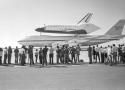
Plans were well underway to launch the Space Shuttle at Vandenberg in the early 1980s. The shuttle was what a rocket could never be: A flying aircraft with a human pilot. //
After the Challenger disaster, the entire program underwent an audit, and it was discovered that the SLC-6 launch pad — recycled from previous canceled Air Force projects like the never-launched Manned Orbital Laboratory — would be destroyed by the force of the first shuttle launch. The effect would have been similar to the April 2023 SpaceX Starship launch in Texas that hurled concrete powder miles from the launch site and damaged the launch vehicle. //
That was all in the future as a Boeing 747 jet carried a Space Shuttle to Vandenberg (then an Air Force base) for a promotional look at what was hoped would be a West Coast base of operations for the shuttle. If my recollection is correct, there has never been a manned flight launched from Vandenberg. In a full circle moment, SLC-6 launch pad is now leased for an expansion of the SpaceX Falcon program. The Falcon is a smaller rocket, carrying about 25% of the shuttle’s maximum. //
Reporters and photographers line up to watch and photograph the space shuttle and 747. The plane and cargo circled over Santa Maria and Lompoc before landing on time at the base. The brand new space shuttle Discovery visited Vandenberg Air Force Base on Nov. 6, 1983. Tony Hertz Telegram-Tribune file //
The newest orbiter will leave Vandenberg on Tuesday for Kennedy Space Center in Florida, where it will fly at least three missions before returning for the first Vandenberg launch. Between five and 10 annual missions may be launched from Vandenberg. The craft weighs 148,000 pounds empty and will weigh about 210,00 pounds in flight. It is 122 feet long and 78 feet wide; about the size of a DC-9 commercial airliner. It is removed or placed aboard the 747 with a bridge-like crane called a mating facility. The Air Force has spent $2.5 billion to build the space shuttle launch complex. Construction included the pouring of 250,000 cubic yards of concrete — enough to build a 25-mile four lane freeway — the use of 9,000 tons of steel reinforcing bar and 15,000 tons of structural steel. The latter would build a 120-story office building. Shuttles launched from Vandenberg will be put on polar, or south to north, orbits; Florida launches are put on equatorial orbits.
Read more at: https://www.sanluisobispo.com/news/local/news-columns-blogs/photos-from-the-vault/article297956698.html#storylink=cpy
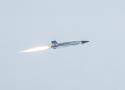
Stratolaunch has finally found a use for the world's largest airplane.
Twice in the last five months, the company launched a hypersonic vehicle over the Pacific Ocean, accelerated it to more than five times the speed of sound, and autonomously landed at Vandenberg Space Force Base in California. Stratolaunch used the same vehicle for both flights.
This is the first time anyone in the United States has flown a reusable hypersonic rocket plane since the last flight of the X-15, the iconic rocket-powered aircraft that pushed the envelope of high-altitude, high-speed flight 60 years ago. //
Zachary Krevor, president and CEO of Stratolaunch, spoke with Ars on Monday afternoon. He said the Talon test vehicle advances the capability lost with the retirement of the X-15 by flying autonomously. Like the Talon-A, the X-15 released from a carrier jet and ignited a rocket engine to soar into the uppermost layers of the atmosphere. But the X-15 had a pilot in command, while the Talon-A flies on autopilot.
"Why the autonomous flight matters is because hypersonic systems are now pushing the envelope in terms of maneuvering capability, maneuvering beyond what can be done by the human body," Krevor said. "Therefore, being able to perform flights with an autonomous, reusable, hypersonic testbed ensures that these flights are exploring the full envelope of capability that represents what's occurring in hypersonic system development today."
Stratolaunch's Talon-A is a little smaller than a school bus, or about half the size of the X-15. //
Engineers know less about the conditions of the hypersonic flight regime (in excess of Mach 5) than they do about lower-speed supersonic flight or spaceflight. The only vehicles that regularly fly at hypersonic speeds are missiles, rockets, and spacecraft reentering the atmosphere. They spend just a short time flying in the hypersonic environment as they transition to and from space.
There are two things you should know about hypersonic missiles. First, rockets have flown at hypersonic speeds since 1949, so when officials talk about hypersonic missiles, they are referring to vehicles that operate in the hypersonic flight environment, instead of just transiting through it.
Second, hypersonic vehicles come in a couple of variations. One is a glide vehicle, which is accelerated by a conventional rocket to hypersonic speed, then steers itself toward its destination or target using aerodynamic forces. The other is a cruiser that can sustain itself in hypersonic flight using exotic propulsion, such as scramjet engines. //
The Pentagon's emphasis on hypersonic weapons is relatively new. After the X-15's final flight in 1968, the government lacked any major hypersonic flight test programs for several decades. NASA flew the autonomous X-43 test vehicle to hypersonic speed two times in 2004, and the Air Force demonstrated an air-breathing scramjet engine at Mach 5.1 with the X-51 Waverider aircraft in 2013. While some of the X-43 and X-51 test flights failed, they provided early-stage data on hypersonic propulsion systems that could power high-speed aircraft and missiles.
But these were expensive government-led programs. Together, they cost nearly $1 billion in 2025 dollars, with only a handful of flight tests to show for it. The military now wants to lean heavier on commercial industry.
Since its founding 14 years ago, Stratolaunch has pivoted its mission from the airborne launch of satellites to hypersonic testing. //
Stratolaunch's founder, Microsoft billionaire Paul Allen, died in 2018, putting the company's future in doubt. Stratolaunch flew its huge carrier aircraft, named Roc, for the first time in April 2019 but ceased operations the following month. Cerberus Capital Management, a private equity firm, purchased Stratolaunch from Allen's heirs later that year and redirected the company's mission from space launch to hypersonic flight testing.
Through it all, Stratolaunch continued flying Roc, a twin-fuselage airplane with a wingspan of 385 feet (117 meters). For a time, it appeared Roc might share a fate with Howard Hughes' "Spruce Goose" flying boat, which held the record as the airplane with the widest wingspan, until Roc (officially designated the Scaled Composites Model 351) took off for the first time in 2019. The Spruce Goose flew just once after its business prospects faded in the aftermath of World War II.
Now, the Pentagon's hunger for hypersonic weapons seems likely to feed Stratolaunch's coffers for some time to come. //
David Mayer Wise, Aged Ars Veteran
5m
1,241
I'm uncertain how big a "game changer" endoatmospheric, maneuverable, hypersonic weapons will be. They should be relatively easy to detect, track, and target using existing systems, even if they have an incredibly low radar cross section, simply because they will be hot as all hell, appearing clearly to any infrared sensors.
Interception is another story, it all depends on how maneuverable the weapon is and if it can reliably detect interceptors. Available reaction time is going to be substantially lower than many other systems, just because of how fast the weapon is moving. Your interceptor doesn't need to match the speed, but it does need to deal with the maneuverability of the weapon. A 15° change in trajectory is a 7 kilometer difference in actual position vs expected position after 15 seconds. Lots of existing interceptors are going to have trouble coping with that.
If the weapon is regularly changing direction then the effective range of your interceptors is significantly reduced, meaning that any interception will have to be launched from closer to the defended area and will have to be launched later in the weapons flight. Launch too soon and the weapons maneuvering will exhaust the interceptors fuel.
If the weapon can detect the interceptor then it may chose an alternate target, heck, they might be maneuverable enough to come in for a second or even third approach.

Secretary Sean Duffy @SecDuffy
·
The U.S. commercial space industry is an inspiring project which showcases American ingenuity and exceptionalism. But the last FAA guidelines under the Commercial Space Astronaut Wings Program were clear: Crewmembers who travel into space must have “demonstrated activities during flight that were essential to public safety, or contributed to human space flight safety.”
The crew who flew to space this week on an automated flight by Blue Origin were brave and glam, but you cannot identify as an astronaut. They do not meet the FAA astronaut criteria.
Blue Origin @blueorigin
We just completed our 11th human spaceflight and the 31st flight of the New Shepard program. The astronaut crew included Aisha Bowe, Amanda Nguyễn, Gayle King, Katy Perry, Kerianne Flynn, and Lauren Sánchez.
To date, New Shepard has flown 58 people to space. Read more:
6:55 PM · Apr 17, 2025. //
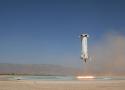
Jeff Bezos's "Blue Origin" rockets are, in my opinion, something that could and should be an absolute banger of a space project. The idea that we could have some billionaire creating rockets for the express purpose of ferrying civilians into the black is something I actually think is needed.
Normalizing space travel, even if in the mind, is something we should definitely be promoting in the zeitgeist.
But then, as Bonchie wrote on Monday, Blue Origin created a PR stunt that was so stupid, I'm surprised no one stopped to think about the negatives for even a few minutes. //
Bezos's rich, leftist, elitist friends are probably not feeling him too deeply right now, and he needed to make it clear that he was still with the agenda by launching the "all-female crew" and making history for women. //
Putting on something so ridiculous as a clear PR stunt that ended up being so cringe-worthy and stupid that it's being widely and roundly mocked sets things back a bit in the minds of the public. Bezos could have put anyone in that rocket including scientists, astronomers, hell, even a regular family who never would have dreamed something like this could happen to them.
Instead, we get self-absorbed celebrities who just chose to use it as a platform to virtue signal, making this all worse. I can't see how this endears space travel to anyone. //
This gets even more infuriating when you look at SpaceX, which utilizes its ever-advancing rocket tech to actually move humanity forward in a way that moves us forward. The spectacle of SpaceX isn't in celebrities, it's getting the job done. It's making science fiction a reality. SpaceX literally rescues astronauts stranded in space.
It's a company that is advancing itself with the clear intent of advancing humanity.
Blue Origin feels like a vanity project meant to elevate one man.
This all-female crew wasn't even a crew. These women were just pawns dressed as explorers, form-fitting suits that accentuated their figures in all the right places.
Again, I want to make it clear that I'm not mad that this flight didn't contain any scientific research or exploration. Civilians going up and coming back down is actually a fantastic idea that I think could really get people excited about the prospect of seeing the stars just a little bit closer.
But this just felt like a stupid virtue signal meant to make one man look good to people who are, frankly, regressive in their views and contribute little to nothing to our society. To do all this with a technology that already is being eyed by a chunk of the public as wasteful and selfish is, in my opinion, irresponsible.
Black Hole
@konstructivizm
The James Webb telescope has discovered Jupiter-sized "planets" in space, free-floating and gravitationally unbound to any star
What has astonished scientists is that the planets are moving in pairs.
Astronomers are now trying to explain this phenomenon scientifically. They are inclined to believe that the objects were thrown out of their orbits due to gravitational disturbances.
NASA
6:10 AM · Apr 5, 2025
Rocket Diaries @rocket_diaries
·
6h
Webb just added a wild twist to our understanding of planetary formation—Jupiter-sized objects drifting through space in pairs, totally unbound to any star. Scientists think gravitational chaos may have ejected them, but why they’re paired up is still a mystery.
In For The Fun @InForTheFun_
·
13h
According to the International Astronomical Union, they are not planet. Because that's exactly how stupid their definition is. Defying something not based on its inherenet parameters like mass-radius (i.e. compactness), fusion etc, but on their orbital parameters. Go figure.

tigas Ars Tribunus Angusticlavius
21y
7,000
Subscriptor
SomewhereAroundBarstow said:
And that's as close as you're going to get an active astronaut to saying that what some people call the Deep State is actually where the heroes that keep everything from falling apart work.
What actually makes you a "steely-eyed missile man" isn't bravery, mojo, having XY chromosomes or white skin, it's to
sit in their cubicle for decades studying their systems, and knowing their systems front and back. And when there is no time to assess a situation and go and talk to people and ask, 'What do you think?' they know their system so well they come up with a plan on the fly
"Hey, this is a very precarious situation we're in." //
As it flew up toward the International Space Station last summer, the Starliner spacecraft lost four thrusters. A NASA astronaut, Butch Wilmore, had to take manual control of the vehicle. But as Starliner's thrusters failed, Wilmore lost the ability to move the spacecraft in the direction he wanted to go. //
Wilmore added that he felt pretty confident, in the aftermath of docking to the space station, that Starliner probably would not be their ride home.
Wilmore: "I was thinking, we might not come home in the spacecraft. We might not. And one of the first phone calls I made was to Vincent LaCourt, the ISS flight director, who was one of the ones that made the call about waiving the flight rule. I said, 'OK, what about this spacecraft, is it our safe haven?'"
It was unlikely to happen, but if some catastrophic space station emergency occurred while Wilmore and Williams were in orbit, what were they supposed to do? Should they retreat to Starliner for an emergency departure, or cram into one of the other vehicles on station, for which they did not have seats or spacesuits? LaCourt said they should use Starliner as a safe haven for the time being. Therein followed a long series of meetings and discussions about Starliner's suitability for flying crew back to Earth. Publicly, NASA and Boeing expressed confidence in Starliner's safe return with crew. But Williams and Wilmore, who had just made that harrowing ride, felt differently.
Wilmore: "I was very skeptical, just because of what we'd experienced. I just didn't see that we could make it. I was hopeful that we could, but it would've been really tough to get there, to where we could say, 'Yeah, we can come back.'"
So they did not.

Three weeks ago, NASA revealed that a shipping container protecting a Cygnus spacecraft sustained "damage" while traveling to the launch site in Florida.
Built by Northrop Grumman, Cygnus is one of two Western spacecraft currently capable of delivering food, water, experiments, and other supplies to the International Space Station. This particular Cygnus mission, NG-22, had been scheduled for June. As part of its statement in early March, the space agency said it was evaluating the NG-22 Cygnus cargo supply mission along with Northrop.
On Wednesday, after a query from Ars Technica, the space agency acknowledged that the Cygnus spacecraft designated for NG-22 is too damaged to fly, at least in the nearterm.

On Monday, the president posted a long statement on Truth Social that repeated this canard of the Biden administration, "They shamefully forgot about the Astronauts, because they considered it to be very embarrassing event for them—another thing I inherited from that group of incompetents."
Trump then went on to state that he and Musk had just sent up a SpaceX Dragon (which, in point of fact, launched last September) to rescue the crew. //
One of the common refrains about spaceflight for decades and decades is that it is nonpartisan.
That is, the Apollo Program brought the country together in the turbulent 1960s and helped make everyone feel good about the country. Pretty much ever since then, Republicans, Democrats, and independents have generally supported NASA and civil spaceflight. //
But if we're going to start lying about basic truths like the fate of Wilmore and Williams—and let's be real, the only purpose of this lie is to paint the Trump administration as saviors in comparison to the Biden administration—then space is not going to remain apolitical for all that long. And in the long run, that would be bad for NASA.
Let's also be clear that Musk and SpaceX are currently flying the only spacecraft in the Western world that is capable of reliably flying humans into orbit. Without Dragon, NASA would have been beholden to Russia for the last five years for human spaceflight. And when Boeing's Starliner had issues nine months ago en route to the International Space Station, NASA was fortunate to have the reliable Dragon program to turn to.
Yet perverting that good news story into some tawdry political gain cheapens SpaceX, NASA, and Wilmore and Williams. In this case, the truth was beautiful. When one American space company had a problem, another stepped in, and the heroic astronauts made it home safely with a perfect backdrop.
If only the story ended there.

Darkness fell over Mare Crisium, ending a daily dose of dazzling images from the Moon. //
Firefly Aerospace's Blue Ghost science station accomplished a lot on the Moon in the last two weeks. Among other things, its instruments drilled into the Moon's surface, tested an extraterrestrial vacuum cleaner, and showed that future missions could use GPS navigation signals to navigate on the lunar surface.
These are all important achievements, gathering data that could shed light on the Moon's formation and evolution, demonstrating new ways of collecting samples on other planets, and revealing the remarkable reach of the US military's GPS satellite network.
But the pièce de résistance for Firefly's first Moon mission might be the daily dose of imagery that streamed down from the Blue Ghost spacecraft. //
Dtiffster Ars Praefectus
9y
3,725
Subscriptor
TylerH said:
Given the amount of fuel needed to return to Earth, probably somewhere around the middle.
The prop to lift back off is at least 1.1 times the dry mass + up mass, but 78% of that is LOX which goes in the bottom tank. We don't know if the liftoff prop will just be in the tanks or in some kind of a really large header in the tank (as a boil off mitigation), but I would assume if there are headers they will be at or near the bottom of the of their respective tanks. Thus atleast 41% of the landed mass would be LOX and be very near the bottom. The legs and engine section will also be fairly substantial and very low. The methane for liftoff would be another 11% and only about a third of the way up the rocket. Much of the rest of the mass is tankage, but that center of mass is also probably no more than a third of the way up. The habitat section and equipment is high up, but it's less than 15% of that lift off mass. The CoM of the whole thing on landing/liftoff is probably only 25-30% up from the surface. It is much less tippy than your initial intuition would lead you to believe. //
https://www.youtube.com/watch?v=M2P-z_cXsOs
https://youtu.be/IpA9DORDkeE?si=oNmwnzJs6_UwzjPb
https://www.flickr.com/photos/fireflyspace/albums/72177720313239766/with/54395270843

Intuitive Machines announced on Friday morning that its Athena mission to the surface of the Moon, which landed on its side, has ended.
"With the direction of the Sun, the orientation of the solar panels, and extreme cold temperatures in the crater, Intuitive Machines does not expect Athena to recharge," the company said in a statement. "The mission has concluded and teams are continuing to assess the data collected throughout the mission."
Athena, a commercially developed lander, touched down on the lunar surface on Thursday at 11:28 am local time in Houston (17:28 UTC). The probe landed within 250 meters of its targeted landing site in the Mons Mouton region of the Moon. This is the southernmost location that any probe has landed on the Moon, within a few degrees of the lunar south pole. //
NASA has accepted that these commercial lunar missions are high-risk, high-reward. (Firefly's successful landing last weekend offers an example of high rewards). It is paying the companies, on average, $100 million or less per flight. This is a fraction of what NASA would pay through a traditional procurement program. The hope is that, after surviving initial failures, companies like Intuitive Machines will learn from their mistakes and open a low-cost, reliable pathway to the lunar surface. //
Fortunately, this is unlikely to be the end for the company. NASA has committed to a third and fourth mission on Intuitive Machines' lander, the next of which could come during the first quarter of 2026. NASA has also contracted with the company to build a small network of satellites around the Moon for communications and positioning services. So although the company's fortunes look dark today, they are not permanently shadowed like the craters on the Moon that NASA hopes to soon explore.

Q. There have been some pretty big geopolitical shifts since you went up there. What does it look like from your point of view?
Hague: Most of the time when I go over to the window, that's when I start thinking about the Earth below me. And I can tell you, in the time that I've been here, the time that I was here before six years ago, the view hasn't changed, and the thoughts that I eventually get to really haven't changed. I see Earth as a small, small orb that's in a pretty big black vastness of space. And there's a lot out there. There are more stars than you can count, but the world looks pretty small when it's in that perspective. And as you fly from continent to continent, you don't necessarily see all of those borders. And the lesson, or the realization that I always come away with is we have far more in common than we have in different, and those common things that we have bring us together. And if, if we're smart, those differences that we have are differences that we bring to teams like the International Space Station, and those differences make the team stronger.

"Every single thing was clockwork... We got some Moon dust on our boots." //
Firefly Aerospace became the first commercial company to make a picture-perfect landing on the Moon early Sunday, touching down on an ancient basaltic plain, named Mare Crisium, to fulfill a $101 million contract with NASA.
The lunar lander, called Blue Ghost, settled onto the Moon's surface at 2:34 am CST (3:34 am EST; 08:34 UTC). A few dozen engineers in Firefly's mission control room monitored real-time data streaming down from a quarter-million miles away.
The Dark Ars Tribunus Angusticlavius
8y
11,841
The lander's four shock-absorbing legs have some give, sort of like the crush zone of a car, according to Will Coogan, Firefly's chief engineer for the Blue Ghost lander. The legs have an aluminum honeycomb material inside, and they connect to bowl-shaped footpads with a ball-socket joint to give the spacecraft some flexibility in case it comes down on a slope or a rock.
That's basically a copy of the Apollo landers. Apollo had crushable aluminum honeycomb in the legs and bowl-shaped feet attached to the legs with ball joints. The statistical analysis was that Apollo's system had a 99.9% of not fully crushing the honeycomb as long as the landing velocity was below 4 feet per second horizontally and 7 feet per second vertically (1.22 m/s and 2.13 m/s). All of the landings were well under those velocities:
https://arstechnica.com/civis/attachments/1740667805423-png.103726/
NASA Technical Note TN D-6850 Apollo Experience Report - Lunar Module Landing Gear Subsystem by William F. Rogers (June 1972).
D-6850 Apollo Experience Report - Lunar Module Landing Gear Subsystem
https://ntrs.nasa.gov/api/citations/19730010151/downloads/19730010151.pdf. //
EarendilStar Wise, Aged Ars Veteran
8y
148
SkyeFire said:
Lunar conditions are brutal. Two weeks of brutal daylight (plus unfiltered solar radiation) followed by 2 weeks of total darkness. A few lunar probes have managed to survive the night and reboot once they got some sunlight again, but none of them survived more than a few day/night cycles. The thermal swings tend to destroy the electronics and power systems.
This entire bath and forth made me realize I don’t know how the temperature swings of the moon and Mars differ. I was reading thinking “How is this thermal swing different than Mars, a place we operate electronics for far more heat cycles than this?”.
Allow me to share what I found:
Commonly accepted average temps for Luna:
-180°C to 105°C
Mars:
-130°C to 22°C
That’s quite the difference!
Does anyone know why Mars nights are warmer? Is it mostly due to ground surface absorption of radiation, and not losing most of it until the next day cycle? The (limited) atmosphere retaining some heat? ///
Shorter nights on Mars