Analemma image taken between 2021 and 2022, with images taken at 4 p.m. on a weekly basis, clouds permitting. The analemma was calibrated and overlaid with an image taken over Lake Varese in the late afternoon of the winter solstice in 2021, featuring one of the many swans that flock to the shores of Lake Varese in the foreground. Canon 400D + Sigma zoom lens 10 mm. Happy solstice!


Can you tell that today is a solstice by the tilt of the Earth? Yes. At a solstice, the Earth's terminator -- the dividing line between night and day -- is tilted the most. The featured time-lapse video demonstrates this by displaying an entire year on planet Earth in twelve seconds. From geosynchronous orbit, the Meteosat 9 satellite recorded infrared images of the Earth every day at the same local time. The video started at the September 2010 equinox with the terminator line being vertical: an equinox. As the Earth revolved around the Sun, the terminator was seen to tilt in a way that provides less daily sunlight to the northern hemisphere, causing winter in the north. At the most tilt, winter solstice occurred in the north, and summer solstice in the south. As the year progressed, the March 2011 equinox arrived halfway through the video, followed by the terminator tilting the other way, causing winter in the southern hemisphere -- and summer in the north. The captured year ends again with the September equinox, concluding another of the billions of trips the Earth has taken -- and will take -- around the Sun.
Find the Cheapest Ammo Prices
Compare thousands of ammo prices with shipping.
Ballistics Trajectory Calculator
Trajectory Calculator Input
Multiple ammunition preset data

“It’s hard to describe how epic this comeback was after our first Falcon 9 launch failure.”
On Dec. 21, 2015, SpaceX launched the Orbcomm-2 mission on an upgraded version of its Falcon 9 rocket. That night, just days before Christmas, the company successfully landed the first stage for the first time. The story behind this remarkable achievement is nowhere more fully told than in the book Reentry, authored by Ars Technica Senior Space Editor Eric Berger and published in 2024. To mark the tenth anniversary, Ars is reprinting a slightly condensed chapter from the book that tells the inside story of this landing. The chapter begins in June 2015 with a tragedy, the disintegration of a Falcon 9 rocket carrying the CRS-7 cargo supply mission for NASA. It was the first time a Falcon 9 had been lost in flight.
normally butters Ars Praefectus
18y
5,285
ahsgdbeyb3 said:
I am curious about what role exactly he had here in the control room. Operators freezing up sounds like an understandable response, but also sounds like there was a lack of sims to prepare then for such events. The flight director would be the one who should keep them on focus, not a manager. I would actually keep such 'VIP' people out of the control room, they tend not to be able to offer much of use during an actual flight, so I'm wondering how SpaceX managed their presence here and what kind of access to the loops they were/are given?
SpaceX has a "responsible engineer" culture. The engineers who know the most about a system assume responsibility for that system and may eventually have a management role and/or represent that system on console in mission control. This philosophy extends to higher levels. The manager of the Dragon program is a responsible engineer wearing a manager hat, not an MBA. David Giger was responsible for Dragon as a whole, and that was the role he was playing when he reminded the team that Dragon is still alive and might still be saved.
This isn't how NASA works. This isn't how legacy NASA contractors work. For example, Boeing outsources Starliner mission control to NASA. Boeing trains NASA controllers and managers on how to operate Starliner, and they provide "back room" engineering support for the NASA controllers on console. I'll never forget the video from Mission Control Houston during the Starliner OFT-1 MET clock anomaly when the thrusters were firing like crazy immediately after separating from the launch vehicle. The NASA Flight Dynamics Officer was gesticulating wildly in an animated conversation facing the Flight Director, obviously unprepared for this scenario and probably not giving the Flight Director the answers he wanted to hear. I felt sorry for him.

Does swearing make you stronger? Science says yes.
“A calorie-neutral, drug-free, low-cost, readily available tool for when we need a boost in performance.”
If you’re human, you’ve probably hollered a curse word or two (or three) when barking your shin on a table edge or hitting your thumb with a hammer. Perhaps you’ve noticed that this seems to lessen your pain. There’s a growing body of scientific evidence that this is indeed the case. The technical term is the “hypoalgesic effect of swearing.” Cursing can also improve physical strength and endurance, according to a new paper published in the journal American Psychologist.
As previously reported, co-author Richard Stephens, a psychologist at Keele, became interested in studying the potential benefits of profanity after noting his wife’s “unsavory language” while giving birth and wondered if profanity really could help alleviate pain. “Swearing is such a common response to pain. There has to be an underlying reason why we do it,” Stephens told Scientific American after publishing a 2009 study that was awarded the 2010 Ig Nobel Peace Prize. //
The team followed up with a 2011 study showing that the pain-relief effect works best for subjects who typically don’t swear that often, perhaps because they attach a higher emotional value to swears. They also found that subjects’ heart rates increased when they swore. But it might not be the only underlying mechanism. Other researchers have pointed out that profanity might be distracting, thereby taking one’s mind off the pain rather than serving as an actual analgesic. //
UserIDAlreadyInUse Ars Tribunus Angusticlavius
12y
6,810
Subscriptor
<psst> "Hey, buddy."
"Yeah?"
"You got a game coming up, yeah?"
"Yeah."
"Need a boost? I got some curse words guaranteed to boost your performance."
"Oh, uh...they check for that now. #!$@, $#!@, and even *&!%!! they test for."
"Yeah, yeah, but I got &!$#!!! and !!^%@$, virtually undetectable. You memorize these, pass the cursing check, and I guarantee you'll have the #!$@ing edge when you need it!" //
etxdm Ars Centurion
5y
315
Subscriptor
They need to study overuse versus occasional use. I've always thought a well placed swear word is far more effective than rampant overuse. I was recently waiting for a drink at a bar and some bro was literally using f*** every other word. It was exhausting trying to filter his speech to understand what he was trying to say.
IT was six men of Indostan
To learning much inclined,
Who went to see the Elephant
(Though all of them were blind),
That each by observation
Might satisfy his mind.
Not all colors of paper and/or ink and type styles are compatible with automated equipment.
Inverse (or reverse) printing — i.e., light print on a dark background — is not permitted for automation and machinable mail, including BRM and QBRM pieces. Paper color is relative to the printing color of the address, barcode, return address, and postage indicia. It is very important in the barcode clear zone. The Postal Service recommends that the paper color allow the PRD (contrast) to conform to the requirements listed in the discussion on reflectance — see 11-4.
Regarding type styles and the best readability on USPS machines, the Postal Service recommends proportional or fixed fonts, or as close to proportional or fixed fonts as possible (e.g., Arial, Tahoma). Avoid script or styles similar to Gothic because USPS machines cannot read them well.

Simplify and elevate your communications. Surprise, inspire and delight your partners and donors.
Since our founding in 2002, we have offered a convenient, one-stop shop for custom design, high-quality printing, professional mail and customized partner gift shipping services for less.
Need to mail a prayer letter to hundreds of supporters? Need to send a newsletter to thousands of recipients? Chalk Line is here to help! Take the hassle out of partner and donor mailings.
We provide missionaries a faster, more affordable, and easier way to mail postcards to the people who pray for you and help keep you in the field.
As a missionary, you need to send regular updates to people interested in your ministry so that they can effectively pray for you and send financial support.
At prayerletters.com, we make it easy for you to send high-quality printed prayer letters quickly and easily. You simply write your letter and send it to us with your mailing list. We take care of all the printing, folding, stuffing, and mailing, freeing up your time and energy to minister in the ways you've been gifted.

What is HomeBox?
Inventory management for regular people

Homebox
Keeping track of everything I own
Home Assistant
My smart home’s true brain
Nextcloud
My digital filing cabinet
Firefly III
Building a stable financial home
KitchenOwl
My personal kitchen companion
Homarr
Bringing all my apps together
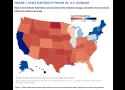
I have been writing here for about a decade that wind and solar would inevitably prove to be far more expensive for producing useful electricity than other methods like fossil fuels, nuclear, or hydro. The reasons are not difficult to understand. Wind and solar, due to intermittency, are not capable of powering a full-time electrical grid on their own. To make the grid capable of fulfilling customer demand 24/7/365, wind and solar require large amounts of additional capital infrastructure — dispatchable back-up generation, energy storage, additional transmission capacity, and more. If wind and solar prove insufficient to eliminate dispatchable back-up generation, then you find yourself running (and paying for) two duplicative systems, when you could have had only one. Energy storage as a potential solution to intermittency turns out to be impossibly expensive. If the only back-up generation you can find that works is powered by fossil fuels, then you haven’t even succeeded in achieving zero carbon emissions in the electricity sector. //
In 2025, Louisiana had the third-lowest electricity rates in the United States. The reasons are simple—73% of Louisiana’s electricity is generated by natural gas and unlike California or New York, Louisiana has not attempted to implement carbon dioxide or renewable energy goals through its electricity generation system. //
em
2 days ago · 0 Likes
Can you please boil this analysis down to a soundbite? Voters already believe renewables are cheaper, so that soundbite should include something that slays that belief.
Richard Greene
7 hours ago · 0 Likes
Free electricity with windmills and solar panels.
At night, when there is no wind, you will not pay for electricity.

When an attorney of many years experience gets disbarred by a court, it is not a trivial thing, but a serious, serious punishment, and not something judges take lightly. But, congratulations to Philadelphia’s George Soros-sponsored, criminal-loving and police-hating District Attorney, Larry Krasner, for getting one of his minions kicked out of practice for deliberate lying to a a federal district court. From The Philadelphia Inquirer:
Find & Remove Duplicate Files
You'd be surprised just how many duplicate documents, photos, music and other files build up on your computer. Duplicate Cleaner can find them and help you safely remove them: saving space and simplifying your life!
The hidden costs of powering civilization //
I want to ask you a question we don’t usually think about when we flip a light switch or fill up a tank…and that is, where does the energy actually come from?
Sure, sunlight, wind, and even coal and gas are technically free, they are energy sources just sitting there in nature to be used… some facing more limitations than others. But turning them into power we can actually use to run Santa Claus’ chocolate factory or light our christmas trees? That’s a whole different story.
This is where the idea of primary energy comes in. It’s actually not about the electricity we see listed on our bills, but is really about all the raw energy we have to pull from nature, to process, convert, and deliver before we get anything useful, such as 24/7/365 electricity, every single second we need it. And once you start looking at energy this way, things get a lot clearer.
We often hear that solar and wind energy is “clean” and basically “free” and it does not have thermal losses like a nuclear or gas-fired power plant. But to make this wind and solar energy usable and reliable in the real world, we have to build enormous support systems, mine rare minerals, manufacture components, build storage, upgrade the grid, maintain everything, and then, eventually, dispose of it. It’s not just about a solar panel and a little breeze blowing over a turbine blade.
Now compare that to conventional fuels like coal or gas or oil… they might lose more energy during combustion in power plants or engines, but the upfront infrastructure is simpler, and the systems last much longer, with the average coal or gas plant running for a good 30-60 years, nuclear usually far longer. That is not nothing and this should be considered when speaking of “free” energy.
Understanding primary energy helps cut through the feel-good stats and get down to the physics. It assists in showing us the full cost of electricity (FCOE), time, money and materials used in making any source truly usable…and once you see it, you can’t unsee it.
That is why looking at the real problem with the “Primary Energy Fallacy” often used by supporters of grid-scale wind and solar, is worth it! //
The “Primary Energy Fallacy” a term coined eloquently by many, is the idea that all primary energy from fossil fuels must be replaced by an equivalent amount of “renewable” energy. However, those people say, this would not be necessary because more than two-thirds of primary energy is lost as wasted heat during the conversion processes.
The misunderstanding occurs in the belief that wind and solar generate electricity without any losses (a secondary or tertiary form of energy) while coal, gas, uranium may have a high energy content but have “thermal losses” ~60-70% during processing. This PE fallacy argument is used for power generation and also for internal combustion engine vehicles (ICE) in a slightly adjusted form.
- Stated Primary Energy Fallacy 1: “The conversion of gas and coal to power results in a loss of around 60%. This means that one unit of primary energy from wind or solar, replaces two units of that of gas/coal”
- Stated Primary Energy Fallacy 2: “The conversion losses during end use in internal combustions engines ICE are also high. Electric motors are much more efficient. Most car engines ‘lose’ 70% of fuel energy, which means that one final energy unit of electricity replaces three units of gasoline/diesel”

Romance From Violin Concerto In D Major Op.35
Erich Wolfgang Korngold
If I want to "disable" syncing a pair, I click on the local filter (found in the center between the two gear symbols) and add a wildcard to the exclude section, thus excluding every file. To reenable syncing for that pair, I right-click on the local filter and select "Cut", which removes that filter and the file exclusion.
As far as I can tell, this works pretty well and is reasonably quick to toggle.