The millionaires behind TLR support reforms that prevent you from suing them, but they’re all too eager to undermine reforms that stop them from suing you. Their efforts to gut the TCPA should be no less shocking than if PETA were caught selling fur coats.
The TCPA protects Texans across the ideological spectrum, from grassroots activists to government watchdogs to on-line reviewers. Weakening the TCPA would embolden litigious corporations, political operatives, and deep-pocketed individuals to use the courts as a cudgel against their opponents. The impact would be devastating not just for those sued, but for the fundamental principles of free speech and open debate in Texas.
It’s unfortunate that tort reform advocates now want to gut one of Texas’ most successful tort reform laws. Their disdain for expensive litigation disappears when they’re the ones filing the lawsuits. Texans should reject these disingenuous, self-serving attacks and tell their lawmakers to leave the TCPA alone, ensuring that all of us—whether pro-life advocates, journalists, or everyday citizens—can continue speaking truth to power without fear of retaliation. //
anon-ymous99
an hour ago
The reddest states have the bluest Republican legislatures. Never ceases to amaze me.
Leitmotif anon-ymous99
6 minutes ago
Actually, it's quite logical - in a perverse sense.
When Republicans dominate the political life of a given state, the grifters, hacks, and opportunists who would otherwise naturally gravitate to the Democrat party join (unfortunately!) the Republican party instead. This phenomenon, in fact, is one on main factors to consider when reflecting upon that salient question that has haunted so many of us - "Where DO, exactly, all these RINOs come from?"
The Supreme Court’s continuing failure to define lower courts’ authority is wreaking havoc on the reputation of the courts — and our constitutional order. //
The Supreme Court has interceded six times in less than three months to rein in federal judges who improperly exceeded their Article III authority and infringed on the Article II authority of President Donald Trump. Yet the high court continues to issue mealy-mouthed opinions which serve only to exacerbate the ongoing battle between the Executive and Judicial branches of government. And now there is a constitutional crisis primed to explode this week in a federal court in Maryland over the removal of an El Salvadoran — courtesy of the justices’ latest baby-splitting foray on Thursday. //
Yet, those requests, as the Trump Administration pointed out yesterday in its response brief, directly infringe on the president’s Article II authority. “The federal courts have no authority to direct the Executive Branch to conduct foreign relations in a particular way, or engage with a foreign sovereign in a given manner,” the Trump Administration wrote. Rather, “[t]hat is the ‘exclusive power of the President as the sole organ of the federal government in the field of international relations.’”
While the Supreme Court has declared that “[s]uch power is ‘conclusive and preclusive,’ and beyond the reach of the federal courts’ equitable authority,” given her orders to date, Judge Xinis is unlikely to stand down. Rather, expect the Obama appointee to enter another scathing order demanding details and actions. But with its core executive powers at stake, the Trump Administration cannot comply.
The justices should have foreseen this standoff and defused the situation last week by clearly defining the limits of the lower court’s authority. The Supreme Court’s continuing failure to do so is wreaking havoc on the reputation of the courts — and our constitutional order.

"The relief sought by Plaintiffs is inconsistent with the Supreme Court’s instruction requiring this Court to respect the President’s Article II authority to manage foreign policy," says the DOJ brief, "The Court should therefore reject Plaintiffs’ request for further intrusive supervision of the Executive’s facilitation process beyond the daily status reports already ordered." They also note, "Defendants object to the requirement of daily status reports and reserve the right to challenge that requirement further." So, we can expect another fight to erupt over the frequency of case updates to make its way to the Fourth Circuit.
To make the point crystal clear to Judge Xinis, the brief goes on to say, "The Supreme Court explained that on remand, any new order must “clarify” the “scope of the term ‘effectuate,’” in a manner that did not “exceed the District Court’s authority.” The Court instructed that any “directive” must give “due regard for the deference owed to the Executive Branch in the conduct of foreign affairs.” And it made clear that any “directive” should concern “Abrego Garcia’s release from custody in El Salvador” and “ensure that his case is handled as it would have been had he not been improperly sent to El Salvador.”
This is critical because Judge Xinis and the Abrego Garcia's legal team have framed "facilitate" as "bring back to the US." The clear reading of the SCOTUS order is that it was referring to getting him out of prison. The DOJ brief makes it very clear that the administration does not consider "facilitate" to have anything to do with bringing an illegal alien and alleged gang member back to the US: "Defendants understand “facilitate” to mean what that term has long meant in the immigration context, namely actions allowing an alien to enter the United States. Taking “all available steps to facilitate” the return of Abrego Garcia is thus best read as taking all available steps to remove any domestic obstacles that would otherwise impede the alien’s ability to return here. Indeed, no other reading of 'facilitate is tenable—or constitutional—here." //
To make the matter more emphatic, the brief tells the judge that she is mucking about in areas where the Constitution tells her she cannot tread. "They [the plaintiffs] ask this Court to order Defendants to (i) make demands of the El Salvadoran government (A1), (ii) dispatch personnel onto the soil of an independent, sovereign nation (A2), and (iii) send an aircraft into the airspace of a sovereign foreign nation to extract a citizen of that nation from its custody (A3). All of those requested orders involve interactions with a foreign sovereign—and potential violations of that sovereignty. But as explained, a federal court cannot compel the Executive Branch to engage in any mandated act of diplomacy or incursion upon the sovereignty of another nation." All of this is true. Abrego Garcia is a Salvadoran citizen in the custody of the Salvadoran government. The US government has no authority to demand his release, even if it wants to do so. //
The government summarizes the demands made by the plaintiffs this way: "In response, Plaintiffs moved for three categories of relief: (1) an order superintending and micromanaging Defendants’ foreign relations with the independent, sovereign nation of El Salvador, (2) an order allowing expedited discovery and converting Tuesday’s hearing into an evidentiary hearing, and (3) an order to show cause for why Defendants should not be held in contempt. //
Galatians 5:22 Sandy-like the beach I can be
an hour ago
He is a citizen of El Salvador, a foreign nation. He is an MS-13 gang member in the custody of the El Salvadoran government. The United States has no authority to take a foreign citizen in the jail of that foreign citizen's country out of that country. //
1776-2023RIP
an hour ago
That is a lot of legalese and lawyerezing. The co equal Executive Branch should, for the sake of “separation of powers”, “ coequal branches of government “ and for our Constitution, completely ignore ALL district court judges. The Supreme Court is equal to the President. Not superior or “supreme “.
Lesser courts are not even equal.
It is arguable that even the Supreme Court doesn’t have the authority to countermand the President.
The supreme court has been wrong many times before and have been ignored by past presidents. Any conflicts arising between the executive and judicial branches get resolved by the legislative branch. That is our system. We are not to be ruled by edicts by the executive branch, true. But it is just as true that we are not necessarily to be ruled by edicts from the judicial branch either. The executive branch , to preserve executive authority, Must ignore these lower court rulings. Force the Supreme Court to take action. Then proceed from that point.

what is particularly revealing is how some parts of the Department of Justice see themselves as an independent branch of government.
Traditionally, all of the lawyers in the office except two — the solicitor general and the principal deputy — are nonpartisan career employees who span administrations, rather than political appointees. When the office takes legal positions, it has historically taken a long view about what is best for the U.S. government.
The hubris in this statement is simply breathtaking. No one in the federal bureaucracy has the remit of taking "a long view about what is best for the U.S. government." That is a political, not a professional judgment. It implies that unelected bureaucrats are supposed to act as a brake, or even an anchor or land mine, to keep an administration from going in a direction it doesn't like. That is wrong, and it is the essence of the Third World style Deep State that President Trump railed against during his first term. //
Those people said the exodus raises questions about whether the department will be able to recruit attorneys from top law schools with clerkship experience and diverse backgrounds at a time when the administration is rapidly filing emergency requests at the high court.
Again, this is an example of the Deep State inadvertently revealing itself. If the Department of Justice values those things and thinks it will not be able to find them if it loyally serves the president, it is making a strong case that its offices are both partisan and elitist. //
Fortunately, the Trump administration is rising to the challenge of finding lawyers who are willing to work to further the Trump agenda.
The Justice Department is building a roster of lawyers willing to defend in court the most controversial parts of President Donald Trump’s agenda, firing career attorneys whom leaders view as standing in their way and hiring dozens of political appointees to carry out the president’s agenda.
The new hires are already appearing on behalf of the government to defend Trump’s efforts to remake immigration policy and the federal workforce and to expand the powers of the presidency. They sometimes sit in front of judges alone, without the cadre of veteran attorneys who typically show up for big cases.
Some have prestigious conservative credentials, clerking for Supreme Court justices and top federal judges, according to a review of the new hires’ professional bios posted on LinkedIn. Others are fresh out of law school, taking on influential positions. Many honed their legal skills working for conservative state attorneys general during the Biden administration. //
Battles like these are happening across the federal government: in the Department of Health and Human Services, at the Environmental Protection Agency, and even in the Armed Forces; see Top US Commander in Greenland Disavows Trump's Position to US and Danish Troops (Updated). The idea that only long-serving, ideologically driven elite law school graduates can adequately represent the United States in court is ridiculous, and you need only look at past performance for the proof. //
GBenton 2 hours ago
Unhappy with the limits our republic as founded placed on the left's demonic lust for power, they spent the last 100 years growing the administrative state outside the bounds and through lawfare and dumbing down the voters with public education, they tried to subjugate and enslave us from within without firing a shot.
Appeals to the norms are simply an attempt to get us to accept our serfdom and not ask of district judges can usurp Article II powers or of the IA can run color revolutions and even delete presidents like JFK or railroad them out like Nixon amd Trump.
its all smoke and mirrors. This extra constitutional adventure needs to come to an end or we lose the country.
McCarthy was right. The commies are burrowed in everywhere, playing the long game.
Time to tear out what they corrupted over the last century and reform education so they can't easily rebuild it.

The MCM states any service member may be prosecuted under Article 88 (Contempt Toward Officials) if they use “contemptuous words against the President, the Vice President, Congress, the Secretary of Defense, the Secretary of a military department, the Secretary of Security, or the Governor or legislature of any State, Commonwealth, or possession in which he is on duty or present.”. //
Service members convicted of an Article 88 violation face a maximum punishment of dismissal, forfeiture of all pay and allowances, and one year of forced confinement.

What if I told you that when federal district judges issue injunctions blocking President Donald Trump’s policies in a judicial insurrection, they were the ones breaking the law?
No, it’s not just because these judges are effectively usurping the authority of the president over the executive branch. It’s more clear-cut than that.
When Chief Judge James Boasberg of the U.S. District Court in Washington, D.C., issued an order demanding the Trump administration return reputed members of the Venezuelan gang Tren de Aragua to the U.S., he wasn’t just making immigration policy—he was violating a black-and-white rule laid down by the U.S. Supreme Court.
It’s called the Federal Rule of Civil Procedure 65(c). Here’s what it says:
The court may issue a preliminary injunction or a temporary restraining order only if the movant [that is, petitioner] gives security in an amount that the court considers proper to pay the costs and damages sustained by any party found to have been wrongfully enjoined or restrained. The United States, its officers, and its agencies are not required to give security.
What does that mean? It means that when the ACLU files a lawsuit against the Trump administration and asks the judge to issue an order forcing Trump to turn around, in midflight, the planes deporting violent gangbangers, the ACLU has to put up or shut up.
The ACLU has to put down a “security” payment when asking for the court order, just in case a later judge strikes down the order after it already cost the government money to follow it.
This commonsense requirement isn’t a Trump wish list item. It’s a rule with the force of law. //
So, why isn’t the Department of Justice formally asking judges to enforce this rule?
The Foundation for Individual Rights and Expression may give a hint at the answer.
“Courts have long recognized exceptions for public-interest litigation, especially when it comes to those seeking to protect constitutional rights,” FIRE’s Ronnie London explained.
Perhaps the Justice Department is unwilling to press its rights on this issue because groups such as FIRE would like a public-interest exception.
Still, Hans von Spakovsky, a senior legal fellow at The Heritage Foundation’s Center for Legal and Judicial Studies, told The Daily Signal, “There is no exception.”
Daniel Huff, who worked as an attorney in the first Trump White House, wrote about the issue for The Wall Street Journal.
He called the “public interest” exception “made-up” and “subjective.”
“This elitist conceit presumes that it is in the public interest to exempt activists from standard legal rules so they can block actions ordered by the president, for whom 77 million Americans voted,” Huff wrote.
He cited no less a judge than since-deceased Supreme Court Justice Ruth Bader Ginsburg, when she served on the U.S. Court of Appeals for the D.C. Circuit.
In National Kidney Patients Association v. Sullivan (1992), a district judge tried to invoke public interest to waive the security payment. A panel of the D.C. Circuit, which included future Justice Ginsburg, rejected the claim outright: “This completely overlooks a key purpose of the bond … to make plaintiffs consider the damage they may inflict by pressing ahead with a possibly losing claim.”


Like with the Japanese internment during World War II, the current move to deport alleged alien criminals is driven by hysteria.

This is a prime example of the press exposing its activist nature. When these select judges ruled on Trump’s activities, it was hyperactive coverage and banner headlines. Judge James Boasberg has become something of a media darling for imposing injunctions and TROs on deportation efforts. Yet when these cases rise to the Supreme Court and get reversed, you might see some pat reporting and solitary articles.
Logic would dictate that if these were in fact serious cases, the coverage would match on either side of a ruling. But as we have become conditioned to for some time, the press is largely dictated by emotion and partisanship. When these judges came out with rulings opposing Trump’s policies, it was blaring headlines, round-the-clock coverage, and every exploration made into how the president was defying the Constitution and burning down our democracy.
Now we get solitary news items and a calming of the waters. Primetime pundits are not delving into the prospect of rogue judges threatening our democracy by attempting to override the president. No “experts” are brought on camera to criticize courts trying to step in and wrest Executive Branch control from the Chief Executive. Outlets are not sharing op-eds about the meaning of it all concerning SCOTUS.
This is a clear sign of an activist media complex. The coverage of the initial judgements were not merely sober presentations of the facts; they were promoting an agenda and encouraging these actions by the judges. Once the rulings come in, then the media makes proclamations and charges Trump with “defying the courts” accusations and interpreting worst-case scenarios.
This is a major advance in the moves by the partisan press. This is not merely farming a narrative anymore; this is a blatant attempt to influence governance. There is a clear anti-administration agenda and they're not even attempting to hide it. They begin from the standpoint that Trump is wrong, regardless of the issue, and then strain to manipulate details to suit that accusation.
Look at one of the impotent arguments made about the use of the Alien Enemies Act when it was said to be invalid because it is an old law from the 1700s. Somehow, this was supposed to suggest that the AEA no longer counts. But for this logic to stand, then you have to question the legitimacy of the very Constitution itself, given that the document predates the law they do not like.

The fact is that if Senate Republicans stand by the parliamentarian’s ruling and allow her to determine what executive communications are and aren’t actually rules, they will be setting their own new precedent for the CRA; call it “the Whitehouse Rule” after Sheldon Whitehouse, D-R.I., the senator who goaded GAO into action. Going forward, those opposed to CRA resolutions would be able to smother them in the crib with adverse GAO “observations” adjudicated by the parliamentarian, who will herself be mired in an endless morass of legalese about statutory construction and APA interpretation.
Furthermore, if the comptroller general is able to foil the White House’s energy agenda, Donald Trump will surely fire and replace him. Tenure protections have not stopped the president yet. When that legal storm subsides, does anybody really think a Trump comptroller’s “observations” will green light, say, Democrat CRA resolutions against the Department of Government Efficiency? The Whitehouse Rule would set a precedent even Democrats will regret — and perhaps a lot sooner than they think.
Much has been made about Congress outsourcing its legislative responsibilities — to the courts, the executive, and private parties. Senate Republicans shouldn’t continue this unfortunate trend by outsourcing their legislative prerogatives to the parliamentarian.

As the country’s largest funder of civil legal aid, LSC provides critical legal representation to low-income Americans—including veterans, families with children and seniors—who are facing life-altering civil legal challenges such as wrongful evictions, domestic violence and consumer fraud. Defunding LSC would not only deny vulnerable individuals access to justice, but would ultimately increase costs for taxpayers.
When someone is accused of a crime and does not have the resources to hire an attorney, state and federal governments provide legal representation. This is not the case when people face civil actions such as custody battles, foreclosure or denial of veterans and social security benefits. To qualify for legal aid, people must meet strict income guidelines: a family of four must earn less than $32,150 a year and an individual must earn less than $15,650.
A well-functioning legal system is fundamental to maintaining order and ensuring justice. LSC provides essential funding for legal aid organizations that assist low-income American workers and families in navigating civil legal disputes. Without this assistance, many would be left without legal recourse, exacerbating instability in communities and overburdening the courts with self-represented litigants. //
Rather than promoting progressive legal activism, as the misguided article states, LSC and its grantees are bound by strict statutory limitations (imposed by Congress) on the types of cases it can support. LSC grantees cannot engage in class-action lawsuits, lobbying, or political advocacy, and those restrictions apply to funding from any source. In other words, if a grantee accepts so much as $1 from LSC, it must abide by the same conditions that Congress imposed; it cannot raise money from other sources and engage in any prohibited activities. Moreover, extensive, multi-layered oversight mechanisms, including an independent Office of the Inspector General, review and ensure that both LSC and its grantees operate within the scope of these limitations. The idea that civil legal aid is a vehicle for partisan activism is a mischaracterization that ignores the broad restrictions set by Congress. //
Rather than eliminating LSC, a more constructive approach would be to ensure its funding is used effectively and transparently. Lawmakers should focus, as they have in the past, on strengthening accountability measures while maintaining this critical safety net that aligns with the principles of fairness, efficiency and limited government intervention. //
Reply:
Hecht and Malcolm assert that, today, Congress has finally succeeded in restricting LSC’s radical mission. Let us for a moment grant that they are correct (which they are not); is it not strange that they see no irony in urging conservatives to accept and embrace Lyndon Johnson’s original Great Society vision of federal funding for private lawsuits? As constitutionalists, conservatives flatly reject the notion that Congress, under any circumstances, should be injecting each year hundreds of millions of dollars into the private practice of law. //
Meanwhile, California Rural Legal Assistance continues to sue state entities, such as the Bakersfield City School District, for not spending enough public money on education. A generation ago, Governor Reagan wondered, as should President Trump today, what business the federal government has in financing private lawsuits against state and local entities. If a majority of Californians seek to change public policy on education, let them win at the ballot box, not in the courthouse in league with an activist judge. //
It is the same with America’s out-of-control homelessness policies, which have been pushed to extremes, ruining much of our country’s urban life. Homelessness is another public policy passion in the legal aid world and judicial activism is the approach that most LSC grantees support.

“You may very well disagree with the enforcement of our federal immigration laws, but it is inappropriate to suggest to the public that federal officers can be criminally prosecuted by your office or any other state or local prosecutor’s office for performing their official duties.” //
U.S. Attorney of Massachusetts Leah Foley told Suffolk County District Attorney Kevin Hayden and a Boston judge to knock it off after threatening to hold an ICE agent in contempt because he arrested an illegal alien during his criminal trial.
Important to note: The ICE agent and troopers did not walk into the courtroom and grab the illegal alien. They arrested him outside of the courthouse. //
Any attempt or threat to interfere with the lawful actions of federal government agents will not be tolerated. Indeed, under Title 18, United States Code, Section 111(a), it is a felony offense to assault, resist, oppose, impede, intimidate, or interfere with an immigration officer’s efforts to duly execute the immigration laws of the United States.
Foley’s letter to Judge Mark Summerville echoed similar thoughts, reminding him that his court lacks any authority whatsoever to proceed in this matter with respect to United States Immigration and Customs Enforcement Officer Brian Sullivan or any other federal official relating to the lawful federal arrest of an illegal alien.”

Garcia, a citizen of El Salvador, who is portrayed as a "Maryland father" in most news reports, entered the US illegally in 2011. In 2019, he was arrested on allegations of membership in the violent Salvadoran gang called Mara Salvatrucha, or MS-13. At that time, he applied for political asylum, which was denied. He was given an order of removal, but a judge put his deportation on hold on the grounds that he might be in danger if he returned to El Salvador. In early March, Garcia was arrested and put on a plane to El Salvador and the Terrorist Confinement Facility, CECOT.
His attorneys sued, and a judge ordered the Trump administration to return Garcia to Maryland. In her order, the judge called the deportation “an illegal act.”
When White House spokeswoman Karoline Leavitt reacted by saying, “We suggest the Judge contact [El Salvador’s] President [Nayib] Bukele because we are unaware of the judge having jurisdiction or authority over the country of El Salvador,” it struck me, and many others, as the kind of remark you can make if you are in no danger of facing the judge in a courtroom. As it turned out, she perfectly captured the tone of the administration's request for a stay of her order.
High Points
The first response was that the judge's order is impossible to comply with.
The district court’s order—a command to “facilitate and effectuate” Abrego Garcia’s return from a foreign country by midnight on Monday—is unlawful. There is no likelihood that it would survive review on appeal.
...The order below is neither possible nor proper. As noted, Abrego Garcia is an El Salvadoran national, being held in El Salvador, at the hands of the El Salvadoran government.
The conclusion is my favorite.
Because the United States has no control over Abrego Garcia, however, Defendants have no independent authority to “effectuate” his return to the United States—any more than they would have the power to follow a court order commanding them to “effectuate” the end of the war in Ukraine, or a return of the hostages from Gaza.
The government's argument is that Garcia had a final deportation order, so the district court judge erred in hearing the case because it was outside her jurisdiction.
Even putting aside these fundamental defects, the order below also runs into a statutory bar. Section 1252(g) strips district courts of jurisdiction to review “any cause or claim by or on behalf of any alien arising from the decision or action by the Attorney General to … execute removal orders 11 against any alien” under the INA, except as otherwise provided in § 1252. 8 U.S.C. § 1252(g) (emphasis added). This is such a suit. The district court thus lacked jurisdiction over this case, and lacked authority to issue its order. //
The government's brief conclusively takes apart every aspect of Garcia's case. He had a deportation order, he had MS-13 connections that make him ineligible to enter the US, the judge not only doesn't have the clout to make El Salvador send him back to the US, she isn't legally allowed to hear the case.
The point of all the injunctions and restraining orders is to preserve the supreme rule of unelected and unaccountable bureaucrats. //
More nationwide injunctions and restraining orders have been issued against Trump in the past month that were issued against the Biden administration in four years. On Wednesday alone, four different federal judges ordered Elon Musk to reinstate USAID workers (something he and DOGE have no authority to do), ordered President Trump to disclose sensitive operational details about the deportation flights of alleged terrorists, ordered the Department of Defense to admit individuals suffering from gender dysphoria to the military, and ordered the Department of Education to issue $600 million in DEI grants to schools.
On one level, what all this amounts to is an attempted takeover of the Executive Branch by the Judicial Branch — a judicial coup d’état. These judges are usurping President Trump’s valid exercise of his Executive Branch powers through sheer judicial fiat — a raw assertion of power by one branch of the federal government against another.

One added note: The DOJ sought to have the case dismissed without prejudice — meaning it could be brought again at some later date. Ho declined to grant that request, opting instead to dismiss it with prejudice, and noting:
In light of DOJ’s rationales, dismissing the case without prejudice would create the unavoidable perception that the Mayor’s freedom depends on his ability to carry out the immigration enforcement priorities of the administration, and that he might be more beholden to the demands of the federal government than to the wishes of his own constituents. That appearance is inevitable, and it counsels in favor of dismissal with prejudice. //
raswhiting Random US Citizen
an hour ago
Yes, it seems the corruption encouraged and allowed by the leftist Democrats is a feature, not a bug in the system, with one reason being it gives the top Democrats leverage over the lower, corrupt Democrats, i.e., the threat of prosecution.
there's plenty to say about Chen's reasoning as well. Should a judge be overruling the executive branch based on his own personal feelings about "economic activity" and "public health?" How would "safety in communities" even be affected?
I would posit that none of that should be considered. The only thing Chen should have been analyzing was what the law says and whether the administration was within its legal right to remove TPS in this case. Not only did he not do that, but it appears he completely contradicted the law.
You see, this issue was already litigated under the first Trump administration, and the Ninth Circuit Court of Appeals ruled that TPS is not subject to judicial review.
Bill Melugin @BillMelugin
·
Replying to @BillMelugin
Notably, U.S. law says this is not subject to judicial review, and the 9th Circuit upheld that in Trump’s first term.
8 U.S.C. § 1254a(b)(5):
“There is no judicial review of any determination of the [DHS Secretary] with respect to the designation, or termination or extension of
Bill Melugin @BillMelugin_
·
Here is that Prior 9th Circuit decision siding with the Trump admin when he sought to terminate TPS for Haiti, Sudan, Nicaragua, and El Salvador and a district judge tried to block it.
https://cdn.ca9.uscourts.gov/datastore/opinions/2020/09/14/18-16981.pdf
8:48 PM · Mar 31, 2025.
In other words, not only is Chen violating the law with his order by ruling on something already deemed not subject to judicial review, but he's then demanding the administration meet a legal standard that doesn't even exist. //
CaptainCall
7 hours ago
This seems like a perfect judicial order for Trump to ignore. He can simply explain that he is not ignoring the courts...he's following the ruling by the 9th circuit, not the district court.
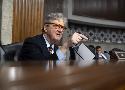
Kennedy then asked the assistant AG nominee to "explain how this works."
You have a plaintiff and you have a defendant. And the plaintiff files a lawsuit and goes in front of a federal judge. a federal judge has a certain jurisdiction ... and subject matter over the parties; the plaintiff and the defendant. They're the only two people in court. How can a federal judge issue an order that affects everybody else — other than those in front of him or her? How's that possible?
Shumate was on it:
It shouldn't be possible, Senator. But district courts do it all the time. I think on the theory that the courts need to enjoin a federal policy from going into effect, and they also will enjoin it nationwide so all non-parties are protected by that injunction. //
John Kennedy @SenJohnKennedy
·
The universal injunction has become a weapon against the Trump admin.
It’s long past time to put an end to this lawless practice.
12:50 PM · Mar 26, 2025. //
anon-l1t0
15 minutes ago
I remember when Obama wanted to make changes in the law but could not get Congress to agree. He found a willing plaintiff to sue the government, and a friendly judge, and then entered into a Consent Decree to accomplish his desired outcome. Then if someone sane objected, Obama simply pointed to the court order and said that his hands were tied by the court. Lawfare working for rather than against the President and his agenda. That is how it is done.

Crawford | March 26, 2025 at 11:46 am
“No matter where you are and what you’re accused of, you deserve due process if you are a citizen of America.”
Simply not true. US citizens who had gone to Germany and volunteered for the Wehrmacht were not given due process during WWII, and no one expected them to receive it. They were enemy combatants, no more.
TargaGTS in reply to Crawford. | March 26, 2025 at 12:47 pm
That’s true. They were not afforded due process on the battlefield…in Europe. However, some were captured in the US. For instance, the US citizens involved in Operation Pastorious (three total), were granted due process (as were the other German nationals captured with them) and that would eventually produce the case SCOTUS decided, Ex parte Quirin, 317 U.S. 1 (1942). Those men were eventually sentenced to death. Their convictions upheld by the Court but two of the three US citizens were granted clemency by FDR and I think later deported to Germany after the war. One was executed weeks after the sentences were upheld.

According to numbers compiled by the Harvard Law Review, U.S. District Courts have issued more sweeping injunctions against Trump in the past two months than they have against three former presidents over their entire terms.
Since Jan. 20, lower courts have imposed 15 nationwide injunctions against the Trump administration, compared to what the Harvard Law Review recounts as six over the course of George W. Bush’s eight-year presidency, 12 over the course of Barack Obama’s eight years in the White House, and 14 during Joe Biden’s single four-year term.
During his first term, Trump was subjected to 64 nationwide injunctions. If inferior courts continue issuing nationwide injunctions against the Trump administration at the current rate (15 for every two months in office), then the second Trump administration will have accumulated 360 nationwide injunctions by the time the president leaves office—and a grand total of 424 over the course of both of Trump’s terms. However, there have been a total of over 45 rulings or more targeted injunctions leveled against the second Trump administration overall, according to The New York Times. //
The Harvard Law Review’s tally (published in 2024) also noted the increased partisanship of the federal judiciary. Of the six injunctions imposed against Republican Bush, half came from judges appointed by Democrats and half from judges appointed by Republicans. Of the 12 injunctions imposed against Democrat Obama, seven (less than 60%) were issued by judges appointed by Republicans. Of the 64 injunctions Trump’s first Republican administration was slapped with, 92.2% were issued by judges appointed by Democrats. All—100%—of the 14 injunctions issued against Democrat Biden came from Republican-appointed judges. //
The growing use of nationwide injunctions by inferior courts, the prestigious legal journal warned, necessarily has a chilling effect on the development of law and precedent. When several inferior courts of different jurisdictions issue conflicting rulings, the matter often winds up at the U.S. Supreme Court, where a definitive standard is set for addressing similar issues going forward. However, nationwide injunctions halt the continued challenging of executive orders, executive actions, or laws, since, as the Harvard Law Review pointed out, various other inferior courts simply refuse to take up related cases, determining that there can be no demonstration of injury in fact while the nationwide injunctions are in place.

Where were these Guardians of Justice when Joe Biden illegally invited and lured in millions and millions of "new Americans and undocumented immigrants?" Where? Why nowhere, of course. These robes seemingly had very little to say about U.S. Code § 1325 (based on Article IV, Section IV of the Constitution) and its undeniable violation. A violation that has, and will continue to for decades, fundamentally changed the history of America. Letting in millions and millions of aliens, and then making the citizenry pay for their everything from schooling, health care, drunk driving deaths, rapes, murders, and any other crimes they committed while here has changed life for us all on many different levels.
It is unclear why the D.C. Circuit has allowed Dellinger’s Motion to Dismiss to linger, as opposed to denying it with a note reprimanding his attorneys to follow the controlling procedures for dismissing a case. But by failing to immediately nix Dellinger’s efforts to manipulate the court, we are now seeing other litigants, such as those in the Maryland case challenging the termination of DEI initiatives, trying similar tacks.
The appellate courts need to make clear to litigants that such jockeying will not work, and then they need to put an end to the outrageous preliminary injunctions. And if they refuse to do so, the Supreme Court needs to end its delusional view that it is maintaining the reputation of the judicial branch by allowing the normal process to play out in these politically charged cases—because there is nothing normal about the lower courts’ efforts to unconstitutionally control the Executive Branch.