
Today, nuclear power is not usually considered among the “sustainable” alternatives to fossil fuels and, since it relies upon uranium as a fuel, of which a finite supply exists on Earth, is classified as “non-renewable” and hence not viable as a long-term energy source. But what do you mean “long-term”, anyway? Eventually, the Sun will burn out, after all, so even solar isn’t forever. Will ten thousand years or so do for now, until we can think of something better?
Energy “experts” scoff at the long-term prospects for nuclear fission power, observing that known worldwide reserves of uranium, used in present-day reactor designs, would suffice for only on the order of a century if nuclear power were to replace all primary power generation sources presently in use. But is this correct? In fact, this conclusion stems not from science and technology, but stupidity and timidity, and nuclear fission is a “bird in the hand” solution to the world’s energy problems awaiting only the courage and will to deploy it.
That is the conclusion by the authors of a paper with the same title as this post, “Nuclear Fission Fuel is Inexhaustible 45” [PDF, 8 pages], presented at the IEEE EIC Climate Change Conference in Ottawa, Canada in May 2006. Here is the abstract:
Nuclear fission energy is as inexhaustible as those energies usually termed “renewable”, such as hydro, wind, solar, and biomass. But, unlike the sum of these energies, nuclear fission energy has sufficient capacity to replace fossil fuels as they become scarce. Replacement of the current thermal variety of nuclear fission reactors with nuclear fission fast reactors, which are 100 times more fuel efficient, can dramatically extend nuclear fuel reserves. The contribution of uranium price to the cost of electricity generated by fast reactors, even if its price were the same as that of gold at US$14,000/kg, would be US$0.003/kWh of electricity generated. At that price, economically viable uranium reserves would be, for all practical purposes, inexhaustible. Uranium could power the world as far into the future as we are today from the dawn of civilization—more than 10,000 years ago. Fast reactors have distinct advantages in siting of plants, product transport and management of waste.


How the country is going K-nuclear //
In 1972 South Korea began construction of its first commercial nuclear power plant, at a time when the country’s per-capita income was slightly lower than that of North Korea. Since South Korea had a relatively small industrial base at the time, undertaking a large infrastructure project was risky.
Propitiously, the venture paid off, and South Korea’s daring has been an overture to success: the country’s industrial growth is largely thanks to nuclear power. With 25 nuclear reactors, South Korea is currently the world’s sixth-largest producer of nuclear energy. In 2022, South Korea ranked third worldwide in terms of the number of nuclear reactors under construction, following China and India.
The country has put a significant amount of effort into developing its nuclear industry, which is demonstrated by the three South Korean power plants in the top five on the list of leading nuclear power plants ranked by capacity in 2023.
After President Yoon Suk Yeol took office in 2022, the administration embraced nuclear energy fully. Speaking of the previous government’s stance against nuclear energy, Yoon pulled no punches, stating: “Had we not been foolish over the past five years and further reinforced the nuclear power ecosystem, we probably would not have any competitors now.” //
Standardisation is key to South Korea’s success with nuclear energy. This means building the same design, ideally using the same engineers who have become familiar with the design, repeatedly, and licensing multiple new reactors at the same time. A paper on standarisation in South Korea summarises that: “Where a number of nuclear power plants are constructed in series within the framework of a long-term national power development plan, nuclear power plant standardisation can definitely facilitate self-reliance in the technology.”
As President Yoon puts it, "The competitiveness of our nuclear plant businesses lies in our ability to construct on time and on budget, which no other company in the world can imitate."
ThorCon is a packaged nuclear power plant concept from Martingale, Inc. that is designed to wring capital costs out of nuclear plant construction. The company visionaries have recognized that the biggest hurdles to building new actinide-fueled reactors are the initial capital investment along with the excessive required construction lead time.
Instead of complaining that “the market” does not reward carefully crafted works of industrial art designed to last for sixty to one hundred years with lucrative paybacks delayed for three or four decades after final investment decisions, the ThorCon design team started with the notion that product designers must create offerings that satisfy market demands.
Today’s energy market rewards financial flexibility, predictable construction schedules, reasonably low investment, affordable operating costs, low or no emissions, and readily implemented upgrade paths. If the offered solution is one that uses actinide fission, customers will also want to clearly understand provisions for handling process leftovers, liabilities, accident prevention, consequence mitigation and regulatory barriers.
Zion Lights @ziontree
One of the reasons I like nuclear energy is its small land footprint.
This video shows the amount of land required by the Olkiluoto 3 nuclear power plant in Finland compared with wind power.
Data visualisation by @Klimavenner

mopani
4 days ago edited
Hydrogen molecules are the smallest in the universe, making it very difficult to make effective seals. First strike.
Hydrogen has an extremely wide flammability range, 4% to 76% of air. Strike two.
While the molar energy density (per molecule) and energy density by weight of hydrogen are exceptional, its volumetric energy density is extremely low, even in liquid form. Compare the size of hydrogen tank to the size of the oxygen tank in the space shuttle. That's one of the primary reasons the SpaceX Super Heavy and Starship rockets use methane instead of hydrogen, because the volumetric energy density is orders of magnitude greater. Strike three.
The Hydrogen energy economy is just another government boondoggle like Solyndra. Attractive on the surface, and sounds intelligent, but ultimately impractical and wasteful.
It's funny actually, if not ironic, that the volumetric energy density of hydrogen is so poor, but as soon as you combine it with some other element, say carbon, its volumetric energy density and practical usability go off the charts! I'm sure some commercial enterprise will discover this and exploit it real soon, and I'm willing to wager that it won't take any government money to build an absolutely booming economy out of it either!!
Just skip the hydrogen! If you're not going to exploit the most efficient energy store in the universe by using a hydrogen compound (hydrocarbons), why do you want to use only half of it, the hydrogen alone?
One should not too quickly dismiss what several generations of the most brilliant minds have already developed and streamlined into an efficient system with sophomoric thinking that somehow believes is an overlooked insight into the fundamentals of the universe.
What is being overlooked is the fantastic energy available from fissioning atoms. The most powerful chemical reaction generates 9 electron volts of energy per molecule. The energy from the fission of one atom (of which there are at minimum three in any chemical reaction) is almost 2 million electron volts. We know how to safely harness an energy source that is six orders of magnitude more powerful than any other, and yet it is rejected. You have to ask why.
"What about the nuclear waste?" It's not waste, it is used fuel, and it can be reused, except that Jimmy Carter, who calls himself a "nuclear engineer" although he never completed the Navy nuclear school, decreed that reusing spent fuel was too dangerous.
Consider too, that nuclear power plants are the only source of energy that completely contain all of their waste/byproducts. The used fuel from all of the nuclear power plants in 70 years of operation in the United States would not fill one single Walmart store.
Annual fuel use for one reactor is 35 tons of uranium fuel -- one semi truck load, although it would only fill a couple of milk crates. The same size coal power plant requires 100 coal cars per day.
Much Hoon, Very Flerp -> mopani
3 days ago
Mo, if you don’t mind my asking, what is it you do for a living? That’s probably the best short form explanation of the issue I’ve ever heard or read. Thank you.
mopani -> Much Hoon, Very Flerp
a day ago edited
Thank you for the compliment. I'm a missionary radio engineer that manages diesel generators and some solar plants because of poor energy supply in Africa.
I've been reading about and studying "renewables" and energy most of my life; I've come to the conclusion that most of the world's leaders are at the energy sophomore phase I was at in high school. Will they ever grow up? Doubtful, to be honest.
If you want a really well-rounded perspective on the whole energy and environment picture and not just the hot takes, read Michael Shellenberger's Apocalypse Never. Fantastic book, and hard to put down! His website is http://environmentalprogres... and is the only thing I've ever seen come out of Berserkely that I could whole-heartedly support. =)
[Edit: I should also give a shout-out to David MacKay's Sustainable Energy -- Without the Hot Air, available on Amazon and online at http://www.withouthotair.com. There is not a better "whole picture" view of energy use out there. ]
One of the best nuclear reactor designs was the Molten Salt Reactor, built and tested at Oak Ridge National Labs from 1965-1969. Thorcon Power wants to mass produce this proven design on a ship-yard assembly line. If CO2 emissions are an existential threat, then we need to be building one hundred 1GW nuclear power plants per year.
A molten salt reactor doesn't need to exchange fuel when the fission product isotopes start to poison the reaction, because the worst poisons ("neutron eaters") are noble gases, and if your fuel is liquid, they can easily be removed instead of being trapped in a solid fuel pellet. So instead of 35 tons of fuel per year, it would only need 1 ton of nuclear fuel per year, and it would extract at least 30% of the potential energy instead of 1%, like the typical Pressurized Water Reactors (Boiling Water Reactors are similar efficiency).
Besides Thorcon's website, visit http://www.daretothink.org to learn more about Molten Salt Reactors; I recommend starting with the "Numbers" page. //
mopani > C. S. P. Schofield
2 days ago
"Hydrogen has its own problems"
Yes, yes it does. It may have the highest energy per molecule, but it is also the smallest molecule, making it very difficult to seal. It also has the worst volumetric energy because of its low density. It's funny how combining it with a couple of carbon atoms fixes that! I wrote a long comment about this the other day on Ward Clark's article about hydrogen.
What would really be interesting, and I think is being ignored for obvious reasons, is hydrocarbon fuel cells, combining the simplicity of the electric drive train with the efficient energy storage of hydrocarbons. It also makes it very easy to make it a hybrid, and if we're wanting to improve efficiency and lower emissions, every vehicle should be a hybrid to recover braking and downhill energy. But hybrids with internal combustion engines add significant complexity.
Fossil fuels are the dirtiest and most dangerous energy sources, while nuclear and modern renewable energy sources are vastly safer and cleaner.

“We will make electricity so cheap that only the rich will burn candles” - Thomas Edison
Edison was dreaming big when he said that. //
Belgium was dreaming big when they built the Atomium. It took 18 months to design and another 18 months to build. //
J'ai vu le futur. “I have seen the future.” These words are displayed inside the structure like a mantra for humankind. It’s not wrong. Consider the structures we admire the most: the Eiffel Tower, the Colosseum, the Pyramids, the Taj Mahal, the Easter Island heads, etc. We do not argue that these structures are too big. We visit them because they are so big, to marvel at their bigness.
For much of human history, we have tried to show our greatness, or to celebrate that which we have believed to be greater than us, through constructing large monuments.
So why are large-scale projects now so heavily criticised?
It may not surprise you that the idea that big is bad came from an anti-growth, anti-technology activist.
E F Schumacher wrote Small is Beautiful: A Study of Economics as if People Mattered in 1973. The book argues in favour of what Schumacher calls small, “appropriate” technologies as a superior alternative to the general ethos of "bigger is better". The latest edition of the book features a foreword by depopulation and degrowth activist Jonathon Porritt.
The book is a holy text for degrowthers, anti-progress activists, and Malthusians alike. It suffers from the recrudescence of the common fallacy of man versus nature, as Schumacher argues that “The system of nature, of which man is a part, tends to be self-balancing, self-adjusting, self-cleansing. Not so with technology.” //
What do I miss, as a human being, if I have never heard of the Second Law of Thermodynamics? The answer is: Nothing. And what do I miss by not knowing Shakespeare? Unless I get my understanding from another source, I simply miss my life. Shall we tell our children that one thing is as good as another-- here a bit of knowledge of physics, and there a bit of knowledge of literature? If we do so, the sins of the fathers will be visited upon the children unto the third and fourth generation, because that normally is the time it takes from the birth of an idea to its full maturity when it fills the minds of a new generation and makes them think by it. Science cannot produce ideas by which we could live.”
Consider that last statement. “Science cannot produce ideas by which we could live.” And yet we have heating, lighting, telephones, the Internet, shoes, glasses, clothes, and so on, thanks to science - not Shakespeare (though I take no umbrage with the Bard). The greatest irony of this statement is that we only have books like Schumacher’s and Shakespeare’s thanks to science and technology.
That a prophet of such pessimism and blinkered thinking has influenced our ideas of large-scale technology ought to concern us. While activists argue against large-scale technological projects, note that when they consider the structures to be works of art the same argument is seldom made. For example, the construction of the Sagrada Família, the largest unfinished Catholic church in the world, began in 1882 and continues to this day. For the most part, people do not cry “it’s too big!” or “what about the cost?!” regarding the church. They allow it to be built. They want to see it finished. Similarly, the Notre-Dame is being rapidly rebuilt after it caught fire in 2019. //
The fact is that we need one - power plants - to have the other - the Sagrada Família, Notre-Dame, etc.
Back to the Atomium. With this single structure, Belgium depicted its love of physics through art. The country wanted to highlight and promote the post-war ideal of peacefully applying atomic research and other advancements in technology, and with over 600,000 visitors per year, the Atomium has achieved this aim. //
Schumacher and I do agree on one thing. He wrote: “To talk about the future is useful only if it leads to action now.” Indeed, we should act now and start building. Large-scale nuclear energy is needed to displace fossil fuels, and committing to it represents the veriest foresight. Without new power plants, we cannot hope to overcome the vicissitudes of tomorrow and maintain the progress that led us here, and beyond. Sometimes we need to dream big and build big. Or, to put it less elegantly, we should go big or go home.

Scientists reveal three unique electron states in molten salts, a crucial discovery for future salt-fueled nuclear reactors’ radiation impacts.

The Church of Christ school is working with the US government to build an experimental reactor. //
Abilene Christian, in partnership with several other universities and with support from the US Department of Energy, is developing plans to construct a molten salt nuclear reactor that are currently under review by the Nuclear Regulatory Commission.
The school has built a $23 million facility to house the reactor and expects approval to start work on it in May 2024. Building that should take about 18 months, and then the school will apply for approval to operate it. The team hopes to fire up the first reactor in late 2025 or early 2026.

NuScale is the second major U.S. reactor company to cut jobs in recent months. //
Many in the atomic energy industry are betting that small modular reactors ― shrunken down, lower-power units with a uniform design ― can make it cheaper and easier to build new nuclear plants through assembly-line repetition.
The U.S. government is banking on that strategy to meet its climate goals. The Biden administration spearheaded a pledge to triple atomic energy production worldwide in the next three decades at the United Nations’ climate summit in Dubai last month, enlisting dozens of partner nations in Europe, Asia and Africa.
The two infrastructure-spending laws that President Joe Biden signed in recent years earmark billions in spending to develop new reactors and keep existing plants open. And new bills in Congress to speed up U.S. nuclear deployments and sell more American reactors abroad are virtually all bipartisan, with progressives and right-wing Republicans alike expressing support for atomic energy.
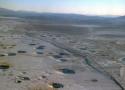
A manhole cover launched into space with a nuclear test is the fastest human-made object. A scientist on Operation Plumbbob told us the unbelievable story. //
Robert Brownlee was on the Operation Plumbbob team that launched an object in space before Sputnik.
They put a manhole cover above a nuke underground, and the explosion shot the iron cap into space.
The fastest human-made object was part of the US government's nuclear testing in the 1950s.
But the very first underground nuclear tests were a bit of an experiment — nobody knew exactly what might happen.
The first one, nicknamed "Uncle," exploded beneath the Nevada Test Site on November 29, 1951.
Uncle was a code for "underground."
It was only buried 17 feet, but the top of the bomb's mushroom cloud exploded 11,500 feet into the sky. //
The underground nuclear tests we're interested in were nicknamed "Pascal," during Operation Plumbbob in 1957. //
Brownlee said he designed the Pascal-A test as the first that aimed to contain nuclear fallout. The bomb was placed at the bottom of a hollow column — 3 feet wide and 485 feet deep — with a 4-inch-thick iron cap on top.
The test was conducted on the night of July 26, 1957, so the explosion coming out of the column looked like a Roman candle. //
Brownlee wanted to measure how fast the iron cap flew off the column, so he designed a second experiment, Pascal-B, and got an incredible calculation. //
Brownlee replicated the first experiment, but the column in Pascal-B was deeper at 500 feet. They also recorded the experiment with a camera that shot one frame per millisecond.
On August 27, 1957, the "manhole cover" cap flew off the column with the force of the nuclear explosion. The iron cover was only partially visible in one frame, Brownlee said.
When he used this information to find out how fast the cap was going, Brownlee calculated it was traveling at five times the escape velocity of the Earth — or about 125,000 miles per hour. //
Pascal-B's estimated iron cover speed dwarfs the 36,373 mph that the New Horizons spacecraft — which many have called the fastest object launched by humankind — eventually reached while traveling toward Pluto. //
"After I was in the business and did my own missile launches," he told Insider in 2016, "I realized that that piece of iron didn't have time to burn all the way up [in the atmosphere]."
Mere months after the Pascal tests, October 4, 1957, the Soviet Union launched Sputnik, the world's first artificial satellite. While the USSR was the first to launch a satellite, Brownlee was probably the first to launch an object into space. ///
Now exceeded by the Parker Solar Probe...
At its closest approach [to the sun] in 2024, its speed relative to the Sun was 690,000 km/h (430,000 mph) or 191 km/s (118.7 mi/s), which is 0.064% the speed of light.[7][9] It is the fastest object ever built on Earth.[

Why is this nuclear fission disrespect from Cipher important enough for such a long post?
Cipher’s “About” page includes this self-description “Cipher covers the technological innovations we need to combat climate change and transform our global energy systems.” The publication’s executive editor is @AmyAHarder Cipher is sponsored by Breakthrough Energy.
Cipher’s fission “coverage” slows global progress in combating climate change. Fission is an incredibly powerful natural reaction that serves as an easily controlled heat source for the most productive, cleanest and safest power plants on Earth. It will play an increasingly important role in addressing energy sufficiency for all, energy abundance for most, energy security and energy cleanliness.
Of course nuclear is a “controversial topic.” People have been carefully taught to fear fission. They have rarely been taught much about the technological details of the power plants. Publications like Cipher that point to accidents almost never mention the statistical evidence accumulated over >6 decades that shows nuclear fission is one of our safest forms of energy production.
It’s logical to have some trepidation and concerns about the unknown, especially when fear messaging has been so prevalent.
There is also the competitive factor. Nuclear energy production takes markets away from all other power sources. No business likes to lose sales and revenues. All businesses strive to beat their competition. Talking trash and going negative are frequently used techniques.
But journalists shouldn’t pick sides.
Cipher should adhere to its mission of covering [all of] “the technological innovations we need to combat climate change” and the rest of our energy challenges.
Rod Adams says: December 15, 2023 at 10:13 AM
I believe that many (perhaps most) observers are confused about the economies of scale and believe that the term only applies to ever larger machines.
Scale is also related to the enterprise that develops the power plant and the supply chain that produces the parts for the machines. If the power plants are so large that all of their components are produced in limited quantities, their supply chain never has the chance to develop economic scale.
NuScale’s system includes many simplifications that might enable it to achieve competitive pricing, especially when the kWh that they sell get appropriately differentiated and valued as superior to similar units of electricity that do not include valuable characteristics like cleanliness, reliability, stability, inertia and power factor.
As I pointed out in my post, the $89/MWh price tag for NuScale output is competitive in a number of different markets. Their mistake was trying to sell to reluctant customers in a place where power is generally cheap and where the customers have no real reason to take risks and bet on FOAK technology.
My sources tell me that the fatal decision to focus on UAMPS as the initial customer was a result of strong pressure by INL to host US’s the pioneering SMR.
That might have worked if NuScale had planned to offer a single 50 MWe module. That power output that could be handled by INL, perhaps with the help of Idaho Power. But NuScale decided they needed to achieve scale more quickly and chose initially to build a 12 unit, 600 MWe power plant in the middle of a vast, nearly unpopulated desert. (The initial plan was rescaled to 6 units of 77 MWe each, but that is still a 462 MWe facility on an 860 square mile site with a total local consumption of roughly 80 MWe.
Consuming the power from their proposed plant required a much larger customer base, but the only utility available was a consortium of 40+ small town cooperatives.
Abandoning the UAMPS project before wasting any more money was a good decision. NuScale has a number of additional potential customers in its pipeline, though it still needs to overcome the FOAK challenge.
Yesterday (Nov 8, 2023), an expected shoe dropped. NuScale and UAMPS (Utah Association of Municipal Power Systems) announced that they had decided to abandon their Carbon Free Power Project. The press release stated, “Despite significant efforts by both parties to advance the CFPP, it appears unlikely that the project will have enough subscription to continue toward deployment.”
A chorus of commentary has erupted on social media. Some are cheers from the usual suspects who have never met a nuclear reactor that they like. Others are from people who ardently support different designs that range from different water reactors to gas-cooled, molten salt or liquid metal reactors that don’t use water cooling and moderation.
Some believe that the decision proves that NuScale Power Modules are hopelessly uneconomic and that the CFPP cancellation proves that NuScale is on shaky grounds as a company. Self-admitted short sellers are doing everything they can to undermine investor confidence so that the company stock price falls quickly and profitably for those betting on that behavior.
My conclusions from the project cancellation are different. There is no doubt that a smooth first-of-a-kind demonstration of a 6-12 unit NuScale power plant would have been better for the company’s prospects in the short term. That result would have also helped to increase interest in new nuclear power projects and would have increased investor FOMO (fear of missing out.) //
UAMPS member power systems have ready access to local coal sources.
The UAMPS-served areas are close to productive oil shale formations that contain substantial quantities of associated natural gas. Sometimes North Dakota gas is almost given away – even in the dead of winter – because it is an annoying byproduct of oil production. //
The CFPP was an important project for NuScale, but it is not the only sale that the company is working on. UAMPS is not the only customer attracted by a passively cooled, light water reactor using established fuel forms, materials and chemistry refined through many decades of operation in large fleets of nuclear power plants.
NuScale’s power modules have been issued a design certification at a time when none of the alternative choices have submitted an application for review. Submission is needed to start a regulatory calendar that moves at an excruciatingly slow pace. Though we hope the next review will be quicker, it took more than six years from the time NuScale submitted its Design Certification Application until the 5-member commission issued the final document. (Dec 31, 2016 – Feb 21, 2023)
According to Fluor, which still holds its large stake in NuScale, 18 active and signed Memorandums of Understanding from 11 different countries were in effect at the end of 2021. //
Blue Energy is “productizing” nuclear fission by manufacturing pre-certified light water small modular reactors in shipyards as fully-completed, transportable nuclear power plants that are leased to industrial facilities and countries seeking energy security, price stability, and turnkey decarbonization. We leverage existing oil & gas platform manufacturing infrastructure and a simplified plant design to shrink the construction schedule from 10 years to 24 months and the overnight capital cost from greater than $6,000/kW to less than $2,500/kW while putting nuclear on a learning curve down to $1/W.
-- CERAWeek presentation “Blue Energy | Offshore Nuclear Power” Mar 7, 2023

The trick to developing immunity to misinformation
“The saddest aspect of life right now is that science gathers knowledge faster than society gathers wisdom.” ― Isaac Asimov, 1988 //
You’re probably thinking “it’s just a meme”, but it is illustrative of a wider problem where information is presented in this manner: as if the truth is subjective. I only need to open any social media app to see that ‘subjective truth’ seems to be everywhere, and every day there is new questionable information to think about (this assertion isn’t only anecdotal, but is also supported by research). //
As social psychologist Dr. Sander van der Linden points out in his book Foolproof: Why We Fall for Misinformation and How to Build Immunity, misinformation is not new. Previous large-scale examples of misinformation taking hold in populations include Nazi propaganda, which heavily relied on the printed press, radio and cinema, and misinformation campaigns that have been traced back to Roman times when emperors used messages on coins as a form of mass communication to gain power. //
Many vested interests and those who believe misinformation themselves use these biases to their advantage. If this was a war, I would argue that the other side is winning. Thanks to some of these people being convincing communicators, and using storytelling that plays on these biases to their advantage, they have been able to influence what wider populations believe on multitudinous topics ranging from gene-editing to nuclear energy to degrowth as a solution to climate change (it’s not). //
The greatest irony is that anti-nuclear activists have also been able to convincingly embed their unscientific position within environmentalism, even though nuclear energy is the cleanest and most environmentally friendly energy source available to humankind, with the smallest land footprint of all energy sources.
Slogans and stories are sticky, but they may not be true or helpful. Hence I’ve argued before that catchphrases and slogans used by activists are often convincing and successful, even when they are inaccurate. Stories, however, are essential to communicating scientific matters, and we need more people to tell them.
After all, it’s much easier and faster to respond with “what about the waste?” when I mention nuclear energy, than for me to explain why spent fuel isn’t the problem many people think it is, which takes time and isn’t as catchy or simple as the aphorism “what about the waste?” (I have covered the waste argument in detail in this article.) In my work tackling misinformation, I have honed some of these detailed responses to convey them through catchphrases that have also been popularised, such as “it’s only waste if you waste it” (in reference to being able to recycle spent fuel) and “meanwhile fossil fuel waste is being stored in the Earth’s atmosphere”, which is both true and a sticky idea. //
Although no one has studied it directly, I feel sure that coining and popularising terms like “nuclear saves lives”, “energy is life”, “nuclear energy is clean energy”, and “rethink nuclear” has helped to combat the misinformation we’ve heard about nuclear energy for so long. //
People often ask how I stay calm when countering constant ad hominem attacks, gish-galloping and sometimes outright insults. As Mr Spock once said, “Reverting to name-calling suggests that you are defensive and, therefore, find my opinion valid.” My answer is that I don’t take people’s biases personally - after all, I used to believe misinformation myself. We have all done so at some point in our lives, and we are all susceptible to believing misinformation in the future. While it’s worth learning to identify the few people who hold fundamental beliefs on a topic that simply cannot be changed, to save wasting your time debating them, remember that for most people these messages do have an impact. It took me years to change my mind from being against nuclear energy to being in favour of it, and every person who took the time to dispel the misinformation I believed, and provide better sources for me to read to counter my viewpoints, had an impact on my beliefs.
While it may not seem challenging to you, remember that when you engage with someone on a wedge issue, you are making a worldview-threatening correction. It is no different than learning that the Earth is spherical when you’ve grown up believing that it is flat. ///
Evangelism takes time and repetition.
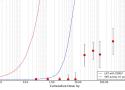
The Gordian Knot Group is pushing Sigmoid No Threshold (SNT) as a replacement to the Linear No Threshold (LNT) radiation harm model. SNT requires dividing an individual's dose rate profile into repair periods (currently set at a day), fitting an S-shaped response curve to the dose in each repair period, and treating each repair period as an independent event. Once you have an estimate of the daily dose rate profiles and a computer, SNT is as easy to implement as LNT.
In our last post, we pointed out LNT failed the Huxley one-ugly-fact test. LNT's prediction of bone cancer incidence in radium dial painters who had received massive doses over a ten year plus period is off by orders of magnitude. Therefore, LNT is wrong and must be rejected. It is only fair that we subject SNT to the same test.
Unlike LNT, SNT does not ignore how rapidly or slowly the dose was received. SNT requires a daily dose rate profile. Radium dial painting started about 1915. In the late 1920's, the ladies were advised to stop licking the tips of their brush. That pretty much put a stop to the bone cancers.
If we assume the ladies received their dose evenly over 10 years, which is almost certainly conservative, then we can add an SNT prediction to the picture, Figure 1. //
SNT claims we should have seen nearly no cancer up to about 2 mSv/day, but then the prediction turns sharply upward. The actual jump upward takes place at about 20 mSv/day. Moreover, at 20 mSv/d, SNT predicts a 99% incidence rate when the observed was less than 30%. However, unlike LNT, SNT avoids the absurdity of a cancer incidence greater than 1.0.
The charitable view of this is SNT is conservative by a factor of ten, in predicting the point at which dose rates become seriously harmful. This is close to a factor of 100 better than LNT. //
My takeaway is SNT is wrong; but it is a qualitatively different wrong than LNT. Furthermore, it is quantitatively acceptable at dose rates up to 1 mSv/day, even when that daily dose is repeated for years. Fortunately, the dose rates experienced by the public in a nuclear power plant release are almost never above 1 mSv/day and then only for a few weeks at most.
If we use SNT in a compensation scheme, the few people who do get hit with more than 1 mSv/day will be over-compensated. From a societal point on view, this is bad. Not only does this represent an inefficient allocation of resources; but it will cause unnecessary psychic trauma in the over-compensated. In the wrong hands, it could lead to unnecessary evacuations. But perhaps this is a price worth paying for SNT's simplicity and its multi-order of magnitude improvement over LNT. //
Jack Devanney 19 hrs ago Author
LNT (like SNT) bills itself as a model that works for ANY radiation exposure. But the BEIR7 fit is based mainly on the bomb survivor (RERF) data which is a single acute dose. It is not a good fit to the RERF data. No smooth curve could be since the RERF data bounces up and down in a very weird way., which should tell you something about the quality of that database.
But the point is that LNT it is off by orders of magnitude when you try to apply it to chronic doses received over protracted periods such as the dial painter data. A regulatory model cant change every time you get a new exposure data. We must have ONE model that does a reasonable job both on large acute doses and large chronic doses. LNT cant do that. SNT can.

The simple truth that a single solid counter-example destroys any scientific hypothesis has been phrased many ways, none more memorably than Thomas Huxley in 1870 talking about how Pasteur took down Buffon and Needham's theory of spontaneous generation with a single experiment.
But the great tragedy of Science --- the slaying of a beautiful hypothesis by an ugly fact --- which is constantly being enacted under the eyes of philosophers, was played, almost immediately, for the benefit of Buffon and Needham.
Pasteur himself put it more prosaicly, ``Never will the doctrine of spontaneous generation recover from the mortal blow of this simple experiment."
The Linear No Threshold (LNT) hypothesis of radiation harm is the theory upon which our radiation protection regulation is based. In its pure form, LNT could be called beautiful in its simplicity. LNT is the theory that harm is strictly additive in the dose, the joules of radioactive energy deposited in a kilogram of tissue. One of the guys who pushed this idea was Harold Gray. We use his name as a shorthand for joules absorbed per kg tissue. Under LNT, we don't have to know anything about how slowly or quickly the dose was received. The only thing that counts is total dose in grays. This requires that the harm be linear in the total dose. //
he deeper you go the messier LNT gets. LNT no longer looks beautiful in its simplicity. It looks more like an ad hoc kluge. But the real problem with LNT is not its ugliness. The real problem is it's flat wrong. Like Pasteur, we need only one experiment to demonstrate this.
Between 1915 and 1950, numerals on luminous watch dials were hand painted using radium paint for the most part by young women. Prior to the late 1920's, the ladies used their tongues to form the tip of the brush into a point, sipping radium into their bodies. Chemically radium is similar to calcium and accumulates in the bones, where it has a 40 year biological half-life. The total skeletal doses varied by over a factor of 1000. But the maximum cumulative dose was an incredible 280 Gy.\cite{henriksen-2013}[p 276]
The Argonne National Lab did an extensive study of the results. 64 bone cancers and 32 head carcinomas were diagnosed. Reliable dose measurements were available for 2,383 women. All the 64 bone cancers occurred in the 264 women with a bone dose of more than 10 Gy.\cite{rowland-1994}[page 107] No bone cancers were found in the 2,110 women with less than 10 Gy dose. //
At a total effective dose of 7 sieverts, LNT predicts every dial painter should have bone cancer. In fact, no cancers were observed in the 2,110 women who received up to 160 sieverts. If we asked the computer what are the ratios of the LNT cancer incidence to actual incidence, the answers would range from 168 to NaN (I don't have a number that large). In the rich history of bad predictions, this has to rank in the top ten.
64 preventable bone cancers is a terrible tragedy. But the ability of these women to handle massive amounts of radiation is a testament to our bodies' ability to repair radiation damage. That's a beautiful thing. I submit this is a case of an ugly theory being shot down by a beautiful fact. Regardless of the aesthetics, as soon as the dial painter data emerged, LNT, like spontaneous generation, should have been tossed immediately on the scrap heap of ideas that simply don't work. But that's not what happened.
We know why LNT does not work. The fundamental reason that LNT performs so abysmally for the dial painters is it denies the ladies' ability to repair radiation damage to their DNA. DNA repair takes time. But for LNT the time dimension is irrelevant. LNT claims whether these women received their dose in one day or spread over 15 years makes no difference. LNT squashes decade long exposures into a single day.
This is Flat Earther level nonsense. Search ``DNA repair" on google scholar and you will get more than three million hits. DNA repair has been studied in mind boggling detail. We know an enormous amount about how DNA is repaired and how long it takes. LNTers simply refuse to accept any of this. This raises the question: why?
Almost all LNTers fall into one of two groups.
1) Anti-nukes. //
2)The LNT dependents. These are people whose livelihood depends on people being scared of radiation. This group comprises not just the radiation protection establishment, including the regulatory bureaucracies; but also the multi-billion dollar radiation clean up industry, the massive national labs researching solutions to all the LNT-inspired dangers associated with radiation, and the government agencies charged with doling out taxpayer dollars to pay for those solutions. Most importantly, it includes the industry incumbents. //
The motives of the anti-nukes are obvious. Their claims automatically trigger scrutiny. But when an industry agrees with its opponents, case closed. LNT has no effective critics and survives, a triumph of self-preservation over Huxley's well deserved tragedy. //
Anton van der Merwe Dec 31, 2023
While I agree 100% with your views on the LNT model, it is noteworthy that even that model values a life lost to radioactivity at least 100 times more than a life lost to air pollution (PM2.5 and PM10 particles).
This is based on consensus data on the mortality rates and the regulatory ‘safe’ levels.
I have never been able to find any justification for this.

The most common argument is that wind and solar power are the cheapest clean energy sources and that nuclear power plants are the most expensive. Taken at face value, it is true that a single solar photovoltaic (PV) panel is cheap, and that a single wind turbine is cheap, while on the other hand, a single nuclear power plant costs billions of pounds. Technically, measured one-on-one, it is correct that wind and solar are cheaper. But is it useful to compare them in this way? //
To understand why people argue that wind and solar power are cheaper, we need to examine the basic economic metric for assessing a generating power plant: the Levelised Cost of Energy (LCOE). This metric provides what is essentially a banker’s number that covers the total amount of power over the lifetime of an energy source, divided by the lifecycle costs over the lifetime of the same energy source.
But there’s a problem: LCOE is a terrible metric for assessing cost-effectiveness because it doesn’t include several crucial factors. For example, it ignores costs and benefits at an energy system level, such as price reductions due to low-carbon generation and higher system costs when extra interconnection, storage, or backup power is needed due to the variable output of wind and solar power.
Crucially, LCOE ignores the value of the plant’s output to the grid. For example, solar plants have a much more attractive production profile relative to wind farms because society needs most of the energy during the day when the sun is shining. So, even though the LCOE of solar power is higher than wind energy, it provides electricity that is more economically valuable. A paper found that ‘An LCOE comparison ignores the temporal heterogeneity of electricity and in particular the variability of VRE [Variable Renewable Energy]’. Therefore, the true economics of power generation can be very different to the ones predicted by the LCOE numbers.
Another issue LCOE ignores relates to different lifespans of technologies. Typically, a 20- or 30-year recovery period is accounted for, but what about when competing technologies last half a century or more? Then the comparison is faulty, as nuclear power plants can generate power for 60 to 80 years, sometimes longer.
Other factors that aren’t considered by the LCOE include:
- Cost of the land required
- Cost to the consumer
- Dispatchability, i.e. the ability of a generating system to come online, go offline, or ramp up or down, quickly as demand swings
- Indirect costs of generation, which can include environmental externalities or grid upgrade requirements
- Additional cost of integrating non-dispatchable energy sources into the grid
- Cost of disposal, which is usually built into the price of nuclear energy but excluded from the price of solar and wind power
- Subsidies and externality costs, such as the costs of carbon emissions
- The cost of backup or baseload power
Intermittent power sources like wind and solar usually incur extra costs associated with needing to have storage or backup generation available. LCOE ignores the cost of this unreliability, which can be as simple as keeping coal-fired power stations running in case they are needed to fire up and meet electricity demand when it becomes less windy or sunny. //
South Korea is our second example. In the mid-1980s the Korean nuclear industry decided to standardise the design of nuclear plants and to gain independence in building them. The country imported proven US, French, and Canadian reactor designs in the 1970s and learned from other countries' experiences before developing its own domestic reactors in 1989. It developed stable regulations, had a single utility overseeing construction, and built reactors in pairs at single sites.
The results were remarkable: between 1971 and 2008, South Korea built a total of 28 reactors. Due to the developments they made in 1989, their overnight construction cost fell by 50%. //
With nuclear energy, waste disposal and decommissioning costs are usually fully included in the operating costs, but they are not accounted for in wind and solar costs. Yes, a single solar panel is cheap. But what about disposing of it? Sadly, they often end up in landfill sites in poor countries abroad, where they leach toxic chemicals. Batteries are currently not recycled, and therefore this is another missing cost. Wind turbine blades face similar issues. And none of these elements will last more than thirty years before they need replacing. What will that cost? //
Oil and gas companies celebrate wind and solar power because they keep fossil fuels in business. Today, wind and solar are backed 1:1 by oil-and-gas-based generators, to fill the gaps when it isn’t windy or sunny, thus keeping the oil and gas industries in demand. In the future, solar purists propose mega storage, which means more batteries, and overbuilding (extra panels) as the solution. These extra costs aren't factored into LCOE. //
What I have tried to do here is trigger a thought experiment by illustrating how complicated these assessments are, that it is not a case of comparing one panel to one plant, and that the LCOE fails on all counts. Ultimately, the full cost of nuclear energy is an upfront investment for a long-lasting, reliable form of energy, which is not the cost people consider when arguing that solar panels and wind turbines are cheaper. Nuclear energy can get cheaper, or it can get more expensive, depending on how it is approached. //
I am of the opinion that we should build everything we need to bring down greenhouse gas emissions and reduce deaths from air pollution. Yet it is clean energy advocates who only like wind and solar power who argue against nuclear energy based on the myth that the latter is too expensive. //
Every time a nuclear power plant is replaced with fossil fuel generation, people die from the resulting air pollution, and more fossil fuel waste is stored in the Earth’s atmosphere. Every time a grid is made to support more wind and solar power without the baseload power to support them, fossil fuels win as they have to fill the gap. Every time a nuclear power plant isn’t built on the supposed basis of cost, the environment is further harmed and human progress takes a step backwards. Every time someone quotes the LCOE, they are either being misled, misleading others, or both.

“It is change, continuing change, inevitable change, that is the dominant factor in society today. No sensible decision can be made any longer without taking into account not only the world as it is, but the world as it will be… This, in turn, means that our statesmen, our businessmen, our everyman must take on a science fictional way of thinking.” – Isaac Asimov //
There is no argument for our complacency that is better represented than the current social movement against producing energy, which perhaps began with Boomers, but is now being led mostly by Gen Z, also known as ‘the sustainability generation’, and also to some degree by Millennials. The irony is that these generations have been the most comfortable of all (and –full disclosure – I am a Millennial); unlike my parents who grew up in poverty in India, and were then manual labourers in Britain, we have had it easy. We haven’t suffered through truly gruelling labour, we don’t need to know how electricity grids work, and most of us have never stepped foot in a mine or experienced electricity blackouts. The divide between what it takes to maintain a high quality of life and the understanding of this has also widened over generations; //
This is not necessarily a bad thing. Thanks to years of development and growth, we live in a time of prosperity, facing fewer core challenges than past generations. //
The problem is that thanks to all of this, a disconnection has occurred between our lifestyles and what it has taken to get us here. The lack of understanding of the skilled labour, need for industries, and mining for raw materials that enabled these lifestyles, and the fact that the toll those things took on the environment was inevitable, but not permanent, has repercussions for society. I was once part of the problem, fighting to forge a society that would be independent of fossil fuels, without thinking about our continued and growing need for reliable electricity and fighting for the alternatives. My argument was the standard traditional environmentalist argument: that we need to live with less. I was wrong.
Now, the argument has gone so far that activists argue that we should just stop oil overnight. But can it be done without causing immense harm to people? //
About 45% of a typical barrel of crude oil is refined into gasoline, and an additional 29% is refined into diesel fuel. The remaining 26% is used to make plastics and other products. There is good news in these figures, as it means that we can reduce a lot of our dependence on oil by making the switch from petrol and diesel cars to electric vehicles, which is a trend that is taking place in many countries already. //
Instead of going ahead anyway and virtue signalling that they are now plastic-free, Lego has ditched plans to switch to PET, since doing so would have had a greater impact on the environment.
Of course, many anti-oil activists would argue that Lego should stop making the bricks altogether. They would argue that they are unnecessary and wasteful. But I disagree. I recall many years of constructing large and complicated architectural designs with my brother when we were children; he was fascinated by the way things work and are put together, and he later trained to become an engineer (a field he now holds a senior position in). This link between playing with Lego and developing engineering skills has been well-documented elsewhere. The irony of wanting to just stop oil is well represented in the idea that we don’t ‘need’ Lego. We don’t ‘need’ to build housing, railways, or power plants either – if we are happy for society to stagnate and for future generations to suffer.
Let’s ignore the idea of an immediate transition, then, and consider what can be done to stop oil eventually. //
This brings me back to a point I’ve been making for years: we should be aiming for energy abundance.
As we shift towards electrifying everything, switching from gas boilers to heat pumps, and diesel cars to electric vehicles, much of our demand for oil will be replaced naturally. But the alternatives will require more electricity, and unless the electricity grid is supplying us with clean power, we have a problem. //
As I’ve explained before, we can build all the wind and solar power people want, but we will still need baseload power to back them up, and historically this has always either come from fossil fuels or nuclear energy. Although the upfront costs for the alternatives appear to be cheaper than for nuclear, this is incorrect when the figures are viewed in context. As well, we need to be aware of shift-loading the costs of wind and solar power onto ordinary working people. I’ve also seen NGOs arguing for building wind and solar in less wealthy countries, and I find this tactic appalling. Intermittent energy is not what we in the wealthy West used to escape poverty. We burned a lot of fossil fuels to develop. We don’t get to deny other countries of that now. //
The truth is that I am a shill. I am a shill for the human race. I want to see the end of needless suffering and death from preventable diseases. I want to see all poverty eradicated. Apart from a few specific war-mongers, who doesn’t want to see the end of all war? I want all life on this planet to thrive. I want to see the best of humankind during my brief presence on this pale blue dot that we are so fortunate enough to inhabit. I want us to live long and prosper.
Humans are capable of solving immense problems and achieving great things, through forging strong values and working together. I am a shill for progress because I want to see what we do next, once the immediate – and entirely solvable – problems like air pollution, poverty, and climate change have been solved.
JUST STOP OIL
JUST START NUCLEAR

Last February, the independent Public Advocates Office of the state Public Utilities Commission reported that residential electricity rates in California had risen between 77% and 105% since 2014 and are far above the national average. “The majority of bill increases are associated with long-standing state priorities,” the report explained.
Yet for all the money Californians pay for those “priorities,” the state doesn’t really run on solar and wind energy.
It’s powered mostly by natural gas, hydroelectric, nuclear energy and, when all else fails, electricity generated in other states and imported on transmission lines. //
While California’s need for electricity can rise as high as 50,000 megawatts in the summer with air conditioning, solar energy produces about 15,000 megawatts at its peak, declining to zero after sunset.
The gap is filled by – you guessed it – natural gas, nuclear, hydroelectric and imports.
In pursuit of “100% clean electricity,” the state’s gas-fired plants were scheduled to be closed this week and its one nuclear plant to be shuttered in 2025.