
But in the name of "renewable" energy, Germany is tearing down a forest that may well have been known to Jacob and Wilhelm Grimm and may have even inspired some of their stories.
In the Reinhardswald near Kassel, known as the Fairytale Forest, a previously untouched natural and cultural landscape with trees over 500 years old, is today being irreversibly destroyed. Why? To protect nature and the climate, the wind industry and green proponents claim. //
The region, which plays a central role in the fairy tales of the Brothers Grimm, is being transformed into a large-scale industrial construction site comprising of 18 large scale turbines.
To build the 244-meter-high wind turbines, large roads are cut into the forest, thousands of trees felled, slopes leveled and large quantities of gravel piled up on the forest floor. All this will cause irreversible damage and destruction to the forest biotope. Critics and conservationists emphasize that the extent of the destruction goes far beyond what one would expect from the construction of a wind turbine in an open field.



WASHINGTON — President Trump announced in a Monday evening post on Truth Social that Israel and Iran have agreed in principle to a cease-fire that would halt what he branded “the 12 Day War.”
“CONGRATULATIONS TO EVERYONE! It has been fully agreed by and between Israel and Iran that there will be a Complete and Total CEASEFIRE (in approximately 6 hours from now, when Israel and Iran have wound down and completed their in progress, final missions!), for 12 hours, at which point the War will be considered, ENDED!” Trump wrote.
“Officially, Iran will start the CEASEFIRE and, upon the 12th Hour, Israel will start the CEASEFIRE and, upon the 24th Hour, an Official END to THE 12 DAY WAR will be saluted by the World. During each CEASEFIRE, the other side will remain PEACEFUL and RESPECTFUL.”. //
“We have to talk to Iran and, of course, Israel about what the future holds … to build a long-term settlement.”
Trump announced the apparent breakthrough hours after Iran lobbed rockets at an American military facility in Qatar in symbolic retribution for Saturday’s US bomb-and-missile attack on three Iranian nuclear sites.
The president said Tehran provided a heads-up in advance of its response and most of the rockets were shot down before reaching their target, the Al Udeid Air Base southwest of Qatar’s capital, Doha.
WITNESSES
(45-80 MINUTES)
Eight men, who rubbed shoulders with Jesus, tell stories of their encounters with him. Ranging from wildly funny to dramatically intense, these stories show a “fleshed out” Jesus, who made a curious call on these mens’ lives. Performed in contemporary dress, with very contemporary language, this show introduces the audience, in a fresh way, to Jesus, without “church language or pews”. In the blink of an eye, with very simple costume changes, Curt becomes eight different men, with eight different perspectives on Jesus. //
God-Views
(40-60 minutes)
What is God really like? This show asks that question. And … it’s funny. Very funny. In it, Curt presents, in caricature form, six different comic misconceptions of the nature of God. God as a Sheriff, a Butler, an old Geezer, a Mechanic, a Cosmic Party Animal, and … God-in-a-box. He concludes with one of two stories (or sometimes both!) … a tender re-telling of the Prodigal Son story, showing the Father heart of God, or a very funny “redneck parable,” showing, in no uncertain terms, the picture of a gracious God.

A powerful new observatory has unveiled its first images to the public, showing off what it can do as it gets ready to start its main mission: making a vivid time-lapse video of the night sky that will let astronomers study all the cosmic events that occur over ten years. //
Named after an astronomer famous for her research related to dark matter, the Vera C. Rubin Observatory is perched on a mountaintop in Chile. It's equipped with a specially-designed large telescope, as well as a car-sized digital camera that's the biggest such camera in the world.
The camera is controlled by an automated system that moves and points the telescope, snapping pictures again and again, to cover the entire sky every few days. Each image is so detailed, displaying it would take 400 ultra high-definition television screens.
By constantly comparing new images to ones taken before, the facility's computer systems will be able to spot anything in the sky that changes or moves or goes boom.
"It will be capable of really detecting things that actually change very rapidly," says Sandrine Thomas, deputy director of Rubin Observatory and the observatory's telescope and site project scientist. "That, in itself, will be unique to the world. No other telescope would be able to do that."
"It has such a wide field of view and such a rapid cadence that we do have that movie-like aspect to the night sky," she says.
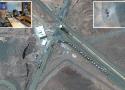
Satellite images appeared to show scores of trucks lined up at Iran’s Fordow nuclear facility just days before the US carried out its large-scale airstrikes — as speculation swirled that Tehran may have been able to move its uranium stockpiles before the attacks.
The images, released by US defense contractor Maxar Technologies, captured more than a dozen cargo-style trucks lined up outside the Fordow nuclear enrichment site’s tunnel entrance on Thursday and Friday.
The vehicles, which came and went over a 24-hour stretch, appeared to move unidentified contents roughly half a mile away, the Free Press reported, citing US officials.

Case uncovered: How Iranian intelligence duped a yeshiva student into spying on Israel
Elimelech Stern, a Hasidic man from Beit Shemesh, bought a phone to trade crypto; a message from 'Anna' drew him into espionage for a hostile power; living a double life, he feared being used for assassinations and begged for help—outside the law
Richard
Coffee/keyboard
It's worse than that
Late Boomers to Gen X were taught "typing", and created most of the foundations and did a lot of the UI/UX research.
Millenials were "taught computing", by which the schools meant "using Microsoft Word".
Gen Z were assumed to already know, so were taught nothing whatsoever.
Gen Alpha are sometimes being taught online safety. Their millennial parents are helping with that by making Facebook uncool. //
fromxyzzy
Re: It's worse than that
We've abandoned a lot of the UI/UX lessons learned through experience, and ironically it was Apple who both did a huge amount of impressive work (building on IBM's internal work I believe) on strictly codifying their UI elements in order to ensure a consistently usable system across applications, and then with iOS, totally destroying any sense of consistency in interaction and hiding every aspect of the real system from the user. I run an old iBook with MacOS 9 for legacy software and tinkering and the only things that don't adhere to the Apple UI guidelines are video games which were virtually always originally for Windows/DOS. I have an iPad in the loo and I can perform the exact same swipe motion on it 5 times and get 5 completely different results for no discernible reason.
Kids that are growing up on iPad and other touch-screen devices are being taught that tech devices are magic boxes that act in ways that you can never understand because they don't respond consistently and they hide every aspect of the underlying system. Honestly, it's primed them for the advent of AI as well, where they simply trust what the magic box tells them is true and are flummoxed when told that the magic box is wrong, unreliable, and they've failed because they just expect systems to work without understanding how.
PICNIC
Problem In Chair Not In Computer
Re: PICNIC
Hm, sounds nicer than PEBCAK !
Re: PICNIC
Problem with knob controlling monitor.

What we said to the Iranians is we do not want war with Iran, we actually want peace. But we want peace in the context of them not having a nuclear weapons program. And that's exactly what the president accomplished last night. I really think there are two big questions for the Iranians here. Are they going to attack American troops, or are they going to continue with their nuclear weapons program? And if they leave American troops out of it, and they decide to give up their nuclear weapons program, once and for all, then I think the president has been very clear. We can have a good relationship with the Iranians. We can have a peaceful situation in that region of the world. //
we negotiated aggressively with the Iranians to try to find a peaceful settlement to this conflict. It was only when the president decided that the Iranians were not negotiating in good faith, that he took this action. He didn't take it lightly, but I actually think if provides an opportunity to reset this relationship, reset these negotiations, and get us in a place where Iran can decide not to be a threat to its neighbors, not to be a threat to the United States, and if they're willing to do that, the United States is all ears.

The broader lesson of this study is that the details will matter in these copyright cases. Too often, online discussions have treated “do generative models copy their training data or merely learn from it?” as a theoretical or even philosophical question. But it’s a question that can be tested empirically—and the answer might differ across models and across copyrighted works. //
For any language model, the probability of generating any given 50-token sequence “by accident” is vanishingly small. If a model generates 50 tokens from a copyrighted work, that is strong evidence that the tokens “came from” the training data. This is true even if it only generates those tokens 10 percent, 1 percent, or 0.01 percent of the time. //
There are actually three distinct theories of how training a model on copyrighted works could infringe copyright:
- Training on a copyrighted work is inherently infringing because the training process involves making a digital copy of the work.
- The training process copies information from the training data into the model, making the model a derivative work under copyright law.
- Infringement occurs when a model generates (portions of) a copyrighted work.
A lot of discussion so far has focused on the first theory because it is the most threatening to AI companies. If the courts uphold this theory, most current LLMs would be illegal, whether or not they have memorized any training data.
The AI industry has some pretty strong arguments that using copyrighted works during the training process is fair use under the 2015 Google Books ruling. But the fact that Llama 3.1 70B memorized large portions of Harry Potter could color how the courts consider these fair use questions. //
The Google Books precedent probably can’t protect Meta against this second legal theory because Google never made its books database available for users to download—Google almost certainly would have lost the case if it had done that. //
Moreover, if a company keeps model weights on its own servers, it can use filters to try to prevent infringing output from reaching the outside world. So even if the underlying OpenAI, Anthropic, and Google models have memorized copyrighted works in the same way as Llama 3.1 70B, it might be difficult for anyone outside the company to prove it.
Moreover, this kind of filtering makes it easier for companies with closed-weight models to invoke the Google Books precedent. In short, copyright law might create a strong disincentive for companies to release open-weight models.
“It's kind of perverse,” Mark Lemley told me. “I don't like that outcome.”
On the other hand, judges might conclude that it would be bad to effectively punish companies for publishing open-weight models.
“There's a degree to which being open and sharing weights is a kind of public service,” Grimmelmann told me. “I could honestly see judges being less skeptical of Meta and others who provide open-weight models.”
Put aside the irony that my research on authoritarianism in China was sidelined by authoritarianism in China. The bigger scandal here is how Western academics and publishers are willing to allow PRC censorship to dictate the terms of their trade.
Of course, this happens all the time on the sly. Every academic in China works under a censorship and ideological regime that distorts and repackages his work to make China appear like a normal and free society. A new study by Ning Leng of Georgetown and Elizabeth Plantan of Stetson University shows that the word “authoritarianism” is one that China’s academics consciously avoid because of party dictates. They show that a combination of top-down censorship and peer-based censorship creates a minefield for scholars in China, and even for mainland Chinese nationals working in the United States.
Offending phrases or topics may lead to sanctions such as failing an “ethical evaluation.”. //
Xi Jinping wants China to challenge the West, and one way it does this is by infiltrating Western institutions and accusing anyone who questions its influence of harboring a “Cold War mentality.” But the China model has no place in a free society.

My pick for the best lens for the Canon R10 is the 28mm f/2.8 because the compact size and wide maximum aperture make it a versatile lens and affordable lens that will give you professional quality images. This is the first lens I’d suggest to buy with the camera or to replace the kit lens that came with it.
But depending on what you shoot most, you may want a different option. So keep reading to see my complete breakdown of the best lenses for the Canon R10 based on what might be right for you.

Removable transparent films apply digital restorations directly to damaged artwork.
MIT graduate student Alex Kachkine once spent nine months meticulously restoring a damaged baroque Italian painting, which left him plenty of time to wonder if technology could speed things up. Last week, MIT News announced his solution: a technique that uses AI-generated polymer films to physically restore damaged paintings in hours rather than months. The research appears in Nature.
Kachkine's method works by printing a transparent "mask" containing thousands of precisely color-matched regions that conservators can apply directly to an original artwork. Unlike traditional restoration, which permanently alters the painting, these masks can reportedly be removed whenever needed. So it's a reversible process that does not permanently change a painting.
"Because there's a digital record of what mask was used, in 100 years, the next time someone is working with this, they'll have an extremely clear understanding of what was done to the painting," Kachkine told MIT News. "And that's never really been possible in conservation before."
Nature reports that up to 70 percent of institutional art collections remain hidden from public view due to damage—a large amount of cultural heritage sitting unseen in storage. Traditional restoration methods, where conservators painstakingly fill damaged areas one at a time while mixing exact color matches for each region, can take weeks to decades for a single painting. It's skilled work that requires both artistic talent and deep technical knowledge, but there simply aren't enough conservators to tackle the backlog. //
For now, the method works best with paintings that include numerous small areas of damage rather than large missing sections. In a world where AI models increasingly seem to blur the line between human- and machine-created media, it's refreshing to see a clear application of computer vision tools used as an augmentation of human skill and not as a wholesale replacement for the judgment of skilled conservators.

Today marks the 50th anniversary of Jaws, Steven Spielberg's blockbuster horror movie based on the bestselling novel by Peter Benchley. We're marking the occasion with a tribute to this classic film and its enduring impact on the popular perception of sharks, shark conservation efforts, and our culture at large. //
A lot of folks in both the marine science world and the ocean conservation communities have reported that Jaws in a lot of ways changed our world. It's not that people used to think that sharks were cute, cuddly, adorable animals, and then after Jaws, they thought that they were bloodthirsty killing machines. They just weren't on people's minds. Fishermen knew about them, surfers thought about them, but that was about it. Most people who went to the beach didn't pay much mind to what could be there. Jaws absolutely shattered that. My parents both reported that the summer that Jaws came out, they were afraid to go swimming in their community swimming pools. //
The movie also was the first time that a scientist was the hero. People half a generation above me have reported that seeing Richard Dreyfuss' Hooper on the big screen as the one who saves the day changed their career trajectory. "You can be a scientist who studies fish. Cool. I want to do that." In the time since Jaws came out, a lot of major changes have happened. One is that shark populations have declined globally by about 50 percent, and many species are now critically endangered. //
And then, from a cultural standpoint, we now have a whole genre of bad shark movies.
Ars Technica: Sharknado!
David Shiffman: Yes! Sharknado is one of the better of the bunch. Sitting on my desk here, we've got Sharkenstein, Raiders of the Lost Shark, and, of course, Shark Exorcist, all from the 2010s. I've been quoted as saying there's two types of shark movie: There's Jaws and there's bad shark movies. //
Ars Technica: People have a tendency to think that sharks are simply brutal killing machines. Why are they so important to the ecosystem?
David Shiffman: The title of my book is Why Sharks Matter because sharks do matter and people don't think about them that way. These are food chains that provide billions of humans with food, including some of the poorest humans on Earth. They provide tens of millions of humans with jobs. When those food chains are disrupted, that's bad for coastal communities, bad for food security and livelihoods. If we want to have healthy ocean food chains, we need a healthy top of the food chain, because when you lose the top of the food chain, the whole thing can unravel in unpredictable, but often quite devastating ways.
So sharks play important ecological roles by holding the food chain that we all depend on in place. They're also not a significant threat to you and your family. More people in a typical year die from flower pots falling on their head when they walk down the street. More people in a typical year die falling off a cliff when they're trying to take a selfie of the scenery behind them, than are killed by sharks. Any human death or injury is a tragedy, and I don't want to minimize that. But when we're talking about global-scale policy responses, the relative risk versus reward needs to be considered. //
In all of recorded human history, there is proof that exactly one shark bit more than one human. That was the Sharm el-Sheikh attacks around Christmas in Egypt a few years ago. Generally speaking, a lot of times it's hard to predict why wild animals do or don't do anything. But if this was a behavior that was real, there would be evidence that it happens and there isn't any, despite a lot of people looking. //
One of my favorite professional experiences is the American Alasdair Rank Society conference. One year it was in Austin, Texas, near the original Alamo Drafthouse. Coincidentally, while we were there, the cinema held a "Jaws on the Water" event. They had a giant projector screen, and we were sitting in a lake in inner tubes while there were scuba divers in the water messing with us from below. I did that with 75 professional shark scientists. It was absolutely amazing. It helped knowing that it was a lake.
Ars Technica: If you wanted to make another really good shark movie, what would that look like today?
David Shiffman: I often say that there are now three main movie plots: a man goes on a quest, a stranger comes to town, or there's a shark somewhere you would not expect a shark to be. It depends if you want to make a movie that's actually good, or one of the more fun "bad" movies like Sharknado or Sharktopus or Avalanche Sharks—the tagline of which is "snow is just frozen water." These movies are just off the rails and absolutely incredible. The ones that don't take themselves too seriously and are in on the joke tend to be very fun.

In early May, I wrote about a quiet but historic breakthrough—one that barely registered on most radars but carried the kind of geopolitical weight rarely seen in our era of performative diplomacy. The United States, through the leadership of Secretary of State Marco Rubio, had brokered a framework between Rwanda and the Democratic Republic of the Congo (DRC) that hinted at something almost unthinkable: peace in a region long synonymous with conflict, exploitation, and chaos. //
Now, just weeks later, that framework has matured into a full-fledged peace accord. And let me say this clearly: this is a huge win for American foreign policy—led not by the State Department's usual bureaucrats, but by a Republican senator with grit, clarity, and spine.
Rubio isn’t getting the ticker-tape parade he deserves, of course. That would require the mainstream media to acknowledge that a Republican delivered a diplomatic masterstroke. //
In my previous column, I called this deal a “billion-dollar boost” for America’s strategic position. That’s truer now than ever. This isn’t just about helping others—it’s about helping ourselves while restoring peace. It’s about countering Chinese influence in Africa, securing the raw materials we need for the 21st century, and proving that American power still means something.
The Rubio-led deal isn’t a magic wand. There will be setbacks. Bad actors don’t reform overnight. But for once, we’re not just reacting—we’re shaping events. That’s what leadership looks like. //
T_Edward
11 hours ago
What must be stressed in this situation is that they came to President Trump and asked for his help. This is huge. They recognize his ability to negotiate in his ability to lead and he sent the right people there to make the agreement. Rubio has been an enormous boost in the statue of our country Because he is actually getting it done! None of this would’ve been possible without President Trump.

This Supreme Court term may well be remembered as a turning point. Not because the justices dismantled the administrative state in one dramatic move, but because they took important steps to rein in its excesses.
A string of rulings issued Friday—from McLaughlin Chiropractic Associates v. McKesson Corp. to Diamond Alternative Energy v. EPA to FDA v. R.J. Reynolds Vapor Co.—shows the Court is serious about restoring balance between unelected regulators and the courts tasked with holding them accountable.
What ties these decisions together is not a single ideological agenda. It is a shared recognition that when agencies act like legislative bodies or try to wall themselves off from judicial review, they go beyond their constitutional limits. The Court’s recent work reminds us that regulatory power must remain subject to oversight and correction when needed. //
District judges must independently interpret statutes, even when an agency has already spoken. As Justice Kavanaugh put it, “When a statute is clear, it is the law—not the agency’s interpretation—that governs.”. //
In FDA v. R.J. Reynolds, the Court pushed back on the FDA’s attempt to control who could challenge its decisions. The agency argued that only manufacturers could challenge its denial of premarket approvals. The Court disagreed and ruled that retailers, who are also harmed by these decisions, have every right to challenge them.
This ruling matters because it keeps agencies from deciding who gets to take them to court. When regulators pick their critics, there is no real oversight. //
None of these decisions dismantles the administrative state. Nor should they. What they do is draw clearer boundaries. Regulators should not act as lawmakers. They should not decide who can challenge them. They should not expect courts to accept their interpretations of the law automatically.
These rulings stand out because they are not driven by ideology. In fact, in some of these cases, Justice Elena Kagan, one of the Court’s more progressive voices, joined the conservative majority. That tells us something important. It suggests that Kagan recognizes, as the majority does, that unchecked regulatory power is dangerous no matter who holds it. If a progressive agency can go too far, so can a conservative one. The Constitution’s checks and balances are there to protect everyone.
Together, these rulings mark a shift toward restoring that balance. In our system, laws should come from legislators, be applied by judges, and not be dictated by unelected bureaucrats. That is a balance worth defending. //
Warren Pease
8 hours ago
“None of these decisions dismantles the administrative state. Nor should they.”
I must disagree with this premise. The administrative state is prima facie unconstitutional. Laws must be passed by both houses of congress and signed by the president. Having unelected bureaucrats make “regulations” with the force of law (these people can jail you and ruin you) is antithetical to a representative republic. SCOTUS should stop screwing around and remove the authority of anyone but congress to do things with the force of law.

Clarity, at a glance
TRMNL is an e-ink companion that helps you stay focused.
Stay focused
Meet the world's first dedicated screen for things that matter.

A British woman has died from rabies after she was "scratched" by a puppy in Morocco, her family said.
Yvonne Ford, 59, from Barnsley, South Yorkshire, had light contact with the stray dog while on holiday in February in the North African country.
In a social media post, reported by the Press Association, Mrs Ford's family said she developed a headache two weeks ago and later couldn't "walk, talk, sleep, swallow".
The UK Health Security Agency (UKHSA) said there was no risk to the wider public due to no documented evidence of rabies passing between people.
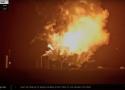
SpaceX's next Starship rocket exploded during a ground test in South Texas late Wednesday, dealing another blow to a program already struggling to overcome three consecutive failures in recent months.
The late-night explosion at SpaceX's rocket development complex in Starbase, Texas, destroyed the bullet-shaped upper stage that was slated to launch on the next Starship test flight. The powerful blast set off fires around SpaceX's Massey's Test Site, located a few miles from the company's Starship factory and launch pads.
Live streaming video from NASASpaceflight.com and LabPadre—media organizations with cameras positioned around Starbase—showed the 15-story-tall rocket burst into flames shortly after 11:00 pm local time (12:00 am EDT; 04:00 UTC). Local residents as far as 30 miles away reported seeing and feeling the blast.
SpaceX confirmed the Starship, numbered Ship 36 in the company's inventory, "experienced a major anomaly" on a test stand as the vehicle prepared to ignite its six Raptor engines for a static fire test. These hold-down test-firings are typically one of the final milestones in a Starship launch campaign before SpaceX moves the rocket to the launch pad.
The explosion occurred as SpaceX finished up loading super-cold methane and liquid oxygen propellants into Starship in preparation for the static fire test. The company said the area around the test site was evacuated of all personnel, and everyone was safe and accounted for after the incident. Firefighters from the Brownsville Fire Department were dispatched to the scene.
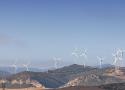
The Iberian blackout was a consequence of grid management, not any power source.
The blackout that took down the Iberian grid serving Spain and Portugal in April was the result of a number of smaller interacting problems, according to an investigation by the Spanish government. The report concludes that several steps meant to address a small instability made matters worse, eventually leading to a self-reinforcing cascade where high voltages caused power plants to drop off the grid, thereby increasing the voltage further. Critically, the report suggests that the Spanish grid operator had an unusually low number of plants on call to stabilize matters, and some of the ones it did have responded poorly. //
It may be tempting to view the cascading failures as a sign of incompetence on the part of the grid operators. But these are the same operators who managed the process of black-starting the grid to normal operations within a matter of hours. There should (and undoubtedly will) be questions about the low number of plants dedicated to grid stabilization, but that can be handled with a simple policy fix. An equally focused correction can likely address any problems at the problematic facility that triggered the whole chain of events.
The real issue is why so much hardware on the grid didn't follow its operating specifications, either disconnecting early or failing to respond properly to the calls for stabilization.
Notably missing in all of this is any mention of renewable power. Spain has a lot of it, and it tends to be used to meet a higher fraction of demand during the spring and fall, when heating and cooling demand is lowest. Opponents of renewable energy were quick to point to the Iberian blackout as evidence of the unreliability of wind and solar (accusations that The New York Times was willing to echo). The investigation indicates that all these accusations were completely without merit.