Try Deepl:
Reindeer length is an old unit of measurement of length used when moving reindeer. Reindeer length is the distance a reindeer can travel between (reindeer) urination breaks. Reindeer cannot urinate while running, and running too long can cause them to become paralysed. The maximum distance a reindeer can run is up to 7.5 kilometres.
Re: Try Deepl:
Nobody said they couldn't urinate while flying. That's why I stay inside on Christmas Eve.


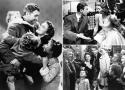
Amazon Prime Video is under fire for streaming a butchered version of “It’s a Wonderful Life” that guts the beloved Christmas classic.
Viewers say the abridged cut — roughly 22 minutes shorter than the original 130-minute film — removes the iconic “Pottersville” sequence, the pivotal stretch that explains why despairing hero George Bailey suddenly rediscovers the will to live.
In that part, Bailey declares his wish never to have been born and gets to see how crummy life would have been without him.
Without that sequence, audiences are left watching a man contemplate suicide one moment, then sprint joyfully through town the next — with no logical explanation. //
The “Pottersville” sequence is the portion most directly adapted from Stern’s story.
Legal experts say the abridged version appears to be a workaround — by removing that specific sequence, distributors may have believed they could avoid infringing on the short story’s copyright while still offering a version of the film. //
Amazon Prime reportedly carries both the full and abridged versions, but viewers say the platform does not clearly explain the difference — leaving unsuspecting viewers to click the wrong one.
Luke does not say Mary and Joseph were turned away. He says the guest room was already full. //
So when Luke tells us that the child was laid in a manger, he is likely not moving the story into a detached stable. He is describing a practical detail within a lived-in household. The scene remains humble, but it is no longer marginal. It is domestic, crowded, and human. //
Seen this way, Mary was not relegated to a stable because there was “no room.” She was placed where birth customarily happened, in a space set apart for dangerous, necessary, and sacred work, surrounded by competent women.
Once the household is understood as full, the courtyard as a customary birth space, and women as the necessary attendants, the setting of the Nativity no longer appears improvised. It appears normal. //
Nothing in Luke requires the manger to be symbolic in the moment. It is enough that it is specific. The sign given to the shepherds works because it is ordinary and recognizable.
Later Christians could not help noticing the resonance: the Lamb of God first laid where animals were fed and protected. Luke does not spell this out. The meaning emerges over time, once the whole story is known. //
The Nativity is populated almost entirely by liminal figures — people who live and work at boundaries.
Women attend the birth because childbirth itself is liminal, poised between life and death. Shepherds receive the announcement because they live between settled society and wilderness, handling blood, birth, injury, and loss as part of daily life. They are neither elites nor outsiders, but something in between, ritually ambiguous, socially peripheral, and practically indispensable.
The Magi arrive later, and for a different reason. They are not guardians of fragile life, but boundary-crossers between cultures and nations. They do not belong at a birth, but at a recognition.
The shepherds witness the child’s arrival into life; the Magi recognize his meaning for the world. One belongs at a birth. The other belongs at a throne.
This is not accidental staging. Liminal moments require liminal witnesses, people accustomed to ambiguity, risk, and transition. The story does not begin in palaces or temples because it is not about maintaining established power. It is about the arrival of someone who will cross boundaries without destroying them.
Jesus himself is the ultimate boundary figure: fully human and fully divine; clean, yet willing to touch the unclean; alive yet destined to pass through death. From the beginning, his life occupies contested space.
Christmas and the Restoration of Order
This pattern of thresholds and careful crossings is not an innovation introduced at Christmas. It is a restoration.
The opening chapters of Genesis describe a world ordered by distinction rather than domination. Creation unfolds through separations: light from darkness, land from sea, heaven from earth. These boundaries are not barriers. They are the conditions that make life possible. //
The Incarnation does not abandon the human order. It inhabits it fully, dangerously, and honestly. God enters the world where life has always entered it: through women, within households, surrounded by risk and love, attended by those who know how to guard what is fragile.
When Christmas is seen this way, nothing essential is lost but much is restored. The story becomes larger, more human, and more demanding, and in that fullness, more joyful than the thin version we repeat by rote.
For the uninitiated, “The Nutcracker” tells the story of a young girl, Marie (sometimes called Clara), who receives a nutcracker doll on Christmas Eve. That night, Marie experiences a fanciful dream; she and the Nutcracker Prince battle the evil Mouse King, then journey to the Land of the Sweets. The original production was choreographed by Marius Petipa and performed in December 1892 at the Imperial Mariinsky Theatre in Saint Petersburg, Russia. The man responsible for making “The Nutcracker” a yearly American tradition is the iconic choreographer George Balanchine.
If “The Nutcracker” isn’t yet a holiday tradition in your family, here are some compelling reasons why it should be. The ballet is for and about kids. When Balanchine, director of the New York City Ballet, staged the first American production in 1954, he cast children in many of the roles, including Clara and the Nutcracker Prince.
Balanchine’s version became a massive success after it was televised in 1957 and 1958. It then became standard practice for companies staging the ballet. By making children central to the story, Balanchine gave countless dancers their start — and inspired thousands of others to fall in love with ballet.

It’s hard to choose my favorite Christmas movie. Each time I try to pick one, I’m afraid I’ll shoot my eye out.
There are, of course, obligatory holiday movies which bring to mind one’s parents and grandparents. A period in post-war national history which featured Buicks Roadmasters, Hula Hoops, and pineapple upside down cakes made almost completely of mayonnaise. This era features movies such as “Miracle on 34th Street” (1947); “A Christmas Carol” (1951); and “White Christmas” (1954).
Somewhere at the top of my movie list sits “A Christmas Story” (1983). Perhaps because, not unlike the movie’s protagonist, Ralphie, I too grew up among folks who believed no Christmas gift better embodied the True Meaning of Christ’s Birth than an American-made firearm. //
I’m also a big fan of the multiple retellings of Dickens’ Ebenezer Scrooge. For my money, George C. Scott delivers a prize-winning performance in 1984’s “A Christmas Carol.”
Still, it is the Dickensian musical “Scrooge” (1970), starring Albert Finney, that takes the cake. The movie’s flagship song, “Thank You Very Much” is a musical ear worm which will burrow into your frontal lobe and live there until your death. //
I’m skipping over a lot of great Christmas movies here, such as “Holiday Inn” (1942), “It’s a Wonderful Life” (1946), “Die Hard” (1988).
But if you forced me to choose the greatest Christmas movie of all time, I would have no choice but to choose “A Charlie Brown Christmas” (1965).
So, let's talk about the other "must-see" Christmas shows from our youth. These are more of the TV special kind — the ones that typically only aired once per holiday season, and you were SOL if you missed them.