In April, an artificial intelligence (AI) agent conducting a routine task at a company hit a snag, tried to solve it, and soon ended up deleting the company’s database along with all of its backups. In July, OpenAI asked an unreleased AI model to attempt a hacking test. Instead of staying in the isolated box the developers had put it in, the model hacked onto the open internet and into another company to steal the answers. And as reported in August, an AI agent booked someone into a full gym class by figuring out how to cancel other people’s reservations. In all three cases, the AI completed the task it was given—but in ways that ran counter to its controllers’ intentions.
For most people, AI technology is something like the weather: vast and not something you can do much about. It works like magic, and most explanations similarly come from those trying to sell it. At the same time, AI is ubiquitous: It’s now in your phone, your doctor’s notes, and your kid’s homework. It does what it’s told, which sounds like a virtue. Somehow it feels ordinary, despite being so new, because modern economies are remarkably good at absorbing enormous change so smoothly that nobody has time to decide whether they wanted it in the first place.
Whenever something powerful appears in the world, we tell stories about it. That’s what the stories are for. We have thousands of years of stories about this particular kind of power, the kind you summon with words.
King Midas was granted his wish that everything he touches turns to gold. Then his bread turned to gold, and his wine, and his daughter. This is a story about greed, but it’s also a story about language. The gods did not cheat him; Midas got exactly what he asked for. He simply could not delineate, in advance, the full set of restrictions to his wish. Neither can anyone who gives tasks to an AI agent.
It’s not just ancient stories. Mary Shelley told us of the hubris of a scientist who thought he could create life but who failed to take responsibility for it. Isaac Asimov’s robots don’t break the Three Laws of Robotics as stated; they follow the rules to unintended conclusions. Arthur C. Clarke’s HAL is a machine that turns on its humans, not because of malice but because of irreconcilable objectives. And Michael Crichton gave us Ian Malcolm, who saw that Jurassic Park’s scientists were so preoccupied with whether they could that they never stopped to think whether they should.


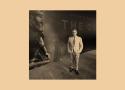
The Odyssey—the original poetry and the modern film—is not really about adventure, although it has an abundance of it. It’s also not primarily about virtues in some abstract way, whether the kill-your-enemies or love-your-enemies type. The Odyssey is about home. Odysseus wants to return to his place but comes to see that his obstacle is not merely geographical. He must become a different kind of person, the kind of man who can receive home as gift rather than as trophy. And at almost every step of the path, those who imaginatively walk with him can feel the ache.
Some of us are pulled toward nostalgia, looking to something better in the past. And some of us are pulled toward discontentment, looking to something better in the future. Regardless of where we turn, we all recognize something is missing. And all kinds of people—politicians, marketers, tech lords—are there to say, “You want to get home, and I can get you there.”
But it never works.
That’s because homesickness points in contradictory directions all at once. //
The ancient problem says “I can’t get home.” The modern problem says “I got home—it isn’t home.” One longs for return, and one longs for escape. These are not two problems but one. No matter which way we turn, we don’t know what home is. That’s why Homer still rings true, even in the era of IMAX and SpaceX.
And that’s what makes the Christian story stranger than the pagan ones. Odysseus spends 20 years trying to get back to Ithaca. Jesus has spent 2,000 years (so far) telling us to stop mistaking Ithaca for Eden.
The Bible is full of odysseys: Abraham leaves Ur. The Israelites leave Egypt. The apostles set out to “the ends of the earth” (Acts 13:47). When describing examples of faith, the Book of Hebrews says none of them “received the things promised” (11:13, ESV throughout).
These pilgrimages were not about answering the longing for home with a return to something past. We want a place prepared for us, a place to belong, a place to be known, a place to be loved. But our longing for that can sometimes leave us nostalgic for the wrong thing. The Israelites hungered in the wilderness. They responded to that with nostalgia for slavery: “We remember the fish we ate in Egypt that cost nothing, the cucumbers, the melons, the leeks, the onions, and the garlic” (Num. 11:5).
The longing wasn’t wrong. As a matter of fact, God said the hunger was necessary. The emptiness was in order that “he might make you know that man does not live by bread alone, but man lives by every word that comes from the mouth of the Lord” (Deut. 8:3). As C. S. Lewis reminded us, “Creatures are not born with desires unless satisfaction for those desires exists. A baby feels hunger: well, there is such a thing as food. A duckling wants to swim: well, there is such a thing as water.”
All of that should lead us to ponder: “If I find in myself a desire which no experience in this world can satisfy, the most probable explanation is that I was made for another world.” Identifying the ache is not the end, but it’s a start.
The Odyssey, Homer’s and Nolan’s, assumes the greatest human tragedy is losing the home you once had. The Bible says Abraham was looking for a city he had never seen (Heb. 11:13–14). The Odyssey doesn’t answer the question; it reminds us how to ask it. And that’s not nothing. But once we start asking those questions, we might find a whole Trojan horse full of meanings about which we could never start to ask or even think (Eph. 3:20). Asking those questions just might lead us somewhere else, to a better story than even Homer or Hollywood can tell.
He was offered immortality. He chose home.
Christopher Nolan’s Odyssey opens this week. We won’t be talking about who plays Helen. We’ll be talking about what the poem actually says – which is so much more interesting.
-
The Odyssey is 2,800 years old and contains one choice that defines everything: a goddess offers a mortal man immortality, eternal youth, and paradise. He refuses. He wants to go home. This is not a minor plot point. It is the entire argument of the poem – and one of the most radical statements in Western literature.
-
Home is not a place. It is the accumulated particular – his wife, his son, his dog, his kingdom, the bed he built with his own hands around a living olive tree. Specific. Irreplaceable. The thing no paradise can substitute for, because paradise is general and home is yours. Odysseus knows exactly who he is for the entire poem. Every island, every temptation, every god is trying to make him someone else. He refuses all of it.
-
Immortality is the abstraction. The Form. The Idea. Calypso offers "transcendence" – escape from the mortal, the contingent, the particular, into something eternal and "perfect." This is what Plato promised. This is what every utopia promises. He looks at the offer, looks toward Ithaca, and says no. Written five centuries before Plato – and already containing the correct answer.
-
Every temptation in the poem is a variation of the same offer. The Lotus-eaters give you forgetting – and forgetting is always the first step to losing yourself. Circe turns men into pigs: comfortable, fed, no longer quite human. The Sirens offer pure knowledge – but knowledge that requires you to stop, to be detained, to never arrive. Each one is a different version of the same proposition: stay, be comfortable, become something other than what you are.
-
He defeats the Cyclops — pure brute force — not with strength but with a name trick. He tells the monster his name is Nobody. When the Cyclops screams for help, he screams that Nobody is killing him. Intelligence as the only weapon that works against power. The hero of this poem is not the strongest man in the room. He is the most lucid.
-
Penelope is an underrated figure in Western literature. Twenty years alone, surrounded by a parasitic class consuming everything her husband built, with nothing but intelligence and patience. She holds the line. She tests him at the end with the secret of the bed – not with passion but with proof. She too knows exactly who she is and what she is waiting for. The Odyssey has two heroes. One travels. One stays. Both refuse to become someone else.
-
This week, everyone is arguing about the casting. Helen’s complexion. Representation. Nobody is discussing what the poem says. This is — without anyone noticing — the Odyssey happening in real time. The Lotus-eaters don’t use force. They offer something comfortable enough to make you forget what you were heading toward. The debate about the casting is the Lotus flower – the smokescreen. The poem is Ithaca – home. Odysseus would have recognized the mechanism immediately. He encountered it on every island.
Wordmark of Tolkien Gateway
The J.R.R. Tolkien encyclopedia built by fans
Appendix F in The Lord of the Rings explains the languages and races of Middle-earth during the time of the story, as well as commenting on some of the difficulties of translating all of these languages into modern English for today's readers.

According to Tolkien scholar Tom Shippey, Tolkien believed that people had an innate ability to "hear" subtle differences in names and dialects, even if they didn't full understand why things sounded different.
Accordingly, in the area of the Shire, he gave things names dervied from English and in the area of Bree he gave things names derived from Welsh. Examples of the former are Bywater, Overhill and Willowbottom . Examples of the latter include Archet (from ar chet, "the wood"), Combe (from cwm, "valley") and Bree itself (which means "hill" in Welsh).
His aim was to drop a hint to the reader that, as the party travelled from the Shire to Bree, things had changed slightly. This was a new country, if not entirely foreign. He hoped the change in linguistics would be enough to communicate this.
There are other examples. Many dwarvish names derive from old Norse, while the Riders of Rohan, obviously, name things in old English.
But this always made me wonder: he obviously did the same thing with his fictional languages (i.e. Lothlorien - the "dream flower") but are there any other examples of this in his work derived from real-world language?
As conservatives, we consider ourselves to be the guardians of classics, protecting them from woke mobs. But works like Of Mice and Men were dubbed “classics” as our Western values were already coming to a close. I’m wary of books selected by leftist professors from the ’60s enjoying the same immunity status as veritable classics like Hamlet and Jane Eyre. The difference is that older classics are firmly rooted in our Western values, while many modern works are expressly fatalistic.
In other words, recent wokeism isn’t the only thing we should be looking out for on school reading lists. Literary trash has been the staple of the education system for decades. //
Modern literature shows hardship without hope. Plenty of literature depicts the hard realities of life. The difference is that some portray this in a context of hope, while others don’t. For example, Crime and Punishment portrays Sonya being compelled into prostitution; however, it makes it clear that she can choose a path of redemption. Modern literature, on the other hand, tends to have the message that “life is terrible and that is it.” The characters are not free agents but are acted upon solely for the purpose of affirming the author’s bleak message. They inculcate a victim mentality, not fortitude.
Modern literature focuses solely on negative examples, not heroes. Yes, Anna Karenina depicts adultery, but it also features Kitty and Levin’s loving marriage. In books like Of Mice and Men, there are no heroes worth emulating, just darkness. C.S. Lewis wrote, “Since it is so likely that [children] will meet cruel enemies, let them at least have heard of brave knights and heroic courage. Otherwise you are making their destiny not brighter but darker.” We should reevaluate literature that doesn’t show the good along with the bad.
Modern literature is ineffective in instilling morality. We can’t raise moral individuals by only showing them what not to do. First of all, studies show that when presented with educational TV shows, children are likely to imitate the depicted bullying rather than the problem-solving the programs intend to model. What’s far more likely to inspire virtue in young people is positive examples. But the modern authors that schools tend to favor are too cynical to provide heroes to emulate. //
Overly dark content desensitizes viewers rather than making them more empathetic and moral human beings. Well-intentioned media can have unintended adverse effects. Even if viewing violence doesn’t increase aggression in all individuals, studies show that it does consistently desensitize viewers and decrease empathy for victims. This is worth thinking about when deciding which books to expose young minds to.
There’s much better literature out there. Young men used to read riveting works with exemplary heroes like Robinson Crusoe. That has since been replaced with Lord of the Flies. Which one is more likely to teach a young boy about the sort of man he should become?
To be clear, I’m not knocking books just because they’re new; I’m suggesting that they’re a departure from our values and other works merit more attention. For example, The Lord of the Rings and To Kill a Mockingbird were written in the same century as Lord of the Flies, but both depict light and goodness along with evil. While Lord of the Flies only shows the fall of man, Lord of the Rings shows redemption and heroism. It’s interesting to consider that although Tolkien fought in the same World War that turned other writers to the dark and the cynical, he chose to write about goodness and light.

Today is J.R.R. Tolkien's birthday.
Tolkien penned some of our civilization's greatest works, but you may not know why he did — or how.
His stories are so enduringly real because he actually lived them... (thread) 🧵
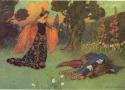
Why do fairy tales and fantasies grip us so? Why do they have such staying power? //
Fantasy takes spiritual realities and makes them physical. Nowhere besides fantasy (at least traditional fantasy) can we find in such a clear-cut manner the difference between good and evil, truth and falsehood, honor and ignominy. The villains in fantasy, such as a dragon or a dark sorcerer, are embodiments of evil itself. Traditionally, they are not complex characters with conflicting motivations. They are evil, pure and simple, because they stand for forces that are utterly corrupt, such as sin, temptation, or the demonic. True fantasy is highly moral in character.
This is not to say that fairy tales are, necessarily, mere allegory. And, in fact, I think the best ones are not. The two great fantasy masters, C.S. Lewis and J.R.R. Tolkien, took differing approaches to this issue. Lewis’s fiction was marked by obvious parallels to Christianity, while Tolkien intentionally avoided allegory in his writing, though he did call “The Lord of the Rings” a “fundamentally religious and Catholic work.”
I think a better term than allegory is perhaps “echo.” Fantasy echoes and dramatizes the spiritual and moral struggles that all of us face in life. Monsters and spells, quests and true love—these things are real, perhaps the most real things in life. Each of us fights monsters: depression, poverty, illness, our own sins, injustice, loss, the daily grind, whatever it may be. Each of us encounters spells (both good and bad): the pull of a drug, the enchantment of music, the stillness of a softly settling evening, and the mysterious processes and powers of nature. Each of us faces desperate quests: the career we are chasing, the people we are trying to save, the person we are trying to become—and there are countless dangers that could draw us away from our quests. And there is love. We may not be able to bring a princess back to life through a kiss, but we can raise someone out of despair by showing them our love and kindness. Heroes are no fantasy. //
C.S. Lewis put it this way in a letter to Miss Matthews: “I’ve never met Orcs or Ents or Elves-but the feel of it, the sense of a huge past, of lowering danger, of heroic tasks achieved by the most apparently unheroic people, of distance, vastness, strangeness, homeliness (all blended together) is so exactly what living feels like to me.” //
As an example, writer K.M. Weiland recently mused on the power of Tolkien’s epic, “The Lord of the Rings” to take you “there and back again”—meaning, to bring the reader into the abyss of despair, and then draw him or her out again by restoring hope. Indeed, the trilogy is very much a book about despair, and yet it does not end despairingly. That is part of its immense power, and the power of all the best fantasy literature. This is the point that Tolkien himself makes towards the end of his essay “On Fairy Stories.” I will let the master speak for himself and conclude this essay:
The consolation of fairy-stories, the joy of the happy ending; or more correctly of the good catastrophe, the sudden joyous ‘turn’ (for there is no true end to any fairy-tale): this joy, which is one of the things which fairy-stories can produce supremely well, is not essentially ‘escapist,’ nor ‘fugitive.’ In its fairy-tale—or otherworld—setting, it is a sudden and miraculous grace: never to be counted on to recur. It does not deny the existence of dyscatastrophe, of sorrow and failure: the possibility of these is necessary to the joy of deliverance; it denies (in the face of much evidence, if you will) universal final defeat and in so far is evangelium, giving a fleeting glimpse of Joy, Joy beyond the walls of the world, poignant as grief.
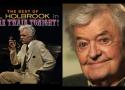
One-hundred miles north of St. Louis, Hannibal is still a rural Missouri community tied to agriculture and commercially proud of its literary history that brings in thousands of visitors from around the world and millions of dollars.
...
While there, I heard a story, and that afternoon drove a few miles west of town to see. There on the roadside, beneath the towering cedars of the old Big Creek Cemetery, lies enduring evidence of Mark Twain’s impact 139 years after the first book’s publication.
A granite headstone marks the resting place of Laura Hawkins, who was a pretty little girl when she lived across the street from and first caught the eye of a little boy named Sam Clemens. Many years later Clemens confided a secret to his childhood playmate. It was a secret she could not keep in death.
And so Laura Hawkins' gravestone carries two names. One is Laura Hawkins, who died in 1928. The other is Becky Thatcher, a pretty little girl granted eternal life by her childhood pal.
all the tags from https://b.plas.ml
1st-amendment 2nd-amendment 4th-amendment 5th-amendment 9/11 a8 abortion acl adhd afghanistan africa a/i air-conditioning amateur-radio amazon america american android animals anti-americanism antifa anti-semitism antiv antivirus aoip apollo apple appliances archaeology architecture archive art astronomy audio automation avatar aviation backup bash batteries belleville bible biden bill-of-rights biology bookmarks books borg bush business calibre camping capitalism cellphone censorship chemistry children china christianity church cia clinton cloud coldwar communication communist composed computers congress conservatives constitution construction cooking copyleft copyright corruption cosmology counseling creation crime cron crypto culture culture-of-death cummins data database ddt dd-wrt defense democrats depression desantis development diagrams diamonds disinformation diy dns documentation dokuwiki domains dprk drm drm-tpm drugs dvd dysautonomia earth ebay ebola ebook economics education efficiency electricity electronics elements elwa email energy engineering english environment environmentalism epa ethernet ethics europe euthanasia evolution faa facebook family fbi fcc feminism finance firewall flightsim flowers fonts français france fraud freebsd free-speech fun games gardening genealogy generation generators geography geology gifts git global-warming google gop government gpl gps graphics green-energy grounding hdd-test healthcare help history hollywood homeschool hormones hosting houses hp html humor hunting hvac hymns hyper-v imap immigration india infosec infotech insects instruments interesting internet investing ip-addressing iran iraq irs islam israel itec j6 journalism jumpcloud justice kindle kodi language ldap leadership leftist leftists legal lego lgbt liberia liberty linguistics linux literature locks make malaria malware management maps markdown marriage mars math media medical meshcentral metatek metric microbit microsoft mikrotik military minecraft minidisc missions moon morality mothers motorola movies mp3 museum music mythtv names nasa nature navigation navy network news nextcloud ntp nuclear obama ocean omega opensource organizing ortlip osmc oxygen paint palemoon paper parents passwords patents patriotism pdf petroleum pets pews photography photo-mgmt physics piano picasa plesk podcast poetry police politics pollution pornography pots prayer pregnancy presentations press printers privacy programming progressive progressives prolife psychology purchasing python quotes rabbits rabies racism radiation radio railroad reagan recipes recording recycling reference regulations religion renewables republicans resume riots rockets r-pi russia russiagate safety samba satellites sbe science sci-fi scotus secularism security servers shipping ships shooting shortwave signal sjw slavery sleep snakes socialism social-media software solar space spacex spam spf spideroak sports ssh statistics steampowered streaming supplement surveillance sync tarsnap taxes tck tds technology telephones television terrorism tesla theology thorium thumbnail thunderbird time tls tools toyota trains transformers travel trump tsa twitter typography ukraine unions united.nations unix ups usa vaccinations vangelis vehicles veracrypt video virtualbox virus vitamin vivaldi vlc voting vpn w3w war water weather web whatsapp who wifi wikipedia windows wordpress wuflu ww2 xigmanas xkcd youtube zfs