
Alvarenga was more than 10 years older than Córdoba. Alvarenga believes he survived, in part, because of his experience in the open sea, but he also credits simple optimism and faith that God would save him.
He focused on finding food. He prayed more and sang hymns, even in the most devastating moments at sea. Alvarenga remembers numerous cargo ships passing him by, but he doesn’t know if all the ships were real or if he imagined them. “I would signal them and nothing would happen,” he said. “But I thought God will determine which boat will save me.”
In the end, it was not a boat, but land that saved Alvarenga. After 438 days of floating on endless water, he saw mountains. When he felt he was close enough, Alvarenga dove into the water, swimming toward what he would later learn was one in the string of the Marshall Islands.
“I hit the ground first. My boat hit the ground second. I felt the waves, I felt the sand, and I felt the shore. I was so happy that I fainted on the sand. I didn’t care if I died at that point. I was so relieved. I knew at that point I didn’t have to eat any more fish if I didn’t want to.” //
Alvarenga didn’t care that journalists didn’t believe his story. The University of Hawaii and a number of independent oceanographers would later say his improbable survival was entirely possible. Buoys and weather models show an ocean drift matched his 6,000-mile journey west. He’s collaborated with journalist Jonathan Franklin in a book about his remarkable survival, called “438 Days.”


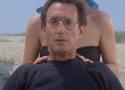
Today marks the 50th anniversary of Jaws, Steven Spielberg's blockbuster horror movie based on the bestselling novel by Peter Benchley. We're marking the occasion with a tribute to this classic film and its enduring impact on the popular perception of sharks, shark conservation efforts, and our culture at large. //
A lot of folks in both the marine science world and the ocean conservation communities have reported that Jaws in a lot of ways changed our world. It's not that people used to think that sharks were cute, cuddly, adorable animals, and then after Jaws, they thought that they were bloodthirsty killing machines. They just weren't on people's minds. Fishermen knew about them, surfers thought about them, but that was about it. Most people who went to the beach didn't pay much mind to what could be there. Jaws absolutely shattered that. My parents both reported that the summer that Jaws came out, they were afraid to go swimming in their community swimming pools. //
The movie also was the first time that a scientist was the hero. People half a generation above me have reported that seeing Richard Dreyfuss' Hooper on the big screen as the one who saves the day changed their career trajectory. "You can be a scientist who studies fish. Cool. I want to do that." In the time since Jaws came out, a lot of major changes have happened. One is that shark populations have declined globally by about 50 percent, and many species are now critically endangered. //
And then, from a cultural standpoint, we now have a whole genre of bad shark movies.
Ars Technica: Sharknado!
David Shiffman: Yes! Sharknado is one of the better of the bunch. Sitting on my desk here, we've got Sharkenstein, Raiders of the Lost Shark, and, of course, Shark Exorcist, all from the 2010s. I've been quoted as saying there's two types of shark movie: There's Jaws and there's bad shark movies. //
Ars Technica: People have a tendency to think that sharks are simply brutal killing machines. Why are they so important to the ecosystem?
David Shiffman: The title of my book is Why Sharks Matter because sharks do matter and people don't think about them that way. These are food chains that provide billions of humans with food, including some of the poorest humans on Earth. They provide tens of millions of humans with jobs. When those food chains are disrupted, that's bad for coastal communities, bad for food security and livelihoods. If we want to have healthy ocean food chains, we need a healthy top of the food chain, because when you lose the top of the food chain, the whole thing can unravel in unpredictable, but often quite devastating ways.
So sharks play important ecological roles by holding the food chain that we all depend on in place. They're also not a significant threat to you and your family. More people in a typical year die from flower pots falling on their head when they walk down the street. More people in a typical year die falling off a cliff when they're trying to take a selfie of the scenery behind them, than are killed by sharks. Any human death or injury is a tragedy, and I don't want to minimize that. But when we're talking about global-scale policy responses, the relative risk versus reward needs to be considered. //
In all of recorded human history, there is proof that exactly one shark bit more than one human. That was the Sharm el-Sheikh attacks around Christmas in Egypt a few years ago. Generally speaking, a lot of times it's hard to predict why wild animals do or don't do anything. But if this was a behavior that was real, there would be evidence that it happens and there isn't any, despite a lot of people looking. //
One of my favorite professional experiences is the American Alasdair Rank Society conference. One year it was in Austin, Texas, near the original Alamo Drafthouse. Coincidentally, while we were there, the cinema held a "Jaws on the Water" event. They had a giant projector screen, and we were sitting in a lake in inner tubes while there were scuba divers in the water messing with us from below. I did that with 75 professional shark scientists. It was absolutely amazing. It helped knowing that it was a lake.
Ars Technica: If you wanted to make another really good shark movie, what would that look like today?
David Shiffman: I often say that there are now three main movie plots: a man goes on a quest, a stranger comes to town, or there's a shark somewhere you would not expect a shark to be. It depends if you want to make a movie that's actually good, or one of the more fun "bad" movies like Sharknado or Sharktopus or Avalanche Sharks—the tagline of which is "snow is just frozen water." These movies are just off the rails and absolutely incredible. The ones that don't take themselves too seriously and are in on the joke tend to be very fun.
He dug a river to the ocean. Then this happened.

US government-owned "moored passive acoustic recorder" was able to hear and record the 2023 implosion of the doomed Titan submersible—even though the recorder was 900 miles away from the dive site.
That implosion, during an attempted dive to the wreckage of the Titanic, killed five people, including Stockton Rush, the CEO of the company that built and operated the Titan.
The implosion audio was just released publicly by the US Coast Guard's Titan Marine Board of Investigation, which has been investigating the disaster in enormous detail. As part of that investigation, the Coast Guard obtained the audio from the National Oceanic and Atmospheric Administration (NOAA), part of the US Department of Commerce.
The audio isn't much to listen to—just some static followed by a staticky explosive noise that decays in swirling fashion for multiple seconds. The implosion itself, given the pressure the vehicle was under at the time, probably occurred in milliseconds, as you can learn from simulations of the event. //
Back in the 1960s, '70s, and '80s, this kind of sonic technology was deeply important to the military, which used the Sound Surveillance System (SOSUS) to track things like Soviet submarine movements. (Think of Hunt for Red October spy games here.) Using underwater beamforming and triangulation, the system could identify submarines many hundreds or even thousands of miles away. The SOSUS mission was declassified in 1991. //
"At some point, safety just is pure waste," Rush once told a journalist. Unfortunately, it can be hard to know exactly where that point is. But it is now possible to hear what it sounds like when you're on the wrong side of it—and far below the surface of the ocean.
all the tags from https://b.plas.ml
1st-amendment 2nd-amendment 4th-amendment 5th-amendment 9/11 a8 abortion acl adhd afghanistan africa a/i air-conditioning amateur-radio amazon america american android animals anti-americanism antifa anti-semitism antiv antivirus aoip apollo apple appliances archaeology architecture archive art astronomy audio automation avatar aviation backup bash batteries belleville bible biden bill-of-rights biology bookmarks books borg bush business calibre camping capitalism cellphone censorship chemistry children china christianity church cia clinton cloud coldwar communication communist composed computers congress conservatives constitution construction cooking copyleft copyright corruption cosmology counseling creation crime cron crypto culture culture-of-death cummins data database ddt dd-wrt defense democrats depression desantis development diagrams diamonds disinformation diy dns documentation dokuwiki domains dprk drm drm-tpm drugs dvd dysautonomia earth ebay ebola ebook economics education efficiency electricity electronics elements elwa email energy engineering english environment environmentalism epa ethernet ethics europe euthanasia evolution faa facebook family fbi fcc feminism finance firewall flightsim flowers fonts français france fraud freebsd free-speech fun games gardening genealogy generation generators geography geology gifts git global-warming google gop government gpl gps graphics green-energy grounding hdd-test healthcare help history hollywood homeschool hormones hosting houses hp html humor hunting hvac hymns hyper-v imap immigration india infosec infotech insects instruments interesting internet investing ip-addressing iran iraq irs islam israel itec j6 journalism jumpcloud justice kindle kodi language ldap leadership leftist leftists legal lego lgbt liberia liberty linguistics linux literature locks make malaria malware management maps markdown marriage mars math media medical meshcentral metatek metric microbit microsoft mikrotik military minecraft minidisc missions moon morality mothers motorola movies mp3 museum music mythtv names nasa nature navigation navy network news nextcloud ntp nuclear obama ocean omega opensource organizing ortlip osmc oxygen paint palemoon paper parents passwords patents patriotism pdf petroleum pets pews photography photo-mgmt physics piano picasa plesk podcast poetry police politics pollution pornography pots prayer pregnancy presentations press printers privacy programming progressive progressives prolife psychology purchasing python quotes rabbits rabies racism radiation radio railroad reagan recipes recording recycling reference regulations religion renewables republicans resume riots rockets r-pi russia russiagate safety samba satellites sbe science sci-fi scotus secularism security servers shipping ships shooting shortwave signal sjw slavery sleep snakes socialism social-media software solar space spacex spam spf spideroak sports ssh statistics steampowered streaming supplement surveillance sync tarsnap taxes tck tds technology telephones television terrorism tesla theology thorium thumbnail thunderbird time tls tools toyota trains transformers travel trump tsa twitter typography ukraine unions united.nations unix ups usa vaccinations vangelis vehicles veracrypt video virtualbox virus vitamin vivaldi vlc voting vpn w3w war water weather web whatsapp who wifi wikipedia windows wordpress wuflu ww2 xigmanas xkcd youtube zfs