Daily Shaarli
December 31, 2025
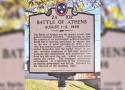
There were no pre-game speeches or waving banners; the vets surrounded the jail, demanding access to those ballots.
In response, one side started shooting, and the other answered in kind. The gunfight lasted a couple of hours until the door to the jail opened, giving the ballots a breath of fresh air.
When all eyes could see, the counting resumed.
Consequences, Not Chaos
Unsurprisingly, the slate of GIs won their respective elections — no race was even close — and the corrupt regime lost its grip of control.
There wasn't a loss of life, nor did Athens descend into anarchy; it simply corrected course.
Corrupt authority retreated into the darkness because ordinary people refused to accept theft disguised as governance. //
Despite the desire to paint corruption in postwar America as a foreign disease, Athens was the horn that woke everybody else, illustrating how civic rot grows fast when oversight vanishes, and fear replaces accountability.
Sunshine, as always, is the best disinfectant, so trust returned just as fast when that sunlight exposed everything.
Remember, those men were veterans returning from organized chaos and brutality, and when they returned home, they didn't want to see echoes from the battlefields. All they wanted was a count that matched the vote, while their restraint was just as important as their resolve. //
Across American life, a rope lies across everyone's waist, stretching between trust and force: Keep it slack enough for the law to work and tight enough to stop abuse.
Athens (TN) found its balance when patience was exhausted, and determination emerged.

Funds in ‘Money Safe’ accounts are only available when customers appear for face-to-face verification

Colloquialisms rarely announce themselves; they slip into sentences wearing work boots and faded jackets, and are already comfortably broken in.
Writers use them because they sound human, readers accept them because they feel familiar, but familiarity, as the expression goes, comes with a cost. Some phrases have been used so much that they have been rubbed as smooth as the Blarney Stone from overuse, drained of texture by repetition and reduced to verbal placeholders.
Language doesn't fail when people repeat things; it fails when people stop thinking about it.
What follows isn't a glossary or something intended for display; it's simply a working map of expressions that came from real places, by honest labor, real danger, and habits. Some deserve a rest, while others keep earning their keep. A few belong to a specific region or generation and lose force when lifted out of context.

And now, with that redesign having been functional and stable for a couple of years and a few billion page views (really!), we want to invite you all behind the curtain to peek at how we keep a major site like Ars online and functional. This article will be the first in a four-part series on how Ars Technica works—we’ll examine both the basic technology choices that power Ars and the software with which we hook everything together.

“If your hair stands on end, lightning is about to strike you. Drop to your knees and bend forward, but don’t lie flat on the ground. Wet ground is a good conductor of electricity,” the team of specialists said. “It is also recommended you get far away from the beach when storms roll in.”

“Really Simple Licensing” makes it easier for creators to get paid for AI scraping. //
Leading Internet companies and publishers—including Reddit, Yahoo, Quora, Medium, The Daily Beast, Fastly, and more—think there may finally be a solution to end AI crawlers hammering websites to scrape content without permission or compensation.
Announced Wednesday morning, the “Really Simple Licensing” (RSL) standard evolves robots.txt instructions by adding an automated licensing layer that’s designed to block bots that don’t fairly compensate creators for content.
Free for any publisher to use starting today, the RSL standard is an open, decentralized protocol that makes clear to AI crawlers and agents the terms for licensing, usage, and compensation of any content used to train AI, a press release noted.

agt499 Ars Tribunus Militum
13y
2,148
So, about the way Cholesterol guy ...improved his “mental clarity.”
I had a cardiac event in 2010, recovered fine with a bunch of meds, but found that I felt substantially diminished mental reasoning.
I went through a pile of tests, MRI, expert neurologists and cognitive testing, which all amounted to "you're pretty smart", but I just couldn't think like I used to.
In 2018 I got a new general practitioner and mentioned this, and she instantly suggested my cholesterol was too low, that the brain needs a level of cholesterol to function well and she'd seen it repeatedly before that cardiologists "overcook" cholesterol management.
Over a few months she reduced my lipid dosage to a quarter of what it had been, with fairly immediate mental improvements and cholesterol readings still in safe bounds.
I'm pleased to have my brain back despite the experts missing it all, and now I know I can go on the "nine pounds of cheese" diet for a brain boost...