Daily Shaarli
February 5, 2026

VoidLink includes an unusually broad and advanced array of capabilities.

CursorWrap is a standout utility from the recent PowerToys release (v0.97, to be precise). It turns your linear, multi-screen array into an infinite circle and eliminates the dead ends of your desktop in no time.
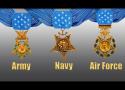
President Trump awarded two very belated Medals of Honor to two highly deserving Americans on Wednesday.
The first went to Army Staff Sergeant Michael Ollis, unfortuantely this was a posthumous award. //
The second story is much more uplifting.
Elmer Royce Williams was born April 4, 1925, in Wilmot, South Dakota. He enlisted in the U.S. Navy shortly after Pearl Harbor as an aviation cadet and completed flight training in August 1945. Williams chose a career as a career officer and eventually flew the Navy's first jet carrier fighter, the Grumman F9F Panther. //
In his efforts, Williams expended all of his ammunition and shot down four, very likely five, of the seven Soviet MiG–15s, setting the American aviator record for MiGs shot in a single sortie and the only naval dogfight over water in the Korean War. //
Williams was told the MiGs were not flown by North Koreans, or Chinese, but by Soviet Naval Aviation pilots flying out of Vladivostok. He was also told never to speak of the incident to anyone—his squadron mates or even his wife.
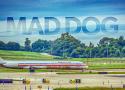
for many years, American Airlines had actually spurned the Boeing 737, choosing instead to build its entire hub-and-spoke operation around the McDonnell Douglas MD-80. For the better part of three decades, their glistening, polished metal bodies with the distinctive T-tails were the predominant aircraft at the airline's hubs across the country. But why did American choose the MD-80 over the 737, and what caused it to eventually return to Boeing? //
American's flight operations director, David Clark, commented on the MD-80 upon its retirement.
"It is very old school, there aren't any modern computer screens affixed to the controls. The steering columns are connected to a cable that goes directly to the flight controls. You can feel it give and pull throughout each flight, and it is a totally thrilling experience that pilots trained on newer aircraft may never experience."
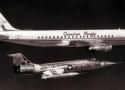
The test flight was planned by Douglas test pilot William Magruder and was set to take off from Edwards Air Force Base (AFB). As flight test engineer Richard Edwards, told to Air & Space Magazine, the idea was to “get it out there, show the airplane can survive this and not fall apart.” The DC-8, which at the time was competing with the Boeing 707, had been used by commercial carriers for about three years. Even though the DC-8 wasn’t designed to go supersonic, the bragging rights of being the first to do so were worth making the attempt.
In order to reach Mach 1, the jet had to be in a dive. According to Mentalfloss.com, this meant taking it up to 52,000 feet, which was also a record for altitude.
As Edwards tells Air & Space Magazine: “We took it up to 10 miles up…and put it in a half-a-G pushover. Bill maintained about 50 pounds of push. He didn’t trim it for the dive so that it would want to pull out by itself. In the dive, at about 45,000 feet, it went to Mach 1.01 for maybe 16 seconds, then he recovered. But the recovery was a little scary.”
The stabilizer in fact was overloaded and the plane stalled when Magruder tried to pull it back.
“What he did, because he was smart, is something that no other pilot would do,” explains Edwards. “He pushed over into the dive more, which relieved the load on the stabilizer. He was able to run the [stabilizer] motor…and he recovered at about 35,000 feet.” The crew successfully turned a mass-produced airliner into the world’s supersonic commuter jet. (Right by their side the entire time? Chuck Yeager, the first person to ever go supersonic in 1947. He escorted the DC-8 during its test in an F-104.)
“That’s an unofficial supersonic record, payload record, and of course an altitude record for a commercial transport,” Edwards points out.