Daily Shaarli
March 5, 2026


Silk Hat and Walking Cane, 3ème mouvement des "Dances in the Canebrakes"
Florence Price
This page lists devices that are known to support faster than real time backups of MiniDiscs, either via USB to a PC or other means (USB A port, SD card)
Via Web MiniDisc Pro exploits
These (portable) devices support the reverse-engineered functionality in /netmd-exploits/ to export audio from MD via the Web MiniDisc Pro application. Type-S exploits are more developed, reliable, and faster than Type-R exploits.
Cradled in red-glowing hydrogen gas, stars are being born in Orion. These stellar nurseries lie at the edge of the giant Orion molecular cloud complex, some 1,500 light-years away. This detailed view spans about 12 degrees across the center of the well-known constellation, with the Great Orion Nebula, the closest large star-forming region, visible toward the lower right. The deep mosaic also includes, near the top center, the Flame Nebula and the Horsehead Nebula.
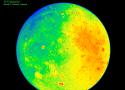
This is the thermal IR (LWIR) of the total lunar eclipse. A 12" Newtonian has been used as fore-optics. Pseudo color to enhance the details. The pictures shows some younger craters are very bright when the sun is temporarily blocked by the Earth.
MST 20260303 03:35 Partial Lunar Eclipse Thermal Vs. Visible (HDR) Fun to see the dramatic difference on the surface in difference wavelength ranges
What does the universe look like through infrared goggles? Our eyes can only see visible light, but astronomers want to see more. Today’s APOD shows spiral galaxy IC 5332 as seen by two NASA telescopes: Webb in mid-infrared and Hubble in ultraviolet and visible light. To toggle between the two space-based views just slide your cursor over the image (or follow this link). The Hubble image highlights the spiral arms of the galaxy separated by dark regions, whereas the Webb image reveals a finer, more tangled structure. Interstellar dust scatters and absorbs light from the stars in the galaxy, causing the dark dust lanes in the Hubble image, and then emits heat in infrared light, so dust glows in this Webb image. The Mid-InfraRed Instrument on Webb needs to operate at a chilling temperature of -266ºC (or - 447ºF), otherwise it would detect infrared radiation from the telescope itself. Combining these observations, astronomers connect the “small scale” of gas and stars to the truly large scale of galactic structure and evolution.