Daily Shaarli
March 20, 2026
The North Carolina Association of Broadcasters (NCAB) has partnered with Wake Tech to develop the NCAB Broadcast Technology Academy to prepare individuals who are technically minded, mechanically inclined or electrically inclined for careers as broadcast technicians in the broadcasting industry.
A rigorous mix of classroom and hands-on learning in a specially designed lab during the 14-week academy provides students the technical skills and theoretical knowledge required for success in the broadcasting industry. Students learn about AM, FM, HD and HDTV transmission systems, including transmitters, antennas, transmission lines, remote control systems and program delivery systems.
Upon completion, students will be able to troubleshoot and repair both legacy and modern radio transmission systems. They also will be prepared to challenge the Society of Broadcast Engineers (SBE) Certified Broadcast Technologist exam, providing national recognition of their engineering abilities.
Tuition, fees and books will be covered by the NCAB. Additional funds will be available to assist with living expenses, transportation, etc., provided the student attends all classes and meets workload and grade requirements.
bungalowbernard Ars Praetorian
5y
404
Each KG of coal produces about 8 KWh of electricity - to produce 8 MWh in a year is literally just Steve throwing a shovelful into the hopper once a day.

InteractivePolls @IAPolls2022
·
CBS POLL: Do you favor or oppose requiring proof of citizenship (e.g., passport or birth certificate) to register to vote?
🟢 Favor: 66%
🟤 Oppose: 34%
——
• Dem: 43-57 (-14)
• GOP: 93-7 (+86)
• Indie: 61-39 (+22)
• White: 68-32 (+36)
• Black: 60-40 (+20)
• Hispanic: 63-37 Show more
InteractivePolls @IAPolls2022
·
CBS News Poll: Do you favor or oppose requiring people to show valid photo ID before they are permitted to vote?
🟢 Favor: 80%
🟤 Oppose: 20%
——
• Dem: 65-35 (+30)
• GOP: 95-5 (+90)
• Indie: 79-21 (+58)
• White: 80-20 (+60)
• Black: 80-20 (+60)
• Hispanic: 77-23 (+55) Show more
6:42 PM · Mar 19, 2026
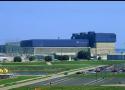
A blogger, Destin, talked TVA into letting him film the refueling process at Browns Ferry in Alabama. Browns Ferry is a three unit boiling water reactor plant. The design is essentially the same as the reactors at Fukushima. The hour and 45 minute video is overly long; and Destin’s narration can be a little grating at times; but overall he does a great job. It’s worth your time.
We also get a pretty good feeling for the plant’s safety culture. //
much of the video is taken up by Destin’s going through various check points, each manned by 3 or 4 people sitting around watching screens. While there are scores of people on the refueling floor, only a handful seem to be actually doing something to the plant. The actual shifting of the fuel bundles is done by a three person team, and is largely automated. At one point, a lady berates Destin’s guide who outranks her for letting Destin walk down a stairs facing forward. The stairs were narrower and steeper than normal. The rule is you have to treat it like a ladder.
Destin is told not to step on the floor drains. The problem is the moisture might contaminate his shoes, and set off alarms. The radiation in the drain is not from the plant. It’s normal background, naturally occurring radon and daughters. Nuclear plants don’t produce radon. On the way out, Destin’s camera fails to clear a check. So they disassemble the camera and put each piece into the detector separately, to allow the pieces out of the plant. Once again the source is background radon. //
On a positive note, TVA should be congratulated for allowing this visit. It should be commonplace. If I were king of the world, I’d have a glassed in viewing gallery, high in every reactor’s refueling space. During outages, I would invite everybody to walk through and get a look at what’s going on. Most of the people will come out as enthusiastic about nuclear as Destin.
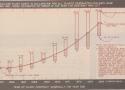
The second 1974 Power Engineering article that Nick Touran has uncovered is Senior Editor Olds’ discussion of the massive jumps in power plant capital costs between 1965 and 1974 Power Plant Capital Costs Going Out of Sight.
The AEC required plant owners to report their estimate of the capital cost of any nuclear plants under construction, and update those estimates annually. Olds’ article is largely based on that data. All his dollar figures are in nominal dollars, the dollar of that year.
Figure 2. USA fossil plant costs bottomed out in 1966.
The paper is graced by a number of hand drawn, beautifully lettered graphics. Figure 2 shows that prior to 1967 fossil plant capital costs were falling reaching a low of $100/kW in nominal dollars in 1966. But in 1967, the cost jumped nearly 20% to $118. Unfortunately, Old does not take the fossil figures any further forward. But if he did he would see that 20% per year escalation continue unabated through 1974, Figure 3. //
Thanks to nuclear’s factor of 100,000 advantage in energy density over fossil, a technology that did not exist 15 years earlier, was working its way down a steep learning curve, and in 1967 was fully competitive with coal, when coal was as cheap as it ever was. Nuclear was insulated from both oil price and fossil pollution regulation.
But in 1967, a new omnipotent player emerged. In 1954, Congress had given the AEC complete and unfettered control over nuclear, both nuclear weapons and nuclear power. As Truman put it, atom power was “too important to be made the subject of profiteering”. The AEC had to both implement Mutually Assured Destruction, and promote and regulate nuclear power. The first responsibility included making sure everybody was petrified of the bomb.