Daily Shaarli
April 10, 2026

Delaware’s business-friendly reputation is why the state has just about one million residents, but two million registered business entities.
That is, until the state's corporate-focused Court of Chancery twice denied Tesla's proposed pay package for Musk, even though it was fully shareholder-approved. The decision was exactly the kind of nanny-statism that companies incorporated in Delaware to avoid.
So Tesla reincorporated in Texas — Wall Street firms have major outposts there now, too, as well as in Florida — and SpaceX quickly followed.
Serving as a corporate P.O. box accounts for as much as one-third of Delaware's state revenues. But clearly that's changing almost as quickly as the Court of Chancery sabotaged the state's reputation in a fit of suicidal pique over Musk's politics. //
What's amazing about Delaware's "bad luck" is just how quickly things began to unravel. It's been more than a century since Delaware became the favorite place for businesses located anywhere to incorporate, thanks to expert Chancery Court judges, predictable corporate legal precedents, and a light regulatory touch. The First State quickly became the legal home for most Fortune 500 companies. No factories. No fancy headquarters. Just a P.O. box. //
Capital finds a way, to misquote Dr. Ian Malcolm.
But as Elon Musk could tell you — and probably did, if you follow him on X — it's a helluva lot easier to move a corporate P.O. box than it is to relocate a billion-dollar HQ.
Delaware forgot that. The exodus has begun.
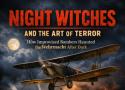
The Red Army needed pilots, aircraft, and pressure on the enemy—immediately. So they did something profoundly unromantic and brutally practical: they took civilians who could fly and turned them into combat airmen.
Many of the women who became the Night Witches had been flying before the war. Civilian aero clubs were common in the Soviet Union, and flight was encouraged as a national skill. These weren’t cosplayers handed wings for morale photos. They were trained aviators, suddenly handed bombs instead of mailbags. Under the leadership of Marina Raskova, they were organized, uniformed, and sent to the front.
Their aircraft was the Polikarpov Po-2, which deserves special mention because it may be the least intimidating combat aircraft ever to terrify a modern army. Built of wood and fabric, slow enough to be outrun by some farm equipment, and equipped with little more than a compass and stubbornness, the Po-2 was not supposed to survive combat. That turned out to be its greatest strength.
The mission assigned to the regiment was night harassment bombing. This was not about destruction; it was about erosion. The goal was to deny German forces something every soldier needs more than ammunition: sleep. Night after night, the Po-2s would appear over German positions, often flying just above treetop level. At the last moment, the pilots would cut their engines and glide silently, releasing small bombs before disappearing back into the darkness.
That silence mattered. //
Psychologically, this was devastating. Armies can endure danger. They struggle against uncertainty. The Night Witches turned the night itself into an enemy. They forced the Germans to spend time, fuel, ammunition, and attention on an aircraft that cost almost nothing to operate. A single crew might fly multiple sorties in a single night, returning to refuel and rearm in primitive fields, then heading back out again.
The numbers tell the story. By the end of the war, the regiment had flown roughly 23,000 sorties. That is not a stunt. That is persistence weaponized. Each individual mission might have been minor, but together they created a constant, grinding pressure on German rear areas. Officers complained. Troops cursed. Morale eroded. The nickname “Night Witches” was not admiration—it was fear mixed with exhaustion.
This is the part modern audiences often miss. The Night Witches were not trying to win battles in the cinematic sense. They were trying to make the enemy miserable, distracted, and tired at scale. It was warfare by irritation, perfected through repetition. And it worked precisely because it was unconventional.
Desperate times reward asymmetric thinking. The Soviets didn’t wait to build perfect aircraft or ideal forces. They repurposed what existed. Civilian pilots became military crews. Trainers became bombers. Night became a weapon. The Night Witches are a textbook example of how nations under existential threat blur the line between civilian and soldier—not out of ideology, but necessity.

Multicarrier prepaid service US Mobile said it is offering bundles for new and existing customers, including residential Starlink, for as low as $47 per month. Essentially, the cheapest plan combines US Mobile’s base unlimited plan at $17 per month with Starlink's residential plan at $30 per month, which offers 100 Mbps download speeds. //
What makes US Mobile unique in the marketplace is that it can offer customers the ability to choose the network they want to use, which they call Dark Star (AT&T), Warp (Verizon), and Light Speed (T-Mobile).