Daily Shaarli
May 22, 2026

Speaking to Ars in the wake of the controversy, Rosenbaum says he “learned a lesson” and is “going to be much more suspicious” and “reticent to trust” AI outputs going forward.
But he also can’t tear himself away from the tools. Rather amazingly, Rosenbaum is not interested in going back to the AI-free research process he used to write previous books.
“The idea of taking X years off [from AI] while it sorts itself out, and going back to, like, Microsoft Word … it’s just not in my nature,” he told Ars. “[AI] is magical. Because it connects, it knits together ideas and gives you pathways to think about things that you’re not going to come up with on your own.”
It’s also magical in another way: Like J.R.R. Tolkien’s One Ring, AI convinces many of those who use it that they can control its power properly. But can they?
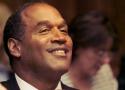
In the O.J. Simpson case, one of its early lawsuit efforts, DirecTV had an investigator on-site who physically turned on Simpson’s TVs and saw the unscrambled DirecTV programming. But this kind of evidence was hugely expensive to collect and required law enforcement help. Most later DirecTV cases were based merely on device purchase lists; DirecTV had no idea what people like Treworgy were actually doing inside the walls of their homes.
In the Treworgy case, both the district court and the 11th Circuit Court of Appeals ruled that simple ownership did not create “a private right of action against a person in possession of access devices in violation of section 2512(1) (b).” In other words, DirecTV couldn’t sue people just for buying a card or a bootloader; they had to show actual illegal activity. //
After the judge ruled against Simpson, the only remaining issue was how much he would owe in damages.
DirecTV had requested $20,000 under each of two separate laws, for a total of $40,000. The judge noted that Simpson had not “used the devices commercially or for resale,” so she declined to award the full request. Instead, DirecTV got $15,000 in damages under the first statute and $10,000 under the second, for a total of $25,000.
The higher cost, though, came from legal fees. DirecTV submitted a motion for Simpson to pay its lawyers after his loss, and the judge agreed to a $33,678 legal bill.
The court granted final judgment on November 29, 2005, ruling that “the Juice” owed DirecTV a grand total of $58,678. It was pricey, yes—but in a way, Simpson got off cheap. When the recording industry launched its own mass lawsuit campaign, college students and single moms were eventually hit with $675,000 or even $1.92 million verdicts.