Daily Shaarli
October 24, 2026

80 years ago today, the first images of Earth from space were taken. A 35mm camera mounted on a captured V-2 rocket launched from White Sands Missile Range in New Mexico. This photo is a frame from the rocket's journey to 65 miles (105 km) above Earth's surface. //
The camera snapped a new frame every second and a half. The V-2 slammed back into the desert at about 500 feet per second and smashed it, but the film survived in a steel cassette, and a recovery soldier said the scientists jumped up and down like kids.

PVC and CPVC cements are solvent-based chemicals that literally dissolve the outer surface of the pipe and fitting. When you push the two pieces together, the softened surfaces fuse at a molecular level, forming one unified piece — not just a surface bond. Once the solvent evaporates and the joint cures, you’re left with what is, in essence, a seamless pipe.
This is why the material chemistry of the cement must match the pipe. The solvent mix that softens CPVC is not the same formula that softens standard PVC, and using the wrong one means the pipe surface never fully dissolves — leaving you with a weak, brittle joint waiting to fail. //
Using CPVC cement on PVC pipe: Weld-On, one of the most reputable solvent cement manufacturers in the industry, confirms that CPVC solvent cement technically will work on PVC piping — though they still recommend using the correct PVC cement for the job. //
Even though CPVC cement can technically bond PVC, using it routinely on PVC is not recommended. The solvent chemistry is calibrated for CPVC’s harder structure, which can result in:
Inadequate solvent action on the softer PVC surface, causing over-dissolution or uneven bonding
Brittle joints that don’t have the flexibility PVC connections normally need. //
A joint made with the wrong cement may hold water temporarily but fail under pressure cycling, temperature swings, or mechanical stress. The bond never achieves the seamless molecular fusion that proper solvent welding creates. //
Several manufacturers offer all-in-one transition cements specifically formulated to bond both PVC and CPVC. These products are engineered as a true middle ground — not a compromise, but a deliberately formulated blend.
When choosing a multipurpose cement, look for:
Explicit “PVC/CPVC” labeling on the can

Most of what our Founding Fathers thought was essential to a good education is barely taught in schools anymore:
- Classical languages
- Religion
- Theology
- Biblical literacy
- Penmanship
- Cursive writing
- Calligraphy
- Spelling
- Grammar
- Syntax
- Vocabulary
- Etymology
- Memorization
- Recitation
- Dictation
- Logic
- Formal reasoning
- Rhetoric
- Oratory
- Public speaking
- Debate
- Dialectic
- Persuasive writing
- Essay composition
- Letter writing
- Philosophy
- Metaphysics
- Epistemology
- Ethics
- Moral philosophy
- Natural law
- Virtue
- Character formation
- Moral reasoning
- Civics
- Constitutional history
- Founding documents
- Political philosophy
- Natural rights
- Duties of citizenship
- Classical literature
- Epic poetry
- Poetry memorization
- Shakespeare
- The Great Books
- Ancient history
- Greek and Roman history
- Medieval history
- Church history
- Western civilization
- Chronological history
- Historical biography
- Geography
- Map reading
- Mental arithmetic
- Arithmetic drills
- Euclidean geometry
- Mathematical proofs
- Astronomy
- Natural history
- Music theory
- Choral singing
- Hymnody
- Drawing
- Fine arts appreciation
- Aesthetics
- Physical education
- Calisthenics
- Self-discipline
- Etiquette
- Manners
- Courtesy
- Respect for elders
- Personal responsibility
- Prudence
- Temperance
- Fortitude
- Justice
- Intellectual humility
- Independent judgment
- The pursuit of truth
- The cultivation of wisdom
//
Nothing to add. Every item here starts with learning to read well. Then a great teacher asks the right question, and it passes from a person to a child. In a class of six, the teacher hears every recitation and catches every stumble. Whoever has the best teachers wins. //
Republican authors (Cicero, Plutarch, Sidney, Cato's Letters) and Enlightenment political thinkers (Locke, Montesquieu)
They would want us to remain obsessed with understanding the conditions required for self governance — the civic virtue and political system

Have you ever seen a bonsai up close? You take a tree that wants to grow thirty meters tall, and every year you cut back its roots and wire its branches so it keeps exactly the same shape. Some live for centuries. They're beautiful. They never get any bigger.
That's what conservatism becomes when it only preserves and never builds. We protected everything, including the things that should have been allowed to die.
In 2022 Elon wrote that unless something changes, Japan will eventually cease to exist. A lot of people here called it rude. I was annoyed too, for about a day. Then I looked at the census again.
WHAT AMERICA SHOULD TAKE FROM THIS
Japan shows you can keep your culture without apologizing for it. Don't let anyone tell you that pride in your country is the problem.
Japan also shows that a nation can get culture right and still lose, if it protects its old companies, its old voters and its old arrangements against its own young people. It dies politely, with clean streets and trains on time.
You still have what we lost: a system that lets things fail and lets new things be born. Bankruptcy, startups, people who move across the country for a better job. Elon is a product of that system. Every bailout, every subsidy for a company that should have died, every rule that protects the insider against the newcomer moves you a little closer to us.
If you know someone who says "America should just be more like Japan," send them this. Both halves.
A nation isn't saved by preserving its past. It's saved by having someone to hand it to.

Incompatibility Risks: While CPVC cement may create an initial bond with PVC pipe, it is not a permanent solution; the chemical differences prevent the materials from fusing correctly, leading to likely failure over time.
Chemical Differences: PVC and CPVC have different chemical compositions—specifically the higher chlorine content in CPVC—which requires specialized cements and primers designed to react with those specific resins.
Potential for Leaks: Using the wrong cement increases the risk of leaks caused by high water pressure, temperature fluctuations (both extreme heat and cold), and general aging of the weak bond.
Best Practices: To ensure a watertight, "inseparable" connection, always use PVC-specific cement and primer for PVC projects, apply both quickly, and give the pipe a quarter-turn during insertion to distribute the adhesive

Birds’ compact nervous system seems to help them handle tasks very quickly. //
The crows solved the task the same way primates do, using the same mathematical logic despite having a very different brain structure. And they did it two times faster.
Mostly Ignorant Ars Centurion
3y
383
Buffy said:
Or the Saturn V.
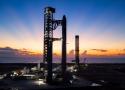
Seriously, though, one of Starships selling points is that it's cost per launch is low, but if you have launch 22 of them for a single lunar mission, it starts to add up.
I think you raise a fair question, so it got me thinking about it.
SpaceX estimates that a fully reusable Starship will cost between $2-$10M per launch. Let's use the upper bound of that estimate, then add a zero to make sure and call it $100M per launch.
Let's say Musk is hugely incorrect and it'll take 20 launches to fuel up a depot.
We're talking $2B to fuel a depot, plus the cost of the depot vehicle, so let's say it's double a normal Starship and is $200M. That's $2.2B to deliver about 100 metric tons of material to the Lunar surface.
Artemis launch costs are a little over $4B per launch, but we'll round down. $4B to deliver an estimated 27 metric tons to the Lunar surface.
Granted, I'm estimating here, but I used a lot of worst-case thinking with Starship costs and it still comes out to half the cost of the only other viable-ish option. Lots for SpaceX to prove yet technically (so does Artemis for that matter, but I'd argue not as much).
Super3DPC Ars Centurion
8y
360
dmsilev said:
A more serious back-of-the-envelope calculation. A full fuel load for Starship is something like 1500 tons, roughly 3/4s LOX and 1/4 liquid methane. We don't really know what the actual LEO capacity of the current version of the stack is, just that it's at least 26 Mk 3 Starlinks plus the dispenser. Call it 55 tons minimum. Let's assume that there's a fair amount of margin in these test flights, future optimization, etc. and say that in the near future 100 tons of payload per flight is reasonable (with the 200 ton design goal well into the future). If they need to transfer a full fuel load into the lunar Ship, that's ballpark 15 launches even without any boiloff or transfer losses.
So yeah, I believe 22 as an estimate, unless HLS Ship doesn't need a full load of fuel for TLI, Lunar capture, and descent/ascent.
It sound like something completely absurd for flag and footprints mission. But for long term permanently manned outpost on the moon, there really is no other way. At the beginning of establishing a base, before ISRU can start, we need lots of hardware on the moon. Habitation module, rovers, construction vehicle, all have to be delivered pretty much in one peace to the Moon.
Face it: the limit is not SpaceX. The limit is rocket equation. There's no way of landing dozens of tons of hardware on the moon with chemical rockets without refuelling dozens of times in earth orbit.
dmsilev Ars Tribunus Angusticlavius
17y
7,869
Subscriptor
The other thing to consider is that getting from LEO to the lunar surface is something like 5.5 km/sec of delta v (Solar system "subway map" chart). Add in another 1.5 or so km/sec to get off the lunar surface and into LLO, where the crew could transfer to Orion for the ride home. That's 7 km/sec needed, which from searching around seems to be pretty close to the dv budget for a fully fueled Starship. So, for Musk's "6 to 8" estimate to work, each tanker really is going to lift 200 tons of cargo to LEO.
Super3DPC Ars Centurion
8y
360
ISUAero1986 said:
I know a few people inside the program that will privately admit the plan is stupid and NaSA should never gone this route.
What we're seeing is the limit of chemical rocket. I agree that for flag and footprint mission or crew rotation mission, using starship is absurd unless the crew being rotated numbered in high tens. But for establishing moon bases, using chemical rocket, dozens of times of refueling is the only way to go to land dozens of tons of cargo on the moon.
After the base is established and can do fuel ISRU production, we can use lunar cycler to reduce the number of refueling launch from earth (material and crew transfer vehicle from earth to lunar cycler then dedicated lunar orbiter from moon to cycler and back). But without dozens of refueling flight per lunar landing, there's never going to be ISRU on the moon. Not on the scale required for on site lunar orbiter / lander.
Despite the common term “PVC glue,” the product used to join PVC pipe is technically PVC solvent cement. Unlike traditional glue, which acts as a surface adhesive, solvent cement chemically softens the surfaces of the pipe and fitting. Once joined, those surfaces fuse into a single, continuous material structure.
This process, known as solvent welding, creates a strong, watertight connection between compatible pipe and fittings when the joint is properly assembled and fully cured. //
Pipe Diameter Pressure 60–100°F
½" to 1¼" Up to 180 psi 15 min
1½" to 3" Up to 180 psi 30 min

There are many types of “pure” water: chemically pure, biologically pure, or a combination of both. RO water, while biologically pure, it is not very chemically pure. The purity (and therefore corrosivity) of RO water is a function of the total dissolved solids (TDS) of the feed water: the lower the TDS, the more pure the RO water. In hospitals, RO is often combined with deionization (DI), and many hospitals follow AAMI TIR standards. RO/DI water is starved for minerals and tends to want to “steal” them from the piping.
All of these factors need to be fully understood and identified before selecting the piping material.
So What Is the Best Material?
Our experts overwhelmingly agree that copper should not be used in this application. Copper can easily leech into the RO water, diminishing its purity. Brass isn’t as easily corroded as copper by RO water, but it still should be avoided for this application.
For any system that includes deionization, Schedule 80 PVC is not recommended. The aggressive nature of the DI water will extract additives from the PVC, weakening the piping structure and contaminating the high-purity water. However, for single-stage RO systems, PVC is acceptable.
For this application, our experts suggest the following materials.
PEX
Many have found that cross-linked polyethylene (PEX) piping/tubing work best in this application. PEX is resistant to the corrosion that is caused by minerals and other contaminants in the water. These contaminants do not build up in the piping, and they do not break down from the constant exposure of the contaminants, which means the RO system can do its job while minimizing the possibility of damage to the plumbing system.
PP
For Types II and III water, polypropylene (PP) piping is suggested. PP is commonly used in these applications and will support not only the resistivity/conductivity levels, but also the other components of the water spec, primarily total organic carbon (TOC).
Keep in mind that PP does not meet ASTM E84 25/50 flame/smoke Ratings, so take care if the piping is within a plenum.
PVDF
For Type I water, PVDF is suggested. PVDF will support the high resistivity levels desired, as well as the tight TOC and other constituent restrictions. Also, to meet AAMI/TIR 34 standards, PVDF with BCF (bead and crevice free) joints to prevent bacteria buildup in the joint crevices should be specified.
Due to its cost, PVDF would usually be reserved for ultra-pure water in applications where water approaching 18 µohm is required.
SISHEN, South Africa — A South African freight operator has claimed the title for running the world’s longest freight train, taking the distinction away from Australia.
National rail operator Transnet Freight Rail reports it ran an empty 696-car, 7.6-kilometer-long train — that’s 4.7 miles long — on its 861-km (535-mile) Iron Ore Export Line between the port of Saldanha and Northern Cape mine at Sishen. Australian mining company BHP had held the record since 2001 with a 682-car, 7.35-km (4.56-mile) train at its operation in Western Australia’s Pilbara region. According to the Guinness Book of World Records, that train was loaded and also set a record at 99,732.1 metric tons. Before that, Transnet had held the record.