Baba Computer
Dr. Anthony Petrillo
For my students, friends, and family.


Roberts Flight Information Region (Roberts FIR), located off the west coast of Africa, has selected Aireon’s space-based automatic dependent surveillance-broadcast (ADS-B) data to navigate and surveil aircraft in the combined upper airspace of its three member States, joining a growing number of African countries opting for the revolutionary product.
The Roberts FIR, which is headquartered in Liberia, is a tripartite organization responsible for the control and safety of air navigation in the combined upper airspace of Guinea, Liberia and Sierra Leone, with a total size of 770,777 square km. Each Member state manages its portion of the airspace from the ground to 3000 ft. Mean Sea Level (MSL).

Toto "Africa" with the names of all the nations of Africa
But before the sea-going phase of the exercise commenced on January 13, the South African government requested that the Iranians withdraw their active participation from the exercise and become observers instead, a request to which the Iranian acceded.
The South African move was prompted by the realization at this late stage, that diplomatically it did not look good to be aligned with an Iranian regime which by some estimates has now killed 12,000 of its own citizens in anti-government riots. The South Africans also realized that its highly favorable trade position under the African Growth and Opportunity Act was in jeopardy, with the Act is coming before the U.S. House of Representatives this week for its scheduled three-year renewal.
These dangers were already apparent back in September, when The Maritime Executive noted that South African Chief of Staff General Rudzani Maphwanya had visited Tehran to issue an invitation to the exercise, a visit not apparently approved beforehand by South African President Cyril Ramaphosa. President Ramaphosa objected to the visit, but did not fire the General for his freelancing in the political arena. Political opponents of the President said at the time that his response was weak, exceedingly so as events have turned out.
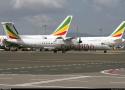
From humble beginnings just after the second World War to the largest airline in Africa, Ethiopian Airlines now connects more people with more aircraft throughout Africa and beyond than ever before. //
On December 21st, 1945, almost 80 years ago, Ethiopian Air Lines (EAL) was founded, beginning operations on April 8th, 1946, with its first flight Addis Ababa – Asmara (Eritrea) – Cairo (Egypt) and vice versa provided by Douglas C-47 Skytrains. During its early days, this was its only route, performed on a weekly basis.
Ethiopian Air Lines, managed by the Ethiopian government and Trans World Airlines (TWA), expanded its operations in Northeast Africa and Central Africa, launching its first long-haul routes in the 1950s. With the arrival of the first jet aircraft in the 1960s and 1970s, Ethiopian further developed its network, adding new services to Asia, Europe, and the Middle East.
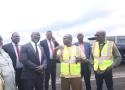
Liberia’s aviation safety systems have come under critical review following an urgent inspection tour of the Roberts International Airport (RIA) and the Liberia Civil Aviation Authority (LCAA) by House Speaker Richard N. Koon.
The Speaker’s visit was prompted by reports of malfunctioning navigation and safety equipment that have left Liberia’s only international airport vulnerable and below international standards. The tour also followed revelations that the country “failed miserably” during a 2022 audit conducted by the International Civil Aviation Organization (ICAO). ///
The airport collects a lot of money for every passenger. Why doesn't that fund all this?
The first widespread success in curing HIV may come from children, not adults.
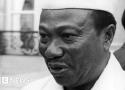
Liberia's former President William Tolbert has had a symbolic reburial, 45 years after he was murdered during a coup and his body was believed to have been dumped in a mass grave.
Ten days after the president's killing, following trials by a kangaroo court, 13 of his cabinet were stripped, tied to stakes and then executed by a firing squad on a beach next to an army barracks in the capital, Monrovia.
None of the 14 corpses has been found but each man got a state funeral at a ceremony attended by President Joseph Boakai and other dignitaries.
The event was seen as an act of reconciliation and part of a process of the country coming to terms with its violent recent past.
"It is an act of national conscience. It is a moment to acknowledge historical wrongs and to reaffirm collective commitment to the truth, justice and reconciliation," President Boakai said. //
Doe himself met a violent death at the hands of rebels in 1990. His reburial in his home town last week was also ordered by the president.
"This is not just a burial; it is a moment of national reflection, a time to reconcile with our history, to heal from our wounds, and to remember with respect and purpose," Boakai said at Doe's funeral.
For the families of those executed in 1980, Tuesday's ceremony was both an act of remembrance and a way of bringing some respect to those who died.
Rwanda and Congo Sign U.S.-Brokered Peace Treaty
President Trump claims credit for the outcome. The main question now is how the treaty will be implemented as fighting still rages in eastern Congo.
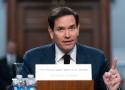
In early May, I wrote about a quiet but historic breakthrough—one that barely registered on most radars but carried the kind of geopolitical weight rarely seen in our era of performative diplomacy. The United States, through the leadership of Secretary of State Marco Rubio, had brokered a framework between Rwanda and the Democratic Republic of the Congo (DRC) that hinted at something almost unthinkable: peace in a region long synonymous with conflict, exploitation, and chaos. //
Now, just weeks later, that framework has matured into a full-fledged peace accord. And let me say this clearly: this is a huge win for American foreign policy—led not by the State Department's usual bureaucrats, but by a Republican senator with grit, clarity, and spine.
Rubio isn’t getting the ticker-tape parade he deserves, of course. That would require the mainstream media to acknowledge that a Republican delivered a diplomatic masterstroke. //
In my previous column, I called this deal a “billion-dollar boost” for America’s strategic position. That’s truer now than ever. This isn’t just about helping others—it’s about helping ourselves while restoring peace. It’s about countering Chinese influence in Africa, securing the raw materials we need for the 21st century, and proving that American power still means something.
The Rubio-led deal isn’t a magic wand. There will be setbacks. Bad actors don’t reform overnight. But for once, we’re not just reacting—we’re shaping events. That’s what leadership looks like. //
T_Edward
11 hours ago
What must be stressed in this situation is that they came to President Trump and asked for his help. This is huge. They recognize his ability to negotiate in his ability to lead and he sent the right people there to make the agreement. Rubio has been an enormous boost in the statue of our country Because he is actually getting it done! None of this would’ve been possible without President Trump.
A British woman has died from rabies after she was "scratched" by a puppy in Morocco, her family said.
Yvonne Ford, 59, from Barnsley, South Yorkshire, had light contact with the stray dog while on holiday in February in the North African country.
In a social media post, reported by the Press Association, Mrs Ford's family said she developed a headache two weeks ago and later couldn't "walk, talk, sleep, swallow".
The UK Health Security Agency (UKHSA) said there was no risk to the wider public due to no documented evidence of rabies passing between people.

What President Donald Trump did in the Oval Office with the President of South Africa, Cyril Ramaphosa, was astonishing.
We hear people talk all the time about how, when we're talking with foreign nations, we should be pressing on human rights. Well, we got that, big time, from Trump, when he cornered the South African leader, lowering the lights and treating him to a video of evidence of the issues in his country. There wouldn't be a better time to do it, to promote change. The South African leader is there because he wants things. That's the time to say, okay, you want things, so do we, we want you to do something about what's going on.
This moment was interesting as Trump says he hadn't made up his mind yet on whether to term what's happening as "genocide," with President Ramaphosa at his shoulder. //
If it's not a genocide today, Jennings asked, how many more do we want to let get murdered before we're satisfied with the terminology? And it was a "boss move" for Jennings to note this, even as CNN was trying to call what Trump said "unsubstantiated" in the chyron underneath.

It is unclear what impact this will have on South Africa. My guess is that Ramaphosa will double down with his racism and fascism as that is all any of the major South African parties seem capable of offering. The one part of this that is deadly serious is the invitation for Afrikaners to emigrate. If a large number of them start looking for the exits, and I'm not enough of an authority on that country to hazard a guess because the Afrikaners have been in southern South Africa longer than the current Black population, the economic impact will be extreme. Rhodesia was a major food exporter. However, Zimbabwe, after land confiscation much like that envisioned by South Africa, is an economic and agricultural basket case.
Quite honestly, it is really about time the West started treating South Africa like the Third World s*** hole that it is. It has dined out on the legend of Nelson Mandela for thirty years while engaging in behavior much more oppressive than that of the government it replaced. Moral cowardice by the West has allowed brutality and corruption to flourish. Hopefully, those days are over for the United States. //
Galatians 5:22
3 days ago
Former South African here (I am not white and I grew up under apartheid). I am about the same age as Elon Musk and I came to the United States for college (when I was 18). Your article is very accurate. After the euphoria of Mandela being released and having elections where all people could vote, the country just went downhill. The corruption is insane ... and it is open and blatant. And the rate of violent crime skyrocketed. Everyone knew someone who had been murdered. And rapes also increased. The government scapegoated the white racists, of course. Those who could leave the country did so. But a lot of people could not afford to leave. And everyone lives in a state of fear. Add to that, there are massive power shortages largely due to mismanagement and corruption. The country has something called "load shedding" where they have scheduled blackouts just about every week. As to the point of Afrikaner migration ... a lot of Afrikaners work on American farms under the farm guest worker program. The Afrikaners used to be the vilified group because of apartheid. But, just like in America, things went too far and the white oppressors were replaced by the black oppressors (as South Africans like to say). The Afrikaners have been vilified and persecuted for the last 30 years. And I am sure Elon Musk knows all about this and has shared his insights with DJT.

Three things could produce an African Renaissance: liberty, capitalism, and energy. The Western world can't do much about the first two; that's something the people of the various nations of Africa will have to work out for themselves. The one thing the West could help with is energy development. But American and European climate scolds seem determined to prevent any energy development. It is, in effect, a re-colonizing of Africa.
https://wattsupwiththat.com/2024/10/17/climate-colonialisms-stranglehold-on-africas-energy-starved/
In 2024, it is unconscionable that over 600 million Africans still lack access to electricity. In sub-Saharan Africa, only 28% of healthcare facilities have reliable electricity. More than 900 million people cook with traditional biomass like wood and animal dung, inhaling toxic fumes that claim over 600,000 African lives each year. Clean water remains a luxury for vast swaths of the population.
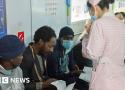
Since China's so-called Peace Ark arrived last week, more than 2,000 South Africans have been treated on board - ranging from maternity check-ups and cataract surgeries to cupping therapy.
China enjoys a strong political partnership with South Africa, and this is Beijing's latest show of soft power. //
The African National Congress (ANC) says its National Health Insurance (NHI) scheme will be a huge improvement as all services at both public and private facilities will be free at the point of care – paid out of a central fund.
Health Minister Aaron Motsoaledi has insisted it will still be implemented despite the party losing its parliamentary majority in May, and going into coalition with parties like the Democratic Alliance (DA) that oppose some aspects of the scheme.
It will cause a massive shake-up of the health sector, but critics fear it could prompt an exodus of health professionals to find employment abroad.
The scheme is being vociferously opposed by private health companies as it bars people from taking out private health insurance for treatment. //
The floating hospital leaves Cape Town on Thursday for Angola before moving on to several other countries. It has already visited the Seychelles, Tanzania, Madagascar and Mozambique - on this its 10th excursion since being commissioned in 2008.
The initiative is seen as a further step in China’s efforts to increase its influence on the African continent.
A collection of the world's best Open Educational Resources.
Download and go
RACHEL is the easiest way to download and deploy free content repackaged for offline users. We specifically curate content to serve the needs of offline populations in developing countries.
RACHEL-Plus
The RACHEL (Remote Area Community Hotspot for Education and Learning) Plus is a portable, battery-powered, device that contains OER content for use in offline communities.
In more than 20 countries, with 40 Powerships, Karpowership has with more than 6,000 MW installed capacity. With our fleet composed of Powerships, FSRUs, LNG Carriers, Support Ships we provide universal access to power for people and communities on 4 continents around the world.
in 2020 a third addendum was signed to increase the capacity to 65 MW. Karpowership is operational in the country since 2018 and has been supplying 80% of Sierra Leone’s total electricity needs. ///
LNG

Some hippos are a little smaller — and lighter — than others, including the endangered West African Pygmy Hippopotamus, which is found mostly in Liberia. The status of that animal makes it all the more interesting that the Attica Zoological Park in Athens, Greece, has recently had a pygmy hippo born in captivity.

Parts of Africa were already seeing web disruptions from damaged Red Sea cables.