It has never been easier to hold an answer you do not understand.
Culture programs us. So do the crowd, the screen, and the government — and now, most gently and most persuasively of all, so does AI. It will answer almost any question in a calm, confident voice, faster than any teacher or any book ever could. It is a marvel. It is also the newest thing that can quietly author your mind for you, without you ever noticing.
This book is about refusing to let it do that. I wrote it for my grandchildren and my college students alike, and it asks no coding of you. It walks you one honest step at a time, from geometry to Gödel to the machine itself, toward a single, unshakable idea: everyone is standing on something they cannot prove. The only question is what you are standing on.
It will not tell you what to think. It hands you back your own mind and dares you to question every authority that would take it — including mine. Where my own questions finally led me, I offer plainly, and never force it on you. The walking, and the choosing, stay yours.


Are you tired of renting digital books from tech giants who change the rules whenever they like? Building a personal library takes some effort, but owning your files feels right. Here are the best websites where you can buy modern DRM-free ebooks and keep them on your drive.
- https://www.smashwords.com/
- https://www.ebooks.com/
- https://www.humblebundle.com/books
- https://uk.bookshop.org/
- https://www.fanatical.com/en/bundle/books
- https://www.baen.com/
- https://leanpub.com/
- https://storybundle.com/
- https://nostarch.com/
- https://www.versobooks.com/
- https://www.sevenstories.com/
- https://weightlessbooks.com/
- https://belial.fr/
- https://www.7switch.com/
Fate Is the Hunter is a 1961 memoir by aviation writer Ernest K. Gann. It describes his years working as a pilot from the 1930s to 1950s, starting at American Airlines in Douglas DC-2s and DC-3s when civilian air transport was in its infancy, moving onto wartime flying in C-54s, C-87s, and Lockheed Lodestars, and finally at Matson Navigation's short-lived upstart airline and various post-World War II "nonscheduled" airlines in Douglas DC-4s.
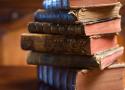
If you can truly appreciate an old book—and maybe even marvel at how its fragile, yellowing pages contain some of the earliest ways that people tried to make sense of the world around them—then headlines about tech companies that are destroying books to train AI likely torture a tender part of your soul.
It’s indeed depressing to imagine piles of book spines waiting to be fed into wood chippers while torn-out pages are cropped, scanned, and trashed. But that’s the cheapest and easiest way to scan books as fast as possible, and AI companies are in a race to advance their models by training on the kind of engaging, high-quality long-form texts that can only be found in books. So book lovers fear it’s likely that the practice is happening on a grander scale than is currently being reported and that some physical copies of books will be lost forever.
What makes this destruction extra painful, though, is that it doesn’t have to be this way. //
“At the Internet Archive, this is how we digitize a book,” the tweet said. “We never destroy a book by cutting off its binding. Instead, we digitize it the hard way—one page at a time.” //
“The job requires keen concentration,” Zhang said, since the pages of “very old, fragile books” are “paper thin.” In the post, Andrea Mills, who helps lead the Archive’s book-scanning operations, explained that “clean, dry human hands are the best way to turn pages.” //
The biggest fear for people who want to see books preserved through the training process is that AI firms will callously pulp rare books that can never be replaced.
En 1946, soit il y a tout juste 80 ans (c’était hier!), paraît le Petit Prince d’Antoine de Saint-Exupéry. L’histoire de ce petit garçon n’a pas pris une ride même si, comme il le disait lui-même : les grandes personnes ne comprennent jamais rien toutes seules, et c’est fatiguant pour les enfants, de toujours et toujours leur donner des explications…
Ce petit bonhomme à la chevelure blonde ébouriffée nous accompagnera ce matin, s’il le veut bien. De même que les jeunes musiciennes et musiciens de l’orchestre junior de l’Harmonie de Colombier.
THE YEAR WAS 2081, and everybody was finally equal. They weren't only equal before God and the law. They were equal every which way. Nobody was smarter than anybody else. Nobody was better looking than anybody else. Nobody was stronger or quicker than anybody else. All this equality was due to the 211th, 212th, and 213th Amendments to the Constitution, and to the unceasing vigilance of agents of the United States Handicapper General.
This post-Apocalyptic award-winning tale of Catholic Monks who preserve learning to rise from the Dark Ages when society's survivors blame education and kill anyone having to do with technology and nuclear science in particular, is perhaps the best narrated of all audiobooks with multiple narraters and sound effects.
A monk novice, Brother Frances discoveries a fall-out shelter 600 years old, containing the tooth and skeleton of the wife of the Blessed Liebowitz, the founder of the order who taught his monks to collect books and memorize them and or pass them along AKA Bookleggers.
Blessed Liebowitz had been a nuclear engineer who sought refuge in Holy Mother Church. He is later betrayed by a friend and was martyred.
Hope is carried by the bookleggar monks but the ending is cyclically chilling but hopeful in the stars.
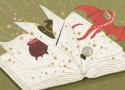
Many Christian parents struggle with the use of magic in literature. Some feel uncomfortable with any magical elements, while others object only to those associated with witchcraft. I’ve had many online conversations with parents who struggle to articulate exactly “how much” magic they’re willing to allow in their kids’ books. I myself have wrestled with this issue, seeking a biblical approach and landing in various places at different times. My goal here is to provide you with an introduction to this topic, and to equip you with perspectives to approach it biblically and practically. Although I love literature, I love the word of God far more. I know I will have to give an account to the Lord for everything, and I deeply desire to represent his word well, despite my fallibility. Having said this, I realize you may come to different conclusions than I have. //
When I approach fantasy literature that includes magical elements, I try to look through a similar lens and ask the questions “Where does this power originate?” and “What are the practitioner’s intentions?” Remember that when an author writes in the genre of fantasy, his or her intent is (usually) not to encourage belief in fantastical events but rather to help the reader recognize the deeper truths that the imaginative elements of the story convey. Oftentimes, the author points to spiritual truths more effectively illustrated outside the bounds of our own reality. Well-written fantasy won’t focus on the magical elements themselves; rather, any magic will simply be a creative vehicle to highlight good versus evil and to reveal the truth that spiritual forces are at work in the world. ////
invocation vs. incantation -- calling on powers or using "unknown technology that is indistinguishable from magic for illiterates in it"
Water Chlorination and Chloramination Practices and Principles
Published by American Water Works Association
Publication Date 2006-07-01
Pages Count 188
This AWWA Manual of Water Supply Practices provides a complete information resource on the uses of chlorine and chloramines in municipal water treatment.
The manual focuses on chemical properties, disinfection mechanisms, feed rates, handling, storage, and safety. Recent developments in equipment, disinfection strategies, and techniques to minimize the formation of disinfection by-products is also covered in detail.
Appendices include dechlorination practices, CT values for inactivation of Giardia and viruses by free chlorine and other disinfectants, chlorine residual test methods, and disinfection of facilities.
Right after completing the purchase process, you will immediately get a digital copy of this handbook / manual / guide which is:
Not Locked
Printable
Multi-User
High Quality Scanned
$ 31.00

The Oppenheimer Alternative
Oppenheimer, Einstein, Feynman, Gödel and the rest of the great 20th-century physicists race against time to save the world
- #1 Locus bestseller
- Winner of the Helicon Award for Best Alternate History Novel of the Year
"This book has everything a reader wants from Sawyer: Well-drawn alternate history, rigorous SF thriller, social commentary, redemption narrative — The Oppenheimer Alternative reimagines one of the most influential lives of the twentieth century." —Analog
Books by Hugo and Nebula Award-Winner Robert J. Sawyer
Buying My Books
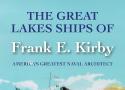
The Great Lakes Ships of Frank E. Kirby: America’s Greatest Naval Architect,” by Richard Gebhart, Michigan State University Press, May 2026, 231 pages, $59.95 (Hardcover), $29.10 (Paperback), $29.95 (E-book)
From the 1870s through the 1890s most of the world’s ships not built in British shipyards were built on the North American Great Lakes, a vast interconnected yet isolated inland sea system. Of these Lakes vessels built during that period and for the first two decades of the 20th century, many, including the best designs came from the mind of naval architect Frank E. Kirby.
“The Great Lakes Ships of Frank E. Kirby: America’s Greatest Naval Architect,” by Richard Gebhart, is a biography of the man and a history of his ships. It charts his career, and follows the course of the shipyards he ran and the ships he built.
Encounter the Faith and Wisdom of C.S. Lewis
C.S. Lewis’s writings bring the great questions of the Christian faith to life. Through his imaginative and invigorating style, Lewis answers these questions in ways that are compelling to those outside Christianity and energizing to those within the Christian faith.
In this free, seven-lecture course, Professor Michael Ward—a leading scholar of C.S. Lewis—will explore Lewis’s:
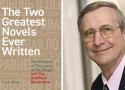
What do British fantasy epics, Russian family dramas, ancient philosophy, and Christian apologetics have in common? This might sound like the setup of a joke or riddle, but it’s the premise of the latest book from philosophy professor and prolific author Peter Kreeft.
Now 89 years old, Kreeft has penned over 100 books on philosophical and religious topics. He’s been a professor of philosophy at Boston College for over 60 years. Over his scholarly career, Kreeft has taken an unusual position, namely, applying philosophy to Christian apologetics. As a Calvinist in childhood who converted to Catholicism during his college years, he believes in the unity of different denominations and often uses nonsectarian language which can apply to all Christians and non-Christians alike.
Last year his latest book was published: “The Two Greatest Novels Ever Written: The Wisdom of ‘The Lord of the Rings’ and ‘The Brothers Karamazov.’” In this simple yet profound book, Kreeft uses two renowned fictional classics to pierce the mysteries of philosophical truths and theological concepts.
While it may seem illogical to use two complex novels to delve into the even more complex fields of philosophy and religion, this brilliant scholar manages to simplify the books and the concepts in 15 short chapters. //
Anyone earnestly seeking the truth will likely be enriched by reading this thoughtful analysis. Wrapping such inspiring philosophy in an analysis of two fictional novels isn’t a gimmick. The very point of the book is that art is the most powerful vehicle for truth. In the Introduction, Kreeft writes:
“Beauty is the point of the arrow that first pierces the heart, which is also the first door we open to God, however anonymously. … The arrows of beauty enter the heart in order to break it. … The heartbreak is art’s holy task. It’s like digging: It creates a space for truth and goodness to fill.”
Covering most of America’s history, here are 10 single-volume books discussing the most important eras in US history.
One minute the two space Hab astronauts were scoop-diving the atmosphere, the next they'd been shot down over the North Dakota Glacier and were the object of a massive manhunt by the United States government.
That government, dedicated to saving the environment from the evils of technology, had been voted into power because everybody knew that the Green House Effect had to be controlled, whatever the cost. But who would have thought that the cost of ending pollution would include not only total government control of day-to-day life, but the onset of a new Ice Age
Stranded in the anti-technological heartland of America, paralyzed by Earth's gravity, the "Angels" had no way back to the Space Habs, the last bastions of high technology and intellectual freedom on or over the Earth. But help was on its way, help from the most unlikely sources ...
From Supreme Court Justice Neil Gorsuch and bestselling author Janie Nitze! Explore the courage and sacrifice of some of the heroes of the American Revolution and the stories behind the document that started it all—The Declaration of Independence.
In the spring of 1776, the streets of Philadelphia buzzed with the sounds of revolution. Talk of war and rumors of spies swirled in the air. Noisy debates spilled out of taverns. The State House bell tolled urgently, calling men to meetings and momentarily drowning out the normal hum of the port city.
Dive into the stories of ordinary people willing to do extraordinary things, from iconic figures like Thomas Jefferson, George Washington, Ben Franklin, and Paul Revere, to lesser-known revolutionaries such as Caesar Rodney, Thomas Paine, and Mary Katherine Goddard. These great men and women risked all they had—their property, freedom, and ultimately their lives—to secure a better life for their children and grandchildren. Packed with firsthand accounts and vivid depictions of the patriots’ struggle for freedom, Justice Gorsuch’s and Janie Nitze’s debut children’s book thoughtfully investigates the foundations of our country, centering the human experience at the heart of it all.
Celebrate America’s 250th birthday with the Heroes of 1776, a celebration of the ideals upon which this country stands, told with humanity in only the way Justice Gorsuch and Janie Nitze can. //
Carolyn
5 out of 5 stars
Be prepared to be moved by this book!
Reviewed in the United States on May 6, 2026
Format: Hardcover
Verified Purchase
I ordered this book because I heard Justice Gorsuch promoting the book in a TV interview. I liked what he said, and I thought it might be a good gift for my younger relatives. I’m cautious about gifting books that I haven’t read, especially for children. So upon its arrival, I sat down to read it and I was so moved that it caught me off guard. I studied American history and the creation of the Declaration of Independance in high school and in college. I’ve seen the movies. I’ve watched the documentaries. I’ve even gone to DC and viewed the document. I know the story, or at least I thought I did. But not like this. This story made it real, because, to use the authors’ words, “At the heart of it all were ordinary people willing to do extraordinary things and risk all they had to secure a better life for themselves, their children, and generations to come.“ They didn’t teach this part of the story in school. I never knew how extraordinary these ordinary people were. I have a new appreciation for the Declaration of Independence and for the men and women who sacrificed so much to create this experiment, we call America. This book is not just for children. It is for everyone of any age. Order a copy or a few. You, can thank me later.

It's that sharp decline in young people's knowledge of how and why America was founded, and our form of government, that prompted Supreme Court Justice Neil Gorsuch to write "Heroes of 1776: The Story of the Declaration." The book is aimed at both school-aged kids and adults. During a recent interview promoting the book, Gorsuch gave some startling figures:
"Only about 13% of kids today in eighth grade are proficient in American history — [and just] 22% in civics. Six out of 10 adults would fail our citizenship test." //
Gorsuch added that much of his inspiration for the book came from former Justice Sandra Day O'Connor, who founded a civics non-profit after her time on the nation's highest court. Gorsuch said of O'Connor and her work,
"As she was leaving the court, she reflected that civic education in this country is a problem. And for a lot of reasons, it's simply not being taught anymore."
Gorsuch offered up some other disturbing facts. In 2019, only one-third of Americans could name all three branches of government. He stated that this was concerning, given the fact that all three branches "interact" and "check" one another against overreach. //
We know why American history and civics are no longer taught in public schools. The agenda of the teachers' unions is not for students to be knowledgeable in history and civics, but in climate change, transgender issues, and why America is inherently a racist nation. They know that if kids are taught about history or civics, it will be that much harder to indoctrinate them on left-wing ideology and hate the country.
ALSO READ: How Much Confidence Do Americans Have in the Supreme Court? A New Poll Says Not Much
Gorsuch said that history and civics education isn't a left- or right-issue for him and his fellow justices. He added, "If you polled the nine of us in our conference room, one thing we could all agree on is the importance of learning American history."
That agreement among the justices on Americans' knowledge of history and civics is encouraging. Neil Gorsuch summed it up, saying, "Because how else are you going to carry this thing forward? Somebody has to run the zoo." //
TheBlaze @theblaze
·
Justice Neil Gorsuch: “We’re a creedal nation. What unites us is not a religion, not a race, it’s a belief in those ideas in the Declaration of Independence.”
7:37 PM · May 6, 2026
The morality, psychology, and science of ethical child-raising
eBooks
Read the full version of Peaceful Parenting in ePub, Mobi, or PDF
NO TIME??
Read the condensed version of Peaceful Parenting in ePub, Mobi, or PDF
These captivating reads offer some needed and expert perspectives on our quest to understand the universe and our place within it.