The Collected Works of Milton Friedman website contains more than 1,500 digital items by and about economist, Nobel Prize winner, and Hoover fellow Milton Friedman. The site features hundreds of Friedman's articles, speeches, lectures, television appearances, and more.



Links to those before us broaden our perspective, provide us with a sense of place in time and make us part of a larger narrative and a shared experience.
We begin to sense a tradition worth preserving and passing along to those who come after us.
Tocqueville made this point in “Democracy in America” by distinguishing between instinctive patriotism, rooted in custom and a sense of belonging based on place and personal loyalty, and reflective patriotism, based more on the opinions of free citizens, who understand their common liberties and their shared responsibilities with their fellow citizens.
This latter, more thoughtful form of patriotism, Tocqueville argued, is shaped by the exercise of individual rights within republican institutions and by what Tocqueville called “self-interest well understood.”
Indeed, one of the reasons Tocqueville admired America so much was that it bred both types of patriotism, a spirited attachment to American self-government as well as a reasoned devotion to the general principles of natural right and human liberty.
Tocqueville concluded that a patriotism in which particular loyalties and universal purposes reinforce each other was the source of the community bond and national cohesion needed to perpetuate democratic societies.
Without patriotism — instinctive patriotism for sure, but especially reflective patriotism — democratic peoples would become preoccupied with narrow, private concerns and come to neglect their civic duties.
The result is social division and civic apathy, as formerly self-governing citizens become themselves passive subjects in a modern, impersonal nation-state.
Without this dual patriotism of both the heart and the head, America’s thriving republic, Tocqueville famously warned, would be overtaken by a new form of democratic despotism that flattens the human spirit.
Today, patriotism is often misunderstood and criticized as an unthinking allegiance to chauvinistic urges.
Yet it is a love of country that is thoughtful as well as passionate — not “the impostures of pretended patriotism” Washington warned us against — that stands confident against the cultural relativism that plagues our society and undermines the defense of liberty by its disingenuous embrace and tendency toward despotic self-assertion.
Patriotism, rightly understood, has always been the civic antidote to what C. S. Lewis called “the poison of subjectivism.” //
Having rejected the Old World’s rule of accident and force in favor of government by reflection and choice, the Founders understood education — heretofore an elite privilege of the upper class and often a tool of state control — to take on a new civic role in service to popular government.
In a republican regime, built on equal rights and the consent of the governed, education not only shapes the private character that allows the individual to govern the self but also imparts the principles necessary for those individuals to practice the arts of self-government.
The student is transformed into the citizen through the expansion and deepening of the natural attachments as well as the cultivation of the civic knowledge necessary to perpetuate free government.
“The Education of youth is, in all governments, an object of the first consequence,” Noah Webster wrote in opening his 1788 essay on the topic. “The impressions received in early life, usually form the characters of individuals; a union of which forms the general character of a nation.” //
Education begins at home, when the habits and manners are established, first by parents, who have the primary responsibility for the upbringing of their children, and then by family, church, community and the first lessons of early instruction.
Like in the great nations of Europe, Webster maintained the formal educational system to be adopted and pursued in America should focus on the foundations of knowledge: reading, writing and arithmetic, as well as a basic understanding of the sciences and the outlines of geography and history.
But in republican America, Webster argued popular education must also “implant, in the minds of the American youth, the principles of virtue and of liberty; and inspire them with just and liberal ideas of government, and with an inviolable attachment to their own country.”
At a young age, this inculcation was especially to be done by teaching history: “every child in America should be acquainted with his own country. He should read books that furnish him with ideas that will be useful to him in life and practice. As soon as he opens his lips, he should rehearse the history of his own country; he should lisp the praise of liberty, and of those illustrious heroes and statesmen, who have wrought a revolution in her favor.”
Thomas Jefferson and James Madison concurred in a report they authored as commissioners of the University of Virginia.
Beyond improving the faculties and morals, the objects of a general education should be for the student “to understand his duties to his neighbors and country, and to discharge with competence the functions confided to him by either,” and “to instruct the mass of our citizens in these, their rights, interests and duties, as men and citizens.”
The objects of “the higher branches of education” — the colleges and universities scattered around the country — were “to develop the reasoning faculties of our youth, enlarge their minds, cultivate their morals, and instill into them the precepts of virtue and order” and “to form them to habits of reflection and correct action, rendering them examples of virtue to others, and of happiness within themselves.”
American higher education should “form the statesmen, legislators and judges, on whom public prosperity and individual happiness are so much to depend.”
Colleges and universities, too, had an obligation to make good citizens.
And the document around which this citizen education was to be constructed, the creed of America’s civic life and political identity, its temporal scripture and its epic poetry, was the Declaration of Independence.
The Declaration is the defining act of the great drama that is the American founding.
When Jefferson and Madison outlined an educational curriculum with “especial attention to the principles of government which shall be inculcated therein,” their first reading was the Declaration, which Jefferson called “an expression of the American mind.”
It is what the ancients described as the prelude to the laws, meant to define the regime and animate what is to come.
Although a “merely revolutionary document,” the Declaration of Independence contains, as Abraham Lincoln wrote on the eve of Civil War, “an abstract truth, applicable to all men and all times,” put there “that today, and in all coming days, it shall be a rebuke and a stumbling-block to the very harbingers of re-appearing tyranny and oppression.”
Lincoln also said once that public opinion “always has a ‘central idea,’ from which all its minor thoughts radiate.”
America’s central idea is the Declaration, and everything else radiates from that. //
By defining our common loves — our native country and our common commitment to republican government based on equal rights, political liberty and the consent of the governed — the Declaration unites our hearts and our minds in a civic friendship of enlightened patriotism.
We must know the Declaration if we truly are to love America.
From the new book “The Making of the American Mind: The Story of our Declaration of Independence.”
Illuminating lecture by the late, great Petr Beckmann. For more on Beckmann, see my posts:
- Access to Energy (archived comments);
- A Basic Physics Reminder for Solar Energy Advocates;
- Beckmann’s Economics as if Some People Mattered, or, Small is Not Beautiful;
- Carson: Libertarians for Junk Science.

I am a lead pencil—the ordinary wooden pencil familiar to all boys and girls and adults who can read and write.
Writing is both my vocation and my avocation; that’s all I do.
You may wonder why I should write a genealogy. Well, to begin with, my story is interesting. And, next, I am a mystery —more so than a tree or a sunset or even a flash of lightning. But, sadly, I am taken for granted by those who use me, as if I were a mere incident and without background. This supercilious attitude relegates me to the level of the commonplace. This is a species of the grievous error in which mankind cannot too long persist without peril. For, the wise G. K. Chesterton observed, “We are perishing for want of wonder, not for want of wonders.”
I, Pencil, simple though I appear to be, merit your wonder and awe, a claim I shall attempt to prove. In fact, if you can understand me—no, that’s too much to ask of anyone—if you can become aware of the miraculousness which I symbolize, you can help save the freedom mankind is so unhappily losing. I have a profound lesson to teach. And I can teach this lesson better than can an automobile or an airplane or a mechanical dishwasher because—well, because I am seemingly so simple.
Simple? Yet, not a single person on the face of this earth knows how to make me. This sounds fantastic, doesn’t it? Especially when it is realized that there are about one and one-half billion of my kind produced in the U.S.A. each year. //
Here is an astounding fact: Neither the worker in the oil field nor the chemist nor the digger of graphite or clay nor any who mans or makes the ships or trains or trucks nor the one who runs the machine that does the knurling on my bit of metal nor the president of the company performs his singular task because he wants me. Each one wants me less, perhaps, than does a child in the first grade. Indeed, there are some among this vast multitude who never saw a pencil nor would they know how to use one. Their motivation is other than me. Perhaps it is something like this: Each of these millions sees that he can thus exchange his tiny know-how for the goods and services he needs or wants. I may or may not be among these items.
No Master Mind
There is a fact still more astounding: The absence of a master mind, of anyone dictating or forcibly directing these countless actions which bring me into being. No trace of such a person can be found. Instead, we find the Invisible Hand at work. This is the mystery to which I earlier referred.
It has been said that “only God can make a tree.” Why do we agree with this? Isn’t it because we realize that we ourselves could not make one? //
I, Pencil, am a complex combination of miracles: a tree, zinc, copper, graphite, and so on. But to these miracles which manifest themselves in Nature an even more extraordinary miracle has been added: the configuration of creative human energies—millions of tiny know-hows configurating naturally and spontaneously in response to human necessity and desire and in the absence of any human masterminding! Since only God can make a tree, I insist that only God could make me. Man can no more direct these millions of know-hows to bring me into being than he can put molecules together to create a tree.
The above is what I meant when writing, “If you can become aware of the miraculousness which I symbolize, you can help save the freedom mankind is so unhappily losing.” For, if one is aware that these know-hows will naturally, yes, automatically, arrange themselves into creative and productive patterns in response to human necessity and demand— that is, in the absence of governmental or any other coercive master-minding—then one will possess an absolutely essential ingredient for freedom: a faith in free people. Freedom is impossible without this faith.
Once government has had a monopoly of a creative activity such, for instance, as the delivery of the mails, most individuals will believe that the mails could not be efficiently delivered by men acting freely. And here is the reason: Each one acknowledges that he himself doesn’t know how to do all the things incident to mail delivery. He also recognizes that no other individual could do it. These assumptions are correct. No individual possesses enough know-how to perform a nation’s mail delivery any more than any individual possesses enough know-how to make a pencil. Now, in the absence of faith in free people—in the unawareness that millions of tiny know-hows would naturally and miraculously form and cooperate to satisfy this necessity—the individual cannot help but reach the erroneous conclusion that mail can be delivered only by governmental “masterminding.”

Jul 31, 2014, 9:51am EDT
Today would have been the 102nd birthday of the late great Milton Friedman, winner of the 1976 Nobel Prize in Economics and 1988 Presidential Medal of Freedom. Needless to say, we miss him and could use his talents.
Friedman is considered one of the greatest economists of the 20th century, the most influential since World War II, and few would dispute, the greatest advocate ever for private markets in relation to their role of ensuring both our cherished economic and political liberties.
Influenced by Jeremy Bentham and many others of his intellectual stripe like Friedrich A. Hayek, Friedman became a celebrity in his time for his enthusiastic and unfettered discussion of the way the world really works, once taking famed talk show host Donahue to school on the role of government in society: “Government has three primary functions. It should provide for military defense of the nation. It should enforce contracts between individuals. It should protect citizens from crimes against themselves or their property. When government-- in pursuit of good intentions tries to rearrange the economy, legislate morality, or help special interests, the cost come in inefficiency, lack of motivation, and loss of freedom. Government should be a referee, not an active player.”
“The battle for freedom,” Friedman wrote in his 1994 re-introduction to Hayek’s seminal work, The Road to Serfdom, “must be won over and over again.” //
As Friedman explained to Donahue in 1979, government enforcing contracts and preserving the rule of law and private property rights is at the core of prosperity and liberty. “Property rights, Friedman wrote in his memoir Two Lucky People with his wife Rose, “… are the most basic of human rights and an essential foundation for other human rights."

Read’s essay is no brief for anarchy. “I, Pencil” is a plea for humility among economic central planners that is desperately needed by the utopian thinkers of our day, and every era.
Leonard Read’s immortal essay “I, Pencil” has persuaded more people of the wonders of the free market than possibly any other comparable work—so many that the BBC recently posted an article attacking it. However, anyone reading both articles will conclude that Read’s pencil comes out looking sharper.
The mere fact that Read’s article can still elicit rebuttals 60 years after it appeared in the December 1958 issue of FEE’s The Freeman is testimony to its significance. As such a powerful and persuasive essay, it had to be destroyed. //
The ability to transport a product from factory to store shelf is a necessary condition for its sale—and thus, its mass production—but not a sufficient one.
If roads created businesses, then there should be no stretch of asphalt in the country not festooned with stores, shops, or offices. Roads facilitate commerce; they do not necessarily cause it. If the government bears responsibility for all the commerce that flows over its roads, then the federal government smuggled all but the 370,000 pounds of drugs stopped at legal ports of entry last year—and the U.S. Post Office trafficked all but the 40,000 pounds of drugs seized in the mails in 2017. Clearly, this is a reductio ad absurdum whether applied to narcotics or number two pencils.
The creative process begins when an entrepreneur senses the underlying need for a product or service, which is confirmed by someone’s willingness to pay for it. One might call this—to coin a phrase—the “magic of the price system.”
Furthermore, just as no Pencil Czar directs the construction of pencils, no Transportation Czar tells the company whether to transport its cargo by truck, rail, ship, drone, or private courier. The firm chooses the method of shipment that best fits its needs based on price signals. //
The second fallacious assumption is that everyone who supports the free market is an anarchist. The Lockean conception of ordered liberty tasks government with defending the right to life, liberty, and property—a position that Leonard Read and Milton Friedman happened to share. Read wrote in his lesser-known work Government—An Ideal Concept that the State should be confined to “protecting the life and property of all citizens equally, and invoking a common justice under law.” Friedman believed the government had three primary functions: to “provide for military defense of the nation,” “enforce contracts between individuals,” and “protect citizens from crimes against themselves or their property.”
The point of “I, Pencil” is best captured by Read’s successor at the helm of FEE, Lawrence W. Reed. “None of the Robespierres of the world knew how to make a pencil, yet they wanted to remake entire societies,” he wrote. Ambitious bureaucrats, eager to impose their ignorance on economics or politics, lack the information and creativity generated spontaneously by free people. “Leave all creative energies uninhibited,” wrote Leonard Read. “Permit these creative know-hows freely to flow.”
Read’s essay is no brief for anarchy. “I, Pencil” is a plea for humility among economic central planners that is desperately needed by the utopian thinkers of our day, and every era.
All of which leaves Harford without a point to make.
Thankfully, pencils have erasers. //
The second fallacious assumption is that everyone who supports the free market is an anarchist. The Lockean conception of ordered liberty tasks government with defending the right to life, liberty, and property—a position that Leonard Read and Milton Friedman happened to share. Read wrote in his lesser-known work Government—An Ideal Concept that the State should be confined to “protecting the life and property of all citizens equally, and invoking a common justice under law.” Friedman believed the government had three primary functions: to “provide for military defense of the nation,” “enforce contracts between individuals,” and “protect citizens from crimes against themselves or their property.”
The point of “I, Pencil” is best captured by Read’s successor at the helm of FEE, Lawrence W. Reed. “None of the Robespierres of the world knew how to make a pencil, yet they wanted to remake entire societies,” he wrote. Ambitious bureaucrats, eager to impose their ignorance on economics or politics, lack the information and creativity generated spontaneously by free people. “Leave all creative energies uninhibited,” wrote Leonard Read. “Permit these creative know-hows freely to flow.”
Read’s essay is no brief for anarchy. “I, Pencil” is a plea for humility among economic central planners that is desperately needed by the utopian thinkers of our day, and every era.
All of which leaves Harford without a point to make.
Thankfully, pencils have erasers.

The Center Square reported Friday that “in the wake of the assassination of Turning Point USA founder Charlie Kirk, thousands of social media posts appear to list politically conservative targets for assassination by the political left.” Some of the principal names that keep recurring on the left’s death wish lists are some of the most prominent critics of the transgender madness: Joe Rogan, JK Rowling, Ben Shapiro, and Matt Walsh, as well as President Donald Trump, Libs of TikTok’s Chaya Raichik, Elon Musk, and Andy Ngo.
JK Rowling pointed out what this bloodlust revealed about the left: “If you believe free speech is for you but not your political opponents, you're illiberal. If no contrary evidence could change your beliefs, you're a fundamentalist. If you believe the state should punish those with contrary views, you're a totalitarian. If you believe political opponents should be punished with violence or death, you're a terrorist.”
Indeed. And that is exactly what the left is today. “Inside every progressive is a totalitarian screaming to get out,” quipped the late, great David Horowitz, and by now, it’s abundantly clear that they’re out. Totalitarians don’t care to debate their opponents, and in particular on the transgender issue, leftists likely know that they would lose, and lose resoundingly, any such debate. And so they want those whom they fear and hate to be silenced, and silenced for good. In a group that hates God and His creation and wants to reshape it to their own liking, moral considerations simply don’t enter into the equation.
If, however, the leftists who posted these hit lists thought they would terrorize their targets into silence, they were in for a disappointment. Like Rowling, Shapiro was defiant, saying: “We will never stop debating and discussing. We will never stop standing up for what America is and what she should be. And we will never let Charlie’s voice die.” //
Indeed, they cannot and must not, but they are counting on patriots to have a collective failure of courage, and to give up their resistance and submit to their evil agenda rather than put their lives on the line. In fact, in the struggle for human freedom, it was ever thus. That’s why Tom Paine wrote back in 1776 that “these are the times that try men's souls. The summer soldier and the sunshine patriot will, in this crisis, shrink from the service of their country; but he that stands by it now, deserves the love and thanks of man and woman. Tyranny, like hell, is not easily conquered; yet we have this consolation with us, that the harder the conflict, the more glorious the triumph.”
That is also why the signers of the Declaration of Independence concluded that document with this: “And for the support of this Declaration, with a firm reliance on the protection of divine Providence, we mutually pledge to each other our Lives, our Fortunes and our sacred Honor.” Even then, like today, terror was the only tool that the forces of darkness had. In order for good to triumph over evil, men had to be willing to stand up to that terror and face it down.
And that is exactly what they did, because they knew that if they did not do so, the flame of liberty would be extinguished, and men would be condemned to slavery to tyranny, possibly for generations, until another generation arose that was willing to pledge their lives, their fortunes and their sacred honor to preserve their freedom.
That was what at stake then, and that is what is at stake now.
It has long been clear that the leftist activists who succeeded in getting “Juneteenth” added as a federal holiday meant to strip Independence Day of some of its moral and historical significance. The timing of Juneteenth, only a fortnight and change before the Fourth of July, is intended to usurp some of the Fourth’s glory. At the same time, the theme of the new holiday is designed to suggest that slavery, rather than liberty, is the defining feature of our founding. It’s an attempt to make 1776 vie with 1619, with the abolition of slavery being portrayed as our real moment of independence, in place of the moment when we actually proclaimed our independence and declared that “all men are created equal.” //
Per the Office of Personnel Management, the official name of the holiday to be observed on June 19 is “Juneteenth National Independence Day.” The official name of the holiday to follow 15 days later is “Independence Day.” It could hardly be clearer that Juneteenth was intended to compete with, and partially marginalize, the Fourth of July.
America does not need, should not have, and does not legitimately have, two Independence Days. Designating Juneteenth as “National Independence Day” intrudes upon our actual Independence Day. It suggests that Americans’ freedom doesn’t really trace to the Declaration of Independence but rather to the Emancipation Proclamation — or, more exactly, to awareness of that proclamation (more than two years after it was issued). It also suggests that our actual Independence Day doesn’t apply to all Americans. //
PBS writes, “Juneteenth commemorates when the last enslaved African Americans learned they were free.” This, however, is false. After Juneteenth, which marks the moment when federal troops arrived in Galveston, Texas in June 1865 and announced that all slaves in Texas were free, people were still held in slavery in Delaware and Kentucky, border states unaffected by the Emancipation Proclamation. //
Only Congress and the states, through the passage of a constitutional amendment, had the power to end slavery on a national basis.
This fact, and the fact that slavery remained in existence in Delaware and Kentucky after Juneteenth, likely would have been raised in the Senate had it bothered to engage in a genuine debate over whether Juneteenth should be a federal holiday. Instead, that body, which once prided itself on its vigorous deliberations, passed the Juneteenth bill under a unanimous consent agreement in the wake of the George Floyd riots, an act of true irresponsibility and political cowardice.
Since Juneteenth marked the end of slavery in Texas, rather than the end of slavery in the U.S., it a much more sensible holiday for Texas than for the U.S. as a whole.
On a national basis, a date truly worth commemorating would be December 6, the day on which the 13th Amendment was ratified, marking our constitutional triumph over an inherited evil that clashed with our founding principles. On that day in 1865, Americans successfully amended their Constitution to read, “Neither slavery nor involuntary servitude … shall exist within the United States, or any place subject to their jurisdiction.” That is a day, and those are words, worth celebrating.
Congress should make December 6 a federal holiday to celebrate America’s abolition of slavery, while eliminating Juneteenth as a federal holiday and thereby confirming that we have but one Independence Day.
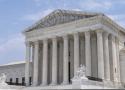
Despite a state ban on sectarian charter schools, the Oklahoma Statewide Charter School Board approved St. Isidore’s request to participate in the state’s charter school program. The ban is rooted in the anti-Catholic Blaine Amendment added to Oklahoma's constitution in 1907.
This set up an interesting conflict where the governor, a Republican, and the Republican state superintendent of public instruction supported the applications, but the Republican attorney general brought the case that the Supreme Court heard Wednesday. He sued in 2023 to block the charter because it would violate state law and the US Constitution. In June 2024, the Oklahoma Supreme Court agreed with Attorney General Gentner Drummond that St. Isidore's Catholic character, despite being open to everyone and requiring attendance of no one, would violate the Constitution's establishment clause.
The crux of the questioning centered on religious neutrality versus hostility to religion. Justice Kavanaugh hit this theme hard. “You can’t treat religious people, and religious institutions, and religious speech as second-class in the United States,” Kavanaugh said to Gregory Garre, a former Bush administration solicitor general who represented Oklahoma's Attorney General Gentner Drummond. (As an aside, it is interesting to note how many prominent "conservatives" are lining up to oppose what I consider to be conservative positions once those positions have the high likelihood of becoming law. Funny, that.) “And when you have a program that’s open to all comers except religion...that seems like rank discrimination against religion,” Kavanaugh added. “They’re not asking for special treatment, they’re not asking for favoritism. They’re just saying, ‘Don’t treat us worse because we’re religious.’” //
If the Court rules the way it appears headed, it will shake up the charter school programs everywhere. First off, it will mean the thirty-eight Blaine Amendment states can no longer use that to block religious schools from applying for charter school status. The attorney for Oklahoma painted a picture of this, opening the door for the state to make personnel and curriculum decisions. "And if religious schools can qualify as public charter schools, it will raise questions about who can be admitted to such schools, whom the schools can hire as teachers, and what the curricula at those schools will be."
In reality, Oklahoma's lawyer is out of his tree. The Supreme Court has already ruled that the government has to stay out of the hiring and firing decisions of people filling "ministerial" functions in religious organizations (Supreme Court Tells Ninth Circuit to Stay Out of Personnel Decisions of Religious Organizations – RedState). And there is no controversy over admission (anyone who wishes to participate may), and St. Isidore agreed to follow the state educational standards when it applied for the charter.
Some online comments have warned that this opens the door to "Satanist" schools or Alphabet-people schools. News flash, we already have those. The real fear by the establishment, Democrat and Republican, is that religious charter schools will proliferate (they will) and that many parents will opt for them because they can be sure their kids will not be introduced to gay porn or secretly "transitioned" without their knowledge or consent. The same people invariably raise the question of Islamic madrassas as though I give a rip about how someone else educates their child. As the charter lays out specific testing and achievement goals, the fear of Middle East-style schools is simply a straw man argument designed to appeal to the worst sort of bigotry. //
The only real question is whether the Court will follow the direction of Alito, Gorsuch, and Kavanaugh and issue a full-throated defense of religion as a critical component of American history and society, or will it just nibble around the edges, causing decades of future controversy. //
Ready2Squeeze
3 hours ago
The real opposition to this is by the Teacher Unions ... if religious schools take off, union membership will likely drop off - and with it union dues payments. //
anon-tf71 Ready2Squeeze
3 hours ago
I'd say the States are even more opposed. When this happens they lose some control of education, maybe even all of it.
Not that this diminishes the (religious?) ferver with which teachers unions oppose it. //
eburke
3 hours ago edited
"it is interesting to note how many prominent "conservatives" are lining up to oppose what I consider to be conservative positions once those positions have the high likelihood of becoming law."
Of all the things Trump has accomplished (and the list is lengthy) his exposure of the faux conservative wing of the GOP is at the very top of the list. He has caused these UniParty hacks to expose themselves for whom they really are...and they hate him for it. //
PubliusCryptus
2 hours ago edited
How about the Federal and State governments stay out of schooling altogether? Make schools competitive, profit-driven organizations; that means antitrust actions against teachers(and other) unions. It also means shining a spot light on tax collections and requiring that those collections be justified by value delivered to the taxpayers. It has become very clear(Thank you DOGE) that government is, almost always, a terrible waste of resources. I would point to Medicare as corollary evidence of that claim. Governments should be the parties of last resort when solving problems.
Liberty and Constitutional Republic, not a democracy

Each of these cases seeks to return our nation to the original intent of religious liberty in our U.S. Constitution — an intent that was misconstrued and misinterpreted by Justice Hugo Black in his majority opinion in Eversen v. Board of Education in 1947.
It was in this case that Black inserted the phrase, “wall of separation of church and state,” words found nowhere in the U.S. Constitution but instead from a letter from Thomas Jefferson to the Danbury Baptists in 1802.
The irony is that those who oppose any religious expression or rights of conscience for religious believers have also distorted Jefferson’s words to advance their anti-faith agenda. Up until Black’s opinion, the court had interpreted the Establishment Clause of the First Amendment to support and encourage religious belief.
Unfortunately, with Black’s words, the damage was done. For the next generation, the Supreme Court, encouraged by groups such as the ACLU and Americans United for Separation of Church and State, wielded Black’s words like a legal wrecking ball to any public expression of religious faith.
So many of our current cultural issues and rapidly deteriorating public discourse is the result of the fundamental misunderstanding and misconstruing by previous Supreme Courts after Black’s opinion.
By restoring religious liberty to its rightful place, where people can openly practice their faith, regardless of what it may be, and the government encourages, but not endorses a certain faith, can we return to the original intent of our Founding Fathers.

Ninety-nine years ago, H.L. Mencken - the "Sage of Baltimore" - released his book, "Notes on Democracy," which I really need to go read again. Mencken was no fan of big government, even by the standards of the 1920s; in fact, you could argue that he was no fan of government at all. What's interesting about his work is his prescience.
Granted, society and politics run in cycles. The Strauss-Howe Generational Theory is one attempt at defining these cycles. So is the old saw that goes, "Tough times make tough people; tough people make good times; good times make weak people; weak people make tough times." //
Mencken. He wasn't an optimist. But when you read his work, you wonder if he didn't have some kind of premonition as to what's going on in the United States today. Back then, in the Roaring Twenties, Mencken made this observation:
The ideal government of all reflective men, from Aristotle onward, is one which lets the individual alone – one which barely escapes being no government at all.
Good government is that which delivers the citizen from being done out of his life and property too arbitrarily and violently – one that relieves him sufficiently from the barbaric business of guarding them to enable him to engage in gentler, more dignified, and more agreeable undertakings.
In other words, the only legitimate role of government is to protect the citizens' liberty and property. //
The notion that a radical is one who hates his country is naive and usually idiotic. He is, more likely, one who likes his country more than the rest of us, and is thus more disturbed than the rest of us when he sees it debauched. He is not a bad citizen turning to crime; he is a good citizen driven to despair.
The most dangerous man to any government is the man who is able to think things out for himself … Almost inevitably, he comes to the conclusion that the government he lives under is dishonest, insane and intolerable.
All government … is against liberty.
I believe in only one thing: liberty; but I do not believe in liberty enough to want to force it upon anyone. //
Sarcastic Frog
2 hours ago
"The most dangerous man to any government is the man who is able to think things out for himself …"
This was true in ancient times; it was true in 1926; and its true today.
Unlike almost every other country, the US was founded on rebellion- people thinking for themselves and resisting the pressure to obey the government for the sole reason of "because we tell you to."
There are those who hate this quality and actively push against it with their NewSpeak and pronouns and "canceling".
I hope we will always have the rebels, who think for themselves and resist the conformity.
anon-t75 Sarcastic Frog
2 hours ago
"A well informed citizenry is the best defense against tyranny." ~ Thomas Jefferson. //
anon-t75
2 hours ago
"I think myself that we have more machinery of government than is necessary, too many parasites living on the labor of the industrious. Government big enough to supply everything you need is big enough to take everything you have ... The course of history shows that as a government grows, liberty decreases. The two enemies of the people are criminals and government, so let us tie the second down with the chains of the constitution so the second will not become the legalized version of the first." ~ Thomas Jefferson. //
idalily
2 hours ago
My favorite Mencken quote: "Every normal man must be tempted, at times, to spit on his hands, hoist the black flag, and begin slitting throats." Not sure quite why I love it. I just do.

he Democracy Fund lawyers champion Amish clients in the legal battle over ArriveCan tickets.
WELLAND, ONTARIO: The Democracy Fund (TDF) has successfully reopened a number of ArriveCan tickets for five Amish clients. These individuals received tickets in 2021 and 2022 for allegedly failing to complete the ArriveCan app but had not received any notification of court dates or convictions, leading to outstanding fines being sent to collections and, in some cases, liens placed against their family farms. These individuals, due to their faith, avoid modern technology. They do not use any form of electricity and have little to no experience using a telephone, much less navigating an app on a modern smartphone.
TDF recently filed documents with the court seeking to have these tickets reopened. The court has now granted this request, which will allow the clients to receive a Notice of Trial and, eventually, set a trial date.
This is EXCELLENT on the differences between a Democracy and a Republic.
Thinking and behaving like we live in a democracy will be our downfall.
Leslie Johnson
@bithits
·
Oct 21, 2024
The first true democracy was in Athens, Greece. It was a disaster. If 51% wanted you dead, you were executed.
If 51% wanted a war, they got it. And it did happen, often.
Truth Slinger X
@TruthSlingerX
·
Oct 21, 2024
That's why we have a Democratic REPUBLIC and the checks and balances that brings.

Even when not in situations where violence is needed, men are excellent leaders and decision makers. They're solution-oriented and effective at implementing these solutions, even in the midst of pushback.
So the key to control is to kick that will to fight out of men, and to do that, you have to have a multi-front assault on masculinity and the inherent drives of men. It's something that has to be done over a long period of time, and if you look at our current situation in terms of the state of masculinity, you'll see this very plan has been in motion for a while. //
Our society, including our schools, have done a lot to both intentionally and unintentionally remove the fighting spirit and masculinity of men. Boys are treated like "defective girls" as psychologist Michael Thompson put it. Their natural energy and rambunctiousness is suppressed with rules and even drugs. Their preoccupation with action-based play, mock battles, and games that center on good vs. evil have become punishable offenses.
They tell young men that their masculinity is evil, and needs to be reduced if not eliminated entirely. It's "toxic," and needs to be reimagined to be softer, passive... and quiet. In media, the men are no loner displayed as strong, they're not put into leadership roles, and if they are, then there's always a female counterpart who is always better in every way that counts. Stars even go so far as to display themselves in women's clothing, showing that masculinity is just a social construct and men should embrace this new softer side of themselves by acting like women. //
Of course, then there's the way society comes down on masculinity in social situations. Commercials like the Gillette "We Believe" ad painted the very nature of men as ridiculous and awful, and while the pushback cost P&G billions, all it did was teach big stage tastemakers not to attack men directly and do it subversively instead. Corporations began promoting "transgender" people, celebrating males becoming females.
There were also legal punishments for being masculine, and you saw that recently in the form of Daniel Penny, a man who stood up for the innocent and took down a violent criminal, neutralizing him and saving others. Penny was thankfully found innocent in a court of law, but let's not pretend this wasn't an attempt to dissuade onlooking men from being a hero when the time came.
Carl Jackson brought up this very point in a recent program where he said, "if you abolish chivalry, you increase the nanny state." He brings up the fact that the left wants me to "tuck their testicles" and notes, as I have, that they've been "largely successful." //
We have to start celebrating masculinity. We have to start encouraging boys to be boys. We have to make men dangerous again.
Because a free, stable society cannot exist if dangerous men aren't there to protect and maintain it. There is no civilization if men aren't willing to fight for it. There is no order if dangerous men aren't willing to establish it. //
Magnus
8 hours ago
Dr Peterson has discussed this with details. Dangerous, disciplined, chivalrous men who are locked and loaded. Mr. Penny comes to mind.
Before November 2020, when the hate speech clause was adopted, the code of ethics all related to how real estate agents and affiliates worked with clients, Fauber said. Now that has changed.
“The NAR has now given themselves permission to police real estate agents 24/7,” Fauber said. “It’s deeply troubling that an organization like the NAR can police my life, and complaints can be filed against me for reading a passage of scripture, even in church; that a person wouldn’t even have to be present to file a complaint about me. That’s far reaching.” //
In Virginia, phone calls of cases like Fauber’s come pouring in daily, Cobb said, regarding someone who has lost a job or suffered significant harm due to their faith. //
Christian realtor Hadassah Carter recently won her case against the Virginia Real Estate Board, citing harassment and discrimination for her beliefs. Carter included Bible verses and Christian phrases on her website and was subjected to monitoring and accused of violating Virginia’s fair housing statutes by the board due to her religious speech.

Over time, I've found myself agreeing with Taibbi and his co-host Walter Kirn more often than not. We may not share the exact same politics, but we share a whole lot of the same values. I've also come to appreciate Taibbi's earnest belief in America's foundational principles and his almost endearing disbelief at the current state of his chosen profession. //
Because “freedom of speech” is now frequently described as a stalking horse for hate and discrimination — the UN High Commissioner Volker Türk scolded Elon Musk that “free speech is not a free pass” — it’s becoming one of those soon-to-be-extinct terms. Speech is mentioned in “reputable” media only as a possible vector for the informational disease known as misinformation.
The end game is not controlling speech. They’re already doing that. The endgame is getting us to forget we ever had anything to say.
....Let's be clear about our language. Madison famously eschewed the word toleration or tolerance when it came to religion and insisted on the words freedom or liberty instead. This became the basis for the Virginia Declaration of Rights, which in turn became the basis for the Bill of Rights. That's why we don't have “toleration of religion” or “toleration of speech.” We have freedom of speech. The right word for the right time.
To the people who are suggesting that there are voices who should be ignored because they're encouraging mistrust or skepticism of authority, or obstructing consensus: I'm not encouraging you to be skeptical of authority. I'm encouraging you to DEFY authority. That is the right word for the this time. //
In this speech, Taibbi hit all the right notes, with a nod to our history, the history of free speech, the Gospel of John and the power of words — and the Word. He captured the spirit of what it means to be quintessentially American — to be free. //
Enzo D Bakr
16 hours ago
Matt Taibbi personifies the difference between a liberal and a Leftist. It is important to our Republic that we all know the difference. Behold...
The critical element in thinking about Elon Musk is that, like any American, he has a right to his own opinion, and he has a right to express his opinion.
However, that right is not unlimited. He is under some special limitations that would not apply to normal people because his company, specifically Starlink and SpaceX are government contractors and, as such, he has obligations to the government that would, for any normal person, and should for him, require him to moderate his speech in the interest of national security.
You have somebody who runs really strategic defense and aerospace projects for the federal government who's actively undermining the government that's paying him. And somewhere in that is a legal case that needs to be prosecuted. //
McNamee’s rationale for criminalizing speech is chillingly shallow and irrational. He declared that somehow Musk’s political views made him a danger as the head of companies of major importance to the United States. It does not bother him when CEOs adopt far left views, just Musk opposing some of those views.
McNamee is using the government contracts with SpaceX as a reason to censor his political and social views. So, according to McNamee, if your company makes something that the government wants (including rescuing the currently stranded astronauts in space), he must give up his right to express political views, including against censorship.
McNamee embraces the power of the government to dictate viewpoints or at least silencing certain views as a matter of national security. It is no accident that the overriding objective is to “get Musk.” Musk has proven the single greatest barrier to the global anti-free speech movement. //
For global elite like McNamee, free speech is not just dispensable but distracting. Only fools would listen to these voices in trading away our indispensable right.
JY
18 hours ago
The purpose of the first amendment is to undermine the government. //
anon-mfdk
19 hours ago
So under his logic, every person in Congress would need to limit their speech because they are paid by the federal government.
As if that weren't twisted enough, now we learn that the TSA whistleblowers who came forward with their concerns about this development are facing retaliatory investigations of their own. //
As Leavitt also notes on Twitter/X, the Quiet Skies program has not even been shown to be effective at its purported aim. //
The whole Quiet Skies program seems like a civil liberties nightmare anyway.
Over four years the OIG examined, the found Quiet Skies confirmed precisely zero passengers as aviation security threats. I can think of far better uses for the hundreds of thousands of dollars DHS puts into this.
Argentina's Javier Milei is setting a great example for all world leaders. It's too bad most of them aren't paying attention. //
Times have been hard in Argentina, and the economically-minded libertarian Javier Milei ran for president of that South American nation on a platform of reducing regulations, reducing taxation, and shrinking government to make things better. And it's starting to work.