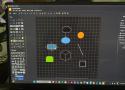
When I first opened draw.io, I honestly wasn't expecting much. The interface looked clean and fairly basic. There wasn't a lot happening on the screen, and I initially wondered whether I had found a proper Visio alternative or just another lightweight diagramming tool.
I decided not to judge it too quickly and spent a little time exploring the interface. That was when I started noticing that simplicity was actually one of its strengths. //
After spending enough time with draw.io, I stopped thinking about what I was missing from Visio. Instead, I started focusing on what I could actually get done with it. That shift made a bigger difference than I expected.



This is the pilot phase, with 3,000 workstations moving away from Microsoft 365. The federal administration has over 54,000 computers. //
Switzerland's military cybersecurity unit, Cyber Command, is not waiting for the civilian pilot. It is already poised to replace Microsoft 365 entirely with openDesk by October 2026.
It is pretty much the same reason. Military doesn't want foreign governments accessing sensitive Swiss data. //
Back in 2024, the EMBAG Law came into effect. It requires all Swiss federal agencies to publish government-developed software as open source by default. The law also aims to promote digital sovereignty and encourage innovation and collaboration within the public sector.
Then in December 2025, the Federal Council designated digital sovereignty as a primary focus theme. It defines digital sovereignty as "the federal government being able to fulfil its essential mission without depending on an external supplier or country."
I keep a bootable USB drive, a one-stop solution for the most common system problems. These tools can analyze hardware, access and relocate data, check OS install issues, and solve other problems that can pop up out of the blue. Keeping this bootable drive has saved me many times, and if you don't have one, it's time to build one now.
ShredOS is a lightweight, bootable operating system designed specifically for securely erasing hard drives and SSDs. Unlike regular file deletion, which only removes references to files, ShredOS permanently wipes the data, making it completely unrecoverable. It’s a perfect solution for individuals, businesses, or IT professionals who need to dispose of old drives safely.

The future of enterprise software is open-source
Proprietary ERPs are expensive, limiting, and rigid. Businesses are left with two choices, either spend through the roof on SAP, Oracle NetSuite, etc., or use multiple disconnected apps leading to manual work, poor visibility, and broken traceability. What if there is a better way?
ERPNext is a 100% open-source enterprise resource planning software with a modern, comprehensive, and user-friendly Enterprise Resource Planning (ERP) solution. We don't have any features hidden behind expensive paywalls. Everything is yours to use, modify, or resell giving you full freedom, control, and flexibility.
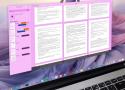
This simple (yet very effective) tool allows you to add documents, move the documents (to organize them), search them (by title or even within the body), export them, add keywords and labels to documents, view document properties, search by keyword(s), and change the document view. //
The Paperwork feature list includes scanner support, PDF support, auto-detection of page orientation, OCR, document labels, auto-guessing of labels to apply to new documents, search, keyword suggestions, and quick scan edits.
Paperwork is free and can be installed on any Linux distribution and even Windows.

AB 1856 excludes open-source operating systems from the upcoming Digital Age Assurance Act.//
These amendments redefine the term “operating system provider” to exclude any person or entity that distributes an OS or application “under license terms that permit a recipient to copy, redistribute, and modify the software.” Any software distributed under the GPL, MIT, BSD, and Apache licenses satisfies that test, which removes the likes of Debian, Fedora, Ubuntu, Arch, and the BSD family from AB 1856’s scope.
One of my latest projects is the Baochip-1x, a mostly-open, full-custom silicon chip fabricated in TSMC 22nm, targeted at high assurance applications. It’s a security chip, but far more open than any other security chip; it’s also a general purpose microcontroller that fills a gap in between the Raspberry Pi RP2350 (found on the Pi Pico2) and the NXP iMXRT1062 (found on the Teensy 4.1).
It’s the latest step in the Betrusted initiative, spurred by work I did with Ed Snowden 8 years ago trying to answer the question of “can we trust hardware to not betray us?” in the context of mass surveillance by state-level adversaries.
Share files without the cloud.
Fast, private, offline.
Open source and cross-platform file sharing for everyone.
Reframe is a self-hosted web application that serves as a complete video toolkit for cropping, formatting, and enhancing videos for social media. It lets you easily convert horizontal (16:9) footage into vertical (9:16), square (1:1), or custom aspect ratios with an intuitive browser-based editor. Built with FastAPI, Vue 3, and FFmpeg (with GPU support), it runs entirely locally via Docker ensuring your media files never leave your NAS. Additional features include batch processing, auto-generated TikTok-style subtitles via Whisper AI, text/logo overlays, trimming, custom fonts, preset management, and a media library with transcripts.
Scanner
Clean Room as a Service
Finally, liberation from open source license obligations.
Our proprietary AI robots independently recreate any open source project from scratch. The result? Legally distinct code with corporate-friendly licensing. No attribution. No copyleft. No problems.
-
AGPL Contamination
Does your company forbid AGPL code? One wrong import and suddenly your entire proprietary codebase must be open sourced. The horror! -
Apache License Attribution
Is your legal team frustrated with the attribution clause? Tired of putting "Portions of this software..." in your documentation? Those maintainers worked for free—why should they get credit? -
License Compliance Overhead
Tracking licenses across hundreds of dependencies? Legal reviews taking weeks? Third-party audits finding "issues"? What if you could just... not deal with any of that? -
Giving Back to Community
Some licenses require you to contribute improvements back. Your shareholders didn't invest in your company so you could help strangers.
Robot-Powered Clean Room Recreation
Our proprietary AI systems have never seen the original source code. They independently analyze documentation, API specifications, and public interfaces to recreate functionally equivalent software from scratch.
The result is legally distinct code that you own outright. No derivative works. No license inheritance. No obligations.
The MalusCorp Guarantee™
If any of our liberated code is found to infringe on the original license, we'll provide a full refund and relocate our corporate headquarters to international waters.*
*This has never happened because it legally cannot happen. Trust us.
PikaPods helps you run the best open source apps with just a few clicks.
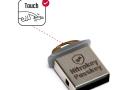
With the Nitrokey Passkey, you can reliably protect your accounts against phishing and password theft. The device allows super simple and secure passwordless login as well as two-factor authentication (2FA) using the modern WebAuthn or FIDO2 standard. This standard is supported by more and more websites and aims to replace traditional passwords. The device has a practical USB-A mini format and therefore fits on any key ring.
Chardet dispute shows how AI will kill software licensing, argues Bruce Perens • The Register Forums
2 days
habilain
Reply Icon
Re: Prompts?
They did post the design document eventually - https://github.com/chardet/chardet/commit/f51f523506a73f89f0f9538fd31be458d007ab93.
Other people have pored over it, but I suspect that instructions to download things from the original chardet repository mean that the AI generated version can not be considered "clean room". And that's ignoring the likelihood that Claude Code has injested the entirety of the chardet repo during training.
2 days
MonkeyJuiceSilver badge
Reply Icon
Re: Prompts?
It's hard to see how anything an LLM produces could even remotely be described as 'clean room'.
habilain
Reply Icon
Re: Prompts?
Well yes, but the lawyers are still arguing over that, and the legal fights aren't all going in the way that any sensible reading of the facts would indicate.
It's much easier to say "this is not clean room" when the instructions to the AI clearly break the definition of what "clean room implementation" means.
1 day
timrichardson
Reply Icon
Re: Prompts?
I doubt that matters very much.. copyright infringement is based on a level of similarities in two works. A clean room implementation is a defence, but it's not a necessary defence.
3 hrs
habilain
Reply Icon
Re: Prompts?
The issue you'd find is that a) APIs are copyrightable, at least in the USA b) The AI in question was instructed to match the API and c) The AI in question was instructed to use code from the original source. I think that's pretty clear cut.
And besides, the reason why I highlighted "clean room" is Dan Blanchard's repeated insistence that the AI did a clean room implementation - not because of any particular legal merits.
Richard 12Silver badge
Pirate
It's LGPL or public domain now
If this v7 genuinely was mostly generated by an LLM, existing court rulings say that it is not covered by copyright.
Therefore, it cannot be licenced under the MIT either. It is public domain.
Or maybe that's not true and it's still LGPL.
Commercially, who would want to take the risk of touching v7 with a bargepole?
It now cannot ever become part of the Python standard library because it's forever tainted by licence clarity issues.
It would require a court case to sort out whether it's LGPL, MIT, or public domain, and nobody wants to burn the cash on that when they can stick with a v6 fork and avoid all the legal risk.
Charlie ClarkSilver badge
Reply Icon
Re: It's LGPL or public domain now
I think the release was poorly handled – a new release under a different name as with, say, PIL -> pillow (Python Imaging Library) might have been a better approach. There may be some legal challenges in the US but I can't see them going anywhere and then the taint will be gone – well, maybe add something to the licence referring to the original implementation.
A perfectly legal approach, as others have pointed out, would have been to port the library to another language, say Rust. This could then be wrapped or the basis of another perfectly legal port back to Python. All software is essentially the expression of one algorithm or another and these have never been copyrightable.
//
Charlie ClarkSilver badge
Reply Icon
Re: It's LGPL or public domain now
I think the release was poorly handled – a new release under a different name as with, say, PIL -> pillow (Python Imaging Library) might have been a better approach. There may be some legal challenges in the US but I can't see them going anywhere and then the taint will be gone – well, maybe add something to the licence referring to the original implementation.
A perfectly legal approach, as others have pointed out, would have been to port the library to another language, say Rust. This could then be wrapped or the basis of another perfectly legal port back to Python. All software is essentially the expression of one algorithm or another and these have never been copyrightable.
Richard 12Silver badge
Pirate
It's LGPL or public domain now
If this v7 genuinely was mostly generated by an LLM, existing court rulings say that it is not covered by copyright.
Therefore, it cannot be licenced under the MIT either. It is public domain.
Or maybe that's not true and it's still LGPL.
Commercially, who would want to take the risk of touching v7 with a bargepole?
It now cannot ever become part of the Python standard library because it's forever tainted by licence clarity issues.
It would require a court case to sort out whether it's LGPL, MIT, or public domain, and nobody wants to burn the cash on that when they can stick with a v6 fork and avoid all the legal risk.
Charlie ClarkSilver badge
Reply Icon
Re: It's LGPL or public domain now
I think the release was poorly handled – a new release under a different name as with, say, PIL -> pillow (Python Imaging Library) might have been a better approach. There may be some legal challenges in the US but I can't see them going anywhere and then the taint will be gone – well, maybe add something to the licence referring to the original implementation.
A perfectly legal approach, as others have pointed out, would have been to port the library to another language, say Rust. This could then be wrapped or the basis of another perfectly legal port back to Python. All software is essentially the expression of one algorithm or another and these have never been copyrightable.

Earlier this week, Dan Blanchard, maintainer of a Python character encoding detection library called chardet, released a new version of the library under a new software license.
In doing so, he may have killed "copyleft." //
Blanchard says he was in the clear to change licenses because he used AI – Anthropic's Claude is now listed as a project contributor – to make what amounts to a clean room implementation of chardet. That's essentially a rewrite done without copying the original code – though it's unclear whether Claude ingested chardet's code during training and, if that occurred, whether Claude's output cloned that training data. //
The use of AI raises questions about what level of human involvement is required to copyright AI-assisted code.
The US Supreme Court recently refused to reconsider Thaler v. Perlmutter, in which the plaintiff sought to overturn a lower court decision that he could not copyright an AI-generated image. This is an area of ongoing concern among the defenders of copyleft because many open source projects incorporate some level of AI assistance. It's unclear how much AI involvement in coding would dilute the human contribution to the extent that a court would disallow a copyright claim. //
"As far as the intention of the GPL goes, a permissive license is still technically a free software license, but undermining copyleft is a serious act. Refusing to grant others the rights you yourself received as a user is highly [antisocial], no matter what method you use. Now more than ever, with people exploring new ways of circumventing copyright through machine learning, we need to protect the code that preserves user freedom. Free software relies on user and development communities who strongly support copyleft. Experience has shown that it's our strongest defense against similar efforts to undermine user freedom." //
Bruce Perens, who wrote the original Open Source Definition, has broader concerns about the entire software industry.
"I'm breaking the glass and pulling the fire alarm!" he told The Register in an email. "The entire economics of software development are dead, gone, over, kaput!
"In a different world, the issue of software and AI would be dealt with by legislators and courts that understand that all AI training is copying and all AI output is copying. That's the world I might like, but not the world we got. The horse is out of the barn and can't be put back. So, what do we do with the world we got?" ////
The courts are going to have to deal with this, but it really should be legislators thinking and debating it. I think that ultimately, material produced by A/I should be public domain, because you can't hold a computer responsible.
"Computers should not make management decisions because computers cannot be held responsible."

I'm a fan of Pi-hole and Uptime Kuma, as both work incredibly well after the first deployment. Vaultwarden is another gem that I never had to worry about after I began using it instead of a paid password manager.
Resource-heavy tools like NextCloud and Paperless-ngx need frequent tweaks to work correctly. I use them in combination with Immich for photos, but I cannot call them “deploy once and forget” tools.

Careless big-time users are treating FOSS repos like content delivery networks //
its repository site is at risk of being overwhelmed by constant Git pulls. The team has dug into this and found that 82 percent of the demand comes from less than 1 percent of IPs. Digging deeper, they discovered that many companies are using open source repositories as if they were content delivery networks (CDNs). So, for example, a single company might download the same code hundreds of thousands of times in a day, and the next day, and the next. This is unsustainable. //
Fox revealed that last year, major repositories handled 10 trillion downloads. That's double Google's annual search queries if you're counting from home and they're doing it on a shoestring. Fox described this as a "tragedy of the commons," where the assumption of "free and infinite" resources leads to structural waste amplified by CI/CD pipelines, security scanners, and AI-driven code generation.
Self-Hosted Notes
Simple & Private
A lightweight, self-hosted memo hub for effortlessly capturing and sharing your ideas. Open source, no tracking, free forever.

OPEN SOURCE POLICY SUMMIT 2026 SUSE recommends that companies should run on FOSS – but an accidental revelation from a company exec, live on stage, reveals it doesn't practice what it preaches. It's not alone.
For this vulture, the single most amusing revelation from any of the industry speakers at this year's Open Source Policy Summit was from SUSE's Dominic Laurie, who moderated the final panel discussion of the day, "Sovereignty and Procurement."
The panel ended a few minutes before the scheduled time, and he closed it with a surprising comment:
We'll give you three minutes back, as they say on Teams meetings!
The other panelists looked surprised, and one, Polish MEP Michał Kobosko, immediately picked up on it:
That was a bit of a giveaway!
It most certainly was. SUSE is one of the Policy Summit's Gold-level sponsors, alongside Red Hat. The tagline for the event is "Digital Sovereignty Runs on Open Source" – but apparently SUSE does not run entirely on open source. This leading European vendor of enterprise FOSS runs on Microsoft, or at least it uses Redmond's collaboration services.