Built for 650-1000V systems, the Multi HS19 Solar 15k combines 3-phase power, battery charging, and solar tracking in a single 19-inch rack unit. High-voltage operation reduces current, cabling, and losses; enabling more compact systems, faster installation, and high efficiency within the Victron ecosystem.


Recommended AGS relay
Dorman 84601
12vdc, less than 150mA coil
Recommended by Midnite Solar
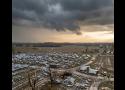
On Tuesday, March 10th, an EF-1 tornado destroyed the Dunns Bridge Solar I and II facilities owned by the Northern Indiana Public Service Company (NIPSCO). The facilities, located outside of Wheaton, Indiana, had 2.4 million solar panels, totaling 700 megawatts (MW) of power capacity, and reportedly cost $1 billion to construct—a little over $1,400 per kilowatt (kW).
NIPSCO issued the following statement in the aftermath:
On the evening of March 10, while actively monitoring severe weather and responding to storm‑related outages across our service area, NIPSCO became aware of damage to its Dunns Bridge I and Dunns Bridge II solar facilities in Starke and Jasper counties. Our team was tracking the storm in real time and moved in to assess conditions and respond as soon as it was safe to do so. Debris from the damage could have been displaced, and we are working to safely secure the area, assess the damage and proactively communicate with the community.
We recognize there may be questions and concerns about potential environmental impacts related to the damage at the solar farm. Solar panel leaching concerns have been thoroughly evaluated in industry-leading research, which shows that the risk is extremely low. Overall, the available evidence demonstrates that both crystalline silicon and thin-film PV (i.e., photovoltaic) modules do not pose a meaningful risk of environmental or human exposure from leaching, even when damaged. //
While the solar panels were damaged by the tornado, we are not aware of any reports of damage at the nearby R.M. Schahfer Generating Station, a 950 MW coal facility that NIPSCO was planning to retire at the end of 2025. However, it is still running thanks to a 202(C) order issued by the U.S. Department of Energy requiring the plant to continue operations. //
Let’s be incredibly uncharitable and look at the anticipated levelized cost of energy (LCOE) of the solar facility over its projected 25-year useful lifetime, and its actual, tornado-truncated lifetime.
Dunns Bridge I began generating power in June of 2023, producing a total of 1.3 million megawatt hours (MWh) up until December of 2025, the most recent month for which data are available. Dunns Bridge II began generating power in January of 2025, and through December, it produced 812,439 MW of power, which is good for a 21.3 percent capacity factor.
We calculated the LCOE over two time periods: a 25-year lifecycle, a standard assumption in the industry, and a 2-year lifecycle to account for the facility being destroyed very early in its lifecycle. The results are about what we would expect. Our estimated subsidized costs over 25 years are approximately equal to S&P Global’s reported PPA cost for the facilities, including subsidies.
Because the LCOE is like calculating the cost of driving your car over the number of miles driven, if your car dies after two years when you expected to drive it for 10, the cost per mile obviously increases. This is why the cost of electricity from the Dunns Bridge I & II facilities skyrockets in this analysis, reaching a subsidized cost of $289.61 per MWh, and an unsubsidized cost of $405.09 per MWh. [Compared to $63.87/MWh subsidized over 25 years, or $82.61/MWh unsubsidized over 25 yrs] //
In our upcoming LCOE study for Reliable Energy Inc. in Indiana, we found that the R.M. Schahfer plant was the most expensive coal plant in the state, due primarily to very high delivered fuel costs at the plant ($50 per MWh).
However, the December 2025 data from S&P Global, the most recent available, show the delivered fuel cost was about $27 per MWh, which substantially improves the economics of the plant, although this could possibly be the result of the company assuming the plant would retire at the end of the year, rather than being required to stay open.
At $70 per MWh, the Schahfer plant is competitive with subsidized solar over a 25-year lifespan, cheaper than the unsubsidized cost over 25 years, and a bargain compared with our admittedly uncharitable comparison to the facility’s actual 2-year lifespan. //
For our part, we would encourage those in the surrounding areas not to worry too much about chemicals leaching from the panels into the soil or water. Photovoltaic panels are made mostly of glass, and the small amounts of toxic materials, such as lead used in soldering, are not a significant concern because they are present in small quantities and there is probably no realistic exposure pathway for humans. //
The storm likely blew debris well beyond the solar site, which could create issues for nearby farmers, especially if they are growing root crops.
Anecdotally, we’ve heard that large potato buyers won’t purchase potatoes from growers located within a mile of a glass recycling facility for precisely this reason. In other words, the real concern here isn’t chemical contamination, it’s debris.
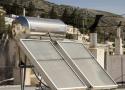
To store heat for days, weeks, or months, you need to trap the energy in the bonds of a molecule that can later release heat on demand. The approach to this particular chemistry problem is called molecular solar thermal (MOST) energy storage. While it has been the next big thing for decades, it never really took off. //
Molecular batteries, in principle, are extremely good at storing energy. Heating oil, arguably the most popular molecular battery we use for heating, is essentially ancient solar energy stored in chemical bonds. Its energy density stands at around 40 Megajoules per kilo. To put that in perspective, Li-ion batteries usually pack less than one MJ/kg. One of the problems with heating oil, though, is that it is single-use only—it gets burnt when you use it. What Nguyen and her colleagues aimed to achieve with their DNA-inspired substance is essentially a reusable fuel. //
The researchers achieved an energy storage density of 1.65 MJ/kg—nearly double the capacity of Li-ion batteries and substantially higher than any previous MOST material. //
One of the biggest fears with chemical storage is thermal reversion—the fuel spontaneously discharges because it got a little too warm in the storage tank. But the Dewar isomers of the pyrimidones are incredibly stable. The researchers calculated a half-life of up to 481 days at room temperature for some derivatives. This means the fuel could be charged in the heat of July, and it would remain fully charged when you need to heat your home in January. The degradation figures also look decent for a MOST energy storage. The team ran the system through 20 charge-discharge cycles with negligible decay. //
Still, we’re rather far away using MOST systems for heating actual homes. To get there, we’re going to need molecules that absorb far more of the light spectrum and convert to the activated state with a higher efficiency. We’re just not there yet.
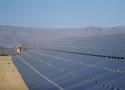
This was a [Solar] company that was not only economically unviable but was also conducting outright shady business practices. ///
That's breaking the laws of physics for a solar company to conduct shady business practices!
One-level load shedding is integrated into the Multicluster-Box. The load-shedding contactor is controlled directly by the master of the main cluster via communication with the Multicluster-Box. If you install an additional load-shedding contactor in a multicluster system, it is controlled with a multifunction relay in the master of extension cluster 1. Additional load-shedding contactors cannot be controlled by the main cluster.
The battery protection mode protects the battery.
If the state of charge (SOC) of the battery falls below the thresholds, battery protection mode is activated. In battery protection mode, the Sunny Island switches to energy-saving mode or switches itself off. The battery protection mode has 3 levels. 1 state of charge threshold can be set for each level. Level 1 and 2 of the battery protection mode have specific start and end times and are therefore dependent on the time of day ( > Setting Time-Dependent Functions).
Elon Musk reposted
Good Faith Energy
@GoodFaithEnergy
We just completed the largest solar + battery project in the Caribbean — on Jumby Bay Island, Antigua. 🇦🇬 🌎
A massive 233.28 kW
@teslaenergy
Solar Roof, powered by 9 inverters and 9
@SolArkSolar
L3-HV-40KWH battery stacks (that’s 72 battery modules!).
SourcePacT provides a way to streamline and maximize the value of any BESS deployment with its simplified design and increases sustainability by prioritizing cleaner energy.
Isolation & Interconnect Switches provide the necessary controls, metering, and switching needed to connect a local power island (critical loads & DER) to larger power infrastructure. This allows the DER (Distributed Energy Resource) to operate as a grid interactive device when connected to the larger electrical system but switch to grid forming by isolating the island during a power anomaly.
The first available Interconnect Source Isolation Switch designed to UL 3008.
This online course is tailored for individuals with technical backgrounds involved in designing or procuring solar powered water systems (SPWS). It offers the flexibility to work on your own schedule while also benefiting from interactive group discussions.
Solar Powered Water Systems: Design and Installation Guide
Get comprehensive guidance on all technical aspects of designing and installing solar powered water systems for rural water supply.
This free guide was created with UNICEF and Water Mission. It has been downloaded by people in over 130 countries.
Solar Powered Water Systems: Operations and Maintenance Guide
Learn how to operate and maintain solar powered water systems. This guide’s adaptable format can be tailored to fit your unique context.
Whether you’re an operator, technician, or trainer, this resource provides practical insights for ensuring sustainable water solutions.
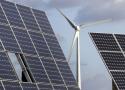
We expect an increase in reliability in modern tech – unless one is a climate scold, and unless the topic in question is solar and wind power:
Wind and solar have been growing as a share of US electrical power generation over the last two decades. State and federal mandates and subsidies have driven the expansion of renewables because of their inherently and intermittent nature. But it’s clear that renewable electricity sources have a third strike: they are fragile and prone to weather damage and destruction. //
In May 2019, a massive hailstorm in West Texas destroyed 400,000 solar modules of the Midway Solar Project, about 60% of the facility. The project was only one year old. The system was rebuilt, costing insurers more than $70 million. //
This whole problem presents a doom loop of unreliable and fragile electrical generation. The climate scolds would have us believe that the weather is growing hotter/colder/more unpredictable because of human activity causing climate change. And to solve the climate change that we have supposedly solved, we must restrict further our use of reliable energy sources for unreliable and fragile "green" energy systems like solar and wind power, which clutter up the landscape and are less reliable and more expensive than the traditional source.
The new microgrid controls accommodate distributed energy power system designs and have the ability to control renewable energy resources (solar and wind) and energy storage - providing a single interface control for a completely integrated microgrid power system.
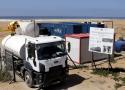
Instead of needing constant power, new system adjusts to use whatever is available. //
“Unlike reverse osmosis, electrodialysis is an electrically driven process,” Bessette says. The membranes are arranged in such a way that the water is not pushed through them but flows along them. On both sides of those membranes are positive and negative electrodes that create an electric field, which draws salt ions through the membranes and out of the water. //
The two most important parameters in electrodialysis desalination are the flow rate of the water and the power you apply to the electrodes. To make the process efficient, you need to match those two. The advantage of electrodialysis is that it can operate at different power levels. When you have more available power, you can just pump more water through the system. When you have less power, you can slow the system down by reducing the water flow rate. You’ll produce less freshwater, but you won’t break anything this way. //
Octavus Ars Scholae Palatinae
18y
1,115
On average, it desalinated around 5,000 liters of water per day—enough for a community of roughly 2,000 people.
Is 2.5L per day really enough per person when that is below the adequate intake levels according to the Institute of Medicine? Let alone for other purposes such as cooking and hygiene.
The Institute of Medicine has recommended adequate intake (AI) values for total water at levels to prevent dehydration. The AI for men aged 19+ is 3.7 liters each day, and 3 liters (13 cups) of which should be consumed as beverages. The AI for women aged 19+ is 2.7 liters about 2.2 liters (9 cups) of which should be consumed as beverages each day.
Water: An Important Part of a Healthy Winter Diet : USDA ARS //
Team Tardigrade Ars Centurion
4y
370
Octavus said:
Is 2.5L per day really enough per person when that is below the adequate intake levels according to the Institute of Medicine? Let alone for other purposes such as cooking and hygiene.
Water: An Important Part of a Healthy Winter Diet : USDA ARS
Like most other things in medicine and science there are different viewpoints on what total water intake needs to be. This study says an average minimum of 1.8 L. I've seen several textbooks that list anything from 1.5 to 2.5 L. I've also see other estimates going as high as 3.5-4 L. Age, sex, renal function, diet, and metabolic disease all have impacts on these numbers.
Electrical engineers must learn to navigate industry codes and standards while designing battery energy storage systems (BESS)
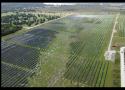
In 2022, Florida was third in the nation, after California and Texas, in total solar power generating capacity, and solar energy accounted for more than 5% of Florida’s total net generation. About four-fifths of the state’s solar generation came from utility-scale (1 megawatt or larger) facilities. //
The Lake Placid Solar Power Plant is located in Highlands County, Fla., and suffered damage during Hurricane Milton. The facility opened in December 2019 and is 45 megawatts, which is enough to power more than 12,000 homes at peak production. //
The frequency of major storms and the costs associated with repair from them must be an essential part of any calculation when deciding if a new power facility is right for the region. It appears that green energy activists aren’t providing this data, but rather their visions of would should be based on their beliefs.
Theology is no way to power a civilization. //
rebelgirl in reply to CommoChief. | October 15, 2024 at 8:26 am
My son is a commercial electrician who works on residential and commercial solar installations. He says he would never have it.
They install the panels on roofs where no one takes into account the problems involved with reaching the source of a potential attic fire. //
Joe-dallas in reply to CommoChief. | October 15, 2024 at 5:01 pm
Correct – the capacity factor for solar during summer is around 35%
The capacity factor in the winter is around 6%
The texas freeze fiasco of Feb 2021,
Solar was producing around 12% capacity factor across the entire nation and a DROP of 60% – 70% wind production across the entire NORTH AMERICAN Continent for 7 DAYS
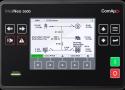
The InteliNeo 5500 is a microgrid controller that offers a cost-effective solution for combining traditional grid or gen-sets with renewable energy sources to create a reliable and efficient power generation system. The panel-mount design with a 5” colour TFT display is suitable for packagers and integrators who are looking to integrate clean and sustainable energy to existing power generation sites.
Its Modbus master ensures compatibility with a large number of preconfigured devices (including those of Fronius and many more).
- Single controller for renewables power sources and battery energy storage system
- Native microgrid applications for on & off-grid systems with renewable energy and storage
- 5" TFT Colour panel-mounted display with 480 x 800 pixels
- Microgrid screen templates for quick view
- Support of up to 8* genset/mains controllers on CAN2
- Modbus master TCP & RTU support of up to 9 devices
Understand how BESS can be incorporated into electrical systems, and synchronized with generators.
Battery energy storage systems (BESS) have become essential in modern energy management, effectively addressing the intermittency of renewable energy sources and enhancing grid stability. This course provides a comprehensive exploration of BESS, focusing on benefits, diverse applications and the critical parameters necessary for optimizing performance.
Additionally, the course will delve into the synchronization and load-sharing of BESS with synchronous generator sets, offering a thorough understanding of how these systems work together to maximize efficiency and reliability.
Without sufficient synchronous grid inertia, the grid becomes unstable and a blackout occurs.
Inertia refers to a system’s capability to resist change. For a power grid, greater synchronous inertia confers greater ability to resist frequency changes. //
In contrast to gigantic 2,256 megawatt nuclear power plants such as Diablo Canyon Power Plant (DCPP) near San Luis Obispo, California which provide very large amounts of synchronous grid inertia, so-called inverter-based resources (IBRs) such as solar powered generators, wind power generators, and batteries supply negligible amounts of synchronous grid inertia. //
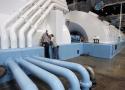
Prior to the introduction of significant penetrations of IBRs, each power grid's synchronous generators (coal and natural gas-fired generators, large hydroelectric dams, geothermal plants, and nuclear power plants) had sufficient synchronous grid inertia to assure power grid stability. The synchronous generators have a large amount of rotational inertia as a consequence of having massive rotating turbines and massive rotating generator rotors. (See photograph below.)
As a simplified example, each of the pair of DCPP’s generators have rotating components which weigh in excess of a million pounds (500 tons.) DCPP’s turbines rotate 30 times per second. The rotating magnetic field induces the 60 cycle per second (Hertz) AC voltage (25,000 Volts) and AC current (45,120 Amperes) in the stator windings of each unit. In response to perturbations in grid frequency, the rotational kinetic energy can be instantaneously converted to changes in the output power of the generator which tend to stabilize the generator’s output frequency and voltage.
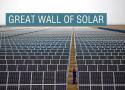
Some 500 miles west of Beijing, in the desert of the Chinese region of Inner Mongolia, a solar-power project is underway that is — even by China’s standards — audacious in scale and, most remarkably, in ambition.
Officials in Ordos are over the next several years going to install 100 gigawatts of solar panels — more than three times as much capacity as the United States is currently building nationwide — along a stretch of land 250 miles (400 kilometers) long and 3 miles (5 km) wide.
The goal isn’t just to generate huge amounts of clean power. It is also to restore a no man’s land, bringing greenery and even livestock to an area roughly the size of Puerto Rico. In doing so, the local authorities are doubling down on two of China’s most successful efforts of recent years: An epic expansion of solar power, and major progress in combating desertification. //
Initially, those operating in desert climes adopted measures such as creating sand barriers and planting trees in order to safeguard their operations. “They must take actions to minimize the damage they would bring to the local ecology and environment while also protecting their own bases from being damaged by sandstorms,” Wang Weiquan, the general secretary of the Energy and Environment Committee of China Energy Research Society, a Beijing-based NGO, told me. “Much to their surprise, they found that their work led grass to grow in the desert.”
Indeed, according to a 2022 study, desert-based solar power projects have resulted in “a significant greening trend”: About one-third of the land under solar plants built in 12 Chinese deserts has seen vegetation grow.
As another recent study showed, solar panels do not only create shade, enabling plants and vegetables to grow, but also reduce the ground wind speed, preventing sand from being picked up.
Solar companies saw opportunities: They started to search for suitable crops to grow under the panels. One plant they found worked was liquorice, which can survive in the harsh environment and make the soil more fertile by absorbing nitrogen from the air and converting it to the ground. //
There are also environmental concerns. For one, most Chinese developers build their desert bases by bulldozing sand dunes, and this could ultimately lead to sand and dust storms, a Chinese sand-control expert told me, speaking on condition of anonymity. A previous study also showed that covering the Sahara with solar panels may, in fact, worsen global warming by potentially increasing surrounding air temperatures markedly and reshaping rainfall patterns worldwide.