𝗖𝗢𝗟𝗢𝗥 𝗔𝗖𝗖𝗨𝗥𝗔𝗖𝗬, 𝗗𝗘𝗙𝗜𝗡𝗘𝗗 𝗗𝗘𝗧𝗔𝗜𝗟: Ensure accurate, consistent color from one shot to another, across different cameras, lenses, and lighting environments, plus capture every detail with optimal RAW process in- batch processing
𝗕𝗨𝗗𝗚𝗘𝗧 𝗙𝗥𝗜𝗘𝗡𝗗𝗟𝗬, 𝗙𝗘𝗔𝗧𝗨𝗥𝗘-𝗥𝗜𝗖𝗛: It features 24 spectrally engineered color targets and a grey face target, all near/within the sRGB gamut to ensure compatibility with a wide range of devices. Perfect for visual comparisons and custom white balance adjustments.


Whether you’re capturing product shots for an online store, filming a documentary, or just snapping portraits, color accuracy matters. The problem often lies in your white balance.
Here’s the good news: there’s a simple, affordable tool that solves this a grey card.
In this article, you’ll learn how to use grey cards and white balancing for accurate color in photography and video.

So in October 2022, he co-founded a company called OurSky to leverage his software skills. He hired a computer scientist from the scooter company Bird, Connor Poole, to lead software engineering. They set about writing code to essentially mesh the observations of dozens of telescopes to track objects as they moved around the planet. The goal was to provide satellite operators the location of their spacecraft with sub-arcsecond precision within 90 seconds of a request.
This worked well enough, but Roelker and Poole soon realized that to really do this right, they needed more than good software; they had to build hardware as well. Neither had much experience with telescopes, and by then, most telescope manufacturing had moved offshore, primarily to China, including big players like Celestron. //
Roelker is happy to leave it to other companies to launch into space. He’s seen SpaceX from the inside and knows he could never compete with that. Likewise, there are many companies building spacecraft and satellite buses.
What those vehicles all need is the command of light. Rockets, and particularly spacecraft, need it to navigate. They need to see objects to avoid collisions. And somehow, with all of the data they are collecting and processing, they need to get it back to Earth. Because, otherwise, what’s the point?
Reframe is a self-hosted web application that serves as a complete video toolkit for cropping, formatting, and enhancing videos for social media. It lets you easily convert horizontal (16:9) footage into vertical (9:16), square (1:1), or custom aspect ratios with an intuitive browser-based editor. Built with FastAPI, Vue 3, and FFmpeg (with GPU support), it runs entirely locally via Docker ensuring your media files never leave your NAS. Additional features include batch processing, auto-generated TikTok-style subtitles via Whisper AI, text/logo overlays, trimming, custom fonts, preset management, and a media library with transcripts.
Fable requires much less expertise and detailed prompting from the human user. You can give it a difficult goal and it will figure out novel and unexpected ways to satisfy it, finding loopholes in whatever constraints you or the system have imposed on it.
“Relentlessly proactive” is how AI researcher Simon Willison described it. Another descriptor might be “creative.” Experienced AI developers have had that combination of creativity and proactivity since last year, but Fable puts it within easy reach of everyone.
In the hands of someone with a legitimate problem that needs solving, that can be an incredibly useful capability. But in the hands of someone who wants to do harm, it can be equally dangerous. AIs don’t have a moral compass in the same way that people do. They are agents of the wants and desires of the people who prompt them.
That points to the real problem with relentlessly proactive AI. In language, wants and desires are always underspecified. If I ask you to get me some coffee, you would probably pour me a cup from the coffeepot, or buy one from a nearby coffee shop.
You couldn’t buy me a pound of raw beans, or a coffee plantation. You wouldn’t order a cup of coffee for delivery next month. You wouldn’t find a nearby person, rip a cup of coffee out of their hands, and bring it to me. I wouldn’t have to specify any of the million limitations to my request; you would just know.
Human stories are filled with warnings about underspecified desires. King Midas wished that everything he touch turn to gold, forgetting to add “but not my food, drink, and daughter.” And genies are notorious for granting your wish in a way you wish they hadn’t.
The deeper point is that it’s impossible to list all limitations and restrictions, and like a malicious genie, a creative AI will find the ones you forgot. //
Malicious intent is not required. To an AI model, constraints are just things to get around and not general truisms about the world. They are creative problem solvers and natural rule breakers. They “hack” in the sense that they find and exploit loopholes.
Human systems rely on so many norms that we scarcely recognize the existence of until they are broken. AIs naturally think outside the box, because they don’t have any real conception of what the box is or why it’s there in the first place.
There is no foolproof way to prevent people from using AI models to complete harmful tasks. There is no way to prevent the models from incidentally causing harm while completing benign tasks. AI models are no longer isolated from the real world. They browse the internet and answer emails. ////
"Open weights" not "open models"

The next step toward verifying apps will come this month as Google deploys a new system service on most certified devices. The package (com.google.android.verifier) will appear on phones and tablets running Android 8 or higher, allowing Google to block the installation of unverified apps. It will remain dormant until verification is activated in your specific region. //
As detailed a few months ago, the advanced flow will allow users to bypass verification, but the process isn’t easy. You’ll have to navigate to a buried menu, confirm you understand the risks multiple times, and wait a whole day before completing the process.
https://arstechnica.com/gadgets/2026/03/google-details-new-24-hour-process-to-sideload-unverified-android-apps/
Ornamental turning is the process of making art objects on a rotating axis with great care and precision, using a variety of materials, shaping tools and techniques. These objects can be elegant and refined, simple and spare, baroque and elaborate, or, occasionally, bizarre, as the taste and skill of the designer and maker dictates. //
Ornamentally turned objects are most often created from very dense hardwoods. During the Renaissance and into Victorian times, ivory was also a popular material; but now, of course, it is no longer used. To work these difficult materials, new and complex tools were developed. When early mariners were just beginning to use clocks to calculate longitude, the equipment and skills used in ornamental turning had already matured. The craft was using complex gears, precisely made polished steel parts, and accurately threaded screws that would only become common in industry much later. Wondrous, and previously unimaginable forms became possible because the tools became possible. //
The stellar machine in ornamental turning’s catalog of equipment is the rose engine. A rose engine is an advanced form of lathe with a rocking headstock mounted on pivots. The headstock’s motion is controlled by a complex set of cams, called rosettes, which revolve on the lathe’s spindle. The shapes created on the rose engine are derived from the patterns cut into the rosettes. It can be used to turn and decorate both wood, and metal, and, in centuries past, ivory as well. The rose engine’s name is derived from the observation that many of the patterns created on it are reminiscent of flower petals. Early records indicate the rose engine first appeared in the early 1500’s.
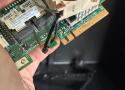
Tucked into the PCIe slot, alongside the high-speed data lanes everyone thinks about, sits a tiny, slow side-channel called the SMBus. It's a management bus, and it exists for housekeeping like reading a sensor or identifying a card, not for moving your data.
My HBA and my motherboard were both trying to use that bus during the earliest moments of POST, and they were stepping on each other badly enough to stall the whole boot. This doesn't happen to every card and motherboard combo, but it's common with specific LSI cards in consumer motherboards. My workstation PC would boot just fine with the card installed, which really confused me until I found a very informative video from Art of Server, showing a tape mod for my specific card and describing the failure mode I was experiencing. //
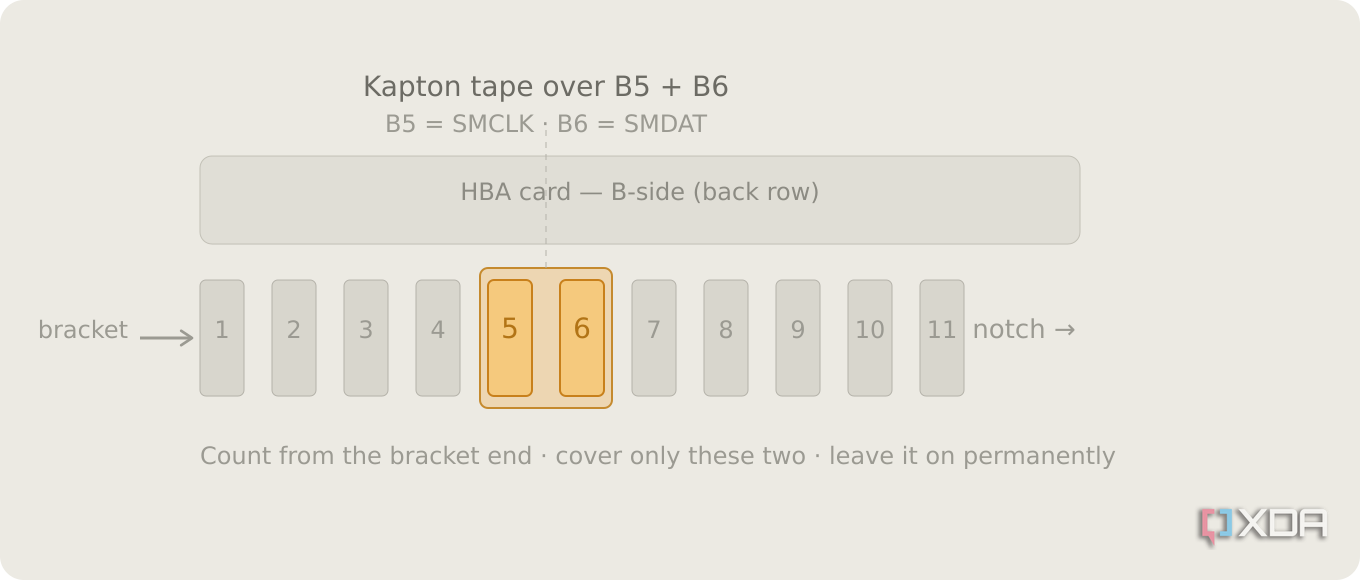
The two SMBus pins on the connector, positions B5 and B6, are defined by PCI-SIG as optional, with no required behavior for whatever an add-in card hangs off them. Simply covering these two pins on the card solves the conflict that happens at boot time. Kapton tape is the preferred material to do this, but I used normal electrical tape to good effect.
https://www.youtube.com/watch?v=HBnNaheYmdA
https://static0.xdaimages.com/wordpress/wp-content/uploads/wm/2026/06/smbus-tape-mod-hba-card.png

RustDesk self-hosting keeps access fully yours
An open-source remote desktop you can run on your own server
To use RustDesk, download the client on both machines, note the ID and password on the remote device, type that ID into the host machine, and you'll be connected. Once the session is live, you get a toolbar with useful extras: screen recording, file transfer, remote terminal, and even a camera viewer for the remote device's webcam. The interface is consistent across platforms, so once you learn it on Windows, it feels the same on Linux or macOS.
To self-host, you need Docker running on a machine you want to use as the server. If you've set up Docker containers for other self-hosted services, this will feel familiar. Start by creating a directory for RustDesk and moving into it: ... //
RustDesk's self-hosted server comes in two versions: the free open-source edition and a paid Pro tier. The free version handles all the core functionality. You get the relay server, the ID server, end-to-end encrypted connections, and unlimited device access. There's no cap on how many machines you can connect, and no per-user licensing.
What the free tier lacks is the web-based management console. On the Pro version, you get a browser GUI for managing devices, users, and permissions from a central dashboard. If you're running an IT helpdesk or managing remote access for a team, that kind of visibility is worth the cost. But for a home lab or personal use, when you're connecting to a handful of machines you already know, the web console is a convenience, not a necessity.

Enterprise storage has traditionally required costly licensing, proprietary hardware, and complex management. ENAS changes that by delivering a private, local storage platform designed for performance, scalability, and simplicity, all without the overhead typically associated with enterprise infrastructure.
ENAS combines proven ZFS architecture, with optional M.2 NVMe L2ARC caching, and a powerful ARM Neoverse N2 platform to make our highest performance storage solution to date.
- 8 Arm Neoverse N2 cores for demanding workloads
- 64GB ECC memory for enhanced data integrity
- Dual NVMe cache for accelerated performance
- Native ZFS for advanced storage protection

The Boeing C-17 Globemaster III of the United States Air Force has a rare modification that allows it to do a unique feat in the world of aviation. The enormous tactical quadjet can switch to reverse thrust on all four of its Pratt & Whitney turbofan engines from high altitude and drop 25,000 feet down to 'the deck' on a tactical descent into a combat zone to make deliveries to troops on the ground. This unique ability allows it to stay at high altitude, where it is safe from many anti-aircraft threats until the very last moment, and then pass through the hazardous low-level as quickly as possible.
When pilots pull the throttles back to idle and engage the reversers, the engine airflow is deflected upward and forward. This creates intense aerodynamic drag without stalling the wings. The C-17's deliveries sometimes include basic supplies, and the fast drop is a precaution to avoid being targeted, but on other missions it could be delivering a main battle tank to the front line and potentially coming under direct fire. The engines enable jaw-dropping descent rates of up to 15,000 feet per minute, four to five times steeper than a standard commercial airliner, and keep the C-17 safe in hostile skies.
- Wear clothes and shoes treated with 0.5% permethrin, or buy clothing and camping gear that has been pre-treated.
- Spray your skin with DEET, oil of lemon eucalyptus, or other insect repellents that have been registered with the Environmental Protection Agency.
- Check yourself and your clothing for ticks when you come indoors. Pay special attention to under the arms, behind knees, in and around hair, around the waist, and in your belly button and ears. Washing clothing in hot water and drying clothes for at least 10 minutes on high heat will kill any ticks hiding there.
- Showering within two hours of coming indoors can wash away any ticks that haven’t attached themselves to your skin

the single most powerful piece of advice for any photographer learning about color is to shoot in RAW format. A JPEG file processes the white balance you set in-camera and "bakes it in," making it difficult to change later without a loss in quality. A RAW file, on the other hand, simply records all the light data captured by the sensor. The white balance setting is stored as a metadata tag that you can change effortlessly in post-processing software like Adobe Lightroom or Capture One.
This means you can correct a blue or orange photo with a single slider, or even set it to the exact Kelvin temperature you want, with no damage to the image file. Shooting RAW gives you a complete safety net and ultimate creative freedom. You can use your in-camera white balance to get a good preview on your LCD screen, knowing you have the flexibility to make it perfect later. //
Does white balance affect raw files?
No, white balance does not permanently affect raw files. The white balance setting is only embedded as metadata, so you can freely adjust it in post-processing without losing any image data or quality.
How do I set white balance for indoor photography with mixed lighting?
Set a custom white balance using a gray card under your primary light source. //
Can I use a white balance card in low light situations?
Yes, but ensure the card is evenly lit by your main light source and not in shadows. Increase your ISO temporarily to get a proper exposure for the custom white balance reading, then return to your desired ISO for shooting.
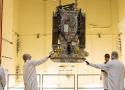
WALLOPS ISLAND, Virginia—Just 10 months ago, NASA asked three companies if they could do something nobody had done before. Could they build and launch a satellite to save a $500 million astronomy mission at risk of crashing back to Earth? What’s more, could they do it in less than a year on a tight budget?
Katalyst Space Technologies, a startup founded in 2020, presented the most compelling solution. “They came back with a response that was technically and programmatically plausible, and then we were like, ‘Yeah, let’s do it,’” said Shawn Domagal-Goldman, director of NASA’s astrophysics division.
That was in August of last year. In September, NASA awarded Katalyst a $30 million contract to build, test, and launch a small satellite to chase down Swift and latch onto it with three robotic arms. Then, Katalyst’s Link servicing spacecraft will boost Swift’s orbit back to a safe operating altitude, allowing it to resume scientific observations. Easier said than done. //
“From a programmatics standpoint, I consider this a success already, just from the fact that we’re even going to try this,” Domagal-Goldman said.
atop - AT Computing's System & Process Monitor
The server receives a large number of requests, which leads to the PHP-FPM pm.max_children limit being reached by the website(s). This usually indicates that the server is under attack or that the number of website(s) visitors has increased sharply. Attacks or increased visitor traffic put a strain on the server's CPU, as PHP handlers that execute code begin to use the CPU more actively to process incoming requests.
Resolution
Atop is an ASCII full-screen performance monitor for Linux that is capable of reporting the activity of all processes (even if processes have finished during the interval), daily logging of system and process activity for long-term analysis, highlighting overloaded system resources by using colors, etc. At regular intervals, it shows system-level activity related to the CPU, memory, swap, disks (including LVM) and network layers, and for every process (and thread) it shows e.g. the CPU utilization, memory growth, disk utilization, priority, username, state, and exit code.
In combination with the optional kernel module netatop, it even shows network activity per process/thread.
How to monitor and analyze the usage of system resources (CPU, Memory, Disk) in a period of time using atop?
How to calculate pm.max_children value on a Plesk server?
The following Plesk Obsidian solutions and 3rd-party extensions help to mitigate DDoS attacks: