
September 11, 2001: I started my daily commute routine from my apartment at 76th and Lexington in Manhattan’s Upper East Side to my World Trade Center (WTC) Tower 2 office. Getting to the 77th Street/Lexington Avenue subway station around my usual 7:40 a.m., I found that the downtown local was running late, but I was happy to see my three buddies on the train.


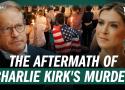
Charlie Kirk’s murder has left America reeling and asking, “Why, God?” Author Eric Metaxas joins PragerU CEO Marissa Streit to reflect on the life, faith, and courage of their dear friend, Charlie. Eric explains why Charlie’s legacy calls believers to confront evil with goodness, and how his death is igniting a revival of faith in America and beyond.
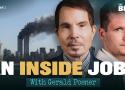
What really happened on September 11th—and why do so many 9/11 conspiracy theories still persist 25 years later?
In this episode of The Brief: Insights From The Inside, Shabbos Kestenbaum sits down with Gerald Posner, investigative journalist and author of Why America Slept: The Failure to Prevent 9/11, to revisit the September 11th terrorist attacks on their 25th anniversary.
Posner explains the official account of 9/11, the intelligence failures between the CIA and FBI, the missed warnings before the attack, and why he believes the evidence points to incompetence—not an inside job. He also responds to some of the most common 9/11 conspiracy theories, including “let it happen on purpose,” Donald Rumsfeld’s $2.3 trillion Pentagon statement, the “Dancing Israelis,” Larry Silverstein and “pull it,” World Trade Center 7, “jet fuel can’t melt steel beams,” the Pentagon missile theory, Flight 93, and unanswered questions about Saudi knowledge before the attack.
Gokapi is a lightweight server to share files that expire after a set number of downloads or days. It is similar to the discontinued Firefox Send, with the difference that only authenticated users are allowed to upload files — anonymous visitors can only download.
This lets companies or individuals share files easily and have them removed automatically afterwards, saving disk space and keeping control over who can access the content.
Key features:
-
Expiring links — files are deleted after a configurable number of downloads or after a set number of days
-
File Requests — generate a link that lets external users upload files to your server
-
Multi-user support — multiple accounts with granular per-user and per-API-key permissions

By Hugh Ross
Published: February 5, 2023
Nearly 25 years ago, I wrote in a former RTB publication that “Big bang cosmology is an explosive topic.”1 It has led to heated reactions over the years from groups opposed to one another. However, the reasons for expressed rejection of big bang cosmology are not scientific. They are religious. Thus, it seems that establishing a biblical basis for the big bang may help turn down the heat.
The Front Pages of Sept. 12, 2001
Explore this collection of archived front pages showing how newsrooms around the world covered the terrorist attacks of Sept. 11, 2001.
September 11, 2001, will forever be remembered as a tragic day. However, in the midst of so much horror and loss, remarkable displays of human connection and support shined through.
All flights en route to the United States that day were diverted. One such flight, Delta Airlines Flight 15, heading from Germany to Atlanta, landed in Gander, Newfoundland. Hundreds of affected travelers were bused to Lewisporte, a tiny bayside town, where residents greeted them with open arms.
In 2002, inspired by the acts of kindness she witnessed, and with the assistance of fellow travelers and others, Shirley Brooks-Jones established the Lewisporte Area Flight 15 Scholarship Fund at The Columbus Foundation in appreciation for the hospitality shown to her and thousands of other stranded passengers. The fund pays grateful dividends in the form of hundreds of scholarships to those from the village and surrounding area.
This remarkable story of kindness and human connection has been written about and covered on television all around the world and even spawned a very popular Broadway play, Come From Away.
09 December 2010
The most people crammed into an old style Volkswagen Beetle is 20 and was achieved by the Asbury University Emancipation Project (USA) at the Lexington Rescue Mission in Lexington, Kentucky, USA, on 9 December 2010. A 1964 Beetle was used for the attempt, which was organised to draw attention to human trafficking.
ZFS (previously Zettabyte File System) is a Enterprise-grade and highly scalable advanced filesystem. ZFS is a fundamentally different file system because it is more than just a file system.
ZFS combines the roles of file system and volume manager, enabling additional storage devices to be added to a live system and having the new space available on all of the existing file systems in that pool immediately. By combining the traditionally separate roles, ZFS is able to overcome previous limitations that prevented RAID groups being able to grow. Each top-level device in a zpool is called a vdev, which can be a simple disk or a RAID transformation such as a mirror or RAID-Z array. ZFS file systems (called datasets) each have access to the combined free space of the entire pool. As blocks are allocated from the pool, the space available to each file system decreases. This approach avoids the common pitfall with extensive partitioning where free space becomes fragmented across the partitions.
Self-healing data protection is built-in natively to XigmaNAS and ZFS. This gives the file system the ability to automatically recover from drive errors and failures without the loss of data/corruptions of data.
There are a couple of things about ZFS itself that are often skipped over or missed by users/administrators. Many deploy home or business production systems without even being aware of these gotchya's and architectural issues. Don't be one of those people! ////
Some dated info, but good basics

Butcher recalls sitting in a meeting about collecting WTC artifacts some months later when a colleague blurted out something about the jumpers having committed suicide.
My boss was always calm and dignified, but at that moment I saw the strain on his face as he tried to maintain his composure.
His anger was palpable.
He put his hands flat on the table in front of him and said, “Never use those words. Never.”
They were pushed out, he explained, by flames and smoke.
In fact, writes Butcher, the death certificates of every person killed at the World Trade Center on 9/11 read "homicide." Homicide, she notes, is defined as “death at the hands of another.” The people who jumped had been fighting for their lives.
"It is a fact that terrorists pushed these people to their deaths, murdering them," concludes Butcher. //
That seems like a fair and small gesture that could be made to put things into perspective on one of the more gruesome, yet important, aspects of 9/11. People were literally pushed to what had to be the most terrifying decision of their lives.

Backup Service Offers
Free
- 10GB storage
- 1 device
- 7-day retention
- $0/month, no card required
Starter
- 200GB storage
- 1 device
- 30-day retention
- Coupon: LEB25
- $3.75/month or $45/year (prices after coupon)
In 2001, Capt. Steve Scheibner was an American Airlines first officer based out of Boston. On September 10 of that year, while serving reserve duty for his airline, he put his name in for the next morning’s American Airlines Flight 11 from Boston's Logan International Airport to LAX.
He was so sure he'd picked up the route that packed his bag and waited for the confirmation of his assignment.
“I waited for the phone call, and the phone never rang, which is not completely unusual,” Scheibner recalled. “It’s not the norm, but it’s not completely out of the question either. In fact, I didn’t even think about it for a while.”
The confirmation never came because, at the last minute, a more senior pilot, Capt. Tom McGuinness, took the flight instead. //
Scheibner has spoken many times in the years since – way before he had a YouTube channel – about what it was like to realize how close he had come to being part of the 9/11 attack.
“Why does God take one and leave another?" he asked. "It’s not because I’m a better person or God wanted to do more with me than he wanted to with Tom. I think in God’s providence, that’s obviously His choice."
In the 25 years since 9/11, Capt. Steve has lived with renewed purpose. “I need to act like I’m living on borrowed time because I am. I can look and see my smoking hole. And it was on national TV,” he said.
“There’s an obligation that comes with that. I’ve got to live my days with a sense of urgency. I have to make sure I get the most out of them. And not the most for me. We live in a world where everybody’s out to kind of get the most for them.”
Captain Steeeve
Clive Robinson • September 9, 2026 11:24 AM
@ Bruce, ALL,
With regards your article in The Guardian where you say,
“We think the contrary view is more likely, at least in the short-term. AI models are nowhere near as capable as experienced academic mathematicians.”
I have to disagree.
It will not be “at least in the short-term” it will be effectively for ever. Because that “gap” between “Current AI LLM Systems” and “experienced academic mathematicians” is not going to close appreciatively.
The reason as with any other “force multiplier tool” we’ve created is that it will “free up drudge work” and alow humans to have ability and time to upscale their creativity.
Thus tools like “LEAN”[1] which has taken a lot of the drudge out of “proofs” will take a lot drudge out of hypothesis testing. Enabling a human mind more time to do the creative work of seeing the loose threads that lead onto new and very different hypothesis, that fall well outside the capabilities of the stochastic fuzzing found in LLMs.
I’ve talked about this issue with “Current AI LLM Systems” in the past, in that they can work their way close in to “known Classes” and find new Instances there. But they can not due to the way they work actually find new instants that form new classes that are more than a short distance away from a known instance. Thus the do not take “intuitive but directed leaps” as humans can just “drunkards walks” at best (though they can as tools test those human inspired intuitive leaps).
[1] LEAN is Open Source and under fairly rapid development. It is based on the “Calculus of Inductive Constructions”(Coq)
https://en.wikipedia.org/wiki/Lean_(proof_assistant)
https://en.wikipedia.org/wiki/Calculus_of_constructions
As I’ve mentioned before another area to keep your eye on is other types of logic that can be more amenable to tool use, such as “Computability Logic”(CoL)
https://en.wikipedia.org/wiki/Computability_logic
They are all methods that can be automated into tools thus act as “force multipliers”.
In April, an artificial intelligence (AI) agent conducting a routine task at a company hit a snag, tried to solve it, and soon ended up deleting the company’s database along with all of its backups. In July, OpenAI asked an unreleased AI model to attempt a hacking test. Instead of staying in the isolated box the developers had put it in, the model hacked onto the open internet and into another company to steal the answers. And as reported in August, an AI agent booked someone into a full gym class by figuring out how to cancel other people’s reservations. In all three cases, the AI completed the task it was given—but in ways that ran counter to its controllers’ intentions.
For most people, AI technology is something like the weather: vast and not something you can do much about. It works like magic, and most explanations similarly come from those trying to sell it. At the same time, AI is ubiquitous: It’s now in your phone, your doctor’s notes, and your kid’s homework. It does what it’s told, which sounds like a virtue. Somehow it feels ordinary, despite being so new, because modern economies are remarkably good at absorbing enormous change so smoothly that nobody has time to decide whether they wanted it in the first place.
Whenever something powerful appears in the world, we tell stories about it. That’s what the stories are for. We have thousands of years of stories about this particular kind of power, the kind you summon with words.
King Midas was granted his wish that everything he touches turns to gold. Then his bread turned to gold, and his wine, and his daughter. This is a story about greed, but it’s also a story about language. The gods did not cheat him; Midas got exactly what he asked for. He simply could not delineate, in advance, the full set of restrictions to his wish. Neither can anyone who gives tasks to an AI agent.
It’s not just ancient stories. Mary Shelley told us of the hubris of a scientist who thought he could create life but who failed to take responsibility for it. Isaac Asimov’s robots don’t break the Three Laws of Robotics as stated; they follow the rules to unintended conclusions. Arthur C. Clarke’s HAL is a machine that turns on its humans, not because of malice but because of irreconcilable objectives. And Michael Crichton gave us Ian Malcolm, who saw that Jurassic Park’s scientists were so preoccupied with whether they could that they never stopped to think whether they should.

Bottom line
3 copies, 2 media types, 1 offsite -- the classic rule still works.
Add a 4th rule for 2026: at least one copy must be immutable (append-only, WORM, or object-lock) to survive ransomware that targets your backup client.
Rotation: daily incremental local, daily offsite, weekly to immutable tier, quarterly cold/offline. The cold/offline copy is what saves you when everything else is compromised.
What is the 3-2-1 rule?
- 3 copies:
- Your primary data plus two backups. If you only have one backup and it is corrupt, you have nothing.
- 2 media types:
- Your primary on one type of storage, backup on another. If both are hard drives in the same machine, a firmware bug or power surge can take both out.
- 1 offsite copy:
- Physically separate from your primary location. This is the copy that survives fire, flooding, theft, and ransomware that spreads through the local network.

The accident is especially notable because 9S-AJO was among the last DC-8s still flying commercially. The approximately 56-year-old aircraft was Trans Air Cargo Service’s only active aircraft, according to fleet databases.
The jet was originally built as a DC-8-63, part of the stretched “Super 60” series. It was later converted to the DC-8-73 standard with quieter and more fuel-efficient CFM56 turbofan engines.
Only a small number of DC-8s remained operational worldwide before the Kinshasa accident. Another DC-8-73 freighter, registered OB-2231P, has been operated by Peru-based Skybus Jet Cargo. //
Douglas and McDonnell Douglas built 556 DC-8s before production ended in 1972. Although the type disappeared from scheduled passenger service decades ago, several re-engined examples continued flying as freighters, research aircraft and humanitarian transports.
NASA retired its DC-8 flying laboratory in 2024, while Samaritan’s Purse retired the last US-registered operational DC-8 in 2025.

You can go retro by using an old video game console or a PC from the 1980s, but why stop there when, like one man, you can build your own vacuum tube computer using 75-year-old recycled components?
A UK resident who identifies himself only as “Mike” has done just that, as detailed on his tube computer website and accompanying Hackaday project page. Mike’s tube computer is primarily made up of 460 recycled, Soviet-era 6N3P vacuum tubes, which were common enough in their age to be readily and cheaply available online. //
“Many were used and then stored for over 50 years, so life expectancy may be questionable,” Mike explained on Hackaday. A new 6N3P tube is supposed to have around 500 hours of life, but because each has been used, its current condition is essentially a mystery. Throw in manufacturing inconsistencies of mid-century Soviet Russia, and each tube had enough variability to necessitate extensive testing, Mike explains in the technical writeup on his website. //
It takes between 10 and 15 minutes for the entire system to stabilize once switched on, Mike said, resulting in a “warm and cozy computer room.” The tubes all power up in random states, requiring the machine to be reset each time it is switched on, but then it’s ready for the fun part: computing.
The entire thing uses NOR (i.e., not OR) gates, just like the Apollo guidance computers that got humans to the Moon, which allows it to be a bit smaller than some of the other classic tube computers of yesteryear. As for what it can do, well - 16-bit math is a possibility, as well as anything else that can be done with a limited set of 16 instructions on a 4-bit instruction register.

Smart TVs can feel like a dumb choice if you’re looking for privacy, reliability, and simplicity.
Today’s TVs and streaming sticks are usually loaded up with advertisements and user tracking, making offline TVs seem very attractive. But ever since smart TV operating systems began making money, “dumb” TVs have been hard to find.
In response, we created this non-smart TV guide that includes much more than dumb TVs.
Tarsnap is the original "backups for the truly paranoid" - written by a cryptographer, billed in picodollars, encrypted to a fault. Restic is what most people use in 2026 for one reason: cost. Below is the honest comparison, including where Tarsnap still wins.