
Most backups fail silently. You find out the night your drive dies. We test that your data actually restores, every single day, and show you the proof. Encrypted on your machine in a vault we can't read. US West Coast, flat pricing, no egress fees, real humans on tickets.
- Restic encrypts on your machine -- AES-256 encryption with your key. We never see, store, or transmit your encryption key. Period.
- Encrypted blobs travel over HTTPS -- Standard TLS transport over Restic's REST protocol. Even in transit, all data is already encrypted ciphertext.
- Stored in your private ZFS vault -- Per-customer dataset with ZFS checksums. Hardware-isolated from other customers' data.
- Only you can decrypt -- Lose the key, lose the data - including from us. That's the tradeoff of real privacy.


Glencore sank a shaft 8,530 feet under Ontario from the bottom of a mine it closed in 2009, and put five lithium-ion locomotives and 23 battery machines down there so it would not have to pump cooled air a mile and a half to keep the crews working //
So why do batteries win underground while they’re still fighting for every point of market share up here? Run a diesel engine in a closed parking garage and you’ll have your answer inside a minute. A mine is that garage stretched over miles of tunnel, with warm rock on every side. Every diesel machine down there’s a heater with an exhaust pipe, and the mine has to push enough fresh air past it to keep people alive and cool enough to work. //
Push air down a shaft and it compresses, and compressed air heats up, at roughly 29 degrees Fahrenheit for every mile of depth (10 degrees Celsius per kilometer) in engineering studies of deep mines in Northern Ontario. At Onaping’s depth, the intake air shows up dozens of degrees warmer than it left the surface, before the rock or a single machine adds anything.

A human deputy sitting beside the road in 1987 might never have noticed. He probably wouldn’t have cared unless there was some reason to stop the vehicle in the first place.
The computer doesn’t get bored.
It doesn’t look away.
It doesn’t forget.
And increasingly, that is the privacy question Americans need to be discussing.
This isn’t really about whether Dad should have gone to the Secretary of State and spent the money to register the replacement trailer correctly. He should have.
The interesting question is whether every minor violation that was once practically invisible should become permanently detectable simply because technology has made detection cheap.
There is a profound difference between a police officer seeing something suspicious and investigating it and building a technological environment in which everyone’s ordinary movements can be recorded, searched and reconstructed later.
For most of American history, privacy wasn’t created entirely by law.
Some of it came from friction.
Following someone required manpower. Checking plates required effort. Remembering where somebody’s pickup was Tuesday afternoon required an actual human being who saw it Tuesday afternoon.
Government theoretically possessed considerable investigative authority, but exercising that authority cost something.
Technology is removing that friction.
A camera doesn’t need overtime.
A database doesn’t need coffee.
An algorithm doesn’t say, “I’m not spending twenty minutes investigating whether Earl’s 1993 Harbor Freight trailer has the correct plate.”
It simply remembers.
And that creates a strange new world where activities that were always technically discoverable can potentially become automatically discoverable.
Those aren’t necessarily the same thing.
The NTP220/270 Series NTP Appliances use multiple GPS/GNSS satellite systems to generate a local Stratum 1 NTP Time source for your equipment.
No stupid app, no online accounts, no subscription service, and no Internet needed. Manage and Monitor using CLI, SSH, and a local web browser.
Our NTP Appliances bring time synchronization to your isolated, disconnected, and air-gapped internal networks, No Internet needed.

Claims follow scrutiny over monitors installing adware without user consent

A cybersecurity expert has demonstrated how computer-generated patterns can successfully prevent surveillance cameras from detecting vehicles - such as the controversial AI-powered Flock licence plate readers that are becoming increasingly common on American streets.
Bill Swearingen, founder of SIXCYBER, has spent the past year running an impressive 31 million tests developing what he calls noRecognition. noRecognition is a reinforcement learning model that generates patterns capable of defeating the algorithms built into surveillance cameras to detect objects.
The patterns do not prevent cameras from actually recording footage, so a human watching the video would still see a car. But what fails is the software use to identify objects, logs vehicle licence plates, and triggers alerts.
Obviously, I modified the order entry and wholesaler systems to work with each other.
Luckily my 50 line receiver only had to deal with 1200 baud, but it did have to transparently deal with 7-bit even parity, 7-bit odd parity and 8-bit no parity. //
baud rate was simple: 115200, 9600 or occasionally 1200
115200? Hark at Mr Fancypants and his expensive toys.
occasionally 1200
Occasionally? You mean you let your expensive modem just sit there unused? Wasting all that time getting the occasional table close enough to the 'phone inlet so the two could connect!
Next you'll be telling me everything ran at 8N1! //
Back when I was a lad, we fought in the gutter to get 110 baud connections. //
Luxury! We didn't have baud rate, we had pigeon rate and we was happy to have it. //
You had pigeons?
We just had stones to throw. Made for pretty short range transmissions.

And, naturally, the meeting to discuss why yesterday’s meeting failed to produce sufficient meetings.
Eventually the Army achieves the theoretical maximum of military bureaucracy:
Every officer is attending a meeting about work nobody can accomplish because everyone is attending meetings.
Anonymous Coward
Re: Procedural Error?
It won't have been a contractor at the DC. Way too expensive.
If it had been, I doubt the same problem would have occurred...most contractors are highly experienced. You get this kind of error with junior hiring and no shadowing (because there is nobody to shadow).
We're probably all guilty of a junior cock up like this because of lack of experience / senior person giving vague instructions.
For example, when I was a budding junior, in my late teens a very, very long time ago...I was shadowing a guy on maintenance visit, a very good engineer, a bit slow and methodical to the point of tooth pulling agony, but very good none the less...I'm more senior now than he was then and I'm still nowhere near that slow, he reeked of fear...disk space was low on the file server, so he asked me to free up some space. I'd never been there before, didn't know how the business operated...hadn't a clue about the file/folder structure etc...I found the biggest folder, organised by date and deleted everything over 12 years old. I free up nearly 200GB of space. I was very pleased...I chose 10 years because I knew there was no legal requirement to keep things older than 10 years old in most cases...I added on 2 years for safety...that's junior thinking.
Turns out I'd deleted half of a long term archive containing old firmware, drivers, source code etc etc for old products of theirs...luckily it was backed up and could be recovered.
Both myself and and the senior learned an important lesson that day. I learned to ask questions, he learned to be more specific.
In at least the last 10 years, could be longer because I haven't really thought about it...I haven't seen many truly senior engineering types in any flavour of tech in permanent roles in any company ranging from tiny sub 100 employee firms all the way up to massive corporates like O2...on pretty much every project I've participated as a contractor, I've either been the only contractor there and the most senior in terms of experience and knowledge, or I've been one of a few contractors with a team of relative internal juniors / mid-career (wish I was freelance) type of folks.
On your "hemorrhaging money for no good reason" comment.
They actually aren't with contractors. Yes they charge a lot per day, but they probably aren't working on that contract every day. A £500 a day contractor probably costs less than a £160k a year permie. A contractor you generally only pay a small retainer, plus a day rate when you use them. They aren't being paid for every day they hold the contract...that's not how it works. Some people can swing that, if their rate is low enough...I do, I typically work on a retainer only that lands somewhere in the middle...because I can't be bothered with complicated billing and I prefer not to negotiate on every single piece of work that comes down the pipeline...I prefer to just crack on...you get more interesting work that way without it being tendered to other contractors etc...I am way cheaper than a permie and most other contractors...and I come with 25 years plus of experience and a skill set that would make a lot of engineers choke...it's broad but also very deep in almost every area that matters because I've used almost every skill extensively bouncing around hundreds and hundreds of different businesses for over a decade.
You get incredible value for money out of a contractor, because you're getting applied knowledge and the experience of working with tons of different companies of all shapes and sizes. An institutionalised permie that became senior rising through the ranks of one business over a decade is no substitute for a good contractor. The depth and range of experience is beyond comparison for the same scale.
Baba Computer
Dr. Anthony Petrillo
For my students, friends, and family.
Owls is just entering this market — not chasing a fortune, but looking for customers we can serve well and get to know. Find out what we have, and see if we're a fit for you.
You have my team's personal invitation, and our promise to do our best to serve you.
— Dr. Anthony Petrillo, CEO
It has never been easier to hold an answer you do not understand.
Culture programs us. So do the crowd, the screen, and the government — and now, most gently and most persuasively of all, so does AI. It will answer almost any question in a calm, confident voice, faster than any teacher or any book ever could. It is a marvel. It is also the newest thing that can quietly author your mind for you, without you ever noticing.
This book is about refusing to let it do that. I wrote it for my grandchildren and my college students alike, and it asks no coding of you. It walks you one honest step at a time, from geometry to Gödel to the machine itself, toward a single, unshakable idea: everyone is standing on something they cannot prove. The only question is what you are standing on.
It will not tell you what to think. It hands you back your own mind and dares you to question every authority that would take it — including mine. Where my own questions finally led me, I offer plainly, and never force it on you. The walking, and the choosing, stay yours.

Fast forward to today, and using LCOE to argue for the “low cost” of wind and solar has become one of the clearest indications that someone is either disingenuous, misinformed, or relying on an outdated understanding of power systems.
While the battle is not over, policymakers, regulators, and analysts increasingly recognize that the cost of generating electricity and the cost of reliably serving customers every hour of the year are not the same thing. As a result, many of the institutions that spent years promoting LCOE comparisons are now developing their own firming-cost and full-system-cost methodologies to address the shortcomings of their previous analyses.
Success has many fathers, but we like to think we have a legitimate claim to being pivotal players in turning the tide in the war on the LCOE.
In truth, LCOE should never have garnered the media attention that it did.
The issue has never been the LCOE itself, which was not designed to compare the value of dispatchable, fuel-based resources with intermittent, weather-based resources. In fact, many of the organizations publishing LCOE studies at the time explicitly warned against doing so.
The problem was how the metric was (mis)used by wind and solar advocates to peddle the fiction that wind and solar were the cheapest forms of energy. //
The LCOE ignored several things to simplify cost comparisons, such as cost variations throughout a plants lifespan, discount rates variations, performance variations, and most importantly, it didn’t assess system costs to incorporate new resources, such as transmission requirements. This is why it was called the “cost of the busbar,” because it was the cost of electricity generated before hitting the transmission and distribution systems.
It also ignored the value of the electricity produced, as well as the cost of maintaining reliability using intermittent resources—which is understandable for the time, but would have huge implications going forward.
This distinction is critical because electricity generated at different times does not have the same value. Dispatchable generators can generally produce electricity when it is most needed, while wind and solar generate electricity when weather conditions permit. LCOE ignores these differences entirely, treating every megawatt-hour as if it were equally valuable.
In other words, the LCOE was a cost-of-generating metric, as opposed to a cost-of-serving (or system-cost) metric. //
This was the first edition of what we now call the Always On Levelized Cost of Energy (AO-LCOE). For the first time, we were directly incorporating the costs of backup generation, transmission, overbuilding, and curtailment into the cost of wind and solar themselves, rather than pretending those costs existed somewhere else.

Learn useful things. Read old books. Know your history. Teach your children what is worth loving. Build friendships strong enough to survive disagreement and hardship. Become capable of producing something besides opinions. Create things worth inheriting.

This is the pilot phase, with 3,000 workstations moving away from Microsoft 365. The federal administration has over 54,000 computers. //
Switzerland's military cybersecurity unit, Cyber Command, is not waiting for the civilian pilot. It is already poised to replace Microsoft 365 entirely with openDesk by October 2026.
It is pretty much the same reason. Military doesn't want foreign governments accessing sensitive Swiss data. //
Back in 2024, the EMBAG Law came into effect. It requires all Swiss federal agencies to publish government-developed software as open source by default. The law also aims to promote digital sovereignty and encourage innovation and collaboration within the public sector.
Then in December 2025, the Federal Council designated digital sovereignty as a primary focus theme. It defines digital sovereignty as "the federal government being able to fulfil its essential mission without depending on an external supplier or country."
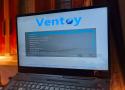
I keep a bootable USB drive, a one-stop solution for the most common system problems. These tools can analyze hardware, access and relocate data, check OS install issues, and solve other problems that can pop up out of the blue. Keeping this bootable drive has saved me many times, and if you don't have one, it's time to build one now.
ShredOS is a lightweight, bootable operating system designed specifically for securely erasing hard drives and SSDs. Unlike regular file deletion, which only removes references to files, ShredOS permanently wipes the data, making it completely unrecoverable. It’s a perfect solution for individuals, businesses, or IT professionals who need to dispose of old drives safely.

The open expression of religion is an American military tradition. George Washington prayed in the snow at Valley Forge. George Patton had prayer cards printed and distributed throughout the Third U.S. Army in 1944. We can't allow the fervently anti-religious to create a heckler's veto over religious liberty. Having a stand-up guy like Pete Hegseth get involved in this battle over a very basic freedom-of-expression issue shows me the Department of War is in good hands.

n this article, we’ll uncover an entire North Korean infiltration operation aimed at deploying remote IT workers across different companies in the American financial and crypto/Web3 sectors, with the objective of conducting corporate espionage and generating funding for the sanctioned regime. We attributed this effort to the state-sponsored APT (Advanced Persistent Threat) Lazarus, specifically the Famous Chollima division.

- Researchers created a fake DeFi startup and hired suspected Famous Chollima operatives, providing a rare inside view of a DPRK IT worker operation.
- The investigation followed the scheme beyond recruitment, showing how the operatives worked, collaborated, and accessed company resources after being hired.
- ANY.RUN sandbox environments provided a live view of the operatives’ behavior, exposing their evolving toolset, remote access workflow, AI usage, and supporting infrastructure.
- The findings show that DPRK IT worker schemes are not only a hiring risk. Once inside, operatives can gain legitimate access to code, systems, intellectual property, and trusted business processes.