
Coming together to write code, save lives. Because better records support better healthcare.


The future of enterprise software is open-source
Proprietary ERPs are expensive, limiting, and rigid. Businesses are left with two choices, either spend through the roof on SAP, Oracle NetSuite, etc., or use multiple disconnected apps leading to manual work, poor visibility, and broken traceability. What if there is a better way?
ERPNext is a 100% open-source enterprise resource planning software with a modern, comprehensive, and user-friendly Enterprise Resource Planning (ERP) solution. We don't have any features hidden behind expensive paywalls. Everything is yours to use, modify, or resell giving you full freedom, control, and flexibility.
21st Century Solutions for
Frontline Clinics
Transforming healthcare where people need it most.
Clinics
201
Patent visits per year
1,200,000
Donate to transform lives
Subscribe to our newsletter
BandaGo is a cloud-based digital solution that lets clinics get the most out of their available resources.

Silence
3 hours ago
a Nice, quick encapsulation of chase scenes, but you left out perennial all-time favorite Benny Hill🤣🤣
Tricky Eddie Silence
2 hours ago
They said it couldn’t be done
He said just let me try
They said others had tried and failed
He said oh but not I
They said it was impossible
He said there’s no such word
He closed his mind, he closed his heart
To everything he heard
He said within the heart of man there is a tiny seed
It grows until it blossoms
It’s called the will to succeed
Its roots are strength, its stem is hope
Its petals are inspiration
Its thorns protect strong green leaves
It’s called determination
There’s nothing in this universe beyond the scope of men
They said it couldn’t be done
Some even said they knew it
But when he faced what couldn’t be done
He couldn’t bloody do it.
--Benny Hill
The assumption of our time is that outcomes should be even if nobody interfered.
Sowell’s reply is geography itself is not even. The Zaire River has more water than the Mississippi and is far less useful because of waterfalls that isolate people.
The Mississippi drops four inches a mile. Those are different rivers. The world was never a level playing field. Treating every disparity as proof of blame turns causation into a morality play.

Before Menger, economists tortured themselves trying to explain why diamonds cost more than water when water keeps you alive. Menger dissolved the paradox in a sentence. Value is marginal and subjective. The tenth glass of water you drink today carries almost no value to you; the first glass you drink after three days without it carries everything. The object does not contain the value. You assign it, based on your circumstances, your preferences, your next most pressing want.
This wrecked the labor theory of value completely, clearing the ground for honest price analysis.
Prices, Menger showed, are not arbitrary signals or social constructs. They are compressed information about millions of individual valuations, each person acting on knowledge no central planner could ever collect. Bureaucrats in Brussels and Washington still haven't absorbed this. They control prices and watch shortages materialize on schedule, baffled every time. //
Handre, it's not that they haven't aborbed it. It's that they are owned by a financial network that rejects a key truth that Menger laid bare.
It's the old Upton Sinclair saying writ large: "It is difficult to get a man to understand something when his salary depends upon his not understanding it."
What Menger explained in Vienna in 1871, the Transnational Crime Syndicate of Big Club Oligarch Family Pirates has spent over 150 years trying to hide from the public.
They're still trying to protect BOTH systems they painstakingly constructed - and enforce - for the rest of us, but not for themselves.
-
THE FIAT CURRENCY SYSTEM
-
THE ENERGY RATIONING/MARKET MANIPULATION SYSTEM

Sheeppox is a highly contagious, often fatal viral disease that was largely eradicated from much of European livestock in the 20th century. But there is still the occasional regional outbreak, such as the one that afflicted many flocks of sheep in Greece last year. In order to reconstruct how the virus has evolved over the last 3,500 years, scientists extracted and sequenced sheeppox DNA preserved in the animal skins used for the parchment of numerous medieval manuscripts. They reported their findings in a new paper published in the journal Science Advances.
The Xteink X3 eReader
Xteink X3
$69

This entire process probably only took 10-15 minutes, and now I have much more control over my Kindle experience. Give it a try!
https://kindlemodding.org/jailbreaking/post-jailbreak/koreader.html
I encourage you to follow the step-by-step guide from the Kindle Modding Wiki, which will have all the up-to-date information and files.b

The Xteink X3 has changed my opinion of what an eReader should be. It doesn't need to be the same size as a paperback, and it definitely doesn't need to be made by Amazon.
Xteink X3
$69
Save $10
https://www.xteink.com/products/xteink-x3
What we have not yet seen is an AI developing a substantial new conceptual framework in order to solve a mathematical problem. Much of mathematics proceeds by identifying the objects that are truly central to a question and then developing a theory that helps us understand them. Current AIs are very strong at searching and recombining existing ideas, but they are weak at building any deep and sustained new theory.
This speaks to a more general limitation of current AI systems. They are creative in the sense that they can recombine existing ideas in novel ways. But they are not creative in others: they have not yet developed conceptually new theories or structures. And while they have larger working memories than humans do, know more about more different things than any particular human does, and can process information faster than humans, can, true novelty is still largely beyond their reach.
Of course, that distinction may not survive for very long. Predictions are notoriously hard, especially about the future of AI. None of these mathematical capabilities were explicitly designed for, or planned. They’re all emergent properties of increasingly capable AI models. We are both confident that someday we will see AI models that are capable of the type of creativity required to do novel mathematics. Will that be in a few months, a few years or a few decades? Of course we don’t know, but our guess is sooner rather than later. //
Rontea • August 28, 2026 9:27 AM
Mathematics, like all human endeavors, is a cathedral built not only of logic but of spirit. The machines that now parade their counterexamples and clever recombinations are but mirrors reflecting the fragments of our own thought. They do not suffer the torment of doubt, nor do they rejoice in the sudden illumination that turns the darkness of ignorance into the dawn of understanding.
A mind that has never trembled before the mystery of existence cannot truly create. These artificial intellects move as blind giants, lifting stones without knowing they are in a temple. They may uncover truths, but they cannot love them. They may solve problems, but they cannot feel the sacred weight of the question.
So no, the end of mathematics is not yet upon us. For mathematics is not merely the tallying of symbols, but the human cry toward infinity. While machines can echo our steps, only man can walk toward the Absolute with awe and trembling.
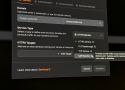
If your remote access is you reaching a handful of web dashboards, install Tailscale and forget about it. It's got superb polish and is seamless for that use case. My case for NetBird is specific: I wanted a control plane that's the vendor's actual product rather than a third-party reimplementation of a closed one, and I wanted to tunnel things that don't speak HTTP without asking permission from a three-port allowlist. If neither of those is your problem, NetBird's stack is overhead you don't need. If both are, there isn't really a competition.
The 'zdb -d` will display information about the dataset.
# zdb -d pool | grep pool/data
Could not open pool/data/%recv, error 16
Dataset pool/data [ZPL], ID 291, cr_txg 112281839, 219K, 7 objects
In this particular situation, we had an ongoing recv process which couldn’t read the data from network. Therefore, the zdb command might be a very useful and quick option to solve such situations.
One of the best aspects of ZFS is its reliability. This can be accomplished using a few features like copy-on-write approach and checksumming. Today we will look at how ZFS does checksumming and why it does it the proper way. //
We can see that using a merkle tree is a very safe way to store data on the disk, as it allows us to detect a lot of problems in the system. It is also worth noting that if ZFS is configured in the redundant way, it will detect broken data, return correct data (of course if possible) and also will repair them. This feature is called self-healing.
The catch is that scrubs are expensive, especially when the pool holds petabytes. An admin who hit a power-supply problem or a sudden shutdown usually wants to scrub the data written around that event, not the entire pool. That is the goal here: teach ZFS something about wall-clock time.
Internally, ZFS only thinks in transaction group (TXG) numbers. Administrators, inconveniently, think in dates. A TXG is just a uint64_t that goes up with every transaction, and there has never been a clean way to map between the two. //
With the database in place, zpool scrub learned two new flags: -S for the start date and -E for the end date. Both accept "YYYY-MM-DD" or "YYYY-MM-DD HH:MM" in local time. The end date is rounded up: scrubbing a bit more than asked is fine, scrubbing less is not.
shipped in OpenZFS 2.4.0.
Most of the time, the whole point of ZFS is that your data does not get corrupted. But during development you sometimes need the opposite: a controlled, reproducible corruption, so you can watch self-healing kick in, see what a scrub reports, or just understand how a file maps onto the physical disk. There is no better exercise than breaking one byte on purpose and seeing ZFS struggling.
The safe rule is simple: do this only on throwaway pools backed by throwaway files. Pointing these commands at a real disk would be less of a lesson and more of a confession.
This is the story of doing exactly that on Linux, the lazy way and the educational way.
What is ZFS and why is it so popular among experienced users? Let's have a look at the history of ZFS and its features and advantages over other filesystems. ////
Snapshot explanation is incorrect about recovery and storage -- snapshots track all changes to the file system, not just versions of existing files.
In order to completely avoid the write hole, you need to provide write atomicity. We call the operations which cannot be interrupted in the middle of the process "atomic". The "atomic" operation is either fully completed or is not done at all. If the atomic operation is interrupted because of external reasons (e.g. a power failure), it is guaranteed that a system stays either in original or in final state.
In a system which consists of several independent devices, natural atomicity doesn't exist. Variance of mechanical hard drives characteristics and data bus particularities don't allow to provide required synchronization. In these cases, transactions are typically used. Transaction is a group of operations for which atomicity is provided artificially. However, expensive overhead is required to provide transaction atomicity. Hence, transactions are not used in RAIDs.
One more option to avoid a write hole id to use a ZFS which is a hybrid of a filesystem and a RAID. ZFS uses "copy-on-write" to provide write atomicity. However, this technology requires a special type of RAID (RAID-Z) which cannot be reduced to a combination of common RAID types (RAID 0, RAID 1, or RAID 5).
In this comic, the concept of an ordinary person having an FTP server is quickly dismissed. And yes, it’s not common. To the average computer user, the idea that someone could just… connect to your computer feels exotic, or even dangerous — see the very common ironic fear of your IP address being known to other people on the internet.
If you take someone who’s “good with computers” but not a networking person, their mental model of The Internet probably involves a definition of “servers” or “the cloud” that distinguishes them from personal computers in some meaningful way. True peer‐to‐peer, if they ever think about it, is an endeavor: WebRTC, STUN, TURN, ICE, what have you. Given that we live in a world of NAT, CGNAT, and restrictive ISPs, this isn’t entirely wrong, but it breaks the elegant design of the original Internet. //
There’s lots of things you can blame for killing the open Internet, but I think NAT was one of the earliest. Running a server used to be trivial: run an executable, tell people your address, done. Now, if you’re lucky, you probably have to configure port forwarding, which you often can’t even do if you’re behind CGNAT or on an institutional network.
It also trained everyone to think client‐server is natural. “My device talks to The Cloud which talks to other devices” feels normal, when that feeling originated as an artifact of address scarcity. The problem the people in the XKCD comic at the top are facing is the absurdity of trying to establish a one-to-one communication using only outbound connections on both sides. Even more ironic is that NAT got normalized as a security feature — “your devices are hidden!” — which is one of the things that made people resist the thing that would fix it.
NAT certainly isn’t the only reason why the modern internet is full of centralized walled gardens, but it was the first — it’s why it’s hard to send a file to someone, it’s why you don’t run your email on your own computer, and why running your own services at all is difficult and often expensive (if you can’t port forward from your own internet connection, you have to buy a VPS instead of using hardware you already have).

Tailscale recently made its free tier a lot more generous this year, with the user cap going up to 6 and the hundred-device cap being axed completely. I had been using it for easy remote access for my family far before the limit change, and right after, everyone decided that they wanted access to my media server around the same time. I quickly reached 6 users, and while I was tempted to just start paying Tailscale for more space, I decided to make use of the infrastructure I was already paying for with self-hosted NetBird, and I saved myself from paying a hefty monthly fee in the process. //
Headscale exists precisely for people in my situation, and it has a key advantage, being that it replaces only the coordination server, so official Tailscale clients can continue to be used exactly as they did. //
It's not a bad solution and plenty of people use it effectively, even in the same VPS-hosted configuration that NetBird is currently in for me, but the fact that it's not official means, like many other open-source community-maintained projects, that the maintainers can simply stop maintaining it. The self-hosted NetBird solution is an official part of the NetBird product, and therefore, it gets the same official support as the cloud-based solution.