Ten years after the end of ground combat in Vietnam, the US returned to military intervention, instigating the invasion of Grenada to restore order.


McCullough says that it was Washington and his army that won the war for American independence. “He was not a brilliant strategist or tactician, not a gifted orator, not an intellectual. At several crucial moments he had shown marked indecisiveness. He had made serious mistakes in judgment. But experience had been his great teacher from boyhood, and in this his greatest test, he learned steadily from experience. Above all, Washington never forgot what was at stake and he never gave up.” Without Washington, there would be no America.
There are many things to celebrate during our nation’s semiquincentennial celebrations, and many men to honor for their part in our country’s birth: Thomas Jefferson, John Adams, Alexander Hamilton, Benjamin Franklin, and John Hancock among them. But no one looms larger than George Washington, who today seems almost mythical. At Washington’s funeral, Henry “Light-Horse Harry” Lee famously eulogized Washington as, “first in war, first in peace, and first in the hearts of his countrymen.” In 2026, it is our duty to ensure that honorific remains as true as when it was first spoken.
Watch as Freedom 250 transforms the iconic Washington Monument into the world’s tallest birthday candle in honor of our Nation’s 250th birthday. From New Year’s Eve through January 5th, 2026, a six-night projection-mapping spectacle will illuminate the Monument, creating an immersive, luminous canvas that narrates our Nation’s discovery, expansion, independence, and vision for the future. This Washington Monument illumination is the opening signature moment of a year-long series of marquee national events celebrating the triumph of the American spirit.
Acts will play every hour on the hour.
https://www.youtube.com/live/wPTjQS84Lxw?si=lwecS5n1_klD8l78
Links to those before us broaden our perspective, provide us with a sense of place in time and make us part of a larger narrative and a shared experience.
We begin to sense a tradition worth preserving and passing along to those who come after us.
Tocqueville made this point in “Democracy in America” by distinguishing between instinctive patriotism, rooted in custom and a sense of belonging based on place and personal loyalty, and reflective patriotism, based more on the opinions of free citizens, who understand their common liberties and their shared responsibilities with their fellow citizens.
This latter, more thoughtful form of patriotism, Tocqueville argued, is shaped by the exercise of individual rights within republican institutions and by what Tocqueville called “self-interest well understood.”
Indeed, one of the reasons Tocqueville admired America so much was that it bred both types of patriotism, a spirited attachment to American self-government as well as a reasoned devotion to the general principles of natural right and human liberty.
Tocqueville concluded that a patriotism in which particular loyalties and universal purposes reinforce each other was the source of the community bond and national cohesion needed to perpetuate democratic societies.
Without patriotism — instinctive patriotism for sure, but especially reflective patriotism — democratic peoples would become preoccupied with narrow, private concerns and come to neglect their civic duties.
The result is social division and civic apathy, as formerly self-governing citizens become themselves passive subjects in a modern, impersonal nation-state.
Without this dual patriotism of both the heart and the head, America’s thriving republic, Tocqueville famously warned, would be overtaken by a new form of democratic despotism that flattens the human spirit.
Today, patriotism is often misunderstood and criticized as an unthinking allegiance to chauvinistic urges.
Yet it is a love of country that is thoughtful as well as passionate — not “the impostures of pretended patriotism” Washington warned us against — that stands confident against the cultural relativism that plagues our society and undermines the defense of liberty by its disingenuous embrace and tendency toward despotic self-assertion.
Patriotism, rightly understood, has always been the civic antidote to what C. S. Lewis called “the poison of subjectivism.” //
Having rejected the Old World’s rule of accident and force in favor of government by reflection and choice, the Founders understood education — heretofore an elite privilege of the upper class and often a tool of state control — to take on a new civic role in service to popular government.
In a republican regime, built on equal rights and the consent of the governed, education not only shapes the private character that allows the individual to govern the self but also imparts the principles necessary for those individuals to practice the arts of self-government.
The student is transformed into the citizen through the expansion and deepening of the natural attachments as well as the cultivation of the civic knowledge necessary to perpetuate free government.
“The Education of youth is, in all governments, an object of the first consequence,” Noah Webster wrote in opening his 1788 essay on the topic. “The impressions received in early life, usually form the characters of individuals; a union of which forms the general character of a nation.” //
Education begins at home, when the habits and manners are established, first by parents, who have the primary responsibility for the upbringing of their children, and then by family, church, community and the first lessons of early instruction.
Like in the great nations of Europe, Webster maintained the formal educational system to be adopted and pursued in America should focus on the foundations of knowledge: reading, writing and arithmetic, as well as a basic understanding of the sciences and the outlines of geography and history.
But in republican America, Webster argued popular education must also “implant, in the minds of the American youth, the principles of virtue and of liberty; and inspire them with just and liberal ideas of government, and with an inviolable attachment to their own country.”
At a young age, this inculcation was especially to be done by teaching history: “every child in America should be acquainted with his own country. He should read books that furnish him with ideas that will be useful to him in life and practice. As soon as he opens his lips, he should rehearse the history of his own country; he should lisp the praise of liberty, and of those illustrious heroes and statesmen, who have wrought a revolution in her favor.”
Thomas Jefferson and James Madison concurred in a report they authored as commissioners of the University of Virginia.
Beyond improving the faculties and morals, the objects of a general education should be for the student “to understand his duties to his neighbors and country, and to discharge with competence the functions confided to him by either,” and “to instruct the mass of our citizens in these, their rights, interests and duties, as men and citizens.”
The objects of “the higher branches of education” — the colleges and universities scattered around the country — were “to develop the reasoning faculties of our youth, enlarge their minds, cultivate their morals, and instill into them the precepts of virtue and order” and “to form them to habits of reflection and correct action, rendering them examples of virtue to others, and of happiness within themselves.”
American higher education should “form the statesmen, legislators and judges, on whom public prosperity and individual happiness are so much to depend.”
Colleges and universities, too, had an obligation to make good citizens.
And the document around which this citizen education was to be constructed, the creed of America’s civic life and political identity, its temporal scripture and its epic poetry, was the Declaration of Independence.
The Declaration is the defining act of the great drama that is the American founding.
When Jefferson and Madison outlined an educational curriculum with “especial attention to the principles of government which shall be inculcated therein,” their first reading was the Declaration, which Jefferson called “an expression of the American mind.”
It is what the ancients described as the prelude to the laws, meant to define the regime and animate what is to come.
Although a “merely revolutionary document,” the Declaration of Independence contains, as Abraham Lincoln wrote on the eve of Civil War, “an abstract truth, applicable to all men and all times,” put there “that today, and in all coming days, it shall be a rebuke and a stumbling-block to the very harbingers of re-appearing tyranny and oppression.”
Lincoln also said once that public opinion “always has a ‘central idea,’ from which all its minor thoughts radiate.”
America’s central idea is the Declaration, and everything else radiates from that. //
By defining our common loves — our native country and our common commitment to republican government based on equal rights, political liberty and the consent of the governed — the Declaration unites our hearts and our minds in a civic friendship of enlightened patriotism.
We must know the Declaration if we truly are to love America.
From the new book “The Making of the American Mind: The Story of our Declaration of Independence.”
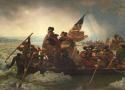
On Christmas morning, General Washington issued orders that the Continental Army was going across that river to kick some Hessian butts. He ordered rations cooked for three days, fresh flints to be put in every musket, and he also ordered that even the musicians and officers were to arm themselves, not with the usual swords and pistols, but with muskets. The Continental Army was betting everything. Bear in mind that in 1776, most of these men couldn't even swim; further, when this happened, the North American continent was in the throes of the Little Ice Age.
General Washington crossed with the first wave. He was leading his men, as a good commander should. By daybreak, the crossing was complete. //
When it was all over, the Hessians had suffered 22 killed, including the commander, Colonel Johann Rall, along with 83 wounded and almost 900 captured. The Americans suffered two killed and five wounded. By noon on the 26th, Washington's forces, with the Hessian prisoners, had crossed safely back across the Delaware into Pennsylvania.
Historian David Hackett Fischer later wrote of this event:
Until Washington crossed the Delaware, the triumph of the old order seemed inevitable. Thereafter, things would never be the same again.
Unlike the battle of Midway, the attack on Trenton wasn't the turning point - but it was a turning point. After Trenton, after that nighttime crossing of an icy river, in the depths of one of the coldest winters in written history, American determination and capability were never again in doubt. General Washington had established himself as a dangerous foe to the British, ... //
We're Americans. If you mess with us, we will cross a frozen river at night to kill you in your sleep. On Christmas.
Despite our march toward electronic money, an important message is still jingling in pockets across America, “E pluribus unum.” The Latin phrase stamped on coins and bills means “Out of many, one.” It was coined in 1776 for the original design of the Great Seal of the United States. The Founding Fathers wanted to underscore the 13 colonies that came together as a single nation. Since then, it has come to include many different people forming one nation.
It is a concept so important that in the Coinage Act of 1873, Congress required “E pluribus unum” be inscribed on every coin, along with “In God We Trust.” We should take these mottos seriously.
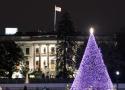
What does appear to be true is that in 1902, when young Archie was just eight years old, he did sneak a tree into the White House and kept it upstairs in a closet. He supposedly had White House staff members help him find lights and ornaments, and he added a gift for each of his family members, including the Roosevelts' pets. On Christmas morning, he finally shared the surprise with his family, who were delighted by it. The president even let his children continue the tradition after that.
Here's what Roosevelt wrote in a letter to a friend about that Christmas:
Yesterday Archie got among his presents a small rifle from me and a pair of riding boots from his mother. He won’t be able to use the rifle until next summer, but he has gone off very happy in the riding boots for a ride on the calico pony Algonquin, the one you rode the other day. Yesterday morning at a quarter of seven all the children were up and dressed and began to hammer at the door of their mother’s and my room, in which their six stockings, all bulging out with queer angles and rotundities, were hanging from the fireplace. So their mother and I got up, shut the window, lit the fire (taking down the stockings of course), put on our wrappers and prepared to admit the children.

Can you correctly answer these 6 questions on the origins and history of American Thanksgiving?
As our nation nears its 250th birthday, Ken Burns’ miniseries should give us a newfound appreciation for the sacrifices of our ancestors.
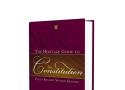
A landmark work of over 100 scholars, The Heritage Guide to the Constitution provides unique line-by-line analysis explaining every clause of America's founding charter and its contemporary meaning. Second edition completely revised.
- An unprecedented collaborative work of 114 leading scholars, with over 200 original essays
- Completely revised, nine years following the original landmark work
- Foreword by Edwin Meese III, 75th Attorney General of the United States
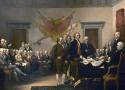
American Founders
Leaders at the Creation of the Republic
Download Link
Key Topics
The Founding Era
Why the American Founding Matters
Leading Founders
Their lives, ideas, public service, and selected writings
Primary Documents
Records of the Founding
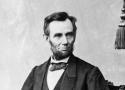
The fiery trial through which we pass, will light us down, in honor or dishonor, to the latest generation. We say we are for the Union. The world will not forget that we say this. We know how to save the Union. The world knows we do know how to save it. We — even we here — hold the power, and bear the responsibility. In giving freedom to the slave, we assure freedom to the free — honorable alike in what we give, and what we preserve. We shall nobly save, or meanly lose, the last best hope of earth. Other means may succeed; this could not fail. The way is plain, peaceful, generous, just — a way which, if followed, the world will forever applaud, and God must forever bless.
China accounts for 70% of global REE mining and 90% of the world’s REE processing/refining. These minerals are essential for weapons systems and electronics. Beijing’s export restrictions on 12 REEs could very well disrupt the global economy and pose a risk to the U.S.’s defense supply chains. This is unsustainable and dangerous—and it has gone on for far too long. Washington must decouple.
Beijing’s practice of weaponizing its REE dominance is straight from the CCP’s unrestricted warfare playbook, a concept first outlined in 1999—combining elements of resource warfare, economic warfare, and lawfare (the CCP’s uses laws and regulations to further its national interests, when and where it sees fit).
China’s announcement to impose export restrictions on resources that it has monopolized aligns with its ongoing demands over recent months, including the demand that the U.S. change its official language regarding Taiwan independence. //
Without a state that is capable of protecting its citizens from foreign and domestic threats, its foremost responsibility, as well as ensuring economic independence, economic prosperity is not possible. National and economic security are essential building blocks.
China’s tightening of export controls should serve as a reminder of the need to decouple. //
But tariffs alone will not break China’s stranglehold on minerals. Achieving this goal will require sustained government intervention—although unfavorable to us small government proponents, it is the best path forward during such a national emergency—and a rollback of environmental and licensing regulations that CCP-backed environmental groups have been fighting for (green warfare). It was the Chinese state’s aggressive subsidization and regulation of its REE industry—coupled with destructive globalist policies—that made this dominance possible.
A new portrait of the founding father challenges the long-held perception of Thomas Jefferson as a benevolent slaveholder. //
With five simple words in the Declaration of Independence—“all men are created equal”—Thomas Jefferson undid Aristotle’s ancient formula, which had governed human affairs until 1776: “From the hour of their birth, some men are marked out for subjection, others for rule.” In his original draft of the Declaration, in soaring, damning, fiery prose, Jefferson denounced the slave trade as an “execrable commerce ...this assemblage of horrors,” a “cruel war against human nature itself, violating its most sacred rights of life & liberties.” As historian John Chester Miller put it, “The inclusion of Jefferson’s strictures on slavery and the slave trade would have committed the United States to the abolition of slavery.”
That was the way it was interpreted by some of those who read it at the time as well. Massachusetts freed its slaves on the strength of the Declaration of Independence, weaving Jefferson’s language into the state constitution of 1780. The meaning of “all men” sounded equally clear, and so disturbing to the authors of the constitutions of six Southern states that they emended Jefferson’s wording. “All freemen,” they wrote in their founding documents, “are equal.” The authors of those state constitutions knew what Jefferson meant, and could not accept it. The Continental Congress ultimately struck the passage because South Carolina and Georgia, crying out for more slaves, would not abide shutting down the market. //
But in the 1790s, Davis continues, “the most remarkable thing about Jefferson’s stand on slavery is his immense silence.” And later, Davis finds, Jefferson’s emancipation efforts “virtually ceased.”
Somewhere in a short span of years during the 1780s and into the early 1790s, a transformation came over Jefferson.

Pride among Democrats tumbles, while independents also hit new low, more than offsetting increase among Republicans //
A record-low 58% of U.S. adults say they are “extremely” (41%) or “very” (17%) proud to be an American, down nine percentage points from last year and five points below the prior low from 2020. The 41% who are “extremely proud” is not statistically different from prior lows of 38% in 2022 and 39% in 2023, indicating most of the change this year is attributable to a decline in the percentage who are “very proud.” //
In January 2001, when Gallup first asked Americans how proud they were, 87% said they were extremely or very proud. After the 9/11 terrorist attacks, the figure increased to 90%, and it held at that level or higher between 2002 and 2004.
The percentage who were extremely or very proud dropped to 83% in 2005, but it did not vary significantly from that mark for the next 11 years. In 2017, a new low of 75% said they were proud, and national pride has deteriorated further since then.

Townhall.com @townhallcom
·
LOL — @SpeakerJohnson is OVER Jeffries' crap.
"Ronald Reagan said one time, 'No speech should be longer than 20 minutes.' Unlike the Democrat leader, I'm gonna honor my colleagues time and be a little more brief than that." 😂
0:20 / 0:20
1:55 PM · Jul 3, 2025. //
"My friends and colleagues, we are so blessed, we should not take it for granted. We live in the most free, the most successful, the most powerful, the most benevolent nation that has ever been on the face of the Earth. And there's a reason for that — the reason that we are the greatest nation is because we were built on the ultimate foundation. And the bold Declaration that my friend Hakeem Jeffries articulated earlier is true. We unite under that. The bold Declaration that we do hold these truths to be self-evident. What is a self-evident truth? It's something that's obvious. 'We hold these truths to be self-evident, that all men are created equal' — it does not say 'born equal,' it says 'created equal.' And...it is our creator that gives us our rights.
"See? The powerful thing about that is we're the first nation in the history of the world that acknowledged that our rights do not derive from government — they come from God himself. You see those words up there — that motto — it says 'In God We Trust,' right above the Speaker's rostrum. You know, a previous Congress put that there in the early sixties....Congress voted to put that there as a rebuke to the Soviets' worldview at the height of the Cold War. Why? Because communism, socialism, find their root in Marxism, and Marxism begins with the belief that there is no God. It's wrong."
"This Congress made a stand those many years ago, and we should do it again — we're different, we're distinct, we're exceptional, because we acknowledge that right there, our motto. It doesn't say 'In Government We Trust,' it says 'In God We Trust.' And we better remember that. He has blessed us with this grand experiment in self-governance now for almost two-and-a-half centuries, and by God's grace, we are working hard, and we are delivering on our promise to Make America Great Again.

If you haven't ventured over to the America 250 link on Whitehouse.gov, this Independence weekend is the perfect time. In partnership with Prager U, the White House has launched the "Founders Museum," with videos that feature AI representations of the founders and revolutionaries of our republic. With the representation of each biography and their contributions to the founding of our nation, the AI animations put forth a challenge to the viewer on how one should carry forward liberty and what was fought and paid for through their sacrifice.
https://www.whitehouse.gov/america250/founders-museum/ //
The videos can be viewed individually, in their respective series (Founding Fathers, Ladies of the Revolution, Major Events, and Declaration of Independence Signers), or as a whole unit. The section also includes a learning option with downloadable biographies, portraits, and documents that allow one to create their own "Founders Museum."
It has long been clear that the leftist activists who succeeded in getting “Juneteenth” added as a federal holiday meant to strip Independence Day of some of its moral and historical significance. The timing of Juneteenth, only a fortnight and change before the Fourth of July, is intended to usurp some of the Fourth’s glory. At the same time, the theme of the new holiday is designed to suggest that slavery, rather than liberty, is the defining feature of our founding. It’s an attempt to make 1776 vie with 1619, with the abolition of slavery being portrayed as our real moment of independence, in place of the moment when we actually proclaimed our independence and declared that “all men are created equal.” //
Per the Office of Personnel Management, the official name of the holiday to be observed on June 19 is “Juneteenth National Independence Day.” The official name of the holiday to follow 15 days later is “Independence Day.” It could hardly be clearer that Juneteenth was intended to compete with, and partially marginalize, the Fourth of July.
America does not need, should not have, and does not legitimately have, two Independence Days. Designating Juneteenth as “National Independence Day” intrudes upon our actual Independence Day. It suggests that Americans’ freedom doesn’t really trace to the Declaration of Independence but rather to the Emancipation Proclamation — or, more exactly, to awareness of that proclamation (more than two years after it was issued). It also suggests that our actual Independence Day doesn’t apply to all Americans. //
PBS writes, “Juneteenth commemorates when the last enslaved African Americans learned they were free.” This, however, is false. After Juneteenth, which marks the moment when federal troops arrived in Galveston, Texas in June 1865 and announced that all slaves in Texas were free, people were still held in slavery in Delaware and Kentucky, border states unaffected by the Emancipation Proclamation. //
Only Congress and the states, through the passage of a constitutional amendment, had the power to end slavery on a national basis.
This fact, and the fact that slavery remained in existence in Delaware and Kentucky after Juneteenth, likely would have been raised in the Senate had it bothered to engage in a genuine debate over whether Juneteenth should be a federal holiday. Instead, that body, which once prided itself on its vigorous deliberations, passed the Juneteenth bill under a unanimous consent agreement in the wake of the George Floyd riots, an act of true irresponsibility and political cowardice.
Since Juneteenth marked the end of slavery in Texas, rather than the end of slavery in the U.S., it a much more sensible holiday for Texas than for the U.S. as a whole.
On a national basis, a date truly worth commemorating would be December 6, the day on which the 13th Amendment was ratified, marking our constitutional triumph over an inherited evil that clashed with our founding principles. On that day in 1865, Americans successfully amended their Constitution to read, “Neither slavery nor involuntary servitude … shall exist within the United States, or any place subject to their jurisdiction.” That is a day, and those are words, worth celebrating.
Congress should make December 6 a federal holiday to celebrate America’s abolition of slavery, while eliminating Juneteenth as a federal holiday and thereby confirming that we have but one Independence Day.
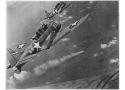
In one day, Japan had lost four fleet carriers, a heavy cruiser, and more than 300 front-line naval aircraft. Three of those carriers were lost in the space of a few moments, on the morning of June 4th. The Americans lost the Yorktown, a destroyer, and 150 aircraft. //
I've left a lot of detail out of this account. Explaining everything that happened in the days around this battle would fill a book. But it was the sinking of the Japanese carriers that turned that tide; that was the decisive moment of the war in the Pacific. The war went on for three more years, ships and men were lost, battles were fought and won, and while America suffered some setbacks, after Midway, the outcome was never truly in doubt. The Battle of Midway was the turning point. //
The famous American film director John Ford was on Midway when it was attacked on June 3rd; you can see his account of that battle here. https://www.youtube.com/watch?v=Jr4YgpKU8ak. //
Eccentric
2 hours ago
The loses for the Japanese were not just the carriers and planes.
They also lost the majority of their experienced naval pilots. The US retained theirs.
As US war production ramped up and older obsolete planes were replaced by newer and better ones, the Japanese were unable to compete.
Atticus62 Eccentric
2 hours ago edited
A massive chunk of the Japanese pilots who bombed Pearl Harbor were lost at Midway. The Japanese went no further in their invasion/acquisition strategy after Midway. Everything started to contract for the Japanese after Midway.
Small, little known story that also affected the Pacific War from that campaign. A Japanese pilot landed his Zero on the ground intact and died quickly during the Alaska invasion portion of the the Midway campaign. The US Army recovered that Zero intact in Alaska and kept the discovery top secret.
The technology and plane were analyzed by the US military and the plane flown by many US pilots and they learned how to quickly counter the Zero's strengths. The intelligence value from that Zero was immeasurable. The Zero soon became a sitting duck in dogfights with US aircraft. That was also a result of the Midway campaign that the Japanese never recovered from. It's just not publicized as much because it took place in Alaska. //
Atticus62
2 hours ago edited
Posted this on PJ, but its important to pass along. If people are interested in reading more about the Midway campaign, I highly recommend the award winning 2005 book Shattered Sword: The Untold Story of the Battle of Midway. It is written by Jonathan Parshall & Anthony Tully. It is a 700 page, extremely well written book that gives one a thorough account of the battle and its ramifications.

North Korea is infiltrating the West digitally. We must respond with vigilance, not wishful thinking. //
Pro tip for companies: ask prospective employees if they think Kim Jong-un is fat. Seriously. Multiple companies have caught North Korean operatives this way. They won’t criticize the regime—because they don’t want to die. And they’ll walk away from the job if you ask.
Lastly, a moment of reflection.
Harrison Ruffin Tyler, grandson of 10th U.S. President John Tyler, has passed away at age 96.
Yes, you heard that right: the grandson of a man born in 1790 lived into the third decade of the 21st century. That’s not just trivia—it’s a powerful reminder of how young our republic truly is.
John Tyler served before the Civil War—before Lincoln. And now his grandson, a man who lived through the Great Depression, WWII, the Cold War, the Space Race, and the internet age—is gone.
In a culture obsessed with the now, we forget how close the past really is. We are not far removed from the Founders—we’re their grandchildren. Literally.
Harrison Tyler preserved Sherwood Forest, his family’s historic estate. He protected Virginia’s architectural legacy. But perhaps his greatest legacy was just living—living proof that America’s past is not distant. Our institutions, our Congress, our civic inheritance—they’re real. They’re tangible. And they’re fragile.
His passing reminds us to cherish what we’ve inherited. To study it. To defend it. And to pass it on.
The line between the Founders’ America and our own isn’t theoretical—it’s family.