
Secretary Sean Duffy
@SecDuffy
·
Follow
Game. Set. Match 🎮 @USDOT @FAANews
Our campaign to recruit GAMERS to apply to become AIR TRAFFIC CONTROLLERS is RECORD BREAKING!
12 THOUSAND applications in 24 hours - the most in one day since the FAA was created 68 YEARS ago!
@PDoocy @SundayBriefFNC 📺⬇️
12:03 PM · Apr 19, 2026 //
"We polled a random sampling of our academy students in Oklahoma City for air traffic control. Of the 250 that we polled, only three of them were not gamers. And so we thought, well, listen, if there's a connection here, uh, they problem solve, they're spacially aware, they do multiple things at the same time, it's very reminiscent of what air traffic controllers do, and so we reached out to the community. Listen, we blew the socks off any prior record. We had 12,000 applications, in 24 hours, 11,000 of those were qualified, we've already sent 8,000 of them to go get their skills test. Again, looking to find the best and brightest, best qualified, to become an air traffic controller, I think this is a sign that looking at who we attract, who's great at the job, this made sense for us to reach out to the gaming community and the response has been remarkable." //
The video asks the gamers whether they’re “up for the challenge” of becoming an ATC but cautions that the job isn’t just a “game” — it’s a “career.
https://youtu.be/kyQ8ktDrQbc?si=Ed4wVPdqrfOaZfXU


After not being able to get in a word edgewise with ATC, without warning, the right engine quit.
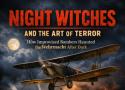
The Red Army needed pilots, aircraft, and pressure on the enemy—immediately. So they did something profoundly unromantic and brutally practical: they took civilians who could fly and turned them into combat airmen.
Many of the women who became the Night Witches had been flying before the war. Civilian aero clubs were common in the Soviet Union, and flight was encouraged as a national skill. These weren’t cosplayers handed wings for morale photos. They were trained aviators, suddenly handed bombs instead of mailbags. Under the leadership of Marina Raskova, they were organized, uniformed, and sent to the front.
Their aircraft was the Polikarpov Po-2, which deserves special mention because it may be the least intimidating combat aircraft ever to terrify a modern army. Built of wood and fabric, slow enough to be outrun by some farm equipment, and equipped with little more than a compass and stubbornness, the Po-2 was not supposed to survive combat. That turned out to be its greatest strength.
The mission assigned to the regiment was night harassment bombing. This was not about destruction; it was about erosion. The goal was to deny German forces something every soldier needs more than ammunition: sleep. Night after night, the Po-2s would appear over German positions, often flying just above treetop level. At the last moment, the pilots would cut their engines and glide silently, releasing small bombs before disappearing back into the darkness.
That silence mattered. //
Psychologically, this was devastating. Armies can endure danger. They struggle against uncertainty. The Night Witches turned the night itself into an enemy. They forced the Germans to spend time, fuel, ammunition, and attention on an aircraft that cost almost nothing to operate. A single crew might fly multiple sorties in a single night, returning to refuel and rearm in primitive fields, then heading back out again.
The numbers tell the story. By the end of the war, the regiment had flown roughly 23,000 sorties. That is not a stunt. That is persistence weaponized. Each individual mission might have been minor, but together they created a constant, grinding pressure on German rear areas. Officers complained. Troops cursed. Morale eroded. The nickname “Night Witches” was not admiration—it was fear mixed with exhaustion.
This is the part modern audiences often miss. The Night Witches were not trying to win battles in the cinematic sense. They were trying to make the enemy miserable, distracted, and tired at scale. It was warfare by irritation, perfected through repetition. And it worked precisely because it was unconventional.
Desperate times reward asymmetric thinking. The Soviets didn’t wait to build perfect aircraft or ideal forces. They repurposed what existed. Civilian pilots became military crews. Trainers became bombers. Night became a weapon. The Night Witches are a textbook example of how nations under existential threat blur the line between civilian and soldier—not out of ideology, but necessity.
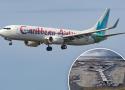
A situation like this is extremely rare, with 74 infants born on 73 commercial flights, of whom 71 survived delivery, between 1929 and 2018, according to a March 2020 study by the National Library of Medicine.
However, the birth brings up some legal questions regarding the baby’s citizenship status.
“The five experiments all succeeded, but none of them revolutionized our understanding of the corona,” he says in a disarmingly honest way about the flight’s immediate impact. “They all played their role in the normal progression of scientific knowledge, but there were no extraordinary results, it has to be said.” //
Léna doubts their incredible flight will ever be repeated. Today, space-based satellites that can watch the sun 24/7 and create permanent artificial eclipses have revolutionized our understanding of the nearest star to Earth—although observing eclipses on Earth is still useful for astronomy. //
“At the time, our knowledge of the solar corona was very very limited,” explains Léna. “Today we have far less need for eclipse flights from a scientific point of view because we can put missions like SOHO in space, which is doing essentially what we were aboard Concorde. Our observation methods have changed a lot, so I doubt if today we’d redo a mission like that.”
It’s often said that scientific inquiry leads to innovation, but the Concorde experiment is a reminder that sometimes innovation offers wild, unexpected dividends to science. Today, the exact plane that chased the eclipse in 1973 sits as a permanent exhibit at Le Bourget Air and Space Museum, complete with the special roof portholes and the eclipse mission logo on its fuselage. Léna, John Beckman and other engineers and astronomers were present for the 2013 unveiling, along with the late pilot André Turcat
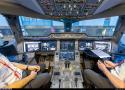
- Squawk 7601 was introduced under Europe’s SERA rules in May 2025 as a new special-purpose transponder code.
- It signals IFR radio failure with continuation in VMC to the nearest suitable airport.
- Not all European countries have adopted 7601.
Chances are you haven’t heard of it. But as of last summer, Europe officially has introduced a new special purpose squawk code. 7601 was introduced to allegedly remove a layer of uncertainty when communications have broken down. But not all European countries agree on its usefulness. //
A trio of codes carry a special, universal meaning and are recognized globally:
7700 — General emergency
7600 — Radio communication failure
7500 — Unlawful interference
Aircraft broadcasting these codes will be flagged on Flightradar24, usually drawing a lot of attention. You can learn the ins and outs of these in our blog post about squawk codes. As of May 2025, a fourth special code has joined the list in European airspace: 7601.
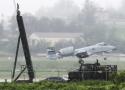
The A-10 Warthog never tried to impress anyone with looks. Good thing, because it couldn't; the plane looks as though it was assembled in a scrapyard during a bar fight.
And when things get serious, it's still one of the first aircraft anybody wants covering them overhead. Operation Epic Fury just drove the point home again, this time over the Red Sea. //
Built by Fairchild Republic, the A-10 exists for one purpose: to kill enemy threats close to American forces.
That mission hasn't changed since the 1970s, and no amount of PowerPoint presentation has replaced it. The aircraft was designed around the GAU-8 Avenger cannon, a 30 mm monster that roars like a lion and leaves fire in its wake like a dragon. Everything else on the plane exists to support that weapon and keep the pilot alive long enough to use it. //
The Warthog didn't just show up; it stayed, loitered, and delivered precise firepower where it mattered, when it mattered. Fast jets hit and leave, while the Warthog sticks around to make sure the job's finished. //
The operation also highlights a critical limitation in the current U.S. force structure. While fifth generation aircraft excel in penetrating defended airspace and striking fixed high value targets, they are not optimized for sustained engagement of numerous low value but operationally decisive targets such as fast attack craft or mobile launch teams. Epic Fury exposes this gap under real combat conditions and reinforces the need for platforms capable of persistent close engagement.
The Air Force keeps trying to retire it in favor of fifth-generation fighters. It sounds like a modern and efficient argument, but in reality, it keeps running into the same problem. The A-10 does a job no other aircraft on the planet handles as well as the Warthog does. //
AnonymousinIL
13 hours ago
It’s not pretty. It’s not ugly. It’s pretty ugly but very well suited for ground support. Fast movers say “my plane has a gun.” Hog drivers say “my gun has a plane.” //
anon-xzx7
13 hours ago
It would be a better plan to identify the generals who want to retire this magnificent aircraft and retire the generals. //
Dawgly One
14 hours ago
The Air Force wants to retire it SOOOOOO bad. You know who doesn’t want it retired? The Army and the Marines. The Army has begged the Air Force to give it to them, but they won’t, because it has jet engines and carries weapons. Clowns. Just give it up, and go do your fast mover stuff. //
David Lang
13 hours ago
Everyone over-estimates how many targets a fighter can take out, a F15 has ~900 rounds, a F 15, F18 has ~500 rounds, a F-25 has 180 rounds, an A-10 has 1150 rounds (and much more powerful rounds than any of the others). The Apache helicopter has a similar number of rounds as the A-10 (same caliber but less powerful)
The A-10 also has more weapons pylons to hang bombs/rockets/etc off of (and flying slower, it can use cheaper rockets rather than guided missiles and smart bombs)
so a single A-10 can take out more targets, armored or not (and many ships would count as armored, not because they specifically have armor, but just the amount of steel needed to hold the ship together in the face of an angry sea is what land vehicles would call armored)
The Air Force has been trying to get rid of them for decades, claiming that the new jets can do the job, but war after war the A-10s show they do a better job, and for less money.
Nowadays they are exclusively flown by National Guard units, so when you hear about them in a war zone, remember those pilots are taking time away from their job to do this. Their jobs are protected by law, but that doesn't get work projects done or earn promotions.
The Flying Bulls GmbH (Red Bull) | OE-LDM | Douglas DC-6B | Callsign: OELDM | Built: 1958 | Flight: Zürich-Salzburg
a unexpected arrival , due to some engine problem , subsequent starting attempts to get airborne , and ultimately did some test flights ( Part 2 ) a wonderful memory year 2000 EXTENDED footage , the sound conditions were excellent first flight of this iconic design 1946
dismal weather but good sound ( haze and rain ! ) rare footage of the last Lockheed Tristar departure from Ostend , some 24 years ago 30/06/1999 CKS N104CK American International Airways CKS 358 to Gander 9.24AM
Non hushkitted DC-8 and rare hushkitted Boeing 707 Sounds still great ! Ostend Airport 2001
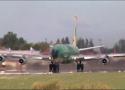
impressive speed , fast , noisy , rolling take off , in a hurry !! NOISY !! TMA 707 OD-AGO departure , runway 26 Exhilarating show !! Quality Airport Ostend Year 2001 ( June )
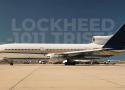
The Lockheed L-1011 competed primarily with the DC-10. Whereas McDonnell Douglas had produced two successful jet airliners and built an extensive customer base, this was Lockheed's first jet-powered airliner. However, while McDonnell Douglas was able to get its aircraft out the door in a swift fashion, Lockheed faced several delays with its program, primarily centered around issues with the Rolls-Royce RB211.
Both aircraft were largely developed out of a request from American Airlines for a twin-engine widebody smaller than the Boeing 747. Both companies developed trijets due to restrictions on twin-engine operations over water, and Lockheed put extra effort into the Tristar's technology. It featured an advanced autopilot, an autoland system, and an automated emergency descent function. This was undoubtedly the most advanced subsonic airliner of its time. //
Charles
I think when the 767 came on the scene, that's what really killed the tristar. //
TJCrewChief
I had a friend that was a 747 and L1011 pilot for TWA. He just loved the Lockheed L1011.
He extolled the fly ability and called it a " Pilots Airplane."
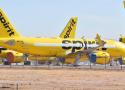
Announced in a press release submitted to Simple Flying, EirTrade Aviation has partnered with RESIDCO to acquire two Airbus A320neo aircraft for teardown, marking the youngest airframes of the type ever dismantled. The aircraft were previously operated by Spirit Airlines and are just four and three and a half years old. Disassembly is taking place in Goodyear, Arizona, with parts destined for EirTrade’s Dallas hub. The transaction is designed to bolster the supply of next-generation used serviceable material (USM) amid growing global demand. //
Early-life teardowns, once uncommon, are now emerging as a strategic response to supply-chain constraints and escalating maintenance costs. //
There are currently more than 4,400 Airbus A320neo aircraft in commercial service worldwide, with a further 7,200 on order. This excludes the approximately 6,500 A320ceo aircraft still operating, many of which share common components. Given the size of the installed base, the A320 platform is expected to remain the largest segment of the global commercial fleet for decades. As a result, demand for USM is projected to increase steadily.
Early-life teardowns provide access to components that align with current regulatory and operational standards, offering operators an alternative to new-part procurement.
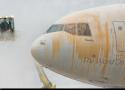
As winter arrives, airports dust off their deicing equipment and ready for another season of cold, snow, and ice. While a car may be safely operated partially covered in ice or snow, aircraft must be completely free of contamination to assure a safe flight. Deicing can sometimes lead to flight delays, but the alternative is far worse. We spoke with Andrew Poure, a former aircraft deicer, to learn more about what goes in to deicing a plane and how the orange or green liquid being sprayed on the plane actually works.
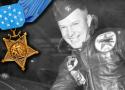
Ordered not to discuss the battle with anyone, Williams remained silent for decades. Only after the U.S. government contacted him years later to let him know that the mission had been declassified did he finally tell someone about it for the first time: His wife.
Williams was later awarded the Silver Star for his bravery, which was upgraded to the Navy Cross in 2023.
Speaking to Task & Purpose for a story in June, Williams said he was honored by efforts to have his award upgraded to the Medal of Honor. When asked how he was able to shoot down four Soviet MiGs during the 1952 dogfight, he replied, “I have a God that did it for me.”
The news that Williams would receive the Medal of Honor came shortly after the parents of a soldier killed while shielding a Polish officer from a suicide bomber in Afghanistan would also be recognized with the award.
Staff Sgt. Michael Ollis, who was killed on Aug. 28, 2013, will be awarded the Medal of Honor posthumously, a White House official confirmed.
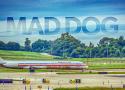
for many years, American Airlines had actually spurned the Boeing 737, choosing instead to build its entire hub-and-spoke operation around the McDonnell Douglas MD-80. For the better part of three decades, their glistening, polished metal bodies with the distinctive T-tails were the predominant aircraft at the airline's hubs across the country. But why did American choose the MD-80 over the 737, and what caused it to eventually return to Boeing? //
American's flight operations director, David Clark, commented on the MD-80 upon its retirement.
"It is very old school, there aren't any modern computer screens affixed to the controls. The steering columns are connected to a cable that goes directly to the flight controls. You can feel it give and pull throughout each flight, and it is a totally thrilling experience that pilots trained on newer aircraft may never experience."
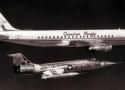
The test flight was planned by Douglas test pilot William Magruder and was set to take off from Edwards Air Force Base (AFB). As flight test engineer Richard Edwards, told to Air & Space Magazine, the idea was to “get it out there, show the airplane can survive this and not fall apart.” The DC-8, which at the time was competing with the Boeing 707, had been used by commercial carriers for about three years. Even though the DC-8 wasn’t designed to go supersonic, the bragging rights of being the first to do so were worth making the attempt.
In order to reach Mach 1, the jet had to be in a dive. According to Mentalfloss.com, this meant taking it up to 52,000 feet, which was also a record for altitude.
As Edwards tells Air & Space Magazine: “We took it up to 10 miles up…and put it in a half-a-G pushover. Bill maintained about 50 pounds of push. He didn’t trim it for the dive so that it would want to pull out by itself. In the dive, at about 45,000 feet, it went to Mach 1.01 for maybe 16 seconds, then he recovered. But the recovery was a little scary.”
The stabilizer in fact was overloaded and the plane stalled when Magruder tried to pull it back.
“What he did, because he was smart, is something that no other pilot would do,” explains Edwards. “He pushed over into the dive more, which relieved the load on the stabilizer. He was able to run the [stabilizer] motor…and he recovered at about 35,000 feet.” The crew successfully turned a mass-produced airliner into the world’s supersonic commuter jet. (Right by their side the entire time? Chuck Yeager, the first person to ever go supersonic in 1947. He escorted the DC-8 during its test in an F-104.)
“That’s an unofficial supersonic record, payload record, and of course an altitude record for a commercial transport,” Edwards points out.
For anyone who has actually examined the evidence, MH370 is not especially mysterious. Captain Zaharie Ahmad Shah hijacked his own aircraft, incapacitated everyone on board by depressurizing the cabin, and then deliberately flew the Boeing 777 into the southern Indian Ocean. The evidence supporting this conclusion is not circumstantial or speculative. It is overwhelming, methodical, and points unambiguously to that single explanation.