Cafeblue32
5 hours ago edited
They'll blink because China needs to sell their cheap crap in order to make money to secure more IMF loans to keep building real estate no one is buying. Their entire economy is a Ponzi scheme of investors. While our economy consists of about 14% construction, China is over a third at about 34%. They currently have more vacant housing in China than they have people. But no one can afford to buy them anyway. China sells cheap junk, shows income, takes out huge loans, skims from top to bottom, builds shoddy construction with what's left and the whole thing repeats.
China's collapse in inevitable because of this. No one globally wants to buy their weapons because they're already outdated or cheaply made and substandard to US or European models. They really don't produce enough food to export and they consume more oil than they produce. It would do us well to become as independent from China as we possible can get, because as goes China, so goes most of the economies of the dependent west.
How the west ever allowed itself to go from seeing commie threats under every rock in the 1960s to going into business with them and becoming dependent them just ten years later is something scientists should be studying as a wonder in human psychology.
anon-b24t Cafeblue32
4 hours ago
The answer is: Corrupt politicians and excessively greedy corporatists.


anon-bjec
2 hours ago
Let those peasants in the United States wail
This is how they see us, and why wouldn't they after the embarrassing displays the left has made in recent years. They own(ed) Xiden. Then Yellin made trips over there bowing and scraping submissively before even the lowest level party members. Lots of examples.
President Trump, they will find, is far different. //
SSN674 Donner’s Party
39 minutes ago
For the Chinese government to dump large amounts of U.S. Treasury bonds, they would likely have to sell those bonds in exchange for U.S. dollars, which they would then convert into Chinese yuan. However, this process increases the supply of dollars and raises demand for the yuan in the foreign exchange market, which puts upward pressure on the value of the yuan relative to the dollar. A stronger yuan makes Chinese exports more expensive and less competitive globally, which is the opposite of what China typically wants to achieve. To counteract this effect and maintain the competitiveness of its export-driven economy, China would have to take steps to devalue its own currency—such as loosening monetary policy or intervening directly in currency markets. So paradoxically, by trying to offload U.S. bonds, China risks hurting its own economy by pushing up the value of its currency unless it takes simultaneous measures to weaken it again.
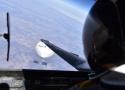
The report you're about to read would normally be unbelievable.
A U.S. president's administration holding private talks with Communist Chinese officials about the administration's concerns over the potential impact on this country's relationship with China if the origin of a Chinese spy balloon and its intent were disclosed to the American public — all of which occurred before the public was notified about the spy balloon. //
U.S. officials identified the spy balloon infiltrating U.S. airspace on Jan. 28, 2023, and an Air Force fighter jet shot down the Chinese spy balloon off the coast of South Carolina Feb. 4, 2023, two days after the Pentagon issued a statement on the matter.
Biden officials held discussions with Beijing Feb. 1, 2023, about the balloon, and discussed the impact disclosing the balloon to the public could have on the relationship with China, internal State Department documents show, two Trump administration officials told Fox News Digital. //
Cowboysurfpunk
5 hours ago
I don't think they were going to tell us,.. until that woman in Montana took a video of it and put on the internet...then they had to...

“104 percent tariffs in China are not enough. I’m advocating 400 percent,” he said.
“I do business in China. They don’t play by the rules,” continued O’Leary, who is also the chairman of O’Shares Investment and private-equity firm O’Leary Ventures. “They’ve been in the World Trade Organization for decades. They have never abided by any of the rules they agreed to when they came in for decades. They cheat, they steal, they steal [intellectual property]. I can’t litigate in their courts. They take product technology, they steal it, they manufacture it and sell it back here,” he said.
O'Leary explained this wasn't about tariffs anymore but about how no one has taken on China for decades while they behaved badly — no one, until Trump.
"As someone who actually does business there, I've had enough," O'Leary said, saying he spoke for "millions of Americans." He said finally, with Trump there was an administration who was saying "enough."
O'Leary said we had all the cards and Xi Jinping, the Chinese leader should be on a plane here to work it out because "Xi can only stay the Supreme Leader if people are employed." He didn't hold back, "It's time to squeeze Chinese heads into the wall."
China may end up getting there themselves. The latest from China is that they are going to raise their 34 percent tariffs to 84 percent on Thursday. But at the same time, they were calling for "dialogue" with the U.S.
FischerKing
@FischerKing64
Remember that free trade with China, allowing it into the World Trade Organization, was in pursuit of a foreign policy agenda. The thinking was China would move toward democracy, become a stakeholder in the international order.
That didn’t happen. It was a failed experiment. So all those jobs lost with the goal of liberalizing China were for nought. So if we’re still dealing with an authoritarian regime engaged in a mercantilist policy, complete with currency manipulation - it’s time for the USA to try something else.
2:52 PM · Apr 7, 2025
·
James Lindsay, anti-Communist
@ConceptualJames
VIDEO: Historian Frank Dikötter reveals the secret of how the CCP took advantage of Bill Clinton to get into the WTO and force the West to destroy our manufacturing capabilities and hand it over to the CCP and its People's Republic. Absolutely mind-blowing video.
2:29 PM · Apr 5, 2025
·
Helen Andrews
Feb 20, 2024
12:04 AM
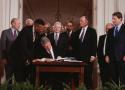
The year 1994 marked the beginning of the era of globalization. For a short time after the end of the Cold War, it was unclear what would be the driving theme of the next period in history. Then it emerged: borderlessness. The theme of the new era would be the free movement of goods, people, and capital. In a few short months on either side of January 1, 1994, the European Union was formed; the Marrakesh agreement was signed, creating the World Trade Organization; the Channel Tunnel opened; and the North American Free Trade Agreement came into effect.
Hubris was present from the beginning. During the negotiations over NAFTA, union leader Richard Trumka, then of the United Mine Workers of America, later president of the AFL-CIO, asked a Clinton administration official whether he was worried about the effect of free trade on American blue-collar workers. The official said yes, but eventually “wages would start to go up again, and things would even out around the world.” Trumka asked him how long this would take. The official answered, “About three to five generations.”
We are now one generation into this process, thirty years from the start of NAFTA, so we are at a good point to ask: Are things evening out? Is the new equilibrium we were promised any closer, and it is better than the one we had before? //
On the 30th anniversary of NAFTA, its opponents stand vindicated and its defenders are chastened—or at least they should be. In many corners of the left and right, free trade dogma is as strong today as it was the day NAFTA was signed. It is therefore worth looking back to see what exactly went wrong with NAFTA, what made people blind to its flaws, and why its costs proved greater than anyone predicted at the time. //
The U.S. lost 5 million manufacturing jobs between 1995 and 2015. Even in advanced technology products, we now have a massive trade deficit. Globalization has not made our manufacturing sector leaner and meaner. Between 2011 and 2022, manufacturing productivity in the U.S. actually declined. To be clear, these dismal numbers are not mainly the fault of NAFTA. The number of jobs lost to Mexico was relatively small; the China shock dwarfs it. Yet NAFTA set off the chain of events that allowed globalization to run free the way it did. It gave the free traders a big win and reshaped the coalitions to their advantage.
There have also been non-economic costs to NAFTA that don’t show up in economic statistics. For one, NAFTA made Mexico fat. The same cheap corn that pushed the farmers off their land flooded grocery stores with processed food and high fructose corn syrup. Coke became cheaper than water. The result was that Mexico’s obesity rate almost doubled; 17 percent of adults are now diabetic, compared to 9 percent in 1990. In 2016, diabetes was Mexico’s leading cause of death. If you believe the online nutrition gurus, NAFTA exported the same obesogenic diet patterns based on massive corn subsidies that have caused Americans to get fatter in the last half-century, far more than our rates of calorie consumption and physical activity can explain. It also gave an economic boost to the same corn producers fueling that dynamic at home.
NAFTA also made Mexico liberal. Today Mexico has gay marriage, gay adoption, and abortion, all things that would have been unthinkable when the agreement was signed. //
The lawsuit that led to the 2023 Mexican supreme court decision decriminalizing abortion was brought by a progressive NGO funded by the MacArthur Foundation, the Hewlett Foundation, and the Tides Foundation. //
Pork prices surged after the pandemic because, as journalist Rana Foroohar explains in her book Homecoming, “the largest pork producer in the United States, Smithfield, is owned by a Chinese company that takes orders from the Chinese government, which understandably wanted to export to China what pork was available during a time of scarcity.”

anon-xnrk Laocoön of Troy
3 hours ago
China’s geopolitical strategy was always to create dependencies with other nations. It’s amazing we allowed it to get so far into a one sided game. Correct me if I’m wrong but an American company has to partner with a Chinese company then transfer technology to the Chinese one in order to set up shop there. The list of one sided nonsense goes on and on. Who loves Greenpeace more than China? EU and US decimate the industrial base while they build a coal plant a week. Can’t use a windmill to run a steel mill, sorry. Look at how people like McConnell voted pre and post WTO admission for China. Oh, and look at his family business. Chinese shipping!! And his father in law James Chao? Founder of Chinese shipping company Foremost, and also close friends and classmates with former president Jiang Zemin. This is just Mitch, any others make a nice living like this? Did this affect how this relationship between the world, US, and China evolved? Who knows? //
Guy Las Vegas anon-j5pd
3 hours ago
Since the tariff is on the wholesale price, a $10 item that costs Walmart $6 would see a $1.20 tariff. That makes the item $11.20 - just to clarify.

China has said it will not honor the judgment. “The so-called lawsuit has no basis in fact, law or international precedence,” Chinese embassy spokesman Liu Pengyu told The New York Times. “China does not and will not accept it. If China’s interests are harmed, we will firmly take reciprocal countermeasures according to international law.”
China was not represented at the trial, resulting in a default judgment.
It's unclear why China is buying farmland in the United States. Granted real estate can be a valuable part of an investment portfolio, but China has ample land of their own. Interestingly, China is far from the largest foreign owner of American agricultural land; that largest foreign owner, as of 2021, would be Canada, followed by the Netherlands, Italy, the United Kingdom, and Germany. China's ownership, also as of 2021, is about 383,935 acres. It's likely, though, that the Canadian and other interests represent ownership by large agricultural business concerns, whereas China's purchases are disturbing due to some of the lands' proximity to important U.S. military installations. For example: Chinese interests have purchased 300 acres of land near Grand Forks Air Force Base, which is home to a B-1 Lancer wing, along with other assets.

stickdude90
9 hours ago
Remind me again why we spend so much blood and treasure to protect these blowhards...
jri500 anon-fv7m
6 hours ago
Bill Clinton and his buddy, Bernard Schwartz (LORAL Space) GAVE China our ballistic missile gyroscope guidance technology. Just gave it to them because liberals couldn't stand the fact that the US was the world's lone super power at the time. China's missiles couldn't reach orbit. Clinton moved the gyro technology from Defense to the Commerce department, and put a CIA satellite on a Chinese rocket. And when that rocket crashed, the Chi Coms sifted the wreckage and reverse engineered our gyros. When Clinton took office, China had zero (0) nuclear missiles capable of hitting the US mainland. When he left office, they had 20. //
Dieter Schultz stickdude90
6 hours ago edited
Remind me again why we spend so much blood and treasure to protect these blowhards...
I think you might be looking at the US being forward deployed and allied with nations around the world... through the wrong lens.
Yes we're spending money stationing forces around the world and, yes, some... maybe a lot of these countries... don't appreciate or deserve our protection but... look at it from the point of view of avoided costs.
But, we can't understand avoided costs unless we consider what isolationism might really cost us in the bigger scheme of things.
We were, mostly, isolationists between 1910 and 1940... not spending money with alliances and forward deploying our forces. Because of that the bad guys in the world didn't believe we'd respond as they gobbled up other countries. What they did believe, and what Churchill said so elegantly in some of his writing, was that if the US allowed its natural allies to fall, the position that the US would be in, strategically, would be difficult in the extreme.
So we stayed out of the areas but, when we were finally forced to act the costs in treasure and lives of our youth was great... far, far greater than they would have been if the Germans and Japanese really believed we would fight to stop them.
Since the end of WWII we've made a lot of mistakes and many of those mistakes have cost us 10s of thousands of our youth and untold treasures but, even with Russia's aggressive moves in the world, we haven't had a repeat of the carnage, loss of life, and expenditures of the country's treasures.
But, we should ask ourselves, even if we've helped protect people that didn't seem to appreciate and value our sacrifice, if, like happened to us leading up to WWI and WWII, would we have likely gotten sucked into another one of the continent's or world's battles and cost ourselves 10 or 100 times the loss of carnage, loss of life, and expenditures of our treasure anyway?
I see the discussions about forward deploying our forces around the world much like the Chesterton's Fence and we should ask ourselves, why that fence was needed in the first place?
Many in this country just want to tear down that fence but, as Chesterton might see it: "If you don’t see the use of it, I certainly won’t let you clear it away. Go away and think. Then, when you can come back and tell me that you do see the use of it, I may allow you to destroy it.’”
Note that the spy balloon transited Alaska, flying just north of Joint Base Elmendorf-Richardson, possibly over Fort Wainwright in Fairbanks, then proceeded to fly over the missile silo complexes in the Dakotas and over several military bases in the central and southern United States before being shot down off the South Carolina coast. While a balloon is at the mercy of the winds, prevailing winds very conveniently will take such a balloon on this route if it is launched in the right place.
The inclusion of American technology not only demonstrates a considerable degree of planning and forethought, but it also shows that China is easily capable of obtaining superior American technology — and using it against us. This was a serious intelligence-gathering exercise by a country that is growing increasingly bellicose towards the United States — and our allies. //
Hank Reardon
7 hours ago
Quoting Professor Victor Davis Hanson from a recent opinion piece published in The Epoch TImes:
“(China’s) entire 20th-century ascendance was based on stealing U.S. technology, dumping its products on the U.S. market below the cost of production to capture market share, and forcing American corporations to relocate, offshore, and outsource—leaving our industrial hinterland a “rust belt.”
https://www.theepochtimes.com/opinion/are-trumps-tariffs-really-tariffs-5808723. //
bk
7 hours ago
By coincidence, I just read the old Buzz Patterson book Dereliction of Duty about what a disaster Clinton was for our country re China. This episode with the balloon seems reminiscent of how Clinton allowed his bog donors at Loral and Hughes to provide all sorts of satellite and nuclear technology to China. No doubt Clinton - oops I mean the charitable Clinton Global Foundation - made some big bundles of cash.
Hank Reardon bk
7 hours ago
If you want another reason to despise Slick and his abuse of our technology, read Never Mind We’ll Do It Ourselves. The book that details how Slick demanded a new method for finding UBL for his handoff to Al Gore in advance of election day, 2020. And once the nascent Predator program did just that, by September, 2020, Slick refused to take the shot.

At the heart of this issue is the de minimis provision, which originates from Section 321 of the Tariff Act of 1930. This provision was initially designed to prevent the government from incurring excessive costs and hassles for small imports made by individuals in a single day, as long as the fair retail value of those imports did not exceed $1. Over the years, Congress has raised this threshold multiple times, and it currently stands at $800, making it the most generous de minimis exemption in the world. In contrast, Canada’s de minimis exemption is capped at only $15. //
A congressional report revealed that between fiscal year 2018 and 2021, more than two-thirds of de minimis imports came from China (including mainland and Hong Kong). In 2023 de minimis imports comprised an astonishing 1 billion parcels valued at approximately $54.5 billion, with around $18 billion in shipments originating from China.
The Select Committee on the CCP estimated that two Chinese companies accounted for more than 30 percent of the daily de minimis shipments in the U.S. These companies are Shein, a fast fashion online retailer based in Singapore that sources most of its products from China, and Temu, a China-based e-commerce marketplace offering a wide range of items from cosmetics to knock-off iPods. These companies ship their merchandise directly to American consumers at extremely low prices, utilizing small shipments that are exempted under de minimis provisions.

When asked about topics such as the Tiananmen Square massacre, persecution of Uyghur Muslims, or Taiwan’s sovereignty, DeepSeek either dodges the question or parrots Beijing’s official rhetoric. This is not a bug—it’s a feature. Unlike Western AI models, which, for all their flaws, still allow for a broader range of discourse, DeepSeek operates within strict ideological parameters. It’s a stark reminder that AI is only as objective as the people—or governments—who control it. //
The question we must ask ourselves is simple: If AI can be programmed to push a state-sponsored narrative in China, what’s stopping corporations, activist organizations, or even Western governments from doing the same?
Don’t think American companies would stop at weighting their algorithms to ensure diversity. Over the past few years, we’ve seen a growing trend of corporations aligning themselves with Environmental, Social, and Governance (ESG) metrics. This framework prioritizes social justice causes and other politically charged issues, distorting how companies operate. Over the same period of time, many social media companies have taken aggressive steps to suppress content considered “misinformation.”. //
Without transparency and accountability, AI could become the most powerful propaganda tool in human history—capable of filtering search results, rewriting history, and nudging societies toward preordained conclusions. //
This moment demands vigilance. The public must recognize the power AI has over the flow of information and remain skeptical of models that show signs of ideological manipulation. Scrutiny should not be reserved only for AI developed in adversarial nations but also for models created by major tech companies in the United States and Europe. //
DeepSeek has provided a glimpse into a world where AI is used to enforce state-approved narratives. If we fail to confront this issue now, we may wake up in a future where AI doesn’t just provide answers—it decides which questions are even allowed to be asked.

The US Cybersecurity and Infrastructure Security Agency (CISA) is warning that Contec CMS8000 devices, a widely used healthcare patient monitoring device, include a backdoor that quietly sends patient data to a remote IP address and downloads and executes files on the device.
Contec is a China-based company that specializes in healthcare technology, offering a range of medical devices including patient monitoring systems, diagnostic equipment, and laboratory instruments.
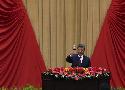
China is beset by many problems. Their economy is deeply flawed, plagued by a massive real-estate bubble and years of currency manipulation and central planning. Their population is about to drop off a demographic cliff. The one thing that all of the various ethnic groups in China seem to have in common is that they aren't having many babies. But, we must note, these are problems that the Western world suffers from as well; here in the United States, we are struggling under $36 trillion in debt, and our people aren't having many babies, either. //
China is our primary geopolitical rival. We, meaning the United States, must do business with them. We must conduct diplomacy with them. We must reassure our Western Pacific allies that we stand with them against any possible Chinese aggression. And, if it comes to that, we may well have to fight a war with China.
We may do all of these things. But the one thing we will probably never do is to understand them. And we have to deal with them accordingly - knowing that China will be what it is, and not what we would wish for it to be. //
Surfer Boy OrneryCoot
19 hours ago
The Chinese in Taiwan seem to have picked up democracy, freedom, and capitalism pretty well for the most part.
Not Mao Surfer Boy
18 hours ago
It is totally different from the mainland. Hong Kong used to be that way too until the CCP took over there. We can also say the same of North and South Korea.
oldgimpy&cranky Surfer Boy
14 hours ago
The Taiwanese are rooted in the KMT, not the CCP. Which explains why the CCP wants Taiwan (beyond the tech and money). The fact that Taiwan adopted Capitalism & Democracy - which started in the 80's - simply means they got tired of being poor commies ;-). //
Redleg
a day ago
Understanding China is easy. They believe that they are the biggest and most powerful country (other than the US) and that this entitles them to be a bully. Hence their predations in the South China Sea, their aggression against the Philippines, and the like. Their intention of being a bully makes them hostile to the US-led rules based order, because the purpose of that order is to restrain bullies.
Protectionism worked for China’s Internet companies, which leapfrogged their American counterparts. Online sales comprised 27% of total retail sales in China in 2022, compared to 15% in the United States. Mobile payments in China reached $US 70 trillion with a total of 158 billion transactions, compared to $8 trillion in the United States. //
Washington, DC, in October 2022, banned the export of high-end computer chips (with a transistor gate width of 7 nanometers or less) as well as the tools and software needed to make them. //
It isn’t clear what the Biden Administration was thinking. The official rationale for the chip control was to stop the Chinese military from gaining an advantage. According to a 2022 RAND Corporation study, virtually all military applications employ older chips (see chart below). The older processes are easier to harden, and most military software has been tested for years on existing hardware rather than rewritten for newer chips. //
If the objective was to hamstring China’s economy, it has failed. The chip ban undoubtedly imposed severe costs on China, which is attempting to reinvent large parts of the semiconductor supply chain at high cost. But China can recompense itself for those costs by turning excess supply into a vehicle to dominate semiconductor markets globally in the not-too-distant future.
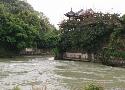
Americans imagine that inside every Chinese person an American is struggling to get out. But China is different, so different that the categories of Western political science are meaningless. China will not change because we think it should, or because we want it to, or because we exhort the Chinese to embrace the benefits of democracy and free markets. If it changes, it will do so very slowly. We shall have to deal with China as it is, and has been for thousands of years. We can demonstrate the superiority of our system with economic growth, technological innovation, and military strength—although we haven’t done so of late. We can show that our ways are better—when we stick to our ways—and set an example. But we can’t change China by preaching to the Chinese.
China’s unique geographic conditions required from antiquity a centralized tax system to fund infrastructure and a centralized bureaucracy to administer it. It never persuaded the peoples it absorbed into the Chinese empire to speak a common language or to confess the same religion. Ethnicity has no role in Chinese statehood. //
When Chinese dynasties failed, either because of internal corruption or natural disaster, bandit rebellions replaced them. China has no hereditary aristocracy, unlike Europe, because the new dynasty levels the ground that preceded it. The Communist Party of China arose as a bandit rebellion in China’s classic historical pattern, and governs as a new incarnation of China’s ancient Mandarin caste. In place of the old Mandarin exam based on Chinese classics, China now has the gaokao, the fearsome university entrance exam. The biggest difference between today’s Communists and the old Mandarins is that the CCP is larger and more comprehensive, with nearly 100 million members.
China’s Emperor is not a revered demigod on the Japanese model, or an anointed sovereign claiming divine right, but simply the one ruler whose job it is to prevent all the other would-be rulers from killing each other. He is Lucky Luciano, the capo di capi whose function is to keep the peace among the underbosses who fear him more than they fear each other. And, to extend the metaphor, the CCP is Marxist in the same way the Mafia is Catholic; both organizations take their ideology seriously, although its practical significance is limited. The Chinese people therefore don’t love their emperor, any more than rank-and-file Mafia soldiers love the capo. They say resignedly, “Without an emperor, we’d kill each other.” And that is just what they have done in the tragic periods when imperial dynasties collapsed.
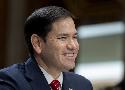
Foreign Minister Wang Yi conveyed the message in a phone call Friday, their first conversation since Marco Rubio’s confirmation as President Donald Trump’s top diplomat four days earlier.
“I hope you will act accordingly,” Wang told Rubio, according to a Foreign Ministry statement, employing a Chinese phrase typically used by a teacher or a boss warning a student or employee to behave and be responsible for their actions.
The short phrase seemed aimed at Rubio’s vocal criticism of China and its human rights record when he was a U.S. senator, which prompted the Chinese government to put sanctions on him twice in 2020. //
This may be a tempest in a teapot. Chairman Xi has met and engaged with President Trump before; the two men know each other, and while Xi may be a Communist, he's not stupid. He knows what to expect from President Trump, and the same applies in return.
But no official, minor or otherwise, in China speaks out of turn without reason. We can assume that Wang Yi delivered this veiled warning at Chairman Xi and the CCP's direction; it's a statement of policy. And, we might note, China has slapped sanctions on U.S. government officials in the past, including Texas' Senator Ted Cruz (R) - and then-Senator Marco Rubio (R-FL).
China knows they have a new American president to deal with. They know what to expect. But it's important to note that China has, through its long history, considered itself the Middle Kingdom, placed between heaven and earth, and despite the strictures of communism, that's still a common way of thinking in China. And while China is, as I'm continually pointing out, a land of great momentum rather than a land of great ideas, they are also a land and a people that take the long view. We think of our history in terms of hundreds of years; China thinks in terms of thousands; they know that sooner or later America will again have a weak leader. We have, after all, had two weak presidents in the last quarter-century. //
OrneryCoot
14 hours ago
We need to take China very seriously. We need to seriously bring them to heel regarding spy balloons, forced technology transfer, election interference, hacking of private and public domains, fentanyl, and unfair trade practices. My hope is that we curb stomp those a$$h0!e$ over that and all of their other aggressive actions. Take them seriously. Seriously enough to fully and purposefully respond to all of their belligerent and dangerous actions, in a way that leaves no room for misunderstanding. Screw China. We saved their butts from the Japanese in WWII, and they have repaid us for the last 80 years with nothing but antagonism, up and to the point of sending troops to fight our soldiers in combat. Give them what they so richly deserve.
Quite honestly, I don't see the case for not grinding ByteDance's commie face in the gravel. It has already said divestiture is off the table. If it would let TikTok, which is worth billions of dollars, die rather than sell it, that tells you the real purpose was never to make money. It is equally difficult to see how a company that Trump castigated this way in 2020:
"TikTok automatically captures vast swaths of information from its users, including Internet and other network activity information such as location data and browsing and search histories. This data collection threatens to allow the Chinese Communist Party access to Americans’ personal and proprietary information — potentially allowing China to track the locations of Federal employees and contractors, build dossiers of personal information for blackmail, and conduct corporate espionage."
becomes better without changing the underlying problem;

When I first heard that Donald Trump was talking about reacquiring the Panama Canal, I thought, "He's just trolling the world." Now that I realize he isn't, I thought I'd better bone up on the subject. //
Now, I was completely oblivious to that fact and learned that CK Hutchinson, a company moored up pretty tightly to the CCP, runs two port facilities located at each end of the canal. In 1997, they initiated a deal with the Panamanian government (two years before the US fully handed over the canal) to manage them.
Apparently, they have no plans to go anywhere. And this is a problem because Beijing is not our friend. //
Now, you have to remember that China always has a plan, and they don't do anything without forethought. And as they have become increasingly belligerent over the past 20 years at least, one has to assume that putting down roots in Panama, a global choke point, serves a purpose for Beijing. I doubt that purpose has any sort of goodwill for us. //
What I do know is that if China shut down the canal to us, we'd be going to war unless the plan is to shut down the canal once they actually invade Taiwan. I doubt they'd ever do it beforehand. That would sort of be like expecting Egypt to sit on its hands if the Sudanese ever dammed up the Nile. //
the Chinese are in the canal zone in an official capacity; they're there for a reason, and they have become increasingly belligerent on the world front over the years, so it's safe to assume that reason doesn't bode well for us as the largest user of the canal. I believe Donald Trump recognizes this. I don't think he's trolling. I think he is forewarning.
And I think he should.