George shook his head slowly. "You're wrong, John. Not back to where we were. This morning, we had an economy of scarcity. Tonight, we have an economy of abundance. This morning, we had a money economy—it was a money economy, even if credit was important. Tonight, it's a credit economy, one hundred per cent. This morning, you and the lieutenant were selling standardization. Tonight, it's diversity.
"The whole framework of our society is flipped upside down.'" He frowned uncertainly.
"And yet, you're right too, it doesn't seem make much difference, it is still the same old rat race. I don't understand it."
-- BUSINESS AS USUAL, DURING ALTERATIONS by Ralph Williams (Astounding Science Fiction, 1958)
I bought a box of SF pulps when I was in my late teens from one of my father's friends, who kept them in the garage. English editions of Astounding Science Fiction, for the most part. Stories written by authors whose names I barely recognised, despite being a science fiction reader from about as soon as I could read.
I paid more than I could afford for them.
I suspect that one story paid for all of them, though.
It's a thought experiment. I'd forgotten the opening of the story (aliens decide to Mess With Us) but remembered what happened after that.
We're in a department store. And someone drops off two matter duplicators. They have pans. You put something in pan one, press a button, its exact duplicate appears in pan two.
We spend a day in the department store as they sell everything they have as cheaply as possible, duplicating things with the matter duplicator, making what they can on each sale, and using cheques and credit cards, not cash (you can now perfectly duplicate cash – which obviously is no longer legal tender). Towards the end they stop and take stock of the new world waiting for them and realise that all the rules have changed, but craftsmen and engineers are more necessary than ever.
That companies won't be manufacturing millions of identical things, but they'll need to make hundreds, perhaps thousands, of slightly different things, that their stores will be showrooms for things, that stockrooms will be history. That there will now be fundamental changes including, in 1950s-style retailing, in a phrase that turned up well after 1958, a long tail.
Being Astounding Science Fiction, the story contains the moral of 95% of Astounding Science Fiction stories, which could perhaps be reduced to: people are smart. We'll cope.
When my friends who were musicians first started complaining sadly about people stealing their music on Napster, back in the 1990s, I told them about the story of the duplicator machines. (I could not remember the name of the story or the author. It was not until I agreed to write this introduction I asked a friend, via email, and found myself, a google later, re-reading it for the first time in decades.) //
I remembered what Charles Dickens did, a hundred and fifty years before, when copyright laws meant that his copyrights were worth nothing in the US: he was widely read, but he was not making any money from it. So he took the piracy as advertising, and toured the US in theatres, reading from his books. He made money, and he saw America. //
Fortunately, Cory Doctorow has written this book. It's filled with wisdom and with thought experiments and with things that will mess with your mind. Cory once came up with an analogy while we argued that explained the world that we were heading into in terms of mammals versus dandelions to me, and I've never seen anything quite the same way since.
Mammals, he said, and I paraphrase here and do not put it as well as Cory did, invest a great deal of time and energy in their young, in the pregnancy, in raising them. Dandelions just let their seeds go to the wind, and do not mourn the seeds that do not make it. Until now, creating intellectual content for payment has been a mammalian idea. Now it's time for creators to accept that we are becoming dandelions.
The world is not ending. Not if, as Astounding Science Fiction used to suggest, humans are bright enough to think our way out the problems we think ourselves into.
I suspect that the next generation to come along will puzzle over our agonies, much as I puzzled over the death of the Victorian Music Halls as a child, and much as I felt sorry for the performers who had only needed thirteen minutes of material in their whole life, and who did their thirteen minutes in town after town until the day that television came along and killed it all.
In the meanwhile, it's business as usual, during alterations.
-Neil Gaiman


The late, great Dr. Petr Beckmann was editor of the great journal Access to Energy, founder of the dissident physics journal Galilean Electrodynamics (brochures and further Beckmann info here; further dissident physics links), author of The Health Hazards of NOT Going Nuclear (Amazon; PDF version) and the pamphlets The Non-Problem of Nuclear Waste and Why “Soft” Technology Will Not Be America’s Energy Salvation. (See also my post Access to Energy (archived comments), and this post.)
I just came across another favorite piece of his and have scanned it in: Economics as if Some People Mattered (review of Small is Beautiful by E.F. Schumacher), first published in Reason (October 1978), and reprinted in Free Minds & Free Markets: Twenty-Five Years of Reason (1993). Those (including some libertarians and fellow travelers) who also have a thing for “smallness” and bucolic pastoralism should give this a read.
Small is Beautiful is the title of a book by E.F. Schumacher. It is also a slogan describing a state of mind in which people clamor for the rural idyll that (they think) comes with primitive energy sources, small-scale production, and small communities. Yet much–perhaps most–of their clamor is not really for what they consider small and beautiful; it is for the destruction of what they consider big and ugly.
… The free market does not, of course, eradicate human greed, but it directs it into channels that the consumer the maximum benefit, for it is he who benefits from the competition of”profit-greedy” businessmen. The idea that the free market is highly popular among businessmen is one that is widespread, but not among sound economists. It was not very popular in 1776, when Adam Smith’s Wealth of Nations was published, and it has not become terribly popular with all of them since–which is not surprising, for the free market benefits the consumer but disciplines the businessman.
If the free market is so popular with business, what are all those business lobbies doing in Washington? The shipping lobby wants favors for U.S. ships; the airlines yell rape and robbery when deregulation from the governmental CAB cartel threatens; the farmers’ lobby clamors for more subsidies. What all these lobbies are after is not a freer market but a bigger nipple on the federal sow.
Illuminating lecture by the late, great Petr Beckmann. For more on Beckmann, see my posts:
- Access to Energy (archived comments);
- A Basic Physics Reminder for Solar Energy Advocates;
- Beckmann’s Economics as if Some People Mattered, or, Small is Not Beautiful;
- Carson: Libertarians for Junk Science.

Edward Lawrence
@EdwardLawrence
·
Follow
U.S. Treasurer tells me there are more than 300 billion pennies in circulation. He says we use about 9 billion pennies each year. At that rate we would run out of pennies in about 33 years. This video shows the last pennies ever minted . #Penny #USMint225
5:21 PM · Nov 12, 2025 //
Yahoo News
@YahooNews
·
Follow
Goodbye, penny. 👋 The U.S. Mint says it is stopping the production of pennies, a historic move more than two centuries after the one-cent coin entered circulation.
The last penny was stamped at the Philadelphia U.S. Mint during an event on Nov. 12. http://yhoo.it/43rxNJ6
2:31 PM · Nov 12, 2025 //
Higher metal prices result in higher production costs. If production costs get too high, the seigniorage – the difference between a coin’s face value and the cost of putting it into circulation – make the coin worth less than what it costs to make it.
The reviewer begs the reader’s indulgence for combining a book review with an appreciation of the author. Yes, Leonard Read is my guide and inspiration, and I was thrilled to learn of the republication of Government: An Ideal Concept (FEE, 1997, $12.95 paperback). This book is to me much like the fruits of scripture.
In 1982, I wrote to Read asking if he still believed what he had written in 1954. His reply: Just the other day I re-read Government: An Ideal Concept. Today I wouldn’t change a word of it. All of my books have been consistent with this book you like.
I have read all of Leonard Read’s books; they are consistent. Read is constant in character and consistent in thought. Given his premises, his freedom philosophy, as he called it (to disassociate himself from the anarchists who had appropriated his earlier use of libertarian), is consistent and corroborated by history. Read has grasped and described a natural law.
In Government: An Ideal Concept, he limits himself to basics and a few clear examples. Other issues and secondary points he leaves for other books, other writers. The argument of this work is logical, consistent, and neither circular nor abstruse.
Read is never a polemicist but warns against provoking antagonism with unnecessary personal attacks and criticisms of error, when what is needed is self-improvement and demonstration of truth. Although he says Government: An Ideal Concept is an essay in clarifying his own thinking, he writes with the authority and serenity of someone already possessed of a truth.
Not at the Constitutional Convention of 1787 nor when Read wrote Government: An Ideal Concept, says Read, was there any well-defined . . . principled, spelled-out ideal theory of government or liberty. The founders attempted to limit government, but lacking was a well-defined theory or positive rationale as to why limitation.[1]
Read was familiar with political and philosophical ideas from earliest writings to the present. Yet he was convinced that extant theories of liberty and government were inadequate and that this lack would have to be supplied before American society could secure the Blessings of Liberty cited in the preamble of the U.S. Constitution.
Read’s plan is to try to justify government, an effective but surprising strategy for one who sees that government, the immune system of society, designed to protect from internal and external dangers, has itself grown unhealthy, and, by proliferation, become an agent of social dysfunction. He seeks to understand the healthy state of government in society as the ideal—a key word in this book’s title. Properly limited government, he asserts, because it is necessary, must be a positive good rather than a necessary evil.
Fundamental to Read’s theory of limited government is his analysis of social versus individual problems, and the role of force and coercion in society. By definition, government is organized force. It monopolizes the legal use of force in those geographical, social, and economic areas under its jurisdiction. Read posits, Man’s purpose on earth is to come as near as possible in his lifetime to the attainment of those creative aptitudes peculiarly his own. He then explains why all of creative human emergence can only be a personal, voluntary undertaking. This leaves those actions of man which impair the source of creative energy and stifle its exchange, and also the actions which are parasitic on the flowing energy as the only social problem. To remove these inhibitory actions, it is necessary to restrain aggressive force and/or penalize those persons who indulge in it. Read explains why force can only restrain, never create. Therefore, the only proper use of force is to restrain aggressive use of force and fraud.
...
Beef costs have stayed relatively stable over the last 50 years. One pound of ground beef in 1980 was equivalent to the earnings of less than 15 minutes of labor, and that ratio is roughly the same in 2025.
At the same time, input costs have soared. //
“A hamburger full of high-quality protein and nutrients for $6 is an incredible deal, especially when you consider the cost of foods with far less to offer,” said Justin Tupper, president of the U.S. Cattlemen’s Association.
Others contrast beef prices to the cost of nutritionally empty, mass-produced products.
“A Snickers bar weighs 1.86 ounces,” said Chris Earl of Reverse Rocking R Ranch in New Mexico. “At $2.69 a bar, that equals $23 dollars a pound for a Snickers.” //
Many producers believe Trump is responding to demands from powerful meatpacking companies to increase supply and slash the premium prices they are being forced to pay for American beef products.
The advocacy group R-CALF USA has long criticized the unchecked power of the four meatpacking companies that process 85 percent of the American beef supply.
“Packers and retailers have become so concentrated they now control the market,” R-CALF posted in an X statement. “A generation ago, ranchers earned over 60% of the consumer beef dollar. Today, they get under 40%. Trying to lower prices by inviting even more imports only speeds up the dismantling of America’s beef industry. We don’t need more foreign beef. We need fair markets and country of origin labels.”
At the very least, ranchers argue, they should have the right to compete against imported beef with clear and transparent labeling.
“I don’t really care if Argentina imports beef, as long as it’s clearly labeled,” said Arizona rancher Casey Murph. “American ranchers are more than ready to compete with the rest of the world’s beef with their lax standards.”
Mandatory country of origin labeling (MCOOL) would require meatpackers to label beef products with the country they came from, giving American producers a market edge. Ranchers have called for this legislation for years to no avail.
Burke warned that flooding the market with cheap foreign beef could turn ranchers against a president who has historically enjoyed enormous popularity in cowboy country.

Tariffs are taxes on American consumers and businesses. They make inputs more expensive, reduce choice, and slow investment. They don’t bring jobs back—they make the tools to create those jobs more costly.
During the campaign, Vice President JD Vance claimed that “a million cheap, knockoff toasters aren’t worth the price of a single American manufacturing job.” The line got applause. But it betrayed a dangerous economic illusion.
Vance sees the toaster. He doesn’t see the millions of families who bought that toaster for $20 instead of $80 and used the savings for groceries, medicine, or a child’s school supplies. He doesn’t see the small business owner who bought cheaper equipment and hired another worker. He doesn’t see the everyday miracles of freed-up capital, redirected investment, and second-order job creation.
Henry Hazlitt called this the fallacy of the “seen and unseen.” It’s the oldest trick in politics: show the factory job you might save, hide the thousands of better futures you quietly destroy.
If we want a freer, fairer global economy, we don’t get there by torching trust and slapping taxes on ourselves. We get there by enabling investors and entrepreneurs to build competitive industries, by investing in lifelong education and innovation, and by strengthening institutions that last longer than one man’s grievance.
That’s what America used to stand for: rules, not whims; institutions, not improvisation.
Steve Miran argues that because the US has run trade deficits for decades, the economic models must be broken. But that’s like saying gravity stopped working because planes fly. The persistent US deficit isn’t a flaw in the system. It’s a reflection of how much of the system depends on us. Models need to be read with the institutional context in mind.
The stakes are bigger than a trade balance. What’s being traded away—at a terrible cost—is the American model of principled leadership, rooted in liberty, trust, and rules. We lose that, we lose the quiet miracle behind a billion pencils.
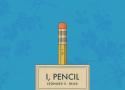
I am a lead pencil—the ordinary wooden pencil familiar to all boys and girls and adults who can read and write.
Writing is both my vocation and my avocation; that’s all I do.
You may wonder why I should write a genealogy. Well, to begin with, my story is interesting. And, next, I am a mystery —more so than a tree or a sunset or even a flash of lightning. But, sadly, I am taken for granted by those who use me, as if I were a mere incident and without background. This supercilious attitude relegates me to the level of the commonplace. This is a species of the grievous error in which mankind cannot too long persist without peril. For, the wise G. K. Chesterton observed, “We are perishing for want of wonder, not for want of wonders.”
I, Pencil, simple though I appear to be, merit your wonder and awe, a claim I shall attempt to prove. In fact, if you can understand me—no, that’s too much to ask of anyone—if you can become aware of the miraculousness which I symbolize, you can help save the freedom mankind is so unhappily losing. I have a profound lesson to teach. And I can teach this lesson better than can an automobile or an airplane or a mechanical dishwasher because—well, because I am seemingly so simple.
Simple? Yet, not a single person on the face of this earth knows how to make me. This sounds fantastic, doesn’t it? Especially when it is realized that there are about one and one-half billion of my kind produced in the U.S.A. each year. //
Here is an astounding fact: Neither the worker in the oil field nor the chemist nor the digger of graphite or clay nor any who mans or makes the ships or trains or trucks nor the one who runs the machine that does the knurling on my bit of metal nor the president of the company performs his singular task because he wants me. Each one wants me less, perhaps, than does a child in the first grade. Indeed, there are some among this vast multitude who never saw a pencil nor would they know how to use one. Their motivation is other than me. Perhaps it is something like this: Each of these millions sees that he can thus exchange his tiny know-how for the goods and services he needs or wants. I may or may not be among these items.
No Master Mind
There is a fact still more astounding: The absence of a master mind, of anyone dictating or forcibly directing these countless actions which bring me into being. No trace of such a person can be found. Instead, we find the Invisible Hand at work. This is the mystery to which I earlier referred.
It has been said that “only God can make a tree.” Why do we agree with this? Isn’t it because we realize that we ourselves could not make one? //
I, Pencil, am a complex combination of miracles: a tree, zinc, copper, graphite, and so on. But to these miracles which manifest themselves in Nature an even more extraordinary miracle has been added: the configuration of creative human energies—millions of tiny know-hows configurating naturally and spontaneously in response to human necessity and desire and in the absence of any human masterminding! Since only God can make a tree, I insist that only God could make me. Man can no more direct these millions of know-hows to bring me into being than he can put molecules together to create a tree.
The above is what I meant when writing, “If you can become aware of the miraculousness which I symbolize, you can help save the freedom mankind is so unhappily losing.” For, if one is aware that these know-hows will naturally, yes, automatically, arrange themselves into creative and productive patterns in response to human necessity and demand— that is, in the absence of governmental or any other coercive master-minding—then one will possess an absolutely essential ingredient for freedom: a faith in free people. Freedom is impossible without this faith.
Once government has had a monopoly of a creative activity such, for instance, as the delivery of the mails, most individuals will believe that the mails could not be efficiently delivered by men acting freely. And here is the reason: Each one acknowledges that he himself doesn’t know how to do all the things incident to mail delivery. He also recognizes that no other individual could do it. These assumptions are correct. No individual possesses enough know-how to perform a nation’s mail delivery any more than any individual possesses enough know-how to make a pencil. Now, in the absence of faith in free people—in the unawareness that millions of tiny know-hows would naturally and miraculously form and cooperate to satisfy this necessity—the individual cannot help but reach the erroneous conclusion that mail can be delivered only by governmental “masterminding.”

Jul 31, 2014, 9:51am EDT
Today would have been the 102nd birthday of the late great Milton Friedman, winner of the 1976 Nobel Prize in Economics and 1988 Presidential Medal of Freedom. Needless to say, we miss him and could use his talents.
Friedman is considered one of the greatest economists of the 20th century, the most influential since World War II, and few would dispute, the greatest advocate ever for private markets in relation to their role of ensuring both our cherished economic and political liberties.
Influenced by Jeremy Bentham and many others of his intellectual stripe like Friedrich A. Hayek, Friedman became a celebrity in his time for his enthusiastic and unfettered discussion of the way the world really works, once taking famed talk show host Donahue to school on the role of government in society: “Government has three primary functions. It should provide for military defense of the nation. It should enforce contracts between individuals. It should protect citizens from crimes against themselves or their property. When government-- in pursuit of good intentions tries to rearrange the economy, legislate morality, or help special interests, the cost come in inefficiency, lack of motivation, and loss of freedom. Government should be a referee, not an active player.”
“The battle for freedom,” Friedman wrote in his 1994 re-introduction to Hayek’s seminal work, The Road to Serfdom, “must be won over and over again.” //
As Friedman explained to Donahue in 1979, government enforcing contracts and preserving the rule of law and private property rights is at the core of prosperity and liberty. “Property rights, Friedman wrote in his memoir Two Lucky People with his wife Rose, “… are the most basic of human rights and an essential foundation for other human rights."

Read’s essay is no brief for anarchy. “I, Pencil” is a plea for humility among economic central planners that is desperately needed by the utopian thinkers of our day, and every era.
Leonard Read’s immortal essay “I, Pencil” has persuaded more people of the wonders of the free market than possibly any other comparable work—so many that the BBC recently posted an article attacking it. However, anyone reading both articles will conclude that Read’s pencil comes out looking sharper.
The mere fact that Read’s article can still elicit rebuttals 60 years after it appeared in the December 1958 issue of FEE’s The Freeman is testimony to its significance. As such a powerful and persuasive essay, it had to be destroyed. //
The ability to transport a product from factory to store shelf is a necessary condition for its sale—and thus, its mass production—but not a sufficient one.
If roads created businesses, then there should be no stretch of asphalt in the country not festooned with stores, shops, or offices. Roads facilitate commerce; they do not necessarily cause it. If the government bears responsibility for all the commerce that flows over its roads, then the federal government smuggled all but the 370,000 pounds of drugs stopped at legal ports of entry last year—and the U.S. Post Office trafficked all but the 40,000 pounds of drugs seized in the mails in 2017. Clearly, this is a reductio ad absurdum whether applied to narcotics or number two pencils.
The creative process begins when an entrepreneur senses the underlying need for a product or service, which is confirmed by someone’s willingness to pay for it. One might call this—to coin a phrase—the “magic of the price system.”
Furthermore, just as no Pencil Czar directs the construction of pencils, no Transportation Czar tells the company whether to transport its cargo by truck, rail, ship, drone, or private courier. The firm chooses the method of shipment that best fits its needs based on price signals. //
The second fallacious assumption is that everyone who supports the free market is an anarchist. The Lockean conception of ordered liberty tasks government with defending the right to life, liberty, and property—a position that Leonard Read and Milton Friedman happened to share. Read wrote in his lesser-known work Government—An Ideal Concept that the State should be confined to “protecting the life and property of all citizens equally, and invoking a common justice under law.” Friedman believed the government had three primary functions: to “provide for military defense of the nation,” “enforce contracts between individuals,” and “protect citizens from crimes against themselves or their property.”
The point of “I, Pencil” is best captured by Read’s successor at the helm of FEE, Lawrence W. Reed. “None of the Robespierres of the world knew how to make a pencil, yet they wanted to remake entire societies,” he wrote. Ambitious bureaucrats, eager to impose their ignorance on economics or politics, lack the information and creativity generated spontaneously by free people. “Leave all creative energies uninhibited,” wrote Leonard Read. “Permit these creative know-hows freely to flow.”
Read’s essay is no brief for anarchy. “I, Pencil” is a plea for humility among economic central planners that is desperately needed by the utopian thinkers of our day, and every era.
All of which leaves Harford without a point to make.
Thankfully, pencils have erasers. //
The second fallacious assumption is that everyone who supports the free market is an anarchist. The Lockean conception of ordered liberty tasks government with defending the right to life, liberty, and property—a position that Leonard Read and Milton Friedman happened to share. Read wrote in his lesser-known work Government—An Ideal Concept that the State should be confined to “protecting the life and property of all citizens equally, and invoking a common justice under law.” Friedman believed the government had three primary functions: to “provide for military defense of the nation,” “enforce contracts between individuals,” and “protect citizens from crimes against themselves or their property.”
The point of “I, Pencil” is best captured by Read’s successor at the helm of FEE, Lawrence W. Reed. “None of the Robespierres of the world knew how to make a pencil, yet they wanted to remake entire societies,” he wrote. Ambitious bureaucrats, eager to impose their ignorance on economics or politics, lack the information and creativity generated spontaneously by free people. “Leave all creative energies uninhibited,” wrote Leonard Read. “Permit these creative know-hows freely to flow.”
Read’s essay is no brief for anarchy. “I, Pencil” is a plea for humility among economic central planners that is desperately needed by the utopian thinkers of our day, and every era.
All of which leaves Harford without a point to make.
Thankfully, pencils have erasers.
China accounts for 70% of global REE mining and 90% of the world’s REE processing/refining. These minerals are essential for weapons systems and electronics. Beijing’s export restrictions on 12 REEs could very well disrupt the global economy and pose a risk to the U.S.’s defense supply chains. This is unsustainable and dangerous—and it has gone on for far too long. Washington must decouple.
Beijing’s practice of weaponizing its REE dominance is straight from the CCP’s unrestricted warfare playbook, a concept first outlined in 1999—combining elements of resource warfare, economic warfare, and lawfare (the CCP’s uses laws and regulations to further its national interests, when and where it sees fit).
China’s announcement to impose export restrictions on resources that it has monopolized aligns with its ongoing demands over recent months, including the demand that the U.S. change its official language regarding Taiwan independence. //
Without a state that is capable of protecting its citizens from foreign and domestic threats, its foremost responsibility, as well as ensuring economic independence, economic prosperity is not possible. National and economic security are essential building blocks.
China’s tightening of export controls should serve as a reminder of the need to decouple. //
But tariffs alone will not break China’s stranglehold on minerals. Achieving this goal will require sustained government intervention—although unfavorable to us small government proponents, it is the best path forward during such a national emergency—and a rollback of environmental and licensing regulations that CCP-backed environmental groups have been fighting for (green warfare). It was the Chinese state’s aggressive subsidization and regulation of its REE industry—coupled with destructive globalist policies—that made this dominance possible.
Unlike its rival, Intel, AMD saw the need for battery efficient chips. It bet better than Intel. It will now be competitively disadvantaged by the United States government becoming Intel’s largest single shareholder.
Apple, too, is a major player in microchip architecture. Using ARM chip architecture, which is very power efficient, Apple engineers and manufactures all its chips for its devices. The Mac uses M-chips. The iPad Pro uses M-chips. Apple’s other devices use A-series chips. Many of Apple’s processing features run faster with less power than Intel’s chips.
But, again, the United States now is the largest shareholder of Intel, which puts every other microchip company at a disadvantage. Why? Because Intel now has subsidy by taxpayers. Instead of having to let the creative destruction of the market place pick apart Intel, which has chronically made bad decisions, the leadership that made those bad decisions has been rewarded.
Uncle Sam insists it will exercise no voting with its stock. But the fine print of the deal shows Uncle Sam is getting common stock with voting rights. Saying it will not vote and not actually voting are two different things. If the situation continues and a Democrat takes back the White House, you will see ESG and DEI explode as Intel seeks to humor its largest shareholder.
This is another step down a dangerous path. Defenders will say the government bailed out Fannie and Freddie. The government bailed out General Motors. The government even bailed out Chrysler. //
The government keeps making companies too big to fail and hiding behind “national security” as the excuse. In fact, that has become the consensus talking point among defenders who will say things like, “I’m uncomfortable with this, but national security…”. It is an excuse and justification, but not reality.
Intel can now ignore most of its other shareholders. Its competitors now face a company subsidized unfairly by taxpayers. Its business decisions get to shift with the whims of political administrations.
This is a terrible decision. Donald Trump has beaten Mamdani to seizing the means of production.

Let's just say that there are some pockets being filled, and they are not yours or mine. Kerry called climate change a gold mine for investors, and he sure has been right.
Walter E. Williams -- “What is the noblest of human motivations? I would say greed.”
In this video, Friedman explains how socialism relies on force to achieve good. But using force corrupts, no matter how pure the intentions.
This is key to understanding why centralized control systems inevitably fail.
Poverty exists everywhere. The difference lies in which system gives people a real chance to rise.
Milton Friedman explains it in 2 minutes—why freer markets consistently deliver better lives for the poor, without government interference.
In less than two minutes, Milton Friedman dismantles the myth that government redistribution drives prosperity.
Spending isn't what matters. Production is.
rhhardin | July 21, 2025 at 6:23 pm
The Fed matches the number of dollars circulating to what the economy can do at once, so that the dollars don’t bid up the price of stuff that’s more than the economy can do at once, or have parts of it fall idle for lack of bidding dollars.
It does this by creating or destroying dollars.
It creates or destroys dollars by selling stuff it has (e.g. bonds) at a greater rate, or buying back stuff with newly created dollars (buying back debt, e.g.).
What regulates this selling or buying back is the target interest rate. They change this target rate in monthly meetings according to leading indicators of inflation. If inflation looks rising, it sells more debt and burns the dollars it gets. You can’t spend debt so that restricts bidding for goods and services. If inflation looks falling, it buys back more debt with newly printed dollars so there can be more bidding on goods and services. In between setting new targets, whether the market short term interest rate is above or below the target tells the fed to buy or sell more to hold the interest rate at the target.
Something gold can’t do for you.
What most people don’t understand, I think, is that money is not wealth. It is to an individual, but not to a country. Money is a ticket in line to say what the economy does next, presumably something for you. The Fed creates and destroys tickets to match what the economy can do at once.
There’s no increase or decrease in wealth, anybody’s wealth.
Maybe that takes some of the sinister magic out of it. //
rhhardin in reply to CommoChief. | July 21, 2025 at 8:36 pm
If productivity goes up 10% as well, then your $100 buys exactly what it did before. LIkewise is money velocity declines by 10%. Stuff changes and the Fed responds to keep the value of the dollar constant. Actually 2% inflation is the target because that adds stability to the economic system against sudden failures. //
Milhouse in reply to CommoChief. | July 22, 2025 at 3:03 am
Chief, the problem with a gold standard is that the gold supply grows at random, at rates that have no connection with the need for an expanded money supply. The gold supply grows and shrinks as new mines are discovered and old ones play out. If you suddenly have a huge influx from newly opened mines, you get inflation; even hyperinflation, as Europe experienced when the gold from the New World started flowing in. And if production has a major spurt, and the gold supply doesn’t increase enough to match it, then you have deflation, which is even worse than inflation; no one wants to invest money in anything, because they’re better off just sticking it in a vault and letting it appreciate on its own.
The idea of the Fed is to control the money supply and make it grow at the same rate as production does, or as close to it as possible. Now at times the Fed has failed to do this, but at least when it’s doing its job properly we can expect good results, whereas with gold it’s always up to pure chance. //
Milhouse in reply to destroycommunism. | July 22, 2025 at 2:57 am
Money doesn’t need to be “backed” by anything. It’s a medium of exchange in itself, and its value comes entirely from the fact that people are willing to accept it in exchange, confident that other people will be equally willing in turn. And they get that confidence from the fact that the IRS guarantees it will accept it, so if worse comes to worst you can use it to pay your taxes, and also from the fact that it’s legal tender, so you can discharge private debts with it whether your creditor likes it or not.
The idea that the government must be willing to sell you gold for dollars, at a fixed price, is obsolete and stupid. It reflects a mindset stuck in the olden days when gold was money and dollars weren’t themselves money but merely represented money. It’s the opposite now; dollars are money, and gold is merely a commodity, exactly like diamonds or wool. //
Milhouse in reply to rhhardin. | July 21, 2025 at 8:30 pm
What most people don’t understand, I think, is that money is not wealth. It is to an individual, but not to a country.
As Smith taught us 250 years ago! The Wealth of Nations should be required reading before anyone comments on economics in any way.
Smith destroyed the “gold equals wealth” myth by pointing out that Spain was flush with gold, but was a very poor country. Beggars had gold plates but nothing to eat off them. Whereas Poland had very little gold, but was a very rich country. Therefore the quantity of gold in a country could not be a measure of its wealth.

The Heritage Foundation's Defense Budget Tool provides a user-friendly method to aid in both the analysis and transparency of the U.S. defense budget and facilitate more informed debate about how the Department of Defense ought to be directing spending.
Until now, individual line items of the defense budgets have only been published on the website of Undersecretary of Defense (Comptroller) each year. This data is published in disparate PDFs and spreadsheets, with no mechanism for viewing all the data at once.
This tool:
- Provides an itemized accounting of the U.S. defense budget for analysis by national security experts.
- Allows a user to create customizable defense budgets that can be saved and shared for future reference.
- Makes defense budget data more accessible to Americans interested in the composition of the U.S. national security budget.
Reagan warned about unchecked government spending.