
Billionaire Home Depot co-founder Ken Langone has done a 180 after blasting Trump's sweeping tariffs, explaining, "When you made a mistake, admit it."
Rapid Response 47 @RapidResponse47
·
LANGONE: "I am sold on Trump ... I think he's got a good shot at going down in history as one of our best presidents ever."
CNBC: "That is a real turnaround because you didn't want to vote for him!"
LANGONE: "When you made a mistake, admit it."
🔥🔥🔥
12:16 PM · Jul 15, 2025



They have gone to court, they have gone to the media, and they have gone to Corporate America rather than loosen their own pursestrings with an endowment estimated at over $53 billion.
Harvard and its defenders claim that accessing the money creates massive complications, due to terms and conditions of the donations and the structure of the endowment itself. A new analysis from the Wall Street Journal suggests that the main complication is that a significant amount of that money may be imaginary -- and that may open a Pandora's box on Wall Street:
Rep. Elise Stefanik (R., N.Y.) recently sought an investigation into Harvard’s financial disclosures to bondholders. She might as well have fired a bazooka at the entire private-equity industry. //
So if the SEC investigates Harvard over the valuations, it should also investigate the private-equity firms that provide them, if not the whole private-equity sector. This could be helpful. With a full-court press under way in Washington to get private-market funds, like private equity, into Americans’ 401(k) retirement plans, it’s more urgent than ever that alternative investments reflect market realities, not wishful thinking. //
The act of liquidating assets or selling stakes to raise funds for operating costs would force transparency on the true value of the endowment, and that would have a ripple effect throughout the economy. That itself might give Harvard some leverage with corporate America to kick in some cash as a donation rather than liquidate assets that might impact their own wealth estimates in the long run.

With these comments, Pulte is demonstrating that he, like his boss Donald Trump, subscribes to the standard Yellen-Bernanke inflationist model of monetary policy: the job of the central bank is to forever force down interest rates, churn out more easy money, and devalue the currency.
Pulte claims publicly that this somehow makes homes more affordable. As we’ll see below, though, the Fed’s easy-money policy of recent decades has not made home more affordable. Rather, Fed policy has helped to relentless increase home prices through the Fed’s asset purchases, interest rate policy, and monetary inflation. //
There are many factors that affect mortgage rates, of course, but over the past thirty years—and especially since 2009—falling interest rates have coincided with rising home prices. In fact, falling interest rates slightly precede rising home prices, suggesting a causal relationship.
Under MFN, U.S. drug prices would be tied to the lowest amount paid by any OECD country with at least 60 percent of our GDP per capita. That includes many countries where government-run health systems routinely undervalue breakthrough medicines and decide which treatments patients can access — and when.
That’s not competition. That’s central planning. A market price originates from voluntary exchange, not foreign bureaucrats operating under fixed budgets and political incentives.
We know where that road leads. In countries using arbitrary price-setting benchmarks, patients are routinely denied or delayed access to new medicines. By late 2022, just 34 percent of new drugs launched globally were available in France, 37 percent in Italy, and 52 percent in Germany. Compare that to nearly 75 percent in the United States. Import their pricing models, and we’ll import their rationing — and avoidable suffering. //
Strong trade pressure best confronts these abuses. Other wealthy countries should be required to meet minimum spending targets on new medicines — benchmarked to what the United States invests relative to GDP. Those spending expectations should be written into binding agreements with clear enforcement mechanisms and consequences for noncompliance.
But overseas is not the only issue; we also need to fix what’s distorting prices at home.
Begin with the supply chain middlemen. The three largest pharmacy benefit managers (PBMs) now control more than 80 percent of the prescription drug market, acting as gatekeepers between manufacturers and patients. These entities, which play no role in innovation, dictate which drugs are covered, how much patients pay, and who profits. /
In 2023 alone, the “gross-to-net bubble” — the gap between the list prices of branded drugs and net prices after rebates and other discounts — was $334 billion. In an ideal market, those savings would dramatically lower out-of-pocket costs for patients.
Instead, the system is cloaked in secrecy. Most patients are unaware of the discounts that PBMs negotiate, and they don’t see a dime of those discounts when they pick up their prescriptions. Patient cost-sharing is still based on the inflated, publicly disclosed list price — not the much lower negotiated price. //
We also need to crack down on hospital conglomerates that abuse the federal 340B program. Initially created to support low-income and rural hospitals, 340B has ballooned into a multibillion-dollar loophole.
These hospitals purchase medicines at heavily discounted prices and resell them at a steep markup — up to five times their acquisition cost — with no obligation to deliver additional care or pass savings to patients. Most 340B hospitals provide less charity care than the national average.
That said, the past few days have demonstrated how eager U.S. lawmakers are to abdicate their constitutional responsibilities entirely. House leaders — or, should I say, “leaders” — have reportedly welcomed the release of the “pocket rescission” paper, because it gave them a roadmap to lower federal spending without lawmakers having to vote on spending reductions. You know, the thing that taxpayers pay them to do.
The whole episode makes Nancy Pelosi’s “we have to pass the bill so that you can find out what’s in it” seem trivial by comparison. It also illustrates how Congress has transformed into an episode of The Simpsons, where lawmakers’ posture on reducing spending amounts to “Can’t Someone Else Do It?”
In that sense, the “pocket rescission” strategy would not only constitute a major change in the relationship between the executive and legislative branches. It also would let lawmakers “off the hook” and absolve them for their role in creating an unsustainable federal budget — an absolution they do not deserve.
In September 2007, Hillary proposed giving every American child a $5,000 “baby bond” at birth. The Republican National Committee immediately condemned it as a “budget busting baby fund.” Rudy Giuliani dismissed it as pure “pandering” to voters.
They were right then. What changed?
Trump’s version offers $1,000 per child — originally branded “MAGA Accounts,” now called “Trump Accounts.” With around 4 million births annually, taxpayers face a minimum $4 billion yearly obligation. The same policy framework Republicans spent months attacking has somehow become Republican orthodoxy. //
From a corporate finance perspective, this program creates perverse incentives that benefit wealthy families and financial institutions while providing minimal help to working Americans.
The structure allows families to contribute an additional $5,000 annually to these government-seeded accounts. Wealthy families who can afford maximum contributions receive ongoing tax shelters, while working families get a one-time $1,000 payment they likely can’t afford to supplement.
Meanwhile, Wall Street firms are already positioning to manage these accounts. Billions in new assets under management mean substantial fee income for financial institutions. Taxpayers fund the initial deposits, Wall Street collects the management fees, and wealthy families get tax advantages — a perfect trifecta for everyone except the middle class citizens who foot the bill.
Trump’s version contains another critical flaw that makes it worse than Hillary’s income-restricted proposal: no income limits and minimal citizenship verification. While children must be U.S. citizens, parents only need Social Security numbers.
This creates a massive incentive for illegal border crossings. //
Genuine America First policy should focus on proven strategies: cutting spending so working people aren’t killed by government-caused inflation, reducing regulatory burdens on small businesses, curtailing the skyrocketing costs of health insurance by repealing Obamacare, and eliminating corporate welfare programs that benefit connected elites.
Instead of creating new government programs, Republicans should expand existing vehicles like Education Savings Accounts and Health Savings Accounts that already provide tax advantages without requiring taxpayer funding.
Real pro-family policy means letting families keep more of their own money through tax cuts and other conservative reforms, not redistributing taxpayer dollars through government accounts managed by Wall Street firms.
President Trump and Sen. Cruz are sound conservatives who received bad advice from establishment insiders. But they can still correct course.
The test of conservative leadership isn’t avoiding all mistakes — it’s recognizing bad advice quickly and changing direction.

Or why I hate costly nuclear. //
Poverty has a Lost Life Expectacy(LLE) of the order of tens of billions of years per year. And we reject should-cost nuclear for fear of an occasional release that worst case, Chernobyl, properly handled, will have a public LLE of less than a 1000 years? This makes sense only if we assume a malthusian level of selfishness. But that is precisely where the nuclear establishment is. //
Jack Devanney
May 19
Edited
I rarely compliment the choir, but I do want to give a shout out to the choristers for whom nuclear's main attraction is its low CO2. For them, this was a very tough sermon. It was a call to change focus, metanoeite if you will, from what nuclear can do for the climate to what nuclear can do for the poor, and for all humanity. That's not an easy switch. For one thing, it implies that costly nuclear is not good enough. It's immoral. We must have should-cost nuclear, and that will require a complete rethink about how we regulate nuclear.
I expected something like a 5% subscriber cancellation rate. Instead we lost 7 of 2900. I thought that was impressive.
Here's your reward. If and only if we push nuclear down to its should-cost, not only will nuclear push fossil fuel out of power generation except for a bit of peaking and backup fo r unplanned outages and do so automatically, not only will EV's now be very attractive economically, but now we can talk seriously about synfuels starting with synthetic methane.

We shouldn't be stockpiling bitcoins," Dimon said when asked about how industrial policy is entwined with national security policies during a panel. "We should stockpiling guns, bullets, tanks, planes, drones, you know, rare earths. We know we need to do it. It's not a mystery."
Stock up on bullets, he advised:
"We should be stockpiling bullets," he continued. "Like, you know, the military guys tell you that, you know, if there's a war in the South China Sea, we have missiles for seven days. Okay, come on. I mean, we can't say that with a straight face and think that's okay. So we know what to do. We just got to now go about doing it. Get the people together, roll up our sleeves, you know, have the debates." //
Chelan Jim Mildred's Oldest Son
16 minutes ago
I see someone who changes their spots. His bank was still promoting DEI in February of this year and has been involved with it since 2021.
I believe he sees momentum with Trump's plan. He does not want to be left out and does not want government to harm his business. He wants to be included in the decisions.
His negativity toward BitCoin is also telling. He wants everyone still tied to the current banking system where they could tighten the screws such as was being entertained with the idea of coercing DEI on loan recipients. //
bk
4 hours ago
Here's how what identifies as the Drudge Report now linked to it:
Dimon issues chilling warning: Trump-Era Mismanagement Could Bring Down USA...
'Enemy within'...

Assemblyman David Alvarez, D-San Diego, commented, “We have a crisis on our hand that may have been self-created by the actions perhaps taken by the state, by regulators.” Assemblymember Cottie Petrie-Norris, D-Irvine added, “If California companies were raking it in, why did we have two refineries announce their intent to close?”
Even the California Air Resources Board (CARB) now admits a significant blind spot. Chair Liane Randolph conceded during the hearing that CARB does not currently assess how its clean air policies impact consumer costs. This means working Californians pay a hidden price — one policymakers haven’t properly quantified or addressed.
Global Economy vs Rural Culture
Localization Is the Answer
●Every home a land grant college
●Local self-sufficiency for national security
●Best of both worlds for young rural families with children
HOW? -- County Currency
To grow “big enough” local economies, county governments gradually issue their own currencies in the form of transferable tax credits good for county tax liabilities.
That’s it!

President Joe Biden, with strong backing from environmental lobbyists and a last-minute defection from West Virginia Senator Joe Manchin, pushed through the Inflation Reduction Act and the Infrastructure Bill. These measures allocated billions of dollars in federal credits and loan guarantees to favored industries, all under the banner of environmental protection.
What followed was a Soviet-style industrial strategy in which a handful of Washington bureaucrats determined the winners and losers of America's energy future. //
Biden's green agenda had another critical flaw: financing. Much of it depended on borrowing from China—ironically benefiting Chinese companies dominating the very industries Biden sought to boost. Since the launch of China's "Made in China 2025" initiative, Chinese firms—heavily subsidized by their government—have taken over more than 85% of the global rooftop solar panel market. Battery components for solar installations have even higher Chinese market dominance. In effect, Biden borrowed money from China to finance the growth of Chinese companies that sold solar products to U.S. installers.
The new House bill aims to dismantle this entire framework in one stroke. It eliminates the trading of green credits between corporations, revokes low-interest green loans, and entirely phases out subsidies for renewable energy initiatives.
To those who claim this approach is irresponsible, we pose a simple question: How many more decades should the green energy sector rely on government aid to stay afloat? Sustainable energy and transition projects are essential, but they must prove their viability in the open market—just like oil and gas companies do every day. This is classic Adam Smith-style capitalism: let competition and innovation—not government favoritism—determine success.
Trump also supports nuclear power, one of the cleanest and most efficient methods of generating electricity. //
By issuing appropriate permitting waivers, Trump aims to unlock this potential, even if a modest federal investment is necessary to overcome ideological resistance from the Left.

Whenever I've had occasion to offer career advice to a young person entering the workforce, I have always pointed out that success in the workplace isn't hard; you just have to do three things: 1) Show up before the other guy, 2) Work a little harder than the other guy, and 3) Never pass up the chance to learn something new. I learned those lessons, primarily, at Woolco, my first real corporate job, and those lessons stuck with me.
All work is worth doing, and if anyone ever harbors any doubt about whether the work they are doing is worth doing, I would ask one thing: Is someone paying you to do it? If so, then you are producing value, therefore, the work is worth doing. There are no lousy jobs, my father used to say, only lousy people. A part-time job for a teenager instills all these lessons early, which means when one settles on a career, those values, those habits, those skills are already in place.
There are a couple of things that are likely causing the dropoff in teen employment. One of them is a matter of policy: Minimum wage laws. //
There are no good reasons why teenagers shouldn't have part-time jobs, and many reasons why they should. This will require some reforms: Changing minimum wage laws, perhaps (if it will make it happen), to implement a reduced minimum wage for those part-time workers under 20 to avoid pricing young people out of the entry-level workforce. I'd rather see minimum wage laws done away with completely, but politics is the art of the possible, and in this case, a tiered system may be the good that we shouldn't let the perfect be the enemy of.

Neera Tanden🌻
@neeratanden
·
Follow
Hey America - while you were sleeping the Republicans started to put out their plan to rip health care away from millions of Americans. Almost 14 million people lose their health care so the GOP can fund tax cuts for the rich.
Jamie Dupree
@jamiedupree
The Congressional Budget Office tells Democrats that the GOP changes to Medicaid and the Obama health law will knock 13.7 million people off the health insurance rolls. Letter at https://democrats-energycommerce.house.gov/sites/evo-subsites/democrats-energycommerce.house.gov/files/evo-media-document/cbo-emails-re-e%26c-reconcilation-scores-may-11%2C-2025.pdf
Last edited
7:18 AM · May 12, 2025. //
VoteGeneric
21 minutes ago
Likely that there are 13.7 million fraudsters in the Medicaid program. //
Musicman
18 minutes ago
I hope Tanden is right: there are surely 14 million on Medicaid who are not actually poor. (One of my best friends, who died last year, was on it even though he had over a million dollars in the bank because he didn’t have any “income.”)
Obama extended Medicaid way beyond its mission. Here in NM our governor has a scheme to extend it to all working class (as opposed to poor) people.

A turbulent period for stocks around new tariff policies from the White House has remarkably given way to Wall Street’s longest winning streak in 20 years.
The S&P 500 rose again on Friday, notching a ninth straight positive session for the first time Nov. 5, 2004.
The index also traded above its April 2 close for the first time since the major tariff announcement a month ago.
[…]
Not to be outdone, the Dow Jones Industrial Average also cashed a ninth straight winning day, its longest streak in more than a year. In London, the winning streak for the FTSE 100 index hit a record of 15 consecutive days. //
As we’ve noted, Trump plays these games with the media, Democrats, and his political enemies like it’s a best-of-seven series. It’s not over after one game, whereas his detractors act like the clowns who think winning the season's first game means they’re championship-bound. Trump’s enemies have had their best-laid plans at every turn, and narratives get burned to ash.
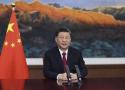
Something is "very, very wrong" in Beijing right now, according to foreign policy expert Gordon Chang, who is signaling more "end-of-regime conduct" coming out of Xi Jinping’s China.
"At a time when China needs friends because it's not selling goods to the U.S., it is going out of its way to antagonize not just the Philippines, not just Taiwan, but also South Korea and Australia," Chang, a senior fellow with the Gatestone Institute, said on "Mornings with Maria" Monday. //
What's troubling about all this is that authoritarian leaders, like Chairman Xi and his ideological counterpart in Russia, Tsar Vladimir I, tend to be suspicious of any strong, capable underlings and so surround themselves and stack the upper layers of their government with sycophants. That sets up a house of cards; as no man is immortal, sooner or later that leader has to step down, which leaves nobody really capable to take over. These events frequently lead to a power struggle among the top tier. //
China's logistical push into the Caribbean, its increasing hostility towards Taiwan, its tweaking the American nose with freedom of navigation flights down the Alaskan coast - all of that, along with China's increased military spending, may well be an indication that Chairman Xi may attempt some kind of military solution. //
WhatNext Jack752877
13 hours ago
There are 2 problems with the idea of China just finding new customers in other nations.
1 - No other market in the world can provide the demand that will satisfy China's current supply capabilities. (They geared production for the US Market, obviously).
2 - Projected growth in that US Market - particularly in consumer electronics - is expected to almost DOUBLE in the next 4 years. At this point in time, if China abandons any hope of being part of that market, that is a PERMANENT loss on huge future earnings . (Because once the US Market develops relationships with several other countries for the electronics we need, there will be no reason to go back to China for stuff.)
These facts alone make it the PERFECT time for re-negotiation between US and China on trade agreements.
The federal government doesn’t just pass laws in Congress. Each year, many of the 438 federal agencies—nominally under the president’s control through the executive branch—publish tens of thousands of pages in regulations, red tape that increases the costs of business, transportation, and many other factors Americans often don’t consider.
This imposes a kind of hidden tax that makes everything more expensive. It also justifies the work of the Department of Government Efficiency and other efforts to streamline the federal government, according to Clyde Wayne Crews, a fellow at the Competitive Enterprise Institute and author of the annual report, “Ten Thousand Commandments.” Crews released the 2025 version of the report on Thursday.
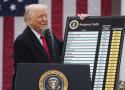
State attorney generals just have no particularized interest. They’re like anybody else in the United States. Tariffs are very complicated. Judges don’t have any basis for deciding whether they’re good or bad for the economy. That can be decided by legislatures if they decide to take over the issue or by elected executives, but not by appointed judges.
Host Greta Van Susteren asked Dershowitz if a state could successfully sue on behalf of its "devastated agriculture sector," to which he answered, "I don't think so," adding:
I think you’d have to have the farmers bringing the lawsuit, not the attorney general of the state. But even farmers would have a difficult time demonstrating that they were directly impacted in a way that was illegal by the tariffs.
When you have tariffs, some people are helped, some people are hurt. That’s the nature of the economy. There are winners, and there are losers. Trump ran for office promising that he would use tariffs, and he was elected. So I just don’t think there is standing to challenge this by virtually anybody.
But if anybody would have standing, it would be a particular person who may have been subject to the tariff who would otherwise be able to sell his product cheaper than he could sell it now. But this is such a stretch that I think they’re going to be laughed at. //
Finally, yes — tariffs used as a bargaining chip can be effective. Also, yes: The longer tariff (trade) wars continue, the worse they become. Why? Because long-term trade wars lead to inflation, without exception.
Cafeblue32
5 hours ago edited
They'll blink because China needs to sell their cheap crap in order to make money to secure more IMF loans to keep building real estate no one is buying. Their entire economy is a Ponzi scheme of investors. While our economy consists of about 14% construction, China is over a third at about 34%. They currently have more vacant housing in China than they have people. But no one can afford to buy them anyway. China sells cheap junk, shows income, takes out huge loans, skims from top to bottom, builds shoddy construction with what's left and the whole thing repeats.
China's collapse in inevitable because of this. No one globally wants to buy their weapons because they're already outdated or cheaply made and substandard to US or European models. They really don't produce enough food to export and they consume more oil than they produce. It would do us well to become as independent from China as we possible can get, because as goes China, so goes most of the economies of the dependent west.
How the west ever allowed itself to go from seeing commie threats under every rock in the 1960s to going into business with them and becoming dependent them just ten years later is something scientists should be studying as a wonder in human psychology.
anon-b24t Cafeblue32
4 hours ago
The answer is: Corrupt politicians and excessively greedy corporatists.
economist and fiscal policy guru Daniel J. Mitchell has crunched the numbers. https://danieljmitchell.wordpress.com/2025/04/21/improved-data-on-ronald-reagans-fiscal-performance/
In 2020, I crunched numbers from OMB’s Historical Tables to rank the fiscal performance of nine recent presidents, going all the way back to LBJ.
I was especially interested to see which presidents did best and worst when looking on overall domestic spending (entitlements plus discretionary).
The numbers showed that Ronald Reagan easily was the most fiscally prudent while Richard Nixon was the worst of the worst (though there’s an argument that LBJ was even worse when looking at the long-run impact of his policies). //
Mr. Mitchell also notes:
You have to go back to Harding and Coolidge to find presidents who were analogous to Reagan.
And there's a name I was not surprised to see: Silent Cal Coolidge. We could use a little Silent Cal today.
anon-bjec
2 hours ago
Let those peasants in the United States wail
This is how they see us, and why wouldn't they after the embarrassing displays the left has made in recent years. They own(ed) Xiden. Then Yellin made trips over there bowing and scraping submissively before even the lowest level party members. Lots of examples.
President Trump, they will find, is far different. //
SSN674 Donner’s Party
39 minutes ago
For the Chinese government to dump large amounts of U.S. Treasury bonds, they would likely have to sell those bonds in exchange for U.S. dollars, which they would then convert into Chinese yuan. However, this process increases the supply of dollars and raises demand for the yuan in the foreign exchange market, which puts upward pressure on the value of the yuan relative to the dollar. A stronger yuan makes Chinese exports more expensive and less competitive globally, which is the opposite of what China typically wants to achieve. To counteract this effect and maintain the competitiveness of its export-driven economy, China would have to take steps to devalue its own currency—such as loosening monetary policy or intervening directly in currency markets. So paradoxically, by trying to offload U.S. bonds, China risks hurting its own economy by pushing up the value of its currency unless it takes simultaneous measures to weaken it again.