It must be nice to sit in a climate-controlled CNN studio, debating the merits of whether American workers deserve skilled trade jobs, without a second thought about who made that studio bearable in the first place.
That’s exactly what happened this week, when CNN analyst Nia-Malika Henderson casually dismissed jobs like HVAC installation and repair—along with other skilled trades—as the sort of thing Americans shouldn’t really care about. Her reasoning? That bringing these jobs back to the U.S. might make stock markets in other countries “nervous,” and she questioned whether they’re really “worth it.”
Let that sink in. //
This is the kind of elitism that’s been rotting through the national media for years. They’ll nod along to phrases like “the dignity of work” and “supporting working families,” but the moment actual working-class jobs are on the table—pipefitting, HVAC, diesel mechanics, welders, electricians, machine operators—they wince.
It’s always the same story: Those jobs aren’t “aspirational.” They’re too dirty. Too noisy. Too blue collar. Too real.
Completely set the tariff issue aside. As much as she would want it to really be about those tariffs, she is revealing her fundamental bias against people with working-class jobs. People who don't wear the nice outfits she gets to wear on television while looking down on them. This is also a group of people who largely voted for Donald Trump, and that increases her disdain of them a hundredfold. //
You won’t hear these folks mock a Wall Street hedge fund analyst who makes millions rearranging numbers for a living. But a guy who keeps schools, hospitals, and newsrooms cool in the summer and warm in the winter? Suddenly, that job isn’t “worth it.” //
Let’s be clear about something: Without HVAC workers, that CNN studio wouldn’t just be uncomfortable—it would be uninhabitable. Without truck drivers, no one’s getting makeup shipped to the green room. Without electricians, the lights go out. Without welders, no one has a desk to sit at. Without construction crews, there is no building to broadcast from.
This country runs on the backs of skilled workers—the very people elite media types so often ignore, stereotype, or outright ridicule.
These jobs aren’t beneath anyone. In fact, they’re the backbone of the middle class. And when the media mocks them, they’re not just showing their ignorance. They’re revealing their disdain for the people who keep America running.
When Henderson asked whether these jobs are “worth it,” she wasn’t just questioning economic policy. She was questioning the value of the people who do those jobs.



After President Donald Trump imposed broad tariffs, some of his left-wing critics began quoting economists like Milton Friedman, who adamantly believed in unilateral free trade.
Friedman preferred that our trading partners refrain from imposing barriers on goods imported from the United States. He said: "We would be benefited by dispensing with our tariffs even if other countries did not. We would of course be benefited even more if they reduce theirs but our benefiting does not require that they reduce tariffs." //
But it's good news that the left has discovered and begun quoting Friedman on unilateral free trade. Perhaps they will start examining Friedman's positions on other policies such as school choice, health care, regulations, the size of the federal government, tax policy and the minimum wage. //
To the leftists now quoting Friedman on tariffs, the Nobel Prize-winning economist had an opinion or two on a few other things.
Donald Trump’s first term began with an unsuccessful attempt to repeal Obamacare. His second term could begin with a successful attempt to expand it.
That’s one possible outcome from a strategy Senate Republicans are attempting to use to pass their budget and spending blueprint. The wonky accounting maneuvers could make it easier to pass a permanent extension of the 2017 Tax Cuts and Jobs Act (TCJA) provisions, but they could also make it easier to pass a permanent extension of enhanced Obamacare subsidies in the process.

The imbalance within this industry illustrates the broader trade issues that leave the U.S. at a disadvantage. //
The U.S. has had a free trade agreement with Australia for 20 years. In that time, Australia has sold $28.7 billion of beef to U.S. consumers, but fresh U.S. beef has been banned for sale there. //
“Australia has used a myriad of sanitary concerns and endless bureaucratic red tape to delay the approval of U.S. beef even though the United States is internationally recognized as having some of the highest food safety and animal health standards in the world,” the NCBA wrote in a statement to U.S. Trade Representative Jamieson Greer. “For the past few years, we have been told by the Australian government that we are in the final stages of approval, yet we continue to see delays … If the Australians will not accept our beef products, then it is only fair that we reciprocate.” //
In the past five years, Brazil has sold $4.45 billion of beef in the U.S., but Brazil has placed many non-tariff restrictions on U.S. beef. In the same time frame, the U.S. has sold $21 million of beef to Brazil. Like Australia, we are comparing billions in imports to millions in exports.
The staggering $4.3 billion beef trade deficit with Brazil is concerning, but NCBA says it is more worried about something else: importing meat contaminated with foot-and-mouth disease as well as mad cow disease, known scientifically as atypical bovine spongiform encephalopathy (BSE).
In November 2021, then-Agriculture Secretary Thomas Vilsack received a letter from the NCBA warning that Brazil took “several weeks” to report two cases to the World Organization for Animal Health (OIE), while most countries report BSE within hours or days. //
In 2003, China and other countries banned the import of U.S. beef after the U.S. found a case of BSE. The USDA worked to restore the market and in 2016 the Chinese market started to reopen under President Barack Obama, but with heavy non-tariff trade restrictions.
The first shipment of beef was in 2017, under Trump, after the U.S.-China 100-Day Action Plan removed many restrictions, and China recognized the authority of the USDA Food Safety Inspection Service (FISA). China became a $2 billion a year market for U.S. beef.
In the 2020 Phase One Agreement, China promised to “conduct a risk assessment” for ractopamine, a growth additive in cattle and swine feed allowed in the U.S. but banned or restricted in some countries. It has accepted swine with ractopamine but the agreement is not specific about beef.
China started to reject beef shipments if it detected any ractopamine, and banned further shipments from beef processing plants and cold storage facilities that sent such beef.
That $2 billion market is now effectively closed, //
“The United States is a prized market for beef sales,” according to the NCBA comments. “Developing countries like Paraguay and Colombia see market access to the U.S. as an endorsement of their product and that is why beef access has been a top policy goal for these governments. Brazil and Paraguay were granted access under highly questionable conditions, and we do not want the U.S. government to continue using beef access as trade bait with South American countries, including Colombia.”
Biden granted Paraguay permission in 2023 to sell fresh beef in the U.S., and Colombia is waiting for access to the U.S. beef market. Both countries have had foot-and-mouth disease, which has been eradicated from the U.S since 1929.
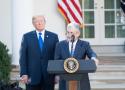
Trump’s tariffs are not designed to encourage Americans to borrow money and maximize their consumption. Nor are they designed to encourage participation in speculative stock market or real estate bubbles. America’s free trade policies encouraged such excesses after the end of the Cold War, and we can’t stand a repeat of the folly. While his critics wrongly invoke the Smoot-Hawley tariff failures of 1930, Trump’s emerging tariff policies, particularly if combined with the appropriate monetary policy, will have much better results and Make America Great Again.
Governments should just get out of the way of free trade among consumers and businesses. //
If we want trade reciprocity, the government should get out of the way and let businesses and consumers engage in voluntary exchanges with each other and overseas partners as they please. ///
So it's okay for Vietnam to charge 90% on imports from USA to protect their economy and industry, but it's not okay for USA to charge a tariff on imports from Vietnam to protect ours? How is that reciprocal?

“104 percent tariffs in China are not enough. I’m advocating 400 percent,” he said.
“I do business in China. They don’t play by the rules,” continued O’Leary, who is also the chairman of O’Shares Investment and private-equity firm O’Leary Ventures. “They’ve been in the World Trade Organization for decades. They have never abided by any of the rules they agreed to when they came in for decades. They cheat, they steal, they steal [intellectual property]. I can’t litigate in their courts. They take product technology, they steal it, they manufacture it and sell it back here,” he said.
O'Leary explained this wasn't about tariffs anymore but about how no one has taken on China for decades while they behaved badly — no one, until Trump.
"As someone who actually does business there, I've had enough," O'Leary said, saying he spoke for "millions of Americans." He said finally, with Trump there was an administration who was saying "enough."
O'Leary said we had all the cards and Xi Jinping, the Chinese leader should be on a plane here to work it out because "Xi can only stay the Supreme Leader if people are employed." He didn't hold back, "It's time to squeeze Chinese heads into the wall."
China may end up getting there themselves. The latest from China is that they are going to raise their 34 percent tariffs to 84 percent on Thursday. But at the same time, they were calling for "dialogue" with the U.S.
FischerKing
@FischerKing64
Remember that free trade with China, allowing it into the World Trade Organization, was in pursuit of a foreign policy agenda. The thinking was China would move toward democracy, become a stakeholder in the international order.
That didn’t happen. It was a failed experiment. So all those jobs lost with the goal of liberalizing China were for nought. So if we’re still dealing with an authoritarian regime engaged in a mercantilist policy, complete with currency manipulation - it’s time for the USA to try something else.
2:52 PM · Apr 7, 2025
·
James Lindsay, anti-Communist
@ConceptualJames
VIDEO: Historian Frank Dikötter reveals the secret of how the CCP took advantage of Bill Clinton to get into the WTO and force the West to destroy our manufacturing capabilities and hand it over to the CCP and its People's Republic. Absolutely mind-blowing video.
2:29 PM · Apr 5, 2025
·
Robert Sterling
@RobertMSterling
THREAD: Here's what a dive bar in Memphis taught me about tariffs, global trade, and domestic manufacturing.
(Yes, I'm being serious.)
Let's talk about why it's so hard to produce things in America, what it means for our country, and what we can do about it 🧵👇 //
If you build a steel mill in America, your billion-dollar asset is going to have hundreds of millions of dollars of equipment from companies like SMS (Germany) or Danieli (Italy). Like it or not, most of your critical infrastructure is coming over on boats from Europe.
You see, when we imported all that equipment from Germany, we didn't just have to import machinery. We also had to import the engineers to install it, configure it, and get it all working. By the hundreds.
America simply doesn't have the engineering know-how to do this anymore.
That's the salt in the wound of deindustrialization. You don't just lose the supply chains and the production footprints and the middle-class jobs and the local tax revenue.
You also lose the knowledge. You lose the skilled labor.
And it's almost impossible to get it back.
Robert Sterling
@RobertMSterling
·
Apr 3
Over the past 35 years, China went from a smaller steel industry than the US to producing more steel than the rest of the world combined.
We still make steel in America, and we make really good steel.
It would be nice if we could once again make the things that make the steel.
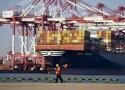
On September 5, 2016, Michael Anton wrote an essay that was seismic in its domestic effect.
It was “The Flight 93 Election.” Published under the nom de plume Publius Decius Mus (Anton was later revealed to be the author), it asserted that the election of Donald Trump was a national imperative. Not a guarantee of any sort. But a Hail Mary pass necessary if we had any hope of saving the nation:
“2016 is the Flight 93 election: charge the cockpit or you die. You may die anyway.
“You - or the leader of your party - may make it into the cockpit and not know how to fly or land the plane. There are no guarantees.
“Except one: if you don’t try, death is certain….
“One of the paradoxes - there are so many - of conservative thought over the last decade at least is the unwillingness even to entertain the possibility that America and the West are on a trajectory toward something very bad. //
I wish I knew Mr. Anton. Because I would love to discuss with him this IDENTICAL conservative cognitive dissonance on display right now with regard to Trump Trade. //
The Globalist trade status quo has been AWFUL for the United States. For many, MANY decades. DC has happily served as the world’s butcher. Slicing up the US and selling it by the pound to the rest of the world. Via multinational corporations with ZERO loyalty to the nation that made their beyond-avarice wealth possible.
Aren’t Conservatives supposed to be the patriotic ones? Anton’s Cognitive Dissonance Conservatives have spent these decades…defending this titanic US sellout. In defense of a fake “free trade” that exists only in their minds.
Charlie Kirk
@charliekirk11
In his interview with Treasury Secretary Scott Bessent, THIS FACT made Tucker Carlson pause and say, "That's the message right there. Just as a bystander I'm like, wow, okay."
This is what Sec. Bessent described to Tucker:
"The good news is we have President Trump's previous term ...working class Americans and hourly workers did better than supervisory workers. The bottom 50% of households, their net worth increased faster than the top 10% of households.
And look, I'm not happy with what's going on in the market today, but the distribution of equities across households, the top 10% of Americans own 88% of equities, 88% of the stock market.
The next 40% owns 12% of the stock market. The bottom 50 has debt. They have credit card bills. They rent their homes, they have auto loans and we've got to give them some relief."
5:41 PM · Apr 6, 2025
·
739.2K
Views
Helen Andrews
Feb 20, 2024
12:04 AM
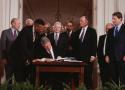
The year 1994 marked the beginning of the era of globalization. For a short time after the end of the Cold War, it was unclear what would be the driving theme of the next period in history. Then it emerged: borderlessness. The theme of the new era would be the free movement of goods, people, and capital. In a few short months on either side of January 1, 1994, the European Union was formed; the Marrakesh agreement was signed, creating the World Trade Organization; the Channel Tunnel opened; and the North American Free Trade Agreement came into effect.
Hubris was present from the beginning. During the negotiations over NAFTA, union leader Richard Trumka, then of the United Mine Workers of America, later president of the AFL-CIO, asked a Clinton administration official whether he was worried about the effect of free trade on American blue-collar workers. The official said yes, but eventually “wages would start to go up again, and things would even out around the world.” Trumka asked him how long this would take. The official answered, “About three to five generations.”
We are now one generation into this process, thirty years from the start of NAFTA, so we are at a good point to ask: Are things evening out? Is the new equilibrium we were promised any closer, and it is better than the one we had before? //
On the 30th anniversary of NAFTA, its opponents stand vindicated and its defenders are chastened—or at least they should be. In many corners of the left and right, free trade dogma is as strong today as it was the day NAFTA was signed. It is therefore worth looking back to see what exactly went wrong with NAFTA, what made people blind to its flaws, and why its costs proved greater than anyone predicted at the time. //
The U.S. lost 5 million manufacturing jobs between 1995 and 2015. Even in advanced technology products, we now have a massive trade deficit. Globalization has not made our manufacturing sector leaner and meaner. Between 2011 and 2022, manufacturing productivity in the U.S. actually declined. To be clear, these dismal numbers are not mainly the fault of NAFTA. The number of jobs lost to Mexico was relatively small; the China shock dwarfs it. Yet NAFTA set off the chain of events that allowed globalization to run free the way it did. It gave the free traders a big win and reshaped the coalitions to their advantage.
There have also been non-economic costs to NAFTA that don’t show up in economic statistics. For one, NAFTA made Mexico fat. The same cheap corn that pushed the farmers off their land flooded grocery stores with processed food and high fructose corn syrup. Coke became cheaper than water. The result was that Mexico’s obesity rate almost doubled; 17 percent of adults are now diabetic, compared to 9 percent in 1990. In 2016, diabetes was Mexico’s leading cause of death. If you believe the online nutrition gurus, NAFTA exported the same obesogenic diet patterns based on massive corn subsidies that have caused Americans to get fatter in the last half-century, far more than our rates of calorie consumption and physical activity can explain. It also gave an economic boost to the same corn producers fueling that dynamic at home.
NAFTA also made Mexico liberal. Today Mexico has gay marriage, gay adoption, and abortion, all things that would have been unthinkable when the agreement was signed. //
The lawsuit that led to the 2023 Mexican supreme court decision decriminalizing abortion was brought by a progressive NGO funded by the MacArthur Foundation, the Hewlett Foundation, and the Tides Foundation. //
Pork prices surged after the pandemic because, as journalist Rana Foroohar explains in her book Homecoming, “the largest pork producer in the United States, Smithfield, is owned by a Chinese company that takes orders from the Chinese government, which understandably wanted to export to China what pork was available during a time of scarcity.”

“This whole concept is about rebuilding an American economy around American goods, around American industry," she said. "We do already live under a tariff regime in this country, but it’s the tariff regime of China, of Mexico, of Brazil, of Australia, of countries that — Mexico won’t take our corn, Australia won’t take our beef.”
Tapper ran defense for these other countries by suggesting the European Union wouldn't take American beef and pork due to hormones used in the products. Which he presented as a final word before pivoting to another question. Rollins wasn't letting it slide.
“Wait! Hold on, Jake! No, no, no!” she said. “Here’s the bottom line: They are using fake science and unsubstantiated claims to not take our products.”
“So it isn’t just that they have high tariffs - thank you for making this point for me - I meant to make it."
"It’s the way they’ve treated our products,” Rollins added. “‘Oh, sorry, we can’t take your beef since 2002 because you use a certain type of feed.' That’s absolute bull. Our farmers and ranchers produce the safest, most secure, and best food in the world!”
Red in Illinois
2 hours ago edited
Trump is using tariffs (admission price) to the largest consumer market as leverage against other countries to lower their trade barriers. Those trade barriers could be tariffs, import quotas, currency manipulation, regulations etc.
All the “free traders” that are panicking right now apparently haven't been paying attention to Trump for the last 8yrs. This is quintessential “Art of the Deal” maneuvering.
Scare the 💩 out of countries that restrict our imports to the point they cry uncle and lower/eliminate their barriers to our exports. Cut deals that result in something closer to free trade. Where comparative advantage actually guides trade.
Apparently, its already working with several countries as they are preparing to send trade delegations to the WH. //
Outerlimitsfan
2 hours ago edited
Well complete free trade between Europe and United States that Elon desires certainly wasn't going to occur by continuing the same policy of the last several decades.
Europe was quite enjoying the status quo of using some protectionism while we also paid a huge amount for NATO and gave away foreign aid to numerous countries.
Big reason why many European countries had the cash to spend on socialist domestic welfare programs was because they didn't need to spend much on military defense. //
Bring Back Bugs Bunny
2 hours ago
Tariff negotiations (Trumps position) are exactly how we reach zero tariffs with EU (Musks position). Trump Musk disagree on tariffs…my bunny tail! //
Chelan Jim
2 hours ago
Musk and Trump are saying the same thing: There should be no tariffs.
Waiting for other countries to voluntarily give up their tariffs on our goods is fairy tale. We have had low tariffs on them for a considerable time and they are not going to budge without some nudging.
Why is Heinz Ketchup Called "Tomato Seasoning" in Israel—and How Trump's Tariffs could end up being great for Israelis.
The victims might be the monopolies, Netanyahu and the public might be the victors. This presents huge opportunities for the savvy. Here’s how: (1/8)
Shipwreckedcrew @shipwreckedcrew
Everyone should read this link and understand the implications.
We have $29 trillion in debt held by the "public."
33% of that debt, or $9 trillion, will mature in the next 12 months. That means we will need to sell new bonds to raise the money to pay off that $9 trillion to the holders of the bonds that will mature.
Five years ago, the AVERAGE interest rate across all of the national debt was 2.32%. That meant the mix of T-Bills (2-12 months) to bonds (up to 30 years) could be averaged out to 2.32%.
Today, because of the borrowing during the Biden Admin post COVID using mostly 3 and 5 year bonds, the average interest rate across all the debt is now 3.35%
That 1.03% increase is actually a nearly 50% increase in borrowing costs across the entirety of the debt.
That's why interest on the national debt this year exceeds the Pentagon budget.
What Pres. Trump is doing by design is to drive down interest rates so that when we have to sell $9 trillion in new bonds over the next 12 months, the interest rates on the new bonds will be less than the interest rates on the bonds sold that were sold by the Biden Admin to fund the nonsense crapola that DOGE has been exposing.
The Hancock @HancockThe1011
·
15h
In short the Biden administration deliberately attempted to bankrupt America to funnel $ to the DC connected class. Arrest them all and throw away the key.
Uğur Demir @lastpresser1
·
5h
I agree with your points — just want to add one thing:
In a normal year, Treasury issuance is roughly 20% short-term and 80% long-term. But in recent years, it's flipped — around 80% is now short-term. That’s why markets have become hypersensitive to quarterly refunding...
MTM 14 @mtm14
·
13h
It is worse than that too…when rates were zero bound under Yellen’s term that bubble head academic did all short term debt instead of issuing more 30 year bonds. Bessent should bring back 20 year issuance and make many of those bonds callable at specific intervals....
cpindc @cpindc
·
18h
I've said this for months. Yellen and President Ron Klain deliberately rolled debt into short term notes.
Anyone who looks at bond market sees the play.
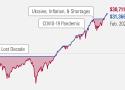
So, what have we learned from these recent crashes?
- It’s impossible to predict how long a stock market recovery will take.
- If you don’t panic and sell your stock holdings when the market crashes, you will be rewarded in the long run. //
When you incorporate the effect of inflation, one dollar (in 1870 US dollars) invested in a hypothetical US stock market index in 1871 would have grown to $30,711 by the end of February 2025.
The substantial growth of that $1 highlights the enormous benefits of staying invested for the long term.
Still, it was far from a steady increase over that period. There were 19 market crashes along the way, with varying levels of severity. //
What does this history tell us about navigating volatile markets? Mainly, that they’re worth navigating.
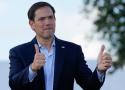
President Trump has made one intention very clear, that being that he will be working to restore the United States' industrial base. He's been taking steps to do that, and many of those steps have involved tariffs intended to balance trade. This effort has culminated (so far) with the April 2nd "Liberation Day" reciprocal tariffs. Democrats and even some Republicans are opposing the tariffs, but one administration member, Secretary of State Marco Rubio, went on record on Friday in support of the president's plans. //
Granted, tariffs make many uncomfortable, and that discomfort is not limited to the left; free-trade advocates on the right are concerned as well. But, as President Trump points out, free trade has to work both ways, and many nations have heavy tariffs on American goods.
The free-market advocate website Issues & Insights is a little more cautious on the matter, but they are not ruling out the idea that the tariffs may have the desired effect. //
If Trump’s approach works better than all those trade deals at bringing down other nations’ tariffs, who can complain? Certainly not free traders.
You don't get much more free trader than I&I's editorial board. //
The thing is, we're in terra incognita here. The United States has not tried a major tariff reset since Smoot-Hawley in 1930. And, despite what you will hear in some quarters, the Smoot-Hawley tariffs didn't cause the Depression; the market crash that led to that financial disaster happened in 1929. No less an economist than Milton Friedman opined that the effect Smoot-Hawley had on the Depression was minimal. What's more, the global economy is vastly different now than it was in 1930. Britain, in 1930, had the world's largest and most powerful navy on the planet and a powerful industrial base, while the United States was still moving from being a predominantly agricultural economy to an industrialized one - and only ten years later, we would be the "arsenal of democracy." Japan was the primary power in Asia, militarily and economically, while China was an agricultural country mired in what we would now call the third world.
Much has changed since then. //
anon-9s7n
3 hours ago edited
Trump has been right about pretty much everything so far. The status quo of being a services economy (that is pretty easy to compete against given our woeful status of education) is not acceptable to anyone with a functioning cranium. We have to incentivize manufacturing in this country and not one single person at any level of the public square has come up with a better way than this.
All the detractors need to clamp their pie holes shut until they can come up with a detailed, multi-year strategy to achieve the same end of bringing manufacturing back to this country.
I'm far more interested in FAIR trade than free trade. Free trade just means giving other nations a free ride on the back of Americans. Enough! //
Eric R EDMUND
an hour ago
There were 10% drops twice in 2024 with no tariffs and a Dem in the White House, no one panicked, almost no one even noticed. The markets will recover quickly enough and if the number of people working has increased in the mean time, it will based on healthier fundamentals. //

Red in Illinois
2 hours ago edited
Rand Paul is good on alot of things but he should not be in charge of anything. His “principles” will not allow him flexibility to actually get to where his principles are occurring.
We do not have free trade right now. We have free trade for thee but not for me. We allow most countries to import their goods to our shores at little cost while these same countries create barriers to our exports….making them non-competitive in foreign markets. These barriers can be out right tariffs, import quotas, regulations that make thier domestic good more affordable and/or manipulate their currency. They can also subsidize their industries effectively making them undercut our products.
For those that havent learned how Trump operates yet….I’ll clue you in. The end goal is not to collect tons of $ from these tariffs nor to raise prices of imported goods. That may occur during the interim though. The goal is to get these countries to reduce their barriers to our exports by using the admission price to the US consumer market as leverage.
In other words, these tariffs are meant to promote FREE trade between countries…not end it.
I don’t know if it will work but I have learned a long time ago that Trump often ends up proving alot of people wrong. I think he’ll do it again.