JHW252
5 hours ago edited
If tariffs are so bad why is the rest of the world using them against us ? My father was a successful businessman who owned a small engineering firm. He predicted everything that is happening now back in the 80’s.
“If they sign NAFTA that’s the end of manufacturing in the United States”
“There is no substitute in an economy for the blue collar worker and his paycheck”. //
Blue State Deplorable
6 hours ago
In general, I agree tariffs drive up prices and discourage trade or so I was taught as an Econ major.
But, I think that analysis fails to capture what Trump seeks. This is a gambit. He’s leveraging the power of the American marketplace to encourage other nations to trade fairly. If you wish to export to the US, you’ll eliminate the tariffs you impose on American goods (and subsidies to your manufacturers that allow them to compete unfairly) or suffer the consequences in the form of retaliatory tariffs. Trump’s betting most nations will fold. Whether it works, remains to be seen.
At the same time, Trump is wooing investment from abroad to create jobs and reinvigorate America’s manufacturing base. He’s also seeking to incentivize American manufacturers to produce goods in the US. Why? Well jobs, as I said, but it’s more strategic than that.
Trump sees a dangerous world and with it, declining US power. He believes that a weakened US makes the world more dangerous and less stable. To shore up US power, he’s looking to re-establish American manufacturing and wealth (particularly middle class wealth). Why? So that America can continue to project power to ensure a stable, less dangerous world and wield that power lethally when it becomes necessary.
The tariffs Trump’s imposing are designed to reset America’s trade relationship. They are intended to be short term in nature and predicated on the assumption that most of the world will play ball. As I said above, whether it works remains to be seen. //
Blue State Deplorable anon-lier
4 hours ago
Yes, “unequal tariffs” make those imports more expensive for American consumption, but they remain cheaper than goods manufactured here. Why? For a lot of reasons. Some of it has to do with the cost of producing in a first world economy, some of it has to do with direct and indirect subsidies that importing manufactures benefit from like Chinese slave labor and the like.
Trump’s view of the world is a little different though. His goal is not higher prices or reduced trade, it’s trade on an equal footing, it’s more manufacturing in America, it’s more good paying American jobs. Could we see higher prices? Possibly, but if real wages go up, it doesn’t necessarily matter.
It’s a complex issue, but I do heed Thomas Sowell’s warning (see above). Make no mistake, Trump’s gambling. It could pay off handsomely, but there could also be severe consequences. //
Outerlimitsfan
6 hours ago edited
Meanwhile Rand Paul is Saying tariffs and protectionist policy was a political disaster for McKinley in 1890. Yes, McKinley(a Congressman) and his party lost badly soon after.
Rand failed to mention though that McKinley later became President in 1896 and reelection for a second term. Rapid economic growth occurred under his protectionist/tariff policies as President. Highest tariffs in U.S. history occurred in late 1800s/early 1900s.
Also Alexander Hamilton and many of the founders supported tariffs and protectionism. //
surfcat50 Outerlimitsfan
6 hours ago
People forget, or may not know, that prior to the constitutional amendment bringing the income tax to life in the US in 1913 (using the same lies then that only “the rich” would pay it), the federal government was funded entirely through duties, excise taxes and . . . TARIFFS.
Treasury Secretary Has Blunt Warning for Countries Upset Over Trump Tariffs: 'Take It In' – RedState
anon-rjsc
6 hours ago
President Trump’s tariffs are much more than a simple tool to get concessions and/or collect money. He’s setting a new global baseline for international relations. For 40 years, the baseline has been zero US tariffs, high tariffs into other countries, and we impose sanctions when we want countries to change. The new baseline is a bilateral reciprocal tariff. From there, we reward a country AFTER it does something beneficial to us, like lowering their tariffs. This new baseline opens countless opportunities way beyond tariffs.

Genuine question: what is the purpose of business?
Two of the most influential thinkers—Adam Smith and Milton Friedman—offered on-the-surface competing answers, which not only created capitalism, but have driven some of the biggest debates in capitalism. And, interestingly, one of the most searched topics in our Robinhood Learn library is on
this topic
. Understanding their views isn’t just an intellectual exercise—it’s key to understanding how modern businesses operate and why certain economic policies shape our world.
Let’s start with Adam:
In 1776, Adam Smith, the so-called father of macroeconomics, attempted to answer, publishing the first edition of what came to be known as The Wealth of Nations. In it, he established scientific aspects of economics we still use today. These included:
The division of labor and specialization for increased efficiency.
The wealth of a nation is not calculated by how much money (or gold in his time) is in the bank, but is instead derived by how value is created (through the transformation of raw materials to goods) that then 'flows' through society. This came to be known as gross domestic product (GDP).
Invisible Hand theory: in the pursuit of self-interest to be the best under certain conditions, competitive society benefits from the unintended and uninterrupted consequences of individuals pursuing their own self-interest. Free trade was an intricate part of this.
For anything you read, it’s crucial to understand the author’s frame of reference, so here’s the context behind his theory: Adam Smith’s book was purposefully political, opposing the vested interests who advocated protectionism and who were driving forward Britain’s colonial and slave trades of the time. Smith was also a moral philosopher which came through in his dissonance for over-simplification.
Fast forward nearly 100 years later, to September 1970, Milton Friedman wrote in the NY Times: “
A Friedman doctrine
–The Social Responsibility of Business Is to Increase Its Profits”. As the title shares, he asserted that the only “social responsibility” of a business is to increase its profits within legal and ethical bounds, while any money or time spent on the pursuit of social initiatives was effectively imposing “taxes” on shareholders, employees, and customers. The one cross-over with Adam Smith is that the focus on a free-market system and similar assumption that businesses (vs people) will naturally act responsibly to maintain their reputation, retain customers, and attract employees.
The Simon–Ehrlich wager was a 1980 scientific wager between business professor Julian Simon and biologist Paul Ehrlich, betting on a mutually agreed-upon measure of resource scarcity over the decade leading up to 1990. The widely followed contest originated in the pages of Social Science Quarterly, where Simon challenged Ehrlich to put his money where his mouth was. In response to Ehrlich's published claim that "If I were a gambler, I would take even money that England will not exist in the year 2000", Simon offered to take that bet, or, more realistically, "to stake US$10,000 ... on my belief that the cost of non-government-controlled raw materials (including grain and oil) will not rise in the long run".
Simon challenged Ehrlich to choose any raw material he wanted and a date more than a year away, and he would wager on the inflation-adjusted prices decreasing as opposed to increasing. Ehrlich chose copper, chromium, nickel, tin, and tungsten. The bet was formalized on September 29, 1980, with September 29, 1990, as the payoff date. Ehrlich lost the bet, as all five commodities that were bet on declined in price from 1980 through 1990, the wager period.
USAspending is the official open data source of federal spending information,
including information about federal awards such as contracts, grants, and loans.

Efficiencies
Tracking DOGE wins

In fiscal year 2023, the United States disbursed $72 billion of assistance worldwide on everything from women's health in conflict zones to access to clean water, HIV/AIDS treatments, energy security and anti-corruption work. It provided 42% of all humanitarian aid tracked by the United Nations in 2024. //
NavyVet Largo Patriot
11 hours ago
We should amend the Constitution, if we can't get legislation, that prevents any and all aid, grant, or other funding when the government has a deficit.
If we can't afford to give money away - i.e. government has to borrow money to meet its obligations - then it should be expressly illegal, and, any elected official proposing it should be immediately removed from office and barred from running in the future. //
doctor goodheart Weminuche45
4 hours ago
In my personal experience (Russia 1990's), it's a transfer of wealth from taxpayers to Beltway bandits, with a tiny percent of funds actually hitting the ground in foreign countries.
Per William Easterly's books (e.g. The White Man’s Burden: Why the West’s Efforts to Aid the Rest Have Done So Much Ill and So Little Good), foreign aid has repeatedly been shown to do more damage than good. It creates a large pool of money and therefore power to one tribe vs. another tribe; substitutes US-made food supplies for local growers, thereby perpetuating poverty--and so on and so forth as President Reagan would have said.
Anyway what to the leftists care? They used to be concerned about world poverty. Now they want to worsen it to depopulate the world, or at least keep most of the world unable to have cheap energy, the source of prosperity and health.

I spent many years conducting root cause analyses and teaching major corporate employees, mostly engineers, how to do root cause analysis. One of the tools for root cause analysis is what some call "5 Whys," but I always called a "Why-Why Analysis," as sometimes it may take two "Whys" and others, ten. In this case, there are too few houses. But they don't ask or answer the next question: Why? //
When asked, "How do you know when you've arrived at a root cause," my stock reply was, "When you arrive at the point where some person or group of people made a decision, that's likely to be your root cause." //
Percyisacat
4 hours ago
Where did they find 1100 sq feet for $2500 a month in Campbell?????? My son lived in Santa Clara, and paid over $3,000 a month for rent.

An ironclad law of economics regarding employment is this: To be retained, an employee must return value to the employer in excess of the cost of employment. Minimum wage laws place an artificial floor on the cost of employment; these laws not only price the entry-level job-seekers out of the market but they force employers to seek alternatives to hiring people.
Now, Chick-fil-A, while not citing any minimum wage laws as a reason for implementing this, has introduced the automated lemon squeezer for their vaunted lemonade prep. //
These burger bots and lemon squeezers will price the low-skilled worker out of a range of jobs. True, to some extent, the move to automation is inevitable; automation increases efficiency, which every business seeks. Even so, there was a time, not all that long ago, when many young people's introduction to the workplace as entry-level workers was a job in a fast-food joint. Increasingly, automation, in order-taking and food preparation, is taking over from those young people and depriving them of valuable experience. Minimum wage law accelerates the loss of these entry-level jobs.
This is why, whenever a minimum wage law is proposed, the question to ask is, "Do you want more burger bots? Because this is how you get more burger bots.". //
DarthCY
17 days ago
The minimum wage is there for unions to have something to raise their wages from. That is why Dims covet it so much. Anybody who thinks you need to raise it to be able to sustain yourself off of a single minimum wage job is economically illiterate. //
Steamfish jacktate82
17 days ago
Keypunch operators, highway toll takers, telephone operators, uniformed gas station attendants, and newspaper delivery boys have all joined the jobs you mentioned as positions filled by humans in my youth but vanishing or gone today. The rise of AI will undoubtably be adding to that list soon.
Protectionism worked for China’s Internet companies, which leapfrogged their American counterparts. Online sales comprised 27% of total retail sales in China in 2022, compared to 15% in the United States. Mobile payments in China reached $US 70 trillion with a total of 158 billion transactions, compared to $8 trillion in the United States. //
Washington, DC, in October 2022, banned the export of high-end computer chips (with a transistor gate width of 7 nanometers or less) as well as the tools and software needed to make them. //
It isn’t clear what the Biden Administration was thinking. The official rationale for the chip control was to stop the Chinese military from gaining an advantage. According to a 2022 RAND Corporation study, virtually all military applications employ older chips (see chart below). The older processes are easier to harden, and most military software has been tested for years on existing hardware rather than rewritten for newer chips. //
If the objective was to hamstring China’s economy, it has failed. The chip ban undoubtedly imposed severe costs on China, which is attempting to reinvent large parts of the semiconductor supply chain at high cost. But China can recompense itself for those costs by turning excess supply into a vehicle to dominate semiconductor markets globally in the not-too-distant future.
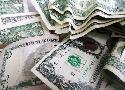
In Tuesday X post, Musk's DOGE wrote that the U.S. spends about 3 cents to mint each penny, which, of course, is only valued at 1 cent.
"The penny costs over 3 cents to make and cost U.S. taxpayers over $179 million in FY2023," DOGE wrote. "The Mint produced over 4.5 billion pennies in FY2023, around 40% of the 11.4 billion coins for circulation produced."
In pointing out the penny's costliness, DOGE is taking aim at an issue that has sparked debate for years, although the price of manufacturing the cent has only grown over the past several years. In 2016, for instance, the U.S. was spending about 1.5 cents to mint each penny, or less than half of its current manufacturing cost. //
The only question remains this: Will we have to start offering our pensive friends and acquaintances a nickel for their thoughts? And are they worth it?
There is much to be said for the new administration’s plan to have a nongovernmental organization investigate how well, or how badly, government agencies are currently handling the taxpayers’ money. But there is a limit to how much money can be recovered by simply cutting back on “waste, fraud and abuse” in federal spending.
There are, however, additional billions of dollars that could be tapped, from a source that not many people think about. That is the vast—almost unbelievable—amount of land owned by the federal government. Some of that land—such as military bases—is used to house the government’s own operations. But the great majority of that land is not.
The rest of this government-owned land is so vast that there is little to compare it with—except whole countries. And not small countries like Belgium or Portugal. The amount of land owned by the National Park Service alone is larger than Italy. The land owned by the Fish and Wildlife Service is larger than Germany. The land owned by the Forest Service is larger than Britain and Spain combined. The land owned by the Bureau of Land Management is larger than Japan, North Korea, South Korea and the Philippines combined.
The idea of selling huge amounts of government-owned land is not new. Before the federal income tax was created in the early 20th century, land sales were sometimes a significant source of federal government income in the preceding two centuries. The prospect of large-scale land sales was considered during the Reagan administration, but the political opposition was too strong.
As of 2015, government-owned lands were valued at $1.8 trillion by the Commerce Department. This is the kind of money that can make a real contribution to the government’s fiscal balance, at a time when so many government operations are urgently in need of support.
As for the current value of these lands to the government, that value is largely negative. The money that these lands bring in is often only a fraction of what it costs the government to take care of them. Wildfires on land managed by the federal government have been about five times the size of wildfires on “non-federal lands,” according to a 2022 study by the Congressional Budget Office.
Land transferred from federal ownership to the market economy can also contribute to more affordable housing. When the same kind of house costs several times more in one part of the country than elsewhere, it is often because the cost of the land is higher rather than because the house costs more to build. That in turn is often because the land is either more scarce or because of laws restricting the building of anything on that land. But, where more land is available to build on, the same kind of house can cost a fraction of what it costs elsewhere.
The federal government owns a little more than one-fourth of the total land area of the United States. The time is long overdue to consider whether that is the best economic arrangement. And reconsideration is especially needed at a time of urgent fiscal problems.


A federal judge ruled Friday that American Airlines's pension fund had violated the law by making investment decisions using criteria other than the interests of the plan beneficiaries. The decision by Judge Reed O'Connor, a George Bush appointee serving the Northern District of Texas, comes from a decision by American Airlines management to allow the pension fund to be managed by BlackRock, which in turn used Environmental, Social, and Governance principles rather than financial performance to guide investment. //
For the reasons explained below, the Court concludes that the facts compellingly demonstrated that Defendants breached their fiduciary duty by failing to loyally act solely in the retirement plan’s best financial interests by allowing their corporate interests, as well as BlackRock’s ESG interests, to influence management of the plan. However, the facts do not compel the same result for the duty of prudence. Defendants acted according to prevailing industry practices, even if leaders in the fiduciary industry contrived to set the standard. This is fatal to Plaintiff’s breach of prudence claim. //
The day before Judge O'Connor ruled that BlackRock had sacrificed the pension payout to plan beneficiaries on the altar of ESG investing, BlackRock, the world's largest asset manager, with $11.5 trillion in assets under management, announced its withdrawal from Net Zero Asset Managers Initiative, an international group of asset management companies "committed to supporting the goal of net zero greenhouse gas emissions by 2050 or sooner."
This makes BlackRock the latest asset manager to reconsider the business model of screwing over investors in exchange for invitations to all the right events. //
The exits are clearly linked to the American Airlines lawsuit, which imposes liability for damages on asset managers for breaching their fiduciary responsibility. One can't ignore the effect of an incoming Congress that is skeptical of ESG. Last summer, the House Judiciary Committee labeled the ESG movement as violating antitrust law.
Less than a year before the end of World War II, then-U.S. Secretary of the Treasury Henry Morgenthau drew up a nightmarish plan to punish postwar Germany.
After the serial 1870-1871 Franco-Prussian War, World War I, and World War II—along with the failed Versailles peace treaty of 1919—the Allies in World War II wanted to ensure there would never again be an aggressive Germany powerful enough to invade its neighbors.
When the so-called Morgenthau Plan was leaked to the press in September 1944, at first it was widely praised. After all, it would supposedly render Germany incapable of ever starting another world war in Europe.
Morgenthau certainly envisioned a Carthaginian peace, designed to ensure a permanently deindustrialized, unarmed, and pastoral Germany. //
When the dying Nazi Party got wind of the plan, Adolf Hitler’s propaganda minister Joseph Goebbels had a field day. He screamed to Germans that they were all doomed to oblivion if they lost the war, even growing opponents of the Nazi Party.
Even many Americans were aghast at the plan.
Gen. George Marshall, the Army chief of staff, warned that its mere mention had galvanized German troops to fight to the end, increasing American casualties as they closed in on the German homeland.
Ex-President Herbert Hoover blasted the plan as inhumane. He feared mass starvation of the German people if they were reduced to a premodern, rural peasantry.
But once the victorious allies occupied a devastated Germany, witnessed its moonscape ruined by massive bombing and house-to-house fighting, and discovered that their “ally” Russia’s Josef Stalin was ruthless and hellbent on turning all of Europe communist, the Harry Truman administration backed off the plan.
There is a tragic footnote to the aborted horrors of the Morgenthau Plan. Currently, Germany is doing to itself almost everything Morgenthau once dreamed of.
Its green delusions have shut down far too many of its nuclear, coal, and gas electrical generation plants.
Erratic solar and wind “sustainable energy” means that power costs are four times higher than on average in the United States.
Once-dominant European giants Volkswagen, BMW, and Mercedes are now bleeding customers and profits. Their own government’s green and electric vehicle mandates ensure they will become globally uncompetitive.
The German economy actually shrank in 2023. And the diminished Ruhr can no longer save the German economy from its own utopian politicians.
The German military is all but disarmed and short thousands of recruits.
German industries do not produce enough ammunition, tanks, ships, and aircraft to equip even its diminished army, navy, and air force. //
After World War II, the Truman administration rejected the notion of a pastoral, deindustrialized, and insecure Germany as a cruel prescription for poverty, hunger, and depopulation.
But now the German people themselves voted for their own updated version of Morgenthau’s plan—as they willingly reduced factory hours, curtailed power and fuel supplies, and struggled with millions of illegal aliens and porous borders.
Germans accept that they have no military to speak of that could protect their insecure borders—without a United States-led NATO.
Eighty years ago, Germany’s former conquerors rejected wrecking the defeated nation as too harsh. But now Germany is willfully pastoralizing, disarming, deindustrializing—and destroying—itself.

If the US government absorbed/forgave all private debt to China and then defaulted on its own debt to China, that might be a pretty big pile of dollars that Beijing could kiss goodbye should they attack Taiwan. And it might deter them from doing just that. As a natural consequence of this goes the presumption that we would no longer trade with China. We're their biggest customer, and losing the US market is also going to be a kick to their stomach. //
lifer1
4 hours ago
There is a flaw in your assertion that "money has no intrinsic value." While true, it is too simplistic. To be sure, that assertion is the basis for the ill-named, Modern Monetary Theory, that has caused so many Swamp creatures to spend like debt and deficit mean nothing until Election season.
Money represents goods and services. It is an intermediate currency whose soundness is key to translating one type of commodity or labor to another with relatively equal representation.
The problem with MMT and spendthrift politicians who reconcile their excess spending by printing more currency is that it doesn't so much devalue the currency as it devalues what the currency represents, which then increases the number of dollars needed to complete commercial transactions.
That is the meaning of inflation. When one defaults on a debt like ours to China, that has the identical effect of printing $1T in new currency to flood the markets as well as undermining the markets' trust and confidence in the brokers of that currency.
Do you want to see the dollar replaced as the global currency? Default on a debt.
Bad idea. Such a bad idea that its proponent likely failed Econ 101.
No, the way that's been handled, historically, is to win a war and assign a war reparations to the loser that has the effect of canceling the debt. It's not done overtly since doing so could be read as defaulting. No, the loser is assigned damages that effectively covers the debt. Then it becomes a ledger exercise, provided everyone believes it to be legitimate.

Javier Milei has shown what can be done. He's turned a deficit into a surplus for the first time in more than 100 years in their country, and in such a short time in office.
It may take a little longer for us, but how do you do it? With commitment, will and afuera! //
Musk cited remarks from Ronald Reagan from 1975, before he was president. But it's all kinds of sense when it comes to tax policy as he explains that even then the government was taking about half of what Americans earn. Reagan spoke out against taxes on businesses that the left pushes but then end up landing on the people. //
"We oughta have tax reform, and we oughta start by making it so simple you don't have to hire a lawyer to figure out how much you owe every year," Reagan said.
"We live in the only country in the world where it takes more brains to figure out your income tax than it does to earn the income," he quipped.
"There's very little that government can do as efficiently and economically that people can't do themselves. And If government would shut the doors and sneak away for three weeks, we'd never miss 'em." //
How much of a tangle is everything in? The Office of Management and Budget can't even tell you how many "boards, commissions, agencies, bureaus, and departments there are in the federal government."
We've been talking about this for almost 50 years. We're at a point where the words are more true than ever and where we now have a golden opportunity.
You finally have Trump, Musk, and Ramaswamy with the force and the will. Now, they need to harness that same common sense and make it happen, despite the people who will try to stand in their way.

Nancy Mace
@NancyMace
·
Follow
It’s not the number of pages that matter - it’s what’s in those pages.
This CR had the same level of spending today as it did yesterday, but the debt ceiling was suspended, meaning there was no limit on the debt. I don’t trust Congress or the government to spend responsibly… Show more
6:50 PM · Dec 19, 2024
Vivek Ramaswamy @VivekGRamaswamy
·
Shorter = better. This bill is only 116 pages, instead of 1,500+ pages. Took a LOT less time to read. Glad to see the following garbage from yesterday’s bill removed in the current version:
- Congressional pay raise/health benefits
- 17 miscellaneous commerce bills
- Random new… Show more
Elon Musk @elonmusk
Yesterday’s bill vs today’s bill 😂
4:52 PM · Dec 19, 2024
Townhall.com @townhallcom
·
.@RepChipRoy: "SWAMP'S GONNA SWAMP!"
"We're just fundamentally un-serious about spending. As long as you got a blank check you can't shrink government. If you can't shrink government you can't live free!"
10:51 AM · Dec 17, 2024 //
This is not the Way. And how long has it been, by the way, since Congress approved an actual budget? Oh, that's right - 1997. It would almost be funny if it wasn't so alarming; it's like they aren't even trying. //
We, and our elected representatives, would do well to remember the words of the late Barry Goldwater:
I have little interest in streamlining government or in making it more efficient, for I mean to reduce its size. I do not undertake to promote welfare, for I propose to extend freedom. My aim is not to pass laws, but to repeal them. It is not to inaugurate new programs, but to cancel old ones that do violence to the Constitution, or that have failed in their purpose, or that impose on the people an unwarranted financial burden. I will not attempt to discover whether legislation is "needed" before I have first determined whether it is constitutionally permissible. //
TheAmericanExperiment
3 hours ago edited
"I'll go one step further and say that we must reduce not only the deficit but the national debt. "
Ward,
The national debt is a fiction. The interest however is very real and the owners of The Federal Reserve System (fancy name for private -for profit corporation) are raking it in.
JP Morgan financed two American wars in the late 1800s. How did he do it. He loaned the Federal Government actual dollars from his bank reserves. in the early 1900s he had an idea for the most lucrative business in the history of the world. Financing the Federal Government with monopoly money.
In 1910 he got together with eight other titans of banking and crafted the plan for The Fed. 15 regional banks all plugged into a central bank in DC but ultimately run by The Fed in New York.
What's cost of printing money? Inflation.
If the Federal government was printing money into existence that would be the cost. Inflation.
So why do we have a national debt in addition to inflation? The Mandrake Mechanism. The Federal Government doesn't print money. In 1913 they granted The Fed a charter to do that and then loan the money to the government at interest. The Fed literally creates money out of this air and then loans it to the American people. Now The Fed can only finance debt and what was their model? Financing wars. The US Congress was very debt averse but one thing you could count on them for... financing a war. The story goes on and on.
For the last 110 years we've had a State Department and CIA fomenting trouble all over the world. Starting fires and then putting them out. And back home we have an FBI always vigilant for any member of Congress, the press or the public for that matter who questions the lucrative arrangement.
So there is no national debt. It's all stolen money. Call it the crime of the last century. //
Leitmotif Sam Grant
an hour ago
Understood. And I do not disagree that the Creature From Jekyll Island has been a manifest cancer on the body politic of the republic
But, I'm less inclined to agree that it's principal goal has been to forment foreign wars.
Rather, it's principal goal has been to privatize the profits of big member banks, while simultaneously socializing xing the risks and financial busts that are a direct result of the inherently fraudulent fractional reserve banking paradigm that is, alas, at the very core of our modern financial system. //
anon-qacb Billy Wallace
4 hours ago edited
In 2008 our National Debt was around 10 Trillion, that's the year Obumer took office. The Democrats have held the Presidency 12 out of the last 16 years and our deficit is now 36 Trillion. So it took us 240 years to get to 10 trillion and only 16 years to add another 26 trillion more. How does that even happen, That is NUTS ! Regardless of which party you belong to we all should have enough brains to realize this can't continue. Name calling does nothing to help the cause and bring people together.