
An open source, self-hosted implementation of the Tailscale control server.
What is Tailscale
Tailscale is a modern VPN built on top of Wireguard. It works like an overlay network between the computers of your networks - using NAT traversal.
Everything in Tailscale is Open Source, except the GUI clients for proprietary OS (Windows and macOS/iOS), and the control server.
The control server works as an exchange point of Wireguard public keys for the nodes in the Tailscale network. It assigns the IP addresses of the clients, creates the boundaries between each user, enables sharing machines between users, and exposes the advertised routes of your nodes.
A Tailscale network (tailnet) is private network which Tailscale assigns to a user in terms of private users or an organisation.
Design goal
Headscale aims to implement a self-hosted, open source alternative to the Tailscale control server. Headscale's goal is to provide self-hosters and hobbyists with an open-source server they can use for their projects and labs. It implements a narrow scope, a single Tailscale network (tailnet), suitable for a personal use, or a small open-source organisation.


WireGuard is an open-source modern VPN (Virtual Private Network) solution that utilizes cryptography protocols to create secure network connections between devices. It's efficient and offers improved reliability than traditional VPN protocols like IPSec. This guide explains how to install WireGuard VPN on a FreeBSD 14.0 and securely configure network tunnels on the server.

But if you happen to have a cloud-based Linux server running anyway, building a WireGuard VPN can be a simple and free way to add some serious, compromise-free security and privacy to your life.
If you plan to limit the VPN to just devices owned by you and a few friends, you'll probably never even notice any extra resource load on your server. Even if you had to fire up and pay for a dedicated AWS EC2 t2.micro reserved instance, the annual costs should still come out significantly cheaper than most commercial VPNs. And, as a bonus, you'll get complete control over your data.
Right now I'm going to show you how all that would work using the open source WireGuard software on an Ubuntu Linux server.
Why WireGuard? Because it's really easy to use, is designed to be particularly attack resistant, and it's so good at what it does that it was recently incorporated into the Linux kernel itself.
The actual work to make this happen really will take only five minutes - or less. Having said that, planning things out, troubleshooting for unexpected problems and, if necessary, launching a new server might add significant time to the project.
This week there was an unfortunate outage on the mynetname.net Dynamic Domain Name Service (DDNS) that MikroTik hosts for free to their customers. Many MikroTik users all over the world rely on this service for remote access to their MikroTik infrastructure. Official documentation is here: https://wiki.mikrotik.com/wiki/Manual:IP/Cloud#DDNS
I thought it would be useful to share what I learned about how RemoteWinBox solves this problem for its customers, so that you too can can roll your own remote access to your MikroTiks!
FreeBSD: Setup SoftEther and configure Offshore 100% Logless VPN server (Windows 10 as clients)

Let’s go through the entire Tailscale system from bottom to top, the same way we built it (but skipping some zigzags we took along the way). With this information, you should be able to build your own Tailscale replacement… except you don’t have to, since our node software is open source and we have a flexible free plan.
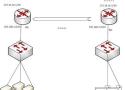
how easy it is to set up an IP tunnel between two locations. This will allow you to access files on a server and share printers between two locations, no matter how far apart. In addition, it enhances data security by encrypting packets as they travel through the tunnel. To accomplish this task, you will need two Mikrotik routers, one at each location, and two public IP addresses.

The attack works by manipulating the DHCP server that allocates IP addresses to devices trying to connect to the local network. A setting known as option 121 allows the DHCP server to override default routing rules that send VPN traffic through a local IP address that initiates the encrypted tunnel. By using option 121 to route VPN traffic through the DHCP server, the attack diverts the data to the DHCP server itself. //
We use DHCP option 121 to set a route on the VPN user’s routing table. The route we set is arbitrary and we can also set multiple routes if needed. By pushing routes that are more specific than a /0 CIDR range that most VPNs use, we can make routing rules that have a higher priority than the routes for the virtual interface the VPN creates. We can set multiple /1 routes to recreate the 0.0.0.0/0 all traffic rule set by most VPNs. //
Interestingly, Android is the only operating system that fully immunizes VPN apps from the attack because it doesn't implement option 121. For all other OSes, there are no complete fixes. When apps run on Linux there’s a setting that minimizes the effects, but even then TunnelVision can be used to exploit a side channel that can be used to de-anonymize destination traffic and perform targeted denial-of-service attacks. //
The most effective fixes are to run the VPN inside of a virtual machine whose network adapter isn’t in bridged mode or to connect the VPN to the Internet through the Wi-Fi network of a cellular device.

- First, open PuTTy.
- For “Host Name” enter the domain name or IP address of the server that will act as the proxy.
- From the “Category” section on the left, scroll to “Connection” > “SSH” > “Tunnels”.
- Enter the local port you want to use for the proxy connection in the “Source port” field. A common choice is “8080”.
- Assuming you picked 8080 for the port, then enter “localhost:8080” (without quotes) as the destination. This tells PuTTY to listen to data sent to it on port 8080 from the same computer putty is running on, and forward it to the remote server.
- Where it says “Forwarded ports”, select “Dynamic”. This enables the SOCKS protocol.
- Now click “add”.
- Go back to the “Session” option in the left panel. Type in a name for this connection under the “Saved Sessions” text box.
- Now click the “Save” so you’ll be able to open the connection later without repeating these steps again.
- Almost done! Just click the “Open” button.
all the tags from https://b.plas.ml
1st-amendment 2nd-amendment 4th-amendment 5th-amendment 9/11 a8 abortion acl adhd afghanistan africa a/i air-conditioning amateur-radio amazon america american android animals anti-americanism antifa anti-semitism antiv antivirus aoip apollo apple appliances archaeology architecture archive art astronomy audio automation avatar aviation backup bash batteries belleville bible biden bill-of-rights biology bookmarks books borg bush business calibre camping capitalism cellphone censorship chemistry children china christianity church cia clinton cloud coldwar communication communist composed computers congress conservatives constitution construction cooking copyleft copyright corruption cosmology counseling creation crime cron crypto culture culture-of-death cummins data database ddt dd-wrt defense democrats depression desantis development diagrams diamonds disinformation diy dns documentation dokuwiki domains dprk drm drm-tpm drugs dvd dysautonomia earth ebay ebola ebook economics education efficiency electricity electronics elements elwa email energy engineering english environment environmentalism epa ethernet ethics europe euthanasia evolution faa facebook family fbi fcc feminism finance firewall flightsim flowers fonts français france fraud freebsd free-speech fun games gardening genealogy generation generators geography geology gifts git global-warming google gop government gpl gps graphics green-energy grounding hdd-test healthcare help history hollywood homeschool hormones hosting houses hp html humor hunting hvac hymns hyper-v imap immigration india infosec infotech insects instruments interesting internet investing ip-addressing iran iraq irs islam israel itec j6 journalism jumpcloud justice kindle kodi language ldap leadership leftist leftists legal lego lgbt liberia liberty linguistics linux literature locks make malaria malware management maps markdown marriage mars math media medical meshcentral metatek metric microbit microsoft mikrotik military minecraft minidisc missions moon morality mothers motorola movies mp3 museum music mythtv names nasa nature navigation navy network news nextcloud ntp nuclear obama ocean omega opensource organizing ortlip osmc oxygen paint palemoon paper parents passwords patents patriotism pdf petroleum pets pews photography photo-mgmt physics piano picasa plesk podcast poetry police politics pollution pornography pots prayer pregnancy presentations press printers privacy programming progressive progressives prolife psychology purchasing python quotes rabbits rabies racism radiation radio railroad reagan recipes recording recycling reference regulations religion renewables republicans resume riots rockets r-pi russia russiagate safety samba satellites sbe science sci-fi scotus secularism security servers shipping ships shooting shortwave signal sjw slavery sleep snakes socialism social-media software solar space spacex spam spf spideroak sports ssh statistics steampowered streaming supplement surveillance sync tarsnap taxes tck tds technology telephones television terrorism tesla theology thorium thumbnail thunderbird time tls tools toyota trains transformers travel trump tsa twitter typography ukraine unions united.nations unix ups usa vaccinations vangelis vehicles veracrypt video virtualbox virus vitamin vivaldi vlc voting vpn w3w war water weather web whatsapp who wifi wikipedia windows wordpress wuflu ww2 xigmanas xkcd youtube zfs