A celebration of the tweaks and customizations that make life easier at the CLI.



For hantaviruses, human infections are accidental and almost always dead ends. Transmission to people generally happens when virus-laden rodent excreta gets stirred up in dust and inhaled—for example, a person sweeping out a shed or garage with a rodent infestation without a mask.
Such a scenario made headlines in the US last year when pianist Betsy Arakawa, who was married to actor Gene Hackman, was revealed to have died of hantavirus. A subsequent investigation found an extensive rodent infestation at the couple’s residence.
The one exception to this transmission route is from the Andes virus; ANDV is the only hantavirus that has been documented in rare instances to spread from person to person.
Based on that documented incidence, it is clear that person-to-person transmission requires close, prolonged contact. To date, though, it remains unclear whether breathing significant amounts of aerosolized virus from an infected person or exposure to an infected person’s respiratory droplets is behind the rare transmission. //
Whether from rodent exposure or the ultra-rare person-to-person transmission, the incubation period for hantaviruses—the amount of time between exposure and when symptoms develop—ranges from about 7 to 42 days.
The currently recommended quarantine and/or active monitoring period for potentially exposed cases is 42 days.
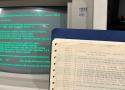
Microsoft continues to make some of the earliest chapters of its operating system history open-source and freely available. Earlier this week, it announced that Tim Paterson's DOS listings, containing source code of the 86-DOS 1.00 kernel, various PC-DOS 1.00 pre-release kernels and utilities, and the Microsoft BASIC-86 Compiler runtime library, were available on GitHub. Microsoft VP Scott Hanselman tied the release to 86-DOS 1.00’s 45th anniversary. The exec confirmed that the code, transcribed from reams of old dot matrix printouts found in a garage, was perfect, "and recompiles byte for byte to the original binaries.”

View and download this historic assembly code for your own space program //
The historic computer software code that took Apollo 11 to the moon has been open-sourced and is available for anyone to read, download, and tinker with. NASA’s Chris Garry made the code available on GitHub as public domain. The published resource is basically in two large codebases, one set of code for the Command Module (Comanche055) and another for the Lunar Module (Luminary099). These modules both had their own Apollo 11 guidance computers (AGC) upon which to run the code, and were instrumental to the success of the remarkable mission – the first human Moon landing in history. //
It is fascinating to see this Apollo 11 code from nearly 60 years ago shared in the context of the ongoing Artemis II lunar mission. Today, we aren’t marveling at the lean and mean machine code that NASA is using to get humans to and from the Moon. Rather, Microsoft Outlook email bugs and a malfunctioning toilet on the Orion spacecraft may have taken the shine off the momentous achievement this latest mission represents.

Microsoft CTO confesses that 30-year-old code from the mid-90s still forms the bedrock of Windows 11 — ancient Win32 API still the backbone, but CTO says it's 'more relevant than ever in 2026' //
As Russinovich eloquently puts it, those of us invested in the computer scene in the 90s “were thinking flying cars and moon stations by the year 2026, not Win32.” The admission that such old software tech is still the "bedrock" of Windows today may be the CTO strategically sharing a cold, hard truth, providing a 'let's be real' moment as part of Microsoft’s latest charm offensive. //
Russinovich highlights that Win32 was also the bedrock for tools like Sysmon and ZoomIt, which he actually wrote back in 1996. These tools are now “more relevant than ever in 2026,” as parts of Windows 11 and PowerToys, respectively, reckons the CTO.
From Supreme Court Justice Neil Gorsuch and bestselling author Janie Nitze! Explore the courage and sacrifice of some of the heroes of the American Revolution and the stories behind the document that started it all—The Declaration of Independence.
In the spring of 1776, the streets of Philadelphia buzzed with the sounds of revolution. Talk of war and rumors of spies swirled in the air. Noisy debates spilled out of taverns. The State House bell tolled urgently, calling men to meetings and momentarily drowning out the normal hum of the port city.
Dive into the stories of ordinary people willing to do extraordinary things, from iconic figures like Thomas Jefferson, George Washington, Ben Franklin, and Paul Revere, to lesser-known revolutionaries such as Caesar Rodney, Thomas Paine, and Mary Katherine Goddard. These great men and women risked all they had—their property, freedom, and ultimately their lives—to secure a better life for their children and grandchildren. Packed with firsthand accounts and vivid depictions of the patriots’ struggle for freedom, Justice Gorsuch’s and Janie Nitze’s debut children’s book thoughtfully investigates the foundations of our country, centering the human experience at the heart of it all.
Celebrate America’s 250th birthday with the Heroes of 1776, a celebration of the ideals upon which this country stands, told with humanity in only the way Justice Gorsuch and Janie Nitze can. //
Carolyn
5 out of 5 stars
Be prepared to be moved by this book!
Reviewed in the United States on May 6, 2026
Format: Hardcover
Verified Purchase
I ordered this book because I heard Justice Gorsuch promoting the book in a TV interview. I liked what he said, and I thought it might be a good gift for my younger relatives. I’m cautious about gifting books that I haven’t read, especially for children. So upon its arrival, I sat down to read it and I was so moved that it caught me off guard. I studied American history and the creation of the Declaration of Independance in high school and in college. I’ve seen the movies. I’ve watched the documentaries. I’ve even gone to DC and viewed the document. I know the story, or at least I thought I did. But not like this. This story made it real, because, to use the authors’ words, “At the heart of it all were ordinary people willing to do extraordinary things and risk all they had to secure a better life for themselves, their children, and generations to come.“ They didn’t teach this part of the story in school. I never knew how extraordinary these ordinary people were. I have a new appreciation for the Declaration of Independence and for the men and women who sacrificed so much to create this experiment, we call America. This book is not just for children. It is for everyone of any age. Order a copy or a few. You, can thank me later.

It's that sharp decline in young people's knowledge of how and why America was founded, and our form of government, that prompted Supreme Court Justice Neil Gorsuch to write "Heroes of 1776: The Story of the Declaration." The book is aimed at both school-aged kids and adults. During a recent interview promoting the book, Gorsuch gave some startling figures:
"Only about 13% of kids today in eighth grade are proficient in American history — [and just] 22% in civics. Six out of 10 adults would fail our citizenship test." //
Gorsuch added that much of his inspiration for the book came from former Justice Sandra Day O'Connor, who founded a civics non-profit after her time on the nation's highest court. Gorsuch said of O'Connor and her work,
"As she was leaving the court, she reflected that civic education in this country is a problem. And for a lot of reasons, it's simply not being taught anymore."
Gorsuch offered up some other disturbing facts. In 2019, only one-third of Americans could name all three branches of government. He stated that this was concerning, given the fact that all three branches "interact" and "check" one another against overreach. //
We know why American history and civics are no longer taught in public schools. The agenda of the teachers' unions is not for students to be knowledgeable in history and civics, but in climate change, transgender issues, and why America is inherently a racist nation. They know that if kids are taught about history or civics, it will be that much harder to indoctrinate them on left-wing ideology and hate the country.
ALSO READ: How Much Confidence Do Americans Have in the Supreme Court? A New Poll Says Not Much
Gorsuch said that history and civics education isn't a left- or right-issue for him and his fellow justices. He added, "If you polled the nine of us in our conference room, one thing we could all agree on is the importance of learning American history."
That agreement among the justices on Americans' knowledge of history and civics is encouraging. Neil Gorsuch summed it up, saying, "Because how else are you going to carry this thing forward? Somebody has to run the zoo." //
TheBlaze @theblaze
·
Justice Neil Gorsuch: “We’re a creedal nation. What unites us is not a religion, not a race, it’s a belief in those ideas in the Declaration of Independence.”
7:37 PM · May 6, 2026
TL;DR: The 2021 Infrastructure Investment and Jobs Act requires all new cars sold after September 2027 to include technology that monitors whether you're impaired or distracted—and can prevent you from driving. Infrared cameras will track your eyes, breath sensors will measure alcohol, and your car can refuse to start or limit its speed. Privacy advocates warn this biometric data could be shared with insurance companies, law enforcement, or sold to data brokers.
What's coming to your car
Tucked into the 2,702-page Infrastructure Investment and Jobs Act that President Biden signed in November 2021 was a provision that few Americans noticed. Section 24220 requires NHTSA to issue safety standards mandating "advanced drunk and impaired driving prevention technology" in all new passenger vehicles.
The law gave NHTSA until November 15, 2024 to finalize rules. Enforcement begins no later than September 2027. That deadline is now 18 months away.

Starting September 2026, a silent update, nonconsensually pushed by Google, will block every Android app whose developer hasn't registered with Google, signed their contract, paid up, and handed over government ID.
You bought an Android phone because Google told you it was open. You could install what you wanted, and that was the deal.
Google is now rewriting that deal, retroactively, on hardware you already own. After the update lands, you can only run software that Google has pre-approved. On your phone: your property, that you paid for.
After September 2026, none of these can be installed without Google's blessing.
F-Droid, home to thousands of free and open-source Android apps, has called this an "existential" threat. Cory Doctorow calls it "Darth Android".
Android's openness was never just a feature. It was the promise that distinguished it from iPhone. Millions chose Android for exactly that reason. Google is now revoking that promise unilaterally, on devices already in people's pockets, because they've decided they have enough market dominance and regulatory capture to get away with it.
Ars Technica: "Google's Apple envy threatens to dismantle Android's open legacy."
FreeOTP is a two-factor authentication application for systems utilizing one-time password protocols. Tokens can be added easily by scanning a QR code. If you need to generate a QR code, try our QR code generator.
FreeOTP implements open standards: HOTP and TOTP. This means that no proprietary server-side component is necessary: use any server-side component that implements these standards. We recommend FreeIPA.

it appears that ${name}_umask will do the job. i.e. in my case syncthing_umask="0002" set in /etc/rc.conf (or /usr/local/etc/rc.conf).
There are three types of file links supported in the NTFS file system: hard links, junctions, and symbolic links. Otherwise known as Reparse Points.
Hard Links can only be created for files. Any changes to that file are instantly visible to applications that access it through the hard links that reference it. Hard links do not support UNC paths (network paths that begin with \). Hard links to a file will not have a shortcut arrow icon on them.
Symbolic Links are soft links that are basically advanced shortcuts. You can create a symbolic link to a local or remote file, folder, or shares path, and that link will appear to be the same as the target source. Symbolic links do support UNC paths (network paths that begin with \). When you open a symbolic link, you will be redirected to the target source. Symbolic links will have a shortcut arrow icon on them.
Junctions (Directory Junction) are soft links that can only be created to a local folder (directory) path. Junction points make it appear as though folder (directory) actually exists at the location of the junction point, and your app won’t know any better. Junction points do not support UNC paths (network paths that begin with \). Junction points will have a shortcut arrow icon on them.
Deleting anything in the link/junction or target (source) folder will delete it in both folders.
Deleting the hard link, symbolic link, or junction point itself will not delete anything in the target (source) folder.

The science of acoustic fire suppression, which has long been known and documented in scientific literature and the press, works by vibrating oxygen molecules away from a fuel source, depriving the fire of a critical component needed for combustion.
Indeed, after just a few seconds of infrasound, the tiny kitchen blaze goes out. //
Sonic Fire Tech says that its system is as good as, if not better than, traditional sprinklers for many applications.
“Sonic Fire Tech is in fact intended to replace interior residential sprinklers,” Pollack told Ars. “The demo showed a critical benefit of SFT over water sprinklers in suppressing a kitchen fire, which represents about half of all residential fires. This is also applicable to commercial kitchen fires and other common grease and chemical fire applications.” //
“Sprinklers have a well-established role,” Nate Wittasek, a Los Angeles-based fire protection engineer, emailed Ars. “They apply water directly to the fuel, cool the space, slow or stop flashover, and give people time to get out while reducing risk to firefighters. Sound may knock down a small flame, but it does not cool hot surfaces or wet fuel. That raises real questions about re-ignition, smoldering fires, hidden fires, and fires that are partially blocked by contents.”
Water sprinklers have been around for a long time. The National Fire Protection Association (NFPA), a well-known industry nonprofit, was founded in the late 1800s to develop a uniform standard for sprinklers. The latest iteration of those guidelines, known as the “13D” standard, is well documented and widely adopted.
A recent press release from Sonic Fire Tech states that the company has “secured third-party validation of its system as a viable NFPA 13D-equivalent alternative to conventional residential sprinklers.” ////
Why not both? First and second level.
Transporting oil by pipelines is significantly safer for workers and carries lower risk of spills than moving it by train or truck, a new report from the Fraser Institute says. Analyzing data from Canada’s National Energy Board and the US Department of Transportation going back to the year 2000, the report’s authors find that pipelines result in fewer spillage incidents and personal injuries than road and rail in North America. //
The evidence is clear: transporting oil by pipeline is safe and environmentally friendly. Furthermore, pipeline transportation is safer than transportation by road, rail, or barge, as measured by incidents, injuries, and fatalities- even though more road and rail incidents go unreported. //
There are 825,000 kilometres of pipeline in Canada and about five times that much in the US. In the US from 2005 to 2009, there were more “serious” incidents, injuries and fatalities resulting from the shipment of oil by road and rail than by pipeline.
Accounting for the superior safety and environmental performance of pipelines is the “genius” of the technology, which has the shipping container remain static while the commodity moves. According to the report, there are an average of 20 spills per billion ton-miles in trucking, two in rail shipping, and 0.6 in pipelines. Pipeline spills release more oil, however, than either road or rail spills. The report maintains that despite the relatively higher quantities of oil released, it is still “miniscule” when taken in the context of the total quantities being shipped each day.
The ten-year average for the frequency of liquid leaks is “approximately three leaks per 1,000 km of pipeline” the report says, citing the Canadian Association of Petroleum Producers for that statistic.
Fatalities for pipeline workers averaged 0.2 per year from 2000 to 2009, it says. The rate of rail-related fatalities, by contrast, was 91 in 2010 and has a five-year average of 81. Measured by ton-miles, the rate of injuries associated with shipping by pipelines was just 0.00687 injuries requiring hospitalization per billion ton-miles; rail caused 30 times that many injuries.

Our list with linked lab reports for 67 toothpaste
& tooth powder products is below this chart (scroll down).
List below this chart last updated: February 21, 2026

On March 23, 2026, the Hong Kong government changed the implementing rules relating to the National Security Law. It is now a criminal offense to refuse to give the Hong Kong police the passwords or decryption assistance to access all personal electronic devices including cellphones and laptops. This legal change applies to everyone, including U.S. citizens, in Hong Kong, arriving or just transiting Hong Kong International Airport. In addition, the Hong Kong government also has more authority to take and keep any personal devices, as evidence, that they claim are linked to national security offenses.

A core part of the energy transition and of the solutions to meeting energy needs, nuclear energy is a strategic resource that is often a subject of debate. This section aims to respond to the main questions and misconceptions by presenting nuclear energy as clearly as possible. The goal is for everyone to form their own opinion.
The capacity of nuclear energy to ensure our energy independence and to guarantee the production of low-carbon electricity is invaluable for tackling the climate emergency.
- A Low-carbon energy – Yes, it emits the least greenhouse gases!
- Constant and controllable energy
- Competitive energy – Least expensive!!
- Energy that is essential to the electricity mix
- Energy that is vital for tomorrow’s world
- Energy that is sparing in its demand for raw materials – It saves natural resources!
- Energy that preserves health – It does NOT emit fine particles, nitrogen dioxide, sulfur dioxide, nitrates or phosphates into the atmosphere!
The plume escaping the reactors? Water vapor. That’s it.
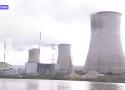
Nuclear power is the most reliable and cleanest form of energy. //
Belgium has accepted reality and embraced nuclear power 20 years after passing phase-out legislation.
The Belgian government intends to acquire all of the “nuclear operations in the country” from the French energy group Engie.
“By doing so, the Belgian Government is taking responsibility for Belgium’s long-term energy future, with the objective of building a financially and economically viable activity that supports security of supply, climate objectives, industrial resilience and socio-economic prosperity,” Engie and the Belgian government said in a joint statement.

The vulnerability and exploit code that exploits it were released Wednesday evening by researchers from security firm Theori, five weeks after privately disclosing it to the Linux kernel security team. The team patched the vulnerability in versions 7.0, 6.19.12, 6.18.12, 6.12.85, 6.6.137, 6.1.170, 5.15.204, and 5.10.254) but few of the Linux distributions had incorporated those fixes at the time the exploit was released.
A single script hacks all distros
The critical flaw, tracked as CVE-2026-31431 and the name CopyFail, is a local privilege escalation, a vulnerability class that allows unprivileged users to elevate themselves to administrators. CopyFail is particularly severe because it can be exploited with a single piece of exploit code—released in Wednesday’s disclosure—that works across all vulnerable distributions with no modification. With that, an attacker can, among other things, hack multi-tenant systems, break out of containers based on Kubernetes or other frameworks, and create malicious pull requests that pipe the exploit code through CI/CD work flows.
“‘Local privilege escalation’ sounds dry, so let me unpack it,” researcher Jorijn Schrijvershof wrote Thursday. “It means: an attacker who already has some way to run code on the machine, even as the most boring unprivileged user, can promote themselves to root. From there they can read every file, install backdoors, watch every process, and pivot to other systems.”