
On Thursday, Elon Musk lost his lawsuit alleging that advertisers violated antitrust law by colluding on an ad boycott after he took over Twitter, gutted content moderation teams, and disbanded the Trust and Safety Council.
In her opinion, US District Judge Jane Boyle wrote that the lawsuit was dismissed because Musk failed to state a claim. His arguments that advertisers acted against their own best interests by avoiding advertising on his platform, now called X, did not plead facts showing that consumers were harmed. Without consumer harm, there can be no antitrust violation, the judge wrote, deeming the ad boycott perfectly legal.



A password manager is great for remembering all your logins, but you still need to keep track of the details for logging into that password manager! Some items to keep tabs on include the account email address, master password, two-step login (2FA) details, recovery codes, and more. vaultwarden

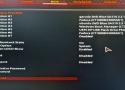
Secure Boot is a feature of UEFI, and it's a requirement for any computer that wants to run a modern version of Windows. It exists to protect us against malware that infects your computer's bootloader. There's a security certificate stored in the UEFI which your computer uses to check the Windows bootloader, to ensure it's legitimately signed by Microsoft, and not an imposter.
So far, so good, but what happens when the certificate in your UEFI expires? Well, we're all about to find out.
IanRS
Bigger problems
In my work as a security architect I occasionally get asked by an assurer or auditor why I think running AWS infrastructure in just two availability zones without a second region is enough. The latest was just earlier this week. It shows that they do not understand risk/impact balance outside their own little box. I have to point out that if something can take out two geographically separated data centres simultaneously then the impact is not restricted just to their website, and they probably have bigger problems to worry about. Some of them accept this. Some still think another region would help.
20 hrs
Anonymous Coward
Re: Bigger problems
I worked for a small public sector body. An auditor once asked what would happen if both our main and DR sites went dark. I said if that happened, something very big & bad was happening and no-one was going to care about our organisation.
Auditor ticked their box as we had clearly considered the possibility and we had a plan. (Do nothing is still a plan!)
Mar 02 4:22 PM PST We are providing an update on the ongoing service disruptions affecting the AWS Middle East (UAE) Region (ME-CENTRAL-1) and the AWS Middle East (Bahrain) Region (ME-SOUTH-1). Due to the ongoing conflict in the Middle East, both affected regions have experienced physical impacts to infrastructure as a result of drone strikes. In the UAE, two of our facilities were directly struck, while in Bahrain, a drone strike in close proximity to one of our facilities caused physical impacts to our infrastructure. These strikes have caused structural damage, disrupted power delivery to our infrastructure, and in some cases required fire suppression activities that resulted in additional water damage. We are working closely with local authorities and prioritizing the safety of our personnel throughout our recovery efforts.
In the ME-CENTRAL-1 (UAE) Region, two of our three Availability Zones (mec1-az2 and mec1-az3) remain significantly impaired. The third Availability Zone (mec1-az1) continues to operate normally, though some services have experienced indirect impact due to dependencies on the affected zones.
Mar 02 4:22 PM PST We are providing an update on the ongoing service disruptions affecting the AWS Middle East (UAE) Region (ME-CENTRAL-1) and the AWS Middle East (Bahrain) Region (ME-SOUTH-1). Due to the ongoing conflict in the Middle East, both affected regions have experienced physical impacts to infrastructure as a result of drone strikes. In the UAE, two of our facilities were directly struck, while in Bahrain, a drone strike in close proximity to one of our facilities caused physical impacts to our infrastructure. These strikes have caused structural damage, disrupted power delivery to our infrastructure, and in some cases required fire suppression activities that resulted in additional water damage. We are working closely with local authorities and prioritizing the safety of our personnel throughout our recovery efforts.
In the ME-CENTRAL-1 (UAE) Region, two of our three Availability Zones (mec1-az2 and mec1-az3) remain significantly impaired. The third Availability Zone (mec1-az1) continues to operate normally, though some services have experienced indirect impact due to dependencies on the affected zones.

I received an email / billing notification from AWS this week that may be the most diplomatically crafted communication in the history of cloud computing. Here it is, stripped of the usual boilerplate around it:
"AWS is waiving all usage-related charges in the ME-CENTRAL-1 Region for March 2026. This waiver applies automatically to your account(s), and no action is required from you."
No explanation. No mention of the Iranian drone strikes that physically destroyed two of three availability zones in the region on March 1st. No reference to the 109 services that went down, nor the customers who spent weeks unable to terminate EC2 instances via the console because the control plane was as dead as the hardware underneath it. No acknowledgment that an entire month of cloud infrastructure effectively ceased to exist. Not even a link to their remarkably short (presumably because it wasn't insulting the Financial Times' reporting) corporate blog post explaining that you probably shouldn't expect that region to be working reliably again any time soon.
Just: we're waiving the charges. You're welcome. Move along.
I want to be clear: I have no problem with this. It's a tough situation, and it's not AWS' fault, given that there is not yet an Amazon standing military force.
But here's the part that caught my attention. The email continues: "You will not see any March 2026 usage for the ME-CENTRAL-1 Region in your Cost and Usage Report or Cost Explorer once processing is complete."
They're not just waiving customer charges for a month; they're erasing the billing and inventory data! //
For most organizations, the AWS bill isn't just an invoice. It's the canonical record of what infrastructure exists, where it's running, and how long it's been there. The Cost and Usage Report (CUR) is the closest thing many companies have to a single source of truth that accurately describes their cloud footprint.
Would you rather have a smoke alarm that goes off 33% of the time you make toast, or one which never goes off when there's a fire ?
Re: 1/3 wrong of 60 is progress (?)
The problem is not with the "smoke alarm" it's with the fire engine.
1 day
MOH
Re: 1/3 wrong of 60 is progress (?)
When I'm making toast, I'm making toast.
I'm aware of what I'm doing and ensuring that the toast making doesn't escalate to a house fire.
If it does, that is fully on me.
I don't need a wonky security camera setting off a fire alarm for times a day because my dark brown slippers have vaguely the same shade as burnt toast and it blindly assumes a fire is in progress.
1 day
Yet Another Anonymous coward
Re: 1/3 wrong of 60 is progress (?)
But it could be useful if you're very confused and might be about to put marmalade on your slippers

Greg Kroah-Hartman can't explain the inflection point, but it's not slowing down or going away. //
No one is quite sure what's behind it. Asked what changed, Kroah-Hartman was blunt: "We don't know. Nobody seems to know why. Either a lot more tools got a lot better, or people started going, 'Hey, let's start looking at this.' It seems like lots of different groups, different companies." What is clear is the scale. "For the kernel, we can handle it," he said.
"We're a much larger team, very distributed, and our increase is real – and it's not slowing down. These are tiny things, they're not major things, but we need help on this for all the open source projects." Smaller projects, he implied, have far less capacity to absorb a sudden flood of plausible AI-generated bug reports and security findings – at least now they're real bugs and not garbage ones. //
The trick for Kroah-Hartman and his peers will be to keep AI as a force multiplier, without drowning the open source maintainers.

As NASA prepares to send four astronauts around the moon for the 10-day Artemis II mission, a veteran space flier's unexplained illness in orbit is spotlighting one of the biggest risks of deep-space travel: the need for medical systems in case of emergencies.
NASA astronaut Michael Fincke said a sudden episode aboard the International Space Station (ISS) in January left him unable to speak and forced NASA's first-ever medical evacuation from the orbiting laboratory. Doctors have ruled out a heart attack, Fincke told the Associated Press, but they still don't know what caused the medical issue.
NASA was able to get Fincke (along with the three other members of the crew) back to Earth relatively quickly from the ISS. But that may not be the case for the longer lunar missions the agency envisions under the Artemis program.
Caddy web server with automatic HTTPS and reverse proxy configuration.

Ewen therefore again made the long drive, and within moments of arriving, he noticed the giant PC was very quiet.
A quick look showed why: the fans weren't working.
Ewen asked if anyone had noticed a problem.
"Oh, the noise was annoying me," replied one of the testing engineers. "So I opened the case and cut the wires." //
Bill GraySilver badge
Chesterton's fence
G. K. Chesterton wrote something that boils down to : if you see a fence running across a road, you shouldn't tear it down until you figure out why it was put there. Somebody presumably went to the time, trouble, and expense of erecting the fence, and had some reason for doing it.
You may eventually learn that their reason no longer applies, or just doesn't matter as much as it used to, and then you might pull the fence down on a suitably informed basis. But you shouldn't equate "I don't see why that's there" with "there's no good reason for that to be there".
As I recall, he was mostly thinking in terms of politics. The idea is that each generation comes along and assumes its parents were idiots, and that society should be rebuilt on more sensible, modern principles... usually without first considering why the parents did such idiotic things. But it's a good engineering principle as well.
Raymond I. Smithjr
5.0 out of 5 starsVerified Purchase
Drumbeat, a well researched and objective historical novel.
Reviewed in the United States on October 18, 2012
Format: Hardcover
Beginning with an apolitical description of the German u-boat navy prior to WW2, its development and deployment in the Atlantic and the tragic consequences of an inept and unprepared outmoded U.S. Navy,,, through the naivete' and politically mismanaged response of the early military leadership...The U.S. experienced losses far greater than at Pearl Harbor. The author takes us on a thrilling excursion in to both sides of the battle in a very balanced presentation of the behind the scenes as well as the in the thick of the encounters. A good read difficult to put down until finished.
KP57 George
5.0 out of 5 starsVerified Purchase
German Submarines controlled the East Coast in 1942
Reviewed in the United States on December 7, 2014
Format: Hardcover
Excellent; well done research, amazing how unprepared America was for submarine attacks off our East Coast and how highest ranking naval officers let their anti-British feelings deny relevance of British provided intelligence. Thus unfortunately for many reasons our government felt it was necessary to deny the attacks took place and many ships were sunk and many men died.

To list all installed packages in FreeBSD, you can use pkg info command.
To list all installed packages in FreeBSD that are outdated, you can use pkg version -vL=
To clean package cache in FreeBSD, you can use pkg clean command. This will remove all old and unused packages from cache.
To remove orphaned packages in FreeBSD, you can use pkg autoremove command. This will remove all packages that are no longer required by any other package.

To all those who say they don’t care about the culture war, Erick Erickson has only one response: "The Left will not let you stay on the sidelines. You will be made to care."
Now the former Editor-in-Chief of RedState.com joins with Christian author Bill Blankschaen to expose the war in America on Christians and all people of faith who refuse to bow to the worst kind of religionsecularismone intent on systematically imposing its agenda and frightening doubters into silence.

The Supreme Court today decided that Internet service providers cannot be held liable for their customers’ copyright infringement unless they take specific steps that cause users to violate copyrights. The court ruled unanimously in favor of Internet provider Cox Communications, though two justices did not agree with the majority’s reasoning.
The ruling effectively means that ISPs do not have to conduct mass terminations of Internet users accused of illegally downloading or uploading pirated files. If the court had ruled otherwise, ISPs could have been compelled to strictly police their networks for piracy in order to avoid billion-dollar court verdicts under the Digital Millennium Copyright Act (DMCA). //
The court decided today that a service is tailored to infringement if it is not capable of “substantial” or “commercially significant” noninfringing uses. The court cited Sony’s 1984 victory in the Betamax case, in which justices found that the Betamax was capable of noninfringing uses and that Sony’s sale of it did not constitute contributory infringement. Sony’s win in 1984 thus contributed to its loss today.

Katalyst Space Technologies must launch the Swift rescue mission by this summer.

A crane stood its ground and forced an alligator to retreat back into a Florida pond in a wild, caught-on-camera confrontation.
The Sunshine State standoff began when a sandhill crane slowly encroached on a gator was basking in the sun behind a residential home, according to the viral video.

Dachannien Ars Scholae Palatinae
16y
1,130
Subscriptor
OrvGull said:
Google has a quantum computing division. Implying they're close to some kind of breakthrough could absolutely juice their stock.
Maybe, but they actually explain the point in worrying now: Store-now-decrypt-later attacks can only really be mitigated by migrating systems to PQC. The sooner you do that, the smaller your data vulnerability surface is (in a timewise sense). If you get compromised in the future and your encrypted data gets exfiltrated, you're much better off if that data was protected with PQC. Your future vulnerability without PQC is by definition shorter if you implement now rather than later.
Based on that logic, the reason to pick, say, 2029 as a good must-implement date is because of the naturally decaying value of store-now-decrypt-later data. Even if QC isn't successful until 2039, deploying by 2029 means any vulnerable data would be 10 years old (and 10 years less valuable) by the time it gets cracked. The fact that they didn't pick a date even sooner just speaks to the monumental bulk of the task at hand.