A federal judge has no power to usurp Executive Branch authority or dictate foreign policy to the president. //
In response, Boasberg called a hearing on Monday demanding to know exactly what time those planes took off, when they left U.S. airspace, and when they touched down in El Salvador — again, as if he, a lone federal judge, has authority to direct counter-terrorism operations that fall under the exclusive authority of the Executive Branch. The administration said simply that these were operational questions that it was not at liberty to discuss in a public setting. (In a jaw-dropping display of arrogance, Boasberg shot back that that his judicial powers “do not lapse at the airspace’s edge.”)
Just prior to that hearing, Attorney General Pam Bondi laid out the administration’s view of the larger question of whether the federal courts even have the power to intervene in this case. In a response and motion to vacate, Bondi argued that the plaintiffs in this case “cannot use these proceedings to interfere with the President’s national-security and foreign-affairs authority, and the Court lacks jurisdiction to do so.”
Bondi went on to explain that “just as a court assuredly could not enjoin the President from carrying out a foreign drone strike or an overseas military operation, or from negotiating with a foreign power to coordinate on such an operation, nor could a court lawfully restrict the President’s inherent Article II authority to work with a foreign nation to transfer terrorists and criminals who are already outside the United States.” The president’s invocation of the AEA, in other words, is non-justiciable and unreviewable.
What the administration is expressing here is a view of judicial and executive powers that more closely conforms to how the Founding Fathers understood them. Put simply, the Founders didn’t think the judiciary was the sole arbiter of what is and is not constitutional. While the courts, headed by the Supreme Court, indeed have an independent power to interpret and apply the Constitution, that doesn’t mean they are supreme over the other two branches, or the states for that matter. //
James Madison stated plainly the reasoning behind this more expansive view of separation of powers clearly in Federalist No. 49: “The several departments being perfectly co-ordinate by the terms of their common commission, neither of them, it is evident, can pretend to an exclusive or superior right of settling the boundaries between their respective powers.”
That means the judiciary can’t simply dictate to the Congress or the president what they must or must not do according to the Constitution. As legal scholar Michael Paulsen has written, “the power of constitutional interpretation is a divided, shared power incident to the functions of each of the branches of the national government — and to instruments of state governments, and of juries, as well — with none of these actors literally bound by the views of any of the others.” According to this view, the Constitution itself, not the Supreme Court, is the supreme law of the land.
If that sounds like a radical view of the Constitution and the separation of powers, that’s only because we have strayed so far from how our constitutional system was first established, and have imported the alien concept of judicial supremacy that elevates the role of the courts over and above the political branches and the states.
It wasn’t always this way. Abraham Lincoln, for example, understood that the Executive Branch was not necessarily bound by the rulings issued by the Supreme Court but had its own inherent power to interpret the Constitution. Lincoln and the Congress both famously asserted what we might call constitutional supremacy in their defiance of the Supreme Court’s Dred Scott decision, by enacting and enforcing laws prohibiting slavery in federal territories — something Dred Scott expressly forbade. Lincoln also defied a Supreme Court decision purporting to limit his authority as commander-in-chief to hold enemy prisoners during the Civil War.


CHIEF JUSTICE JOHN ROBERTS on Trump world's calls to impeach James Boasberg, who ruled against the president on the Alien Enemy Act:
"For more than two centuries, it has been established that impeachment is not an appropriate response to disagreement concerning a judicial decision.
"The normal appellate review process exists for that purpose.". //
Musicman
2 hours ago
Roberts is the reason we are having this controversy. For years now, under Trump's first and now second term, District judges have been issuing orders that extend beyond their districts. Roberts has had numerous opportunities to reign in those judges and has failed to do so. Yes, there is an appellate process, but SCOTUS should make it clear that only the SUPREME COURT is a co-equal branch of government. Congress is a co-equal branch, but Congressmen are not. If a district court judge rules against a Presidential action, it should be stopped from enforcing that ruling until SCOTUS confirms that ruling (which it can do by refusing to hear the case) or overturns it. But Roberts cannot simply stand by and allow District Court after District Court to run the Executive Branch.
laker 7w7o7r7d7s
2 hours ago
Article 3 created ONLY the supreme court. everything else was put into place by Congress & the President.
Kids have figured out that America’s failing liberal institutions have left them surrounded by a harmful cultural and political order that can’t justify itself. //
But in the clip from the debate that was most widely shared, a young Hispanic guy asks Seder about his objections to supposed religious fundamentalists and then, as the kids say, he proceeds to absolutely own Seder. Essentially, the question put before Seder is this: If he objects to traditional religious values as a foundation for guiding America’s collective political and legal decisions, what does he think should be the basis for morality? //
Presumably, Seder knew this debate would be hostile, but he seems genuinely shocked a kid would cut right to matters of first principles and question the assumptions of moral authority underpinning bog standard boomer liberalism. But this shouldn’t have been entirely unexpected. When it comes to political punditry, there’s a pretty basic test for whether or not you take someone seriously: How does that person justify the use of political power to implement the policies they favor?
What Seder was asked was far from a trick question; rather, it’s basic American civics. This is exactly the question that the Declaration of Independence addresses, as the founders knew that any attempt to legitimize the rejection of their present government would start with establishing why the government they were proposing was more just and morally superior. In that sense, it wasn’t just a declaration — it’s an explanation of the basis of morality, and how England’s governance was illegitimate for not respecting it. So our founding document is a fairly succinct and compelling natural law argument for a government that recognizes all men are created equal and endowed by our creator with inalienable rights that cannot be abrogated, let alone by a king who claims the “divine right” to tax people on a whim.
Of course, the actual structure of American governance is more complicated than that because we have to define and apply those rights, and the most just way to do that involves consent of the governed. So our system hinges on allowing an element of democracy, while putting enough checks in the system to ensure the tyranny of the majority doesn’t overwhelm the God-given rights of individuals. We don’t always get the balance right, but that’s the basic idea. And there’s no getting around the fact that having objective notions of morality, traditionally represented by a belief in God, is foundational to our whole system. You may not like the structure of American governance, but you’d think a guy who’s been doing liberal talk radio and podcasts for over twenty years would recognize why the question he was asked was so important and have a coherent way to answer it.
As Chris Rufo observes, “The remarkable thing here is that the Left’s ‘debate champ’ doesn’t see the entire setup, which means he’s ignorant of basic Christian theology, the natural rights theory of the American founders, and the criticism from Nietzsche to Weber to Foucault. Just doesn’t know any of it.” There’s also an element of blatant hypocrisy here as well. “Seder objects to religion because it ‘imposes’ values on everyone,” notes professor and First Things editor Mark Bauerlein. “It is, however, a dream to think that imposition of values is NOT a precondition of every social order. (Foucault’s prime critique of liberalism is that it presumes such.)” //
In other words, it’s safe to assume Seder is defending the dominant liberal order imposing its values on everyone because it’s what he knows and what he prefers, not because he can articulate why it’s justifiably “moral.” Nor is our current liberal order necessarily a matter of consent or democracy. This is pretty evident in the left’s approach to social issues. Gay marriage flailed in nearly every referendum it faced, and only became legal after the Supreme Court made it legal by decree, using a decision that has all the defensible legal and moral rubric one would expect to find on the back of a cereal box. And when a more conservative Supreme Court overturned Roe v. Wade, the left screamed in unison they actually preferred it when nine unelected judges conjured up a new right to murder children in the womb that half the country found morally abhorrent, rather than letting such a controversial issue be decided by be democratic means.
And when liberals couldn’t exercise raw power to get their way in courtrooms and legislative chambers, they leveraged the economic might of corporate America to enforce their agenda. Despite the fact BLM was a scam literally run by communists who explicitly stated the nuclear family was an obstacle to “social justice,” corporations were alternately bullied and praised into giving BLM and related causes $83 billion even as the movement burned cities to the ground.
The problem is that you can only arbitrarily impose values on people from the top down for so long before there’s political and cultural backlash.

This sequence of events tees up a court fight that challenges the ability of the Trump administration to use the Alien Enemies Act to rid the US of known members of terrorist groups.
The deportation of TdA members is one of at least three sets of court cases that, in my opinion, put the US on the cusp of a constitutional crisis due to activist and anti-Trump judges using an imagined ability to impose nationwide orders stopping the administration from acting. So far, a judge has ordered probationary employees rehired, another has ordered the government to spend money according to his rather than the administration's timetable, and now this judge has decided that illegal aliens who are members of a terrorist group can stay in the US; //
Spartan Conservative
an hour ago
I believe this is the key sentence to this post:
While the J6 defendants had to beg for help or rely on public defenders who may not have had much sympathy for them, somehow, the airborne terrorists, like Hamas provocateur Mahmoud Khalil, were able to come up with high-powered and very expensive legal help on very short notice to keep them from being speedily deported.
Like Orwell said, "some of us are more equal than others." Follow the money path going into those lawyers' pockets.
DC Judge Who Tried to Stop Deportations Gets a Harsh Message From El Salvador's President – RedState
the president invoked the Alien Enemies Act of 1798 against the vicious Venezuelan gang Tren de Aragua which has been terrorizing cities across the country—and then the administration sent at least one planeload of members of the “Foreign Terrorist Organization” back to their country of origin.
It didn’t take long for Obama appointed Chief U.S. District Judge James Boasberg to kneecap the effort. Not only did he issue a temporary restraining order preventing the deportation of any Venezuelans, but he also ordered that the plane (or planes; it’s unclear) return the gangsters to the U.S.
The actions against the president began even before he signed the order. Mind-boggling:
Hours before the proclamation was signed, a lawsuit was filed by the American Civil Liberties Union, Democracy Forward and the ACLU of the District of Columbia, claiming it could be used to deport any Venezuelan in the country, regardless of whether they are a member of TdA.
At a hearing Saturday afternoon, Chief U.S. District Judge James Boasberg of the D.C. Circuit granted a temporary restraining order preventing the deportation of the five Venezuelans, who had already been in federal custody for two weeks.
Two planes that may have been en route to deport illegal immigrants were ordered returned by the judge. However, it is unclear as of Saturday night if they have done so. //
Bukele is a tough character whose uncompromising stance on law and order has transformed El Salvador from the most dangerous to the safest country in Central America; see El Salvadorian Hardman, President Nayib Bukele Wins Blowout Re-Election Victory – RedState. I'd much rather have Venezeuelan terrorists held in El Salvador than detained in America, and if it costs less in the process, that's a bonus. //
I remain of the view that this is a test case the Trump Admin has purposely triggered in order to RE-establish POTUS authority to use the AEA [note: Alien Enemies Act] to address the consequences of the Biden Admin "Open Border" policy. That policy allowed millions of unvetted migrants to enter the country illegally. The ability of the Administration to deport a substantial number of those illegal aliens is limited by the physical facilities necessary to arrest, detain, and hold them while deportation proceedings take place. Having the ability to execute mass deportations of the worst criminal offenders without going through the processes set forth in other federal statutes would increase significantly the pace by which large numbers of such individuals could be removed without burdening the facilities we do have.
...
What makes me think this is a test case is that the complaint was filed before President Trump issued an Executive Order stating that he would be using the AEA to remove these five individuals. The exercise of authority under the AEA begins with a Presidential “Proclamation” that certain factual circumstances have arisen, and extraordinary Presidential authority granted by Congress is being invoked to respond to those circumstances.
At the time the complaint was filed, no such proclamation had been issued by President Trump, but the Complaint was specific to an extent that would be highly unlikely if the Plaintiffs’ attorneys had not been given a preview of what it was likely to say.

Activist Nation: Judge Orders Plane Carrying Gangsters Kicked Out by Trump to Turn Around – RedState
the president invoked the Alien Enemies Act of 1798 against the vicious Venezuelan gang Tren de Aragua which has been terrorizing cities across the country—and then the administration sent at least one planeload of members of the “Foreign Terrorist Organization” back to their country of origin.
It didn’t take long for Obama appointed Chief U.S. District Judge James Boasberg to kneecap the effort. Not only did he issue a temporary restraining order preventing the deportation of any Venezuelans, but he also ordered that the plane (or planes; it’s unclear) return the gangsters to the U.S.
The actions against the president began even before he signed the order. Mind-boggling:
Hours before the proclamation was signed, a lawsuit was filed by the American Civil Liberties Union, Democracy Forward and the ACLU of the District of Columbia, claiming it could be used to deport any Venezuelan in the country, regardless of whether they are a member of TdA.
At a hearing Saturday afternoon, Chief U.S. District Judge James Boasberg of the D.C. Circuit granted a temporary restraining order preventing the deportation of the five Venezuelans, who had already been in federal custody for two weeks.
Two planes that may have been en route to deport illegal immigrants were ordered returned by the judge. However, it is unclear as of Saturday night if they have done so.

On its face, the administration's application for a partial stay simply asks the Supreme Court to narrow the scope of the injunctions as to birthright citizenship (rather than decide the merits of the argument at this juncture). But the application also seeks to strike at the heart of an even larger issue — the explosion of universal injunctions being issued in recent years.
The rationale is spelled out succinctly in the application's next-to-last paragraph:
There are “more than 1,000 active and senior district court judges, sitting across 94 judicial districts.” DHS, 140 S. Ct. at 600-601 (Gorsuch, J., concurring). Years of experience have shown that the Executive Branch cannot properly perform its functions if any judge anywhere can enjoin every presidential action everywhere. The sooner universal injunctions are “eliminated root and branch,” “the better.” Arizona, 40 F.4th at 398 (Sutton, C.J., concurring)
If nothing else, the Trump administration is prompting a thorough examination of the separation of powers and the scope of executive authority.

I'm not one to use the term "Constitutional crisis" loosely, but if this ruling stands, I think we are at that point. Alsup's decision means federal agencies cannot legally respond to a White House directive to reduce their headcount. It also changes the legal status of probationary and term appointments to tenure rather than how they have been traditionally viewed. IANAL, but I think the ability of the American Federation of Government Employees to intervene on behalf of employees who are not represented by a bargaining unit in an employment matter is highly suspect.

On Thursday, President Trump issued an executive order that cut federal ties with the Spygate incubator and major Democrat law firm Perkins Coie. The president did so based on the firm’s partisan dishonesty, and because it openly discriminates based on sex and race.
This is a good legal basis for refusing to work with any company, and it should be extended to every legal entity in the country. Top of the list should be the American Bar Association, which also advocates for and engages in unlawful racial and sexual discrimination and is a highly partisan actor on behalf of the Democrat Party and other anti-Constitution activists.
The ABA deeply affects the U.S. lawyer pipeline and licensing system, accrediting law schools, rating judges, and weaponizing lawyer discipline. Its rabid leftism means the ABA systematically ratchets the entire U.S. legal system against the U.S. Constitution.
That’s an existential threat to the country, as most recently illustrated by the dozens of federal judges the ABA helped advance who hate our supreme law so much they rule that the elected executive cannot control the unelected executive branch. With judges like those the ABA advances, the United States will quickly discard what remnants of our constitutional order persist. //
“The ABA’s public actions grew increasingly partisan throughout the Biden presidency and now into the early days of Trump’s second term. The organization justified President Biden’s preposterous assertion that the Equal Rights Amendment had been ratified; claimed that bar associations have a First Amendment right to engage in racial discrimination; and sued President Trump for slashing USAID subsidies,” Fragoso notes.
By endorsing race and sex discrimination, presidents unilaterally changing the Constitution, and forbidding elected executive control of unelected executive bureaucrats, the ABA has disqualified itself as a legal organization or any kind of legitimate player in American public life. No elected official who has made a public vow to preserve and protect the Constitution should give this anti-American pressure organization the time of day.
Justin Murphy @jmrphy
The NYT this morning criticized Elon Musk's call to impeach federal judges, accusing him of violating constitutional norms. Well, I looked into the data and it's insane: We stopped impeaching federal judges, despite having more of them now than ever!
The impeachment rate now seems implausibly low.
Either federal judges have become saints, or something is suppressing impeachments.
What is the probability we'd observe zero impeachments from 2011-2024? Using the Poisson distribution, I think it's somewhere around 3-7% depending on how you do it. So it's very fishy.
What's even crazier is that there is a clear political story behind all of this.
The 1980 Judicial Conduct and Disability Act, signed by Jimmy Carter, gave judges the power to police themselves through an obfuscated multi-layer system where chief judges dismiss almost all the complaints and judicial councils choose confidential sanctions in most of the cases where they even admit wrongdoing occurred.
Shipwreckedcrew
@shipwreckedcrew
·
Follow
I love all the press coverage tonight of CJ Roberts' order from about 10:00 pm ET.
All the usual suspects -- AP, Reuters, ABC, etc., all refer to it as a "temporary" hold on the order that the Court entered.
No. The Orders are "Stayed" pending further order of the Court.
If the CJ Roberts thought the District Judge was within his authority to order the Executive to spend specific amounts on money on specific grants/contracts on or before midnight tonight, he could have simply done nothing.
Instead he said the Admin need not comply with the Order. //
Shipwreckedcrew
@shipwreckedcrew
·
Follow
So CJ Roberts steps in around 10:00 and issues a stay on the Order to Enforce His TRO entered by Judge Amir Ali in DC -- a District Court judge for all of 90 days.
Judge Ali's TRO had commanded that the Executive
While the "merits" of the withholding might be subject to some legitimate legal debate, when a higher court -- or the Chief Justice -- steps in so abruptly there is very often a key issue that the lower court judge is simply ignoring in his haste to "do right" -- and I think that is the problem here. The District Court lacks jurisdiction to entertain the claim or provide the relief requested -- whether the plaintiffs are entitled to it or not. Judge Ali brushed off the questions about jurisdiction in his fit of pique over what he saw as DOJ non-compliance with his Order. But there is a truism that all federal civil litigators know -- one that never occurs to legal reporter: "Jurisdiction is always at issue.". //
Has the Supreme Court finally gotten fed up with courts setting executive-branch policies? Based on last night’s intervention by Chief Justice Supreme Court John Roberts, the answer could be yes.

The Trump administration is targeting court interpretations that have stripped the president of full control over personnel, and policy, within federal agencies.
Judge Contreras relied on a very shaky 1935 precedent called Humphrey’s Executor v. United States. This precedent established the, in my view, unconstitutional and un-republican plethora of "independent" boards and commissions that carry out executive functions but aren't answerable to the guy in whom the "executive Power" of the United States is "vested." Recent cases have held that any commission holding anything other than an advisory capacity must be controlled by the President; how the MSPB's role in adjudicating employment disputes will be viewed is unknown.
This case is headed to the DC Circuit and the Supreme Court. Another similar case, that of Special Counsel Hampton Dellinger, is at the Supreme Court; Trump Sends Scorching Appeal of DC Court Order Reinstating Biden Appointee to the Supreme Court – RedState. In that case, Trump fired Dellinger, who had the same legal protections as MSPB judges. A judge ordered Dellinger reinstated, and the Supreme Court will get Dellinger's response to the government's objections at 2 p.m. Wednesday.
Other possible cases testing the limits of Humphrey’s Executor are the firings of 17 IGs, who, by statute, can only be fired after a 30-day notice to Congress and an explanation of the reasons, and a member of the National Labor Relations Board. //
Laocoön of Troy
10 hours ago
Remember corrupt FBI agents Peter Strzok and Lisa Page? Remember the friendly judge who they secretly met with at a party to plot their next moves against Trump? The crooked judge? Judge Rudolph Contreras (Obama appointee). Strzok referred to him affectionally as "Rudy" like they were old buds.
Looks like the crooks from Trump's first term are trying to get the band back together.
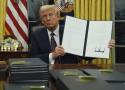
all executive departments and agencies, including so-called independent agencies, shall submit for review all proposed and final significant regulatory actions to the Office of Information and Regulatory Affairs (OIRA) within the Executive Office of the President before publication in the Federal Register. //
The President and the Attorney General, subject to the President’s supervision and control, shall provide authoritative interpretations of law for the executive branch. The President and the Attorney General’s opinions on questions of law are controlling on all employees in the conduct of their official duties. No employee of the executive branch acting in their official capacity may advance an interpretation of the law as the position of the United States that contravenes the President or the Attorney General’s opinion on a matter of law, including but not limited to the issuance of regulations, guidance, and positions advanced in litigation, unless authorized to do so by the President or in writing by the Attorney General. //
If this order sticks, Trump has permanently and fundamentally changed the Executive Branch, as it has existed since 1935, in less than a month. //
bk
9 hours ago edited
Liberals: "Musk is unelected and therefore can't tell us what to do!"
Also libs: "How dare Trump interfere with tens of thousands of unelected bureaucrats who have been telling us what to do for decades!"

Though they lost, they got a solid dissent to work with and went to the Supreme Court.
Their arguments are that the president has absolute authority to remove officials at will and that every time the Supreme Court has heard a case similar to Dellinger's, they have agreed. //
Whatever the agency, for the President to discharge his constitutional duty to supervise those who exercise executive power on his behalf, the President can “remove the head of an agency with a single top officer” at will. Collins 594 U.S. at 256. On that basis, President Biden in 2021 fired the single head of the Social Security Administration without cause. //
!This Court should not allow lower courts to seize executive power by dictating to the President how long he must continue employing an agency head against his will. “Where a lower court allegedly impinges on the President’s core Article II powers, immediate appellate review should be generally available.”. //
As a general matter, the Constitution “scrupulously avoids concen-trating power in the hands of any single individual” save for the President, who is“the most democratic and politically accountable official in Government.” Id. at 223-224. Single agency heads thus must be accountable to the President through at-will removal. There are only four single agency heads upon whom Congress has sought to confer tenure protection: the Directors of the Consumer Financial Protection Bureau (CFPB) and Federal Housing Finance Agency (FHFA), the Commissioner of Social Security, and the Special Counsel here. The former three are undisputedly subject to at-will removal under Article II. This Court’s precedents foreclose any special exception for the Special Counsel.

Margot Cleveland @ProfMJCleveland
·
Replying to @ProfMJCleveland
3/3 As drafted, the Order would prohibit Donald Trump & heads of agencies from assessing data or firing anyone. Would be most restrictive of all TROs entered to day if Court enters.
10:23 PM · Feb 15, 2025

JD Vance @JDVance
·
If a judge tried to tell a general how to conduct a military operation, that would be illegal.
If a judge tried to command the attorney general in how to use her discretion as a prosecutor, that's also illegal.
Judges aren't allowed to control the executive's legitimate power.
3:13 PM · Feb 9, 2025 //
Rapid Response 47 @RapidResponse47
·
President Trump demolishes Fake News "reporter" @svdate on Air Force One:
POTUS: "I don't know even what you're talking about. Neither do you. Who are you with?"
@svdate: "HuffPost, sir."
POTUS: "No wonder. I thought they died."
11:08 PM · Feb 9, 2025. //
The president certainly has a way with reporters, doesn't he? Let's talk about the dishonest framing of Date's question, though.
Read what Vance wrote again. Did he ever "suggest" the administration would "enforce it themselves" regarding going around a Supreme Court ruling? Was the Supreme Court even mentioned at all? The answer to all those questions is no. Instead, what Vance did was state a plain fact, at least in his view of the law. Namely, that the judge is out of line in usurping the statutory authority of the executive branch to control the bureaucratic state.
No doubt, the remedy to those things will be an appeal, and when it reaches the Supreme Court, it will likely end up being a bloodbath for the bureaucracy. On that front, Democrats and the press should be careful what they wish for regarding waging these court battles. The only reason Roe v. Wade was overturned is because leftists picked a fight they weren't ready to win over a state law in Mississippi.
Do you know who did brag about ignoring the Supreme Court, though? That would be one Joseph Robinette Biden. //
MajorKong
7 hours ago
Vance has the benefit of being correct on the legal point as well. The relief is extra judicial. Not available to the court. Bondi needs to ask for sanctions against the judge at the next level. //
emptypockets
4 hours ago
So that's why HuffPo got a seat in the press briefing lineup. For their value as a chew toy.

Here are the powers given to the President by the 1807 Insurrection Act, as modified in 2006:
https://en.wikipedia.org/wiki/Insurrection_Act //
This law, I am given to understand, provides a statutory exemption to the Posse Comitatus Act of 1878, which prohibits the use of the armed forces in civil law enforcement. In other words, President Trump would seem to have a tool here, if he chooses to use it. The Posse Comitatus Act also specifically states “…except in cases and under circumstances expressly authorized by the Constitution or Act of Congress…” This means that suppression of domestic insurrection is specifically exempted, as an Act of Congress – the Insurrection Act – allows the use of the military.
Now, I’m not generally in favor of the government, at any level, using force unless met first by force. But dip me in... something unpleasant if the events of the last few days ain’t been different. There is an organized, armed, destructive rebellion going on against civil authority. The protesters are blocking the public roadways, interfering with the law-abiding citizenry’s right to go about their daily business unimpeded, and possibly endangering lives by impeding the passage of emergency vehicles.
If the president won’t authorize the use of soldiers and Marines to quell the burning, rioting, and looting, then the only recourse is for private citizens to arm themselves in response and to use deadly force themselves in defense of the life, limb, and property of themselves and their neighbors. //
So, yes, the president has some tools to deal with these protests, if things get bad enough. But it's likely, for the time being, he's going to continue the "you made your bed, now you lie in it" approach.

President Trump followed up his rampage through the National Labor Relations Board (Trump Goes Pearl Harbor on the National Labor Relations Board, Fires Chairman and General Counsel) by firing two Equal Employment Opportunity Commissioners and its general counsel. The newly reduced EEOC can no longer bring enforcement actions or initiate rulemaking as it doesn't have a quorum. //
Under Joe Biden, the EEOC bullied companies into submitting to DEI and replacing Equality with Equity.
Much like the defenestrated acting chairman at the NLRB, the two fired Democrats were not happy about the cruel turn of fate. //
Unlike the NLRB commissioner, whose firing seems questionable because the law says NLRB commissioners can only be fired for cause, the EEOC's enabling legislation does not require that.
The EEOC now only has two members and cannot act until President Trump nominates replacements. This is mostly a good thing.
I think there is something else going on with these firings. It seems like the Trump White House may be teeing up a challenge to a Supreme Court case.
In 2020, the CFPB was challenged for its blatantly unconstitutional structure. Under the law, it was managed by a single director who could only be removed "for cause." The Supreme Court agreed that allowing a single individual to control an agency outside the reach of the president to remove them was unconstitutional.
I believe the target of Trump's removal of three commissioners, one who can only be removed for cause and two without similar protections, is to convince the Supreme Court to overturn Humphrey's Executor vs. United States. This 1935 decision held that the president could only remove the commissioner of independent agencies for reasons established by Congress. The Selia decision established that did not apply to single commissioners; Trump wants to take a run at it to see if he can get that precedent overturned the way Chevron was reversed last summer; //
We'll see how this turns out, but even if Trump is wrong, the NLRB and EEOC will not be lumbering about the countryside and disturbing the livestock until the Supreme Court speaks. //
OrneryCoot
3 hours ago
There is something inherently wrong with the idea that the leader of the executive branch of government cannot fire persons under his authority, tasked with implementing his policy, in the executive branch. That is all kinds of "only in Washington" dumb. Trump is right to blast through that and try to tee up a SCOTUS decision. In the meantime, I will breathe a sigh of relief that these people are removed from their positions of power. Democrat appointed workers in the administrative state are open sores that need to be cut out.

anon-n5wm
6 hours ago
A woman wearing a cross in a room full of atheists, God bless America. //
Tech in RL
4 hours ago
It’s not suprising she’s good at her job. She was Deputy Press Secretary to Kayleigh McEnany, after all. She studied with the master. Trump is the most transparent president in recent history and makes her job even easier. She doesn’t have to lie like the DEI hire did. //
anon-wy307
4 hours ago
Seila Law vs. CFPB (2020). The President is the sole individual in whom the executive authority is vested, and the authority of the President to fire personnel is absolute. Congress attempting to interfere or be consulted violates the separation of powers. The 30-day notice is unconstitutional.
That was the ruling.