Margot Cleveland @ProfMJCleveland
·
Replying to @ProfMJCleveland
12/ In sum, this opinion is a HUGE win for Trump because it establishes 3 key principles that apply to many of the other cases being brought against Trump Administration: a) no jurisdiction over firings; b) no jurisdiction over grant terminations;
13/ c) you can't get around Congress limiting district court jurisdiction by creative pleading of claims under other theories; d) with no bond harm to government will outweigh other harm; e) public has interest in Article III obey Article I.
2:14 PM · May 3, 2025 //
The Left only destroys
2 hours ago
require a bond for the injunction
To me, this is the most important part of the ruling. My understanding is that the bond posted must cover the expenses that the defendant (in this case, the Federal Government) incurs if later the injunction is overturned. Given the scope of those activities, the cost of the bonds would be huge. If this really happens (and I'm betting President Trump will move mountains to make sure it is), it will finally prevent every little candy-@$$ed technicolor-haired leftist from filing for injunctive relief six seconds after an Executive Order is issued.


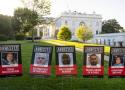
Think about that for a moment. A federal judge presiding over an ACLU lawsuit has ordered the Attorney General of the State of Florida to cease enforcement of the Florida law that is the source of the suit. The AG, citing his opinion that the judge has no jurisdiction, is defying the order, refusing to order Florida law enforcement to stand down.
And here's the interesting bit: It seems that if the Florida AG is to be brought in to face contempt charges, the person likely to be tasked with bringing him in would be U.S. Marshal Greg Leljedal of the Northern District of Florida. Now, look at this:
...
They seem to be on remarkably good terms.

Retired Professor tcgeol
3 days ago
I hope this isn't misunderstood, but sometimes Catholics who are otherwise socially conservative have what most of us would consider quite liberal views on things like immigration and welfare, arising out of a misguided notion that the government is supposed to play the same kind of role as the Church in helping those less fortunate. Of course, the only way the government can do that is by forced wealth transfers, which the Constitution never contemplated.
The Catholic Charities Bureau was created by the Roman Catholic Diocese of Superior in Wisconsin to serve the poor and needy. In furtherance of this mission, Catholic Charities provides a number of important social services. These services are open to any Wisconsinite in need, regardless of his religious background. One might think Wisconsin would want to incentivize such open-ended acts of charity by granting Catholic Charities the same benefits made available to other religious organizations. Alas, that is not the case.
Instead, the Wisconsin Supreme Court disregarded the undeniably religious purpose behind the creation of Catholic Charities and ruled that serving the poor and needy is not “typical” religious activity. Setting aside the Wisconsin Supreme Court’s blissful ignorance of both the role religion plays in charitable activity and the dictates of Catholic Social Teaching, such a ruling creates a narrow set of state-approved religious activities that limits religious activity to the likes of “observance of liturgical rituals,” “evangelical outreach,” “pastoral counseling,” “performance … of church ceremonies,” and “education in … doctrine.”
The court’s ruling unilaterally declares that any activity that is unorthodox or resembles secular activities cannot be motivated by a religious purpose. This means that church-run food pantries or community projects cannot be religious activities under Wisconsin’s limited understanding of religion.
The Becket Fund, which represents Catholic Charities at the Supreme Court, has rightfully argued that the Wisconsin Supreme Court’s decision “violates the principle of church autonomy,” “entangles church and state,” and “discriminates among religions.” While a ruling in favor of Catholic Charities on these grounds would be a win for religious liberty, it would only be a Band-Aid on a bullet hole.
Without a definition of religion, courts are forced to guess at what activities mandate protection from government interference. //
However, the definition the court should adopt is that which best reflects the original meaning and is adaptable to a changing religious landscape: namely, religion means a system of beliefs and practices derived from duties to a sacred authority, which is prior to and beyond human relations and receives allegiance and worship.
This definition recognizes that religion is not merely the product of internal contemplation but also features externally compelled duties. Such an understanding was commonplace among the founders and reflects the original meaning of religion as used in the Religion Clauses. However, this definition also provides flexibility by recognizing protections for religions with external governing authorities — such as the Great Spirit common to American Indian religions — that operate similarly to God in the Abrahamic faiths but may not be covered by an exclusively theistic definition.
Moreover, supporting a single definition respects the painfully obvious truth that the Religion Clauses of the First Amendment are complementary provisions working together to defend a preexisting sphere of authority against government capture. Similarly, this definition recognizes something that courts have so desperately tried to deny for decades: The Religion Clauses are not antagonistic to religion or even indifferent; they exist for the benefit of religion.
Citizens’ natural right to religious liberty is one of the foundational principles of American law, so much so that, according to the Supreme Court, a “religious people” enshrined in the First Amendment a guaranteed freedom to worship as one wills. A “religious people” are not a people indifferent or antagonistic to religion. Rather, they are a people who believe the dictates of religion impose superior obligations to those imposed by the state.

Now it's interesting, and maybe Orrick is hoping nobody will learn this, but Title 23 U.S.C. § 158 established that the federal government could lawfully withhold highway funds from states that did not comply with a uniform minimum age for alcohol consumption that was set by the feds at age 21. This came about in an effort to combat drunk driving and was enacted by Congress in 1984 as a way of ensuring compliance. It is a federal statute. Title 23, Section 158 says:
The Secretary shall withhold 10 per centum of the amount required to be apportioned to any State under each of sections 104(b)(1), 104(b)(3), and 104(b)(4) [1] of this title on the first day of each fiscal year after the second fiscal year beginning after September 30, 1985, in which the purchase or public possession in such State of any alcoholic beverage by a person who is less than twenty-one years of age is lawful.
At least one state did not comply and took the matter to the Supreme Court in 1987 with South Dakota v. Dole. South Dakota lost ... //
Held: Even if Congress, in view of the Twenty-first Amendment, might lack the power to impose directly a national minimum drinking age (a question not decided here), § 158's indirect encouragement of state action to obtain uniformity in the States' drinking ages is a valid use of the spending power.
(a) Incident to the spending power, Congress may attach conditions on the receipt of federal funds. However, exercise of the power is subject to certain restrictions, including that it must be in pursuit of "the general welfare." Section 158 is consistent with such restriction //
Watt
33 minutes ago
Background documents:
The court order: https://storage.courtlistener.com/recap/gov.uscourts.cand.444175/gov.uscourts.cand.444175.111.0_1.pdf
To the point: Sorry, this post is messed up in several respects, including as follows:
-
The federal courts, including the Supreme Court, review cases and controversies (Art. III), not "general trends".
-
South Dakota v Dole is presented superficially here. First, the case addressed a federal statute that itself placed a condition on further federal finding to the states. The present situation involves an EO that threatens to cut off federal funding. That's different enough such that South Dakota wouldn't apply.
-
Second, South Dakota presumed that the statute would define the conditions. Here, the EO threatens to cut off funding after the fact.
-
Third, South Dakota set forth factors for when a statute can constitutionally place conditions on federal funding. One of these is that the conditions not be coercive. Arguably, the EO is "coercive."
Although I'm not sure whether case law after South Dakota has has covered this permutation, it would seem that the condition placed on funding should relate to the goal of the funding. In South Dakota, the funding was for interstate highway construction. The condition for full funding was that the state statutes had to set their drinking are at 21 (to help reduce drunk driving). So, could Congress constitutionally enact a statute that withheld all federal funding from a jurisdiction not compliant with immigration law? Or perhaps just all federal law enforcement-related funding?
In any event, South Dakota doesn't support the EO at issue.
mopani Watt
3 minutes ago
Excellent summary review; I agree.
However, the present state of affairs is intolerable. Since Congress did not specify enforcement mechanism to cover this eventuality, I think this is the right way to start down the path. If Congress decides the solution decided by the Courts and precedent is satisfactory, then it was a useful exercise. If Congress (and by extension, their constituents) does not like the precedent, then they have reason to amend the law, and data on which to base the change.
This is the sort of discussion that I wish Trump would engage in, explaining the theory, method, and desired end result. It would win loyalty from supporters, might convert detractors, and would help defuse some animosity (maybe?).
CheeseState
27 minutes ago
The precedence is in regards to a Law passed by Congress and not an EO by a single person (POTUS). So the principle may be the same but there is a difference between Congress tying the two together and POTUS tying Congressionally approved funds to an EO he created. //
mopani CheeseState
16 minutes ago edited
I think you are right in part, but the nuance is that Trump's EO is about enforcing existing law.
Even if Congress didn't write this enforcement action into explicit law, do we want to agree that the precedent is set that any law without explicit enforcement penalties are unenforceable? I'm of two minds about that; generally, I would say, yes, let the elected officials debate and write penalties into the laws they write.
On the other hand, do all the existing laws suddenly become unenforceable because they didn't have explicit penalties written in? What about all the creative resistance mechanisms that opponents of laws always find?
I think we have to give the Executive flexibility to enforce laws passed by Congress to deal with ingenious disobedience, and we need the courts to debate the methods to come to a consensus and create precedent. It takes time, and that's good even if it gets frustrating.
The whole process is analogous to the Scientific Method:
- Thesis
- Anti-thesis
- Synthesis
- Consensus
Sometimes it takes decades to get all four steps hammered out because it takes decades to build a Large Hadron Collider to test the first two.
The legal process is similar, but usually takes less than a decade. It should be slow. We don't want government running at warp 9.
Political-Paige
3 hours ago edited
Roberts and the majority of the Court have ignored their first obligation: to adhere to the Constitution, in favor of an obligation they created out of whole cloth: to protect at all costs inferior court judges by abrogating any semblance of judicial restraint.
Every time they duck the elephant in the room by pretending these ruling are well-intentioned misinterpretations of the Constitution, rather than the blunt usurpation of Article II power by a rogue and adversarial branch, they further degrade what's left of our checks & balances. They are a constitutional wrecking ball.
Their intentional misinterpretation of the unlawful actions of lower courts has upended 250 years of constitutional stability. The other two branches either rein them in by reminding that that enforcement is the prerogative of the Executive alone, or the Republic is nothing more than a dictatorship of unelected thugs.
The Constitutional crisis is already here. //
COUltraMAGA
3 hours ago
The only court co-equal with the executive branch is US Supreme Court.
That’s it.
All other courts have been created by the legislative powers of congress and can be curtailed, thinned, or eliminate by congress.
It’s time for Johnson and Thune to get heads cracking and draft reconciliation bills that require simple majorities to chain up or whittle down these idiots.
It’s Russia-gate and Impeachment-gate part 2.0 this time around. And I’m sick of it.

Trump issued the order on March 25, 2025, and Ward Clark gave us an overview of what's in it:
The EO discusses the integrity of voter registration:
Within 30 days of the date of this order, the Election Assistance Commission shall take appropriate action to require, in its national mail voter registration form issued under 52 U.S.C. 20508:
(A) documentary proof of United States citizenship, consistent with 52 U.S.C. 20508(b)(3); and
(B) a State or local official to record on the form the type of document that the applicant presented as documentary proof of United States citizenship, including the date of the document’s issuance, the date of the document’s expiration (if any), the office that issued the document, and any unique identification number associated with the document as required by the criteria in 52 U.S.C. 21083(a)(5)(A), while taking appropriate measures to ensure information security.
And, there is a section strong-arming the states into strictly abiding by federal election laws:
The Election Assistance Commission shall, pursuant to 52 U.S.C. 21003(b)(3)and 21142(c) and consistent with applicable law, take all appropriate action to cease providing Federal funds to States that do not comply with the Federal laws set forth in 52 U.S.C. 21145, including the requirement in 52 U.S.C. 20505(a)(1) that States accept and use the national mail voter registration form issued pursuant to 52 U.S.C. 20508(a)(1), including any requirement for documentary proof of United States citizenship adopted pursuant to section 2(a)(ii) of this order. //
On Thursday, Kollar-Kotelly issued a 120-page memorandum opinion in support of her order granting the plaintiffs in the LULAC and League cases a preliminary injunction, prohibiting the administration from giving effect to section 2(a) of the order (requiring proof of citizenship in the national mail voter registration form). //
anon-15qo
15 minutes ago
Article II, Sec. 3, ...he [president] shall take Care that the Laws be faithfully executed,...
Article I, Sec. 4, of the Constitution gives states the responsibility of overseeing federal elections.
Amdt. 15, Sec.1, The right of citizens of the United States to vote shall not be denied or abridged by the United States or by any State on account of race, color, or previous condition of servitude–
Amdt. 19, The right of citizens of the United States to vote shall not be denied or abridged by the United States or by any State on account of sex.
Amdt. 24, sec. 1, The right of citizens of the United States to vote in any primary or other election for President or Vice President, for electors for President or Vice President, or for Senator or Representative in Congress, shall not be denied or abridged by the United States or any State by reason of failure to pay any poll tax or other tax.
Amdt. 26, sec. 1, The right of citizens of the United States, who are eighteen years of age or older, to vote shall not be denied or abridged by the United States or by any State on account of age.
If the average American were asked to point to the section of the U.S. Constitution granting the Supreme Court authority to execute immigration laws, chances are he would have a tough time finding it. Why? Because such a power doesn’t exist.
That pertinent fact didn’t seem to matter to seven justices on America’s highest court, however.
This past weekend, these justices took it upon themselves to usurp President Trump’s Article II powers over immigration enforcement by temporarily halting the planned deportations of dangerous Venezuelan gang members under the Alien Enemies Act. Released in the early hours of Saturday morning, the court’s one-page order arbitrarily directed the administration “not to remove any member of the putative class of detainees from the United States until further order of this Court.”
The order provided no rationale for the decision, prompting Associate Justice Samuel Alito to pen a blistering dissent, in which Associate Justice Clarence Thomas joined. In addition to chastising the majority for “hastily and prematurely” granting emergency relief in a case still working its way through the lower courts, Alito laid out a bulleted list of everything wrong with the high court’s “unprecedented and legally questionable” actions. He notably wrote, “It is not clear that the Court had jurisdiction” over the matter, and, “Both the Executive and the Judiciary have an obligation to follow the law” (emphasis added). //
While hordes of illegals came across the U.S.-Mexico border, the Biden administration facilitated the placement of foreign nationals throughout the country in places like Springfield, Ohio, upending countless American lives in the process.
Some American families suffered great losses as a result of Biden’s open border policies. Illegal aliens who never should have been allowed to set foot in the U.S. to begin with took the lives of young girls like Laken Riley and Jocelyn Nungaray.
And yet, when Trump attempts to reverse this anarchy by lawfully utilizing his Article II powers and existing statutes to remove foreign nationals infringing upon America’s sovereignty, the courts interfere and tell him he can’t. That is patently absurd and illogical.
For one, the Constitution gives the authority to execute the nation’s laws to the president — not to the Supreme Court or any other lower court judge.
Secondly, the notion that the judiciary is “supreme” to the other branches directly contradicts the views of the Founding Fathers. As The Federalist’s John Daniel Davidson recently explained, the founders “didn’t think the judiciary was the sole arbiter of what is and is not constitutional.” “While the courts, headed by the Supreme Court, indeed have an independent power to interpret and apply the Constitution,” Davidson wrote, “that doesn’t mean they are supreme over the other two branches, or the states for that matter.”
Alexander Hamilton even suggested in The Federalist No. 78 that the judiciary is to be considered the weakest of the three branches, as it “has no influence over either the sword or the purse, no direction either of the strength or of the wealth of the society, and can take no active resolution whatever.”

We have recently heard much about the Fourteenth Amendment with regard to “birthright citizenship.”. //
This language actually further limits and restricts what the federal government can do to us in the writing of its laws. This is where the “Equal Protection” really kicks in: “(N)or deny to any person within its jurisdiction the equal protection of the laws.”
Proper application of the 14th Amendment? Means a whole lot of laws are unconstitutional.
Progressive tax law? Or any tax law other than a true flat tax? Is unconstitutional. To pass one law with multiple tax rates? Or tax law that has crony tax breaks to which only some citizens have access? Is denial of many millions of Americans’ “equal protection of the laws.”
Nigh everything the Feds do is predicated upon punishing enemies and rewarding friends. Laws for thee — but not for me. Or vice versa. None of this is constitutional — per the 14th.
Think of the massive disempowerment of the federal government the correct application of the 14th would provide.
Think of the massive equalization of opportunities the end of anti-14th cronyism would deliver. //
The Big Cronies’ government advantages mean greater success. Which means they can better afford even more cronyism. Which means even greater success. Which means…. Lather, rinse, repeat.…. //
Cronyism isn’t picking winners and losers. It’s picking losers at the expense of winners.
The losers end up looking like winners because they are being propped up and propelled forward by the cronyism. It’s government force-feeding us bad ideas. Which deprives us of better ideas. Because they are overrun by the lesser, cronyism-fueled bad ideas.
See: Fake energy. Solar and wind are terrible. But they look “viable” because of the hundreds of billions of dollars of Big Gov cronyism shoving them down our throats. //
See also: The bank sector. Which is as rife with cronyism as any sector in the US.
You know what happened to your disappeared neighborhood bank? That had been in your community for decades? Big Gov cronyism killed it.
The Big Banks dominate. They received tens of trillions of dollars in government money after they helped destroy the global economy in 2008. Not letting that serious crisis go to waste? Big Gov let the Big Banks write the Dodd-Frank law that further institutionalized their cronyism.
Thousands of neighborhood banks have been murdered as a result. Which the Big Banks then buy on the cheap. Which further solidifies their Bigness. Which….

Let's review the bidding. Biden creates a facially illegal and purely discretionary program. He brings in a half-million Third World illegals who are, according to the definition of the program, "inadmissible or otherwise ineligible for admission." President Trump, supported by the secretary of homeland security, orders an end to the program and jumps through the administrative hoops of using a Federal Register announcement to reverse Biden's purely discretionary program and a Deep State, or Deep State-adjacent federal judge says he can't and requires an individual interview to end the paroles, which is not required by law, when they never received the legally require individual parole.
This is not new. Barack Obama created the Deferred Action on Childhood Arrivals program (DACA or Dreamers) out of whole cloth. It is simply a scheme whereby the federal government covers its eyes and pretends these people don't exist. This program was not created by executive order, law, or administrative rulemaking. Nope. Secretary of Homeland Security Janet Napolitano issued a freakin memo directing that "prosecutorial discretion" be exercised. However, when Jeff Sessions got around to pulling the plug on DACA, lawfare ensued, and the administration was told it could not rescind the Napolitano memo.
Just stop for a moment and consider this. Federal courts literally told the Trump administration that they could not rescind a memo written five years and three Homeland Security secretaries earlier. Logically, this means a cabinet secretary’s memo is more powerful than an actual law because it takes no consensus to issue it, and it can’t be withdrawn when management changes. To make matters worse, the Roberts Court, in a 5-4 decision, upheld the logically ridiculous notion that the whim of a Democrat president has the same standing, in terms of permanence, as the Constitution.
We clearly have a two-tiered justice system. Not only do BLM rioters get a pass while pro-life grannies go to jail for demonstrating peacefully outside an abortion center, the president himself has his decision treated with derision by the federal courts while all manner of Democrat humbug receives the adulation of our black-robed overseers. //
houdini1984
3 hours ago
The Supreme Court has become the problem. By refusing to keep the judicial branch in its own lane, the Roberts Court has greenlit a nationwide judicial coup against our elected representatives, including the President. The Founders never intended to create a nation that was subject to judicial tyranny of this kind.
The only solution is for the elected branches to push back decisively, soundly rejecting all judicial decisions that interfere with or run contrary to constitutionally-established congressional and presidential powers. Unfortunately, Democrats will block and congressional attempts to rein in these rogue judges, which means that it's up to executive to restore our constitutional order.
The President has taken an oath to defend the Constitution of the United States. If that requires him to defend it against one of the other branches, so be it.
Dieter Schultz houdini1984
3 hours ago
The Supreme Court has become the problem. By refusing to keep the judicial branch in its own lane, the Roberts Court has greenlit a nationwide judicial coup against our elected representatives, including the President.
Oh, if it were only that simple.
IMHO, it is not just the SC that is the problem, all of the branches of the federal government are confused and conflicted. Congress sets up independent departments and functions in the executive branch and puts language in the law prohibiting the President from removing them. Then, the executive branch makes rules, and binding rulings, that look, and are, a lot like lawmaking and the judiciary, respectively.
Today the most pressing problem is the judiciary and it being out of control but the problem is bigger than that and requires something more than just the SC doing its job.
Although, right now I'd settle for the SCOTUS actually doing its job.
houdini1984 Dieter Schultz
2 hours ago
Admittedly, our entire constitutional order is out of whack, but we have to start somewhere if we want to get things back on track. The problem is that too many on the right are sitting around waiting and hoping for SCOTUS to do the right thing. That's not going to happen with Roberts at the helm, since he's more concerned with protecting the Court than safeguarding the country.
Meanwhile, Congress is completely broken. They can't even do their job and complete a budget. Every year, they wait until the last minute and push some stupid continuing resolution at us while threatening a shutdown. The Dems have been waging war against normalcy for decades, and the Republicans are too disunited to mount any effective opposition.
Sadly, it's up to the Executive to stand against this nonsense and try to restore sense and order to the nation. The only good news here is that this administration seems to understand that the administrative state needs to be rolled back, so maybe that will mute some of your concerns about executive rulings, rules, and pseudo-lawmaking.
Hope is a terrible strategy, but it appears to be all we have at this point. //
houdini1984 Scholar
30 minutes ago
Just so. If I were Trump, I would assemble some of my most plain-spoken cabinet members and organize an instructional speech to the nation. We would explain, in simple words, exactly how our government has become so off-track, and the steps needed to put things back in order. Explain how this current dysfunction directly affects their lives, and the benefits they'll enjoy from a restoration of constitutional governance.
Oh, and make a point to talk about the people who support the current misrule, and the corrupt benefits they enjoy from corrupting our constitutional system. Then challenge Democrats to join us in fixing these problems -- while making it clear that we won't allow their anti-American revolution to do any further damage to the American people. //
mopani houdini1984
9 minutes ago edited
What it is going to take is years of push back and work by the executive branch, including making regular updates to the people.
There is no easy solution, and any quick fix will be quickly broken.
Buckle up, any victory worth having is worth fighting for.
I thank God we have a chief executive who understands this and is willing to wage the war. But he has got to take it to the people when frequent special addresses and pressure Congress to make his executive orders into law.
The Supreme Court’s continuing failure to define lower courts’ authority is wreaking havoc on the reputation of the courts — and our constitutional order. //
The Supreme Court has interceded six times in less than three months to rein in federal judges who improperly exceeded their Article III authority and infringed on the Article II authority of President Donald Trump. Yet the high court continues to issue mealy-mouthed opinions which serve only to exacerbate the ongoing battle between the Executive and Judicial branches of government. And now there is a constitutional crisis primed to explode this week in a federal court in Maryland over the removal of an El Salvadoran — courtesy of the justices’ latest baby-splitting foray on Thursday. //
Yet, those requests, as the Trump Administration pointed out yesterday in its response brief, directly infringe on the president’s Article II authority. “The federal courts have no authority to direct the Executive Branch to conduct foreign relations in a particular way, or engage with a foreign sovereign in a given manner,” the Trump Administration wrote. Rather, “[t]hat is the ‘exclusive power of the President as the sole organ of the federal government in the field of international relations.’”
While the Supreme Court has declared that “[s]uch power is ‘conclusive and preclusive,’ and beyond the reach of the federal courts’ equitable authority,” given her orders to date, Judge Xinis is unlikely to stand down. Rather, expect the Obama appointee to enter another scathing order demanding details and actions. But with its core executive powers at stake, the Trump Administration cannot comply.
The justices should have foreseen this standoff and defused the situation last week by clearly defining the limits of the lower court’s authority. The Supreme Court’s continuing failure to do so is wreaking havoc on the reputation of the courts — and our constitutional order.
Like with the Japanese internment during World War II, the current move to deport alleged alien criminals is driven by hysteria.

This is a prime example of the press exposing its activist nature. When these select judges ruled on Trump’s activities, it was hyperactive coverage and banner headlines. Judge James Boasberg has become something of a media darling for imposing injunctions and TROs on deportation efforts. Yet when these cases rise to the Supreme Court and get reversed, you might see some pat reporting and solitary articles.
Logic would dictate that if these were in fact serious cases, the coverage would match on either side of a ruling. But as we have become conditioned to for some time, the press is largely dictated by emotion and partisanship. When these judges came out with rulings opposing Trump’s policies, it was blaring headlines, round-the-clock coverage, and every exploration made into how the president was defying the Constitution and burning down our democracy.
Now we get solitary news items and a calming of the waters. Primetime pundits are not delving into the prospect of rogue judges threatening our democracy by attempting to override the president. No “experts” are brought on camera to criticize courts trying to step in and wrest Executive Branch control from the Chief Executive. Outlets are not sharing op-eds about the meaning of it all concerning SCOTUS.
This is a clear sign of an activist media complex. The coverage of the initial judgements were not merely sober presentations of the facts; they were promoting an agenda and encouraging these actions by the judges. Once the rulings come in, then the media makes proclamations and charges Trump with “defying the courts” accusations and interpreting worst-case scenarios.
This is a major advance in the moves by the partisan press. This is not merely farming a narrative anymore; this is a blatant attempt to influence governance. There is a clear anti-administration agenda and they're not even attempting to hide it. They begin from the standpoint that Trump is wrong, regardless of the issue, and then strain to manipulate details to suit that accusation.
Look at one of the impotent arguments made about the use of the Alien Enemies Act when it was said to be invalid because it is an old law from the 1700s. Somehow, this was supposed to suggest that the AEA no longer counts. But for this logic to stand, then you have to question the legitimacy of the very Constitution itself, given that the document predates the law they do not like.
The point of all the injunctions and restraining orders is to preserve the supreme rule of unelected and unaccountable bureaucrats. //
More nationwide injunctions and restraining orders have been issued against Trump in the past month that were issued against the Biden administration in four years. On Wednesday alone, four different federal judges ordered Elon Musk to reinstate USAID workers (something he and DOGE have no authority to do), ordered President Trump to disclose sensitive operational details about the deportation flights of alleged terrorists, ordered the Department of Defense to admit individuals suffering from gender dysphoria to the military, and ordered the Department of Education to issue $600 million in DEI grants to schools.
On one level, what all this amounts to is an attempted takeover of the Executive Branch by the Judicial Branch — a judicial coup d’état. These judges are usurping President Trump’s valid exercise of his Executive Branch powers through sheer judicial fiat — a raw assertion of power by one branch of the federal government against another.
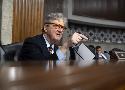
Kennedy then asked the assistant AG nominee to "explain how this works."
You have a plaintiff and you have a defendant. And the plaintiff files a lawsuit and goes in front of a federal judge. a federal judge has a certain jurisdiction ... and subject matter over the parties; the plaintiff and the defendant. They're the only two people in court. How can a federal judge issue an order that affects everybody else — other than those in front of him or her? How's that possible?
Shumate was on it:
It shouldn't be possible, Senator. But district courts do it all the time. I think on the theory that the courts need to enjoin a federal policy from going into effect, and they also will enjoin it nationwide so all non-parties are protected by that injunction. //
John Kennedy @SenJohnKennedy
·
The universal injunction has become a weapon against the Trump admin.
It’s long past time to put an end to this lawless practice.
12:50 PM · Mar 26, 2025. //
anon-l1t0
15 minutes ago
I remember when Obama wanted to make changes in the law but could not get Congress to agree. He found a willing plaintiff to sue the government, and a friendly judge, and then entered into a Consent Decree to accomplish his desired outcome. Then if someone sane objected, Obama simply pointed to the court order and said that his hands were tied by the court. Lawfare working for rather than against the President and his agenda. That is how it is done.

The Supreme Court has become a paper tiger, failing to hold defiant lower courts accountable when they make rogue decisions. //
Lower court federal judges across the country are standing athwart the American people’s will to allow the Trump administration to cut government programs and deport violent gang members from the country. But these unelected judges have a long-running pattern of clinging to their status quo, even in defiance of the Supreme Court, because the high court refuses to rein them in.
The Supreme Court has the responsibility to make sure its subsidiary courts follow its directives — often by taking more cases, and making their precedent unambiguous. Arrogant, active, and open defiance on some of the most important issues, however, has been the norm from these lower courts for years, and a majority on the high court has persistently refused to stop them. //
The Court’s majority again refused to take a case wrongly decided by lower courts, when the Biden administration attempted to fine a Medicare-funded work-around for Dobbs, forcing hospitals in Idaho, which had outlawed almost all abortions, to perform them anyway.
“Shortly before Idaho’s law took effect, President Biden instructed members of his administration to find ways to limit Dobbs’s reach,” Alito wrote in a dissent for Moyle v. United States. “Apparently, the Court has simply lost the will to decide the easy but emotional and highly politicized question that the case presents. That is regrettable.”
It’s not just abortion, it’s Second Amendment rights as well. Lower courts repeatedly waged war against DC v. Heller, the Supreme Court precedent that struck down a law that banned handgun ownership in Washington, D.C., and clarified that the Second Amendment does not just protect a right to self defense for militia purposes.
In a 2018 case that would have allowed the Court to enforce its own precedent, the Court ran away, and had done so for years, Thomas wrote in yet another dissent slamming lower courts for defying the high court.
“Our continued refusal to hear Second Amendment cases only enables this kind of defiance. We have not heard argument in a Second Amendment case for nearly eight years … If this case involved one of the Court’s more favored rights, I sincerely doubt we would have denied certiorari,” Thomas said before listing other rights that the Court would have taken cases on. “The Court would take these cases because abortion, speech, and the Fourth Amendment are three of its favored rights. The right to keep and bear arms is apparently this Court’s constitutional orphan. And the lower courts seem to have gotten the message.” //
The Court used to enforce its precedent, like when lower courts attempted to defy Brown v. Board of Education and its mandate to racially integrate schools. It used to do it because it has always been part of the job — precedential decisions are not ‘one-and-done’ adventures. They will need clarification, parameters set, or clarity for lower courts to tell them the high court meant what it said.
At least one federal judge, James C. Ho of the Fifth Circuit Court of Appeals, has publicly diagnosed at least part of the problem with the court refusing to take cases: A debilitating lack of fortitude among a vast array of federal judges.
In a 2023 speech at the Heritage Foundation, Ho said many federal judges are afraid to make tough decisions, or take tough cases, because they are afraid of public backlash for making the right decision:
If you plan to be faithful to the Constitution in every case, no matter how unpopular that may be, gold stars are not in the cards for you. But that’s the job. Judges don’t swear an oath to uphold the Constitution part of the time: We swear an oath to uphold the Constitution all of the time.
If you’re an originalist only when elites won’t be upset with you—if you’re an originalist only when it’s easy — that’s not principled judging. That’s fair-weather originalism. We’re not binding ourselves to the text if we only follow it when people like the result.
“When you look at the résumé of a typical federal judge, you often see a bunch of fancy credentials,” Ho added to the argument in a 2024 piece for the National Review. “People who have devoted their whole lives to collecting gold stars tend to be motivated by one overarching objective: getting more gold stars. If that’s what drives you, then the threat of public scolding can be a powerful motivator.”
The “booing of the crowd,” Ho said, “is not going away anytime soon,” and if judges cannot handle it, they should probably find other work.
At what point does judicial review turn into judicial rule?
This problem isn’t just about these issues or executive power — it’s about the broader politicization of the judiciary. When a judge blocks a policy because he personally opposes it, rather than because it violates the Constitution, he is no longer functioning as a neutral arbiter. //
Even the Supreme Court has recognized the dangers of this judicial overreach. In Trump v. Hawaii (2018), Chief Justice John Roberts warned lower courts that they do not have the authority to micromanage national security decisions made by the executive. Yet lower courts continue to ignore that warning, issuing nationwide injunctions based on political discomfort rather than constitutional law.
The media will cast Trump’s decision to ignore Boasberg’s ruling as reckless, lawless, or authoritarian. But what’s truly reckless is allowing the judiciary to continue seizing power it does not have. There is precedent for presidents pushing back against judicial overreach. Abraham Lincoln ignored a Supreme Court ruling in 1861 when Chief Justice Roger Taney attempted to block his suspension of habeas corpus during the Civil War. Andrew Jackson famously refused to comply with a Supreme Court decision in Worcester v. Georgia, arguing that the executive branch — not the judiciary — was responsible for enforcement. Both of those decisions were controversial. Both were necessary.
The ACLU is seeking to stop the executive branch from removing five plaintiffs. D.C. District Judge James Boasberg hastily took command and control over the latest iteration of lawfare, emergently agreeing to consider the case and issuing orders camouflaged in legitimacy. Judge Boasberg’s orders, actions, and reactions are laden with plain error.
From the onset, Boasberg failed to recognize his court lacks the jurisdiction to hear this case. Why? The ACLU filed this case in the District of Columbia. The five Venezuelan plaintiffs represented by the ACLU are not detained in D.C., but in New York and Texas. The Supreme Court ruled in Rumsfeld v. Padilla that no court has jurisdiction over a habeas petition unless those filing the petition are detained in the district in which it was filed.
Boasberg was also quick to accept the plaintiffs’ premise that the Alien Enemies Act (AEA) is a power properly exercised only during a time of war. This is patently false. Any plain reading of the law makes it clear that the AEA is an appropriate power to invoke not only during a time of war, but when the president determines there has been an invasion or predatory incursion. Even more persuasive is the Supreme Court’s ruling in Ludecke v. Watkins that the AEA extends beyond wartime. And without a statutory definition of “invasion” or “predatory incursion,” it is the judgment of the president alone to determine if such has occurred. This national security determination is a non-justiciable political question and the Supreme Court has repeatedly informed the intellectually curious that political questions are not reviewable by a court. //
Boasberg has gone too far and too fast to retreat, so this skirmish will continue until the Supreme Court loads up the Article II canons on his position (see what I did there). Through his orders and admonitions, Boasberg has tactlessly given imprimatur to the “legal strategy” of disrupting the Trump presidency at all costs. Boasberg has called DOJ’s response to brash authority as “woefully insufficient,” but, candidly, his stewardship of this case thus far has been nothing more than woeful.
President Trump’s adversaries were determined to take his freedom, his fortune, and even his life. Those efforts thankfully failed. But his enemies remain undeterred.
This is just lawfare by other means.

The solution is clear: either the Supreme Court needs to step in and reassert its unique authority to issue nationwide rulings, or Congress must pass legislation limiting district courts' ability to issue sweeping national injunctions. The current system, where any district judge can effectively veto presidential actions, is unsustainable and undermines our constitutional order.
Trump's administration continues to fight these battles in court, often successfully on appeal. But the time has come to address this abuse of judicial power head-on.

Random US Citizen
3 hours ago edited
He’s not “going to lose” the narrative, he’s already lost it. He lost it back when he manipulated the outcome of the Obamacare case by ignoring the plain wording of the statute and decided the the word “penalty”—those seven literal letters—meant “tax.” Everything he’s done after that has just proved that he is a politician, not a judge. The damage he has done to the reputation of the judiciary through his blatant political maneuvering is incalculable. It’s rather ironic that insiders claim he is doing this to protect the court from a reputation for being political. But the Supreme Court has gone from one of the most trusted institutions in the country to one that is at a historic low of trust.
John Roberts has no one to blame for this but himself. His constant refusal to decide constitutional matters before the court in favor of remanding them over minor issues is part of the problem. His willingness to join the conservatives on the bench in important decisions merely so he can write tepid opinions is another. His need to make choices based on political calculations is a third. But most damaging is his unwillingness to admit the reality that lower court judges are making decisions based on their personal politics and take action. His claim that “There are no ‘Obama judges’” in the face of this reality was proof that he’s not serious about his job as a justice.
Either that, or someone is holding his kids hostage.
jester6 Random US Citizen
8 minutes ago
As I wrote in another thread, SCOTUS's power to declare actions of the Executive and Legislative branches unconstitutional is not found in the text of the Constitution. That power comes from a 1803 court decision called Marbury vs Madison. SCOTUS granted themselves that power, and the other branches aqueised.
However, for most of our history, it was only SCOTUS who challenged the Executive or Legislative branch openly. Over the last 40 years the Circuits began to do it. And now, since 2016, the District courts are playing at the game. These judges are operating on the idea that power of the judiciary iis sacrosanct; infact the judiciary is the weakest branch if government in our system. It has no real power over the other branches if they decide to ignore it.
Thanks to the actions of these district judges, the entire judiciary is now part of our political process. Sooner or later, the traditional political branches are going to start treating the judiciary as political players. The judiciary has very little power to withstand that onslaught.
Not only can Trump simply ignore the judiciary, Congress can wipe out all courts but SCOTUS with a simple majority vote, and there is nothing the judiciary can do. Congress can also simply remove jurisdiction on certain matters from the courts with a majority vote.
If Trump decided to ignore the courts tomorrow, their only hope would be for Congress to impeach Trump... and the judiciary has made enemies of so many people in Congress, there is zero chance the Senate would vote two-thirds to remove Trump from office. The bottom line is Roberts has let these district judges put the entire judiciary into a precarious position.
These judges are like a 50 year old man reffing a football game who decides he wants to play running back... they've picked up the ball but they have not considered what it will feel like when a 300 pound 25 year old linebacker takes them down. They are foolishly assuming the protections that went with their role as ref will continue when they play the game. If they don't reverse course, they will find out that is a bad assumption. //
1776-2023RIP
3 hours ago
It is Roberts job to rein in these out of control judges.
Like everything else, he’s failing at this. He pontificates that “for over 200 years…blah, blah”.
But he doesn’t acknowledge that no president has ever faced this level of litigation. This is Judicial tyranny. Nothing less.
The Judicial Branch ( headed by the Supreme Court ) is a coequal ( not superior) branch of government.
The Executive Branch ( The President) is a coequal ( not inferior) branch of government.
Sometimes they are in conflict. It would then be up to the other Co-equal branch ( the Legislature) to resolve the conflict. That is our system under the constitution.
Reminder the Supreme Court has gotten many, many things wrong over the years. The “Dred Scott decision “ being a notable one. Abraham Lincoln famously ignored this ruling. He was right to do so.
Just because a court ( even the SC) says it so, doesn’t mean it has to be so. Otherwise, a rogue supreme court could simply rule that every action a president took is unconstitutional. Effectively neutering the President, and arrogating Executive Powers to themselves. This is judicial tyranny and Justice Roberts should put an end to it. Before Trump does. //
Mike Rogers
2 hours ago edited
Roberts gets ONE chance. Either the court takes one of these challenges to article 2 and rules in favor of the constitution or Trump can remind the nation that the judiciary cannot control the presidency and plow on with the people’s agenda.
There is a big difference between contract law and the (unfortunately) painful procedures for firing civil servants, and ruling on policy which is outside the purview of ANY judge.
During Trump 1.0 Roberts was concerned about maintaining the legitimacy and relevance of the Supreme Court, but Trump 2.0 can destroy both if he does not guide the court to adhere closely to the constitution. //
anon-jzmf
3 hours ago
Justice Roberts wants courts and judges to be seen as neutral arbiters sitting on a serene plane high above the excesses of politics. But John, if you want your fantasy to come true, your courts and judges have to actually sit above politics, and many judges do not. If a significant number of judges decide to become activists, making their venues "political courts," then the political branches will inevitably respond to the politicization of those courts. Get ready, Johnny, because it's coming and coming hard. //
Jeff Bartlett
2 hours ago
You miss the point. Trump is whining about impossible impeachments when he should be doing this:
- Sue EOs in pro-Trump courts: Trump wins, uses as cover to proceed while
rulings conflict. - Use Lincoln precedent: remove judges for violating Article 3, Section 1, Clause 1.
- Charge judges with treason: acting w/o jurisdiction (US v Will, Cohens v Virginia). //