
Starting next year, Google plans to require all apps installed on certified Android devices, including sideloading, to come from developers it has verified. Many Android developers see the move as a power grab and have started a movement to "Keep Android Open." //
On Tuesday, via the F-Droid blog, he renewed his challenge to Google's assertions about its verification program, specifically the company's claim that "Sideloading is fundamental to Android and it is not going away."
"This statement is untrue," he wrote in his post. "The developer verification decree effectively ends the ability for individuals to choose what software they run on the devices they own.
"It bears reminding that 'sideload' is a made-up term. Putting software on your computer is simply called 'installing,' regardless of whether that computer is in your pocket or on your desk."
Both Google and Apple [PDF] use the term "sideloading" as a pejorative, possibly because they have a commercial interest in running app store toll booths.
Prud'hommeaux proposes the term "direct installing," in case you need to make a distinction between obtaining software the old-fashioned way versus going through a rent-seeking intermediary marketplace like the Google Play Store or the Apple App Store.
Pointing to The Register's recent report about 77 malicious apps on Google Play that amassed more than 19 million downloads, Prud'hommeaux questions both Google's ability to catch malicious apps and its lack of evidence to support the claim that it "found over 50 times more malware from internet-sideloaded sources than on apps available through Google Play."


Open Source Blueprints for Civilization. Build Yourself.
We’re developing open source industrial machines that can be made for a fraction of commercial costs, and sharing our designs online for free. The goal of Open Source Ecology is to create an open source economy – an efficient economy which increases innovation by open collaboration.

If you’re trying to debloat Windows 10 or 11, you’re probably wondering which tool to use. Try Win11Debloat, an open-source & easy-to-use one-line tool; download it now.
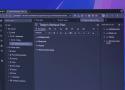
Keep is convenient, but it was time for a replacement. So, I tried out Trillium, a self-hosted, open-source note app. This might just be the self-hosted notes app that will make me ditch Google Keep. https://github.com/TriliumNext/Trilium
fortunately, i made a discovery: the “detail” page is called “detail.php”, while the normal “get me the whole image” link is “fetch.php”. so i simply deleted detail.php and symlinked the name to fetch.php; this fixed it, and i didn't even have to edit any code, because doku is built the way it should be: a loose collection of files that anyone can understand.
this is, again, why i went with dokuwiki - because it's one of the last vestiges of classic nerd software on the internet. it's like linux in 2003, before it started trying to Help you, before it started trying to be a mishmash of half-baked, half-remembered ideas from Windows and MacOS that don't make end users all that much more comfortable, while getting in the way of the people who the OS was meant to be for in the first place. just let me ifconfig an IP onto eth0 you jackoffs, stop Managing my Network.
i hate modern linux. it has been going in the wrong direction for over 20 years, trying desperately to suck up to consumers who will never care about it, like the democrats “reaching across the aisle” to people who simply bite their fingers off for their trouble, while doing immense harm to their own constituents in the process. and that's really a microcosm of all free software, it's why every other open source CMS package reeks of business-brain.
enterprise brainworms have taken over so fully that you just can't find something at the triple point of “good idea”, “well maintained” and “actually useful for normal human beings,” which is, again, how i wound up using a piece of software from 2004, before the collapse began in earnest. it's like finding steel that isn't radioactive due to fallout from nuclear tests: you simply have to go dig up the old stuff, even if that means melting down old car chassis.

If you're writing an open source system utility, for example, your chance of widespread adoption depends on its reputation as trustworthy, and that will reflect on you.
Who watches the watchers?
Talon is a case in point. A Windows de-bloater made by an outfit called Raven and distributed through GitHub as open source, it nonetheless got a rep as potential malware. Open source by itself guarantees nothing, and the conversation around whether or not Talon's bona fides checked out simply grew and grew. Enter YouTube cyber security educator and ethical hacker John Hammond. His day job includes answering the question "Is it Malware?" He has the chops, he has the tools, he has the caffeine. Speedrun is go. //
How might Raven have avoided being considered suspicious? There's a concept called defensive coding, where you consider each decision not just as how it contributes to functionality, but how it would cope if given an unexpected input. With Talon, the defensive process is whether a choice of technique will trigger malware scanners, and if it might, but is indispensable, how to make it clear in the code what's going on. You know, that pesky documentation stuff. The design overview. The comments in the code. If your product will need all those open source eyeballs to become trusted, then feed those eyeballs with what they need. There aren't many Hammonds, but there are lots of curious wannabes, and even the occasional journalist eager to tell a story.
Creating security is a huge task, and everyone who launches software for the masses has the opportunity to help or hinder, regardless of the actual intent of the product. Open source is a magnificent path to greater security across the board, because it keeps humans in the loop. Engineering for those humans is a force amplifier for good. Just ask the future historians speedrunning the history of cyber security centuries from now. ®
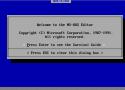
Last month, Microsoft released a modern remake of its classic MS-DOS Editor, bringing back a piece of computing history that first appeared in MS-DOS 5.0 back in 1991. The new open source tool, built with Rust and simply called "Edit," works on Windows, macOS, and—in a twist that would have seemed unlikely three decades ago—Linux. https://devblogs.microsoft.com/commandline/edit-is-now-open-source/
Aside from ease of use, Microsoft's main reason for creating the new version of Edit stems from a peculiar gap in modern Windows. "What motivated us to build Edit was the need for a default CLI text editor in 64-bit versions of Windows," writes Nguyen while referring to the command-line interface, or CLI. "32-bit versions of Windows ship with the MS-DOS editor, but 64-bit versions do not have a CLI editor installed inbox.". //
https://github.com/microsoft/edit
At 250KB, the new Edit maintains the lightweight philosophy of its predecessor while adding features the original couldn't dream of: Unicode support, regular expressions, and the ability to handle gigabyte-sized files. The original editor was limited to files smaller than 300KB depending on available conventional memory—a constraint that seems quaint in an era of terabyte storage.

Clarity, at a glance
TRMNL is an e-ink companion that helps you stay focused.
Stay focused
Meet the world's first dedicated screen for things that matter.
Monitor your security cameras with locally processed AI
Frigate is an open source NVR built around real-time AI object detection. All processing is performed locally on your own hardware, and your camera feeds never leave your home.
Get access to custom models designed specifically for Frigate with Frigate+.
What this is
This repo contains downloads of compressed disk images of bootable USB keys.
Version 1 is based on several upstream FOSS projects, plus some ancient DOS freeware applications. The idea is to provide a complete, easy-to-use, distraction-free environment for writers. It is set up for English with provision for US and UK keyboard layouts. If you want other translations, I welcome help!
To get your work off the key, just insert the key into a computer that's already running any more modern OS than DOS.
You cannot go online with the keys and there are no Internet tools. There are also no games included. Both are intentional.
What it contains: SvarDOS plus a menu launcher and a choice of freeware writing tools
The operating system is SvarDOS, the latest release as of January 2025. For source code for the OS, go to the SvarDOS website.
There are no build scripts or source code here. I did not use any. I did not compile anything at all. What I did was take pre-existing compiled code from SvarDOS and other projects, install it, and configure it. Then I worked out how to make bootable media in VMs, imaged those DOS-bootable USB media, and put the downloads here.
The main writing-tools key has a simple launch menu using the DOSShell menu from PC DOS 2000, which back in 2021 I made into a Virtualbox VM and published on my tech blog.
It contains three word processors, two outliners, three plain-text editors, and some other apps. These alls are all explicitly freeware or products from companies that no longer exist.

By 21st century standards, DOS is so tiny and simple that it can run on almost anything. It has a library of thousands of apps, including some very powerful tools. Many were shareware or public domain, and are legal to use for free. Even many formerly commercial apps are legally freeware now. As an example, there's a good assortment at the FreeDOS repo. FOSS was not a big thing in the DOS era – it predates the invention of the GPL, for instance – but DOS versions of some of the big-name FOSS apps, such as Emacs and Vim, do exist. //
There's one purpose where being the digital equivalent of a hermit in a cave in the desert is an advantage. A function for which a total lack of ability to connect to a WLAN and access the Web is a desirable thing: a standalone, non-networked, multimedia-free writing machine.
Early versions of many of the big-name word processors ran on DOS, including the classic WordPerfect and the original Microsoft Word. There are other writers' tools, too, such as Symantec's GrandView outliner. Not all are free to use these days, but a surprising number are. For instance, one of the most popular British apps from the 1980s boom times, Arnor Protext, is now freeware. Even some of the big names, when the last inheritor ceased trading years ago, as we described regarding MicroPro's WordStar last year. //
Microsoft Word 5.5 came out in 1990 and was the first DOS release with a modern CUA user interface – in other words, drop-down menus using standard keystrokes. It still works well and Microsoft released this version as freeware in 1999 as a Year 2000 fix for all previous versions of Word for DOS and OS/2. (Unfortunately, this doesn't apply to Word 6.0 for DOS, which was the final DOS version and is a little more pleasant to use.) //
The result of the holiday season at the end of last year is our USB-DOS project on GitHub. It's a – so far, very small – collection of images of bootable USB keys. There are both FAT16 and FAT32 images. The FAT16 image will fit on a 256 MB key, if you can still find one that tiny; the FAT32 image will fit on a 4 GB key with a lot of room to spare. The first release, version 1.0, contains MS Word, Arnor Protext, an outliner, and the WordPerfect Editor. It boots straight into a graphical menu that lets you run the apps without ever even seeing DOS's command line. The second release, version 1.1, is nearly twice the size, but that's because it adds in the DOS components from Robert Sawyer's WordStar 7 archive, including file conversion utilities, and substantial documentation as PDF files. For that reason, we also added Adobe Reader for DOS.

As we've said many times here, the normal community understanding on contribution licensing is inbound=outbound, which is to say that contributors agree for their contributions to be licensed under the project's existing licence.
In the case of copyleft licences, as the linked question says, this is actually a requirement of the licence. In the case of the permissive licences like MIT, however, it's just a community understanding. Unless the project required a CLA from you, you could make an argument that you never licensed your contributions to the project at all, but I'd expect it to be a hard, uphill business to convince a judge of that (indeed, as Bart points out (thank you, Bart!), given GitHub's embedding of in=out in their TOS, it will likely be next to impossible).
But the project is completely entitled to change to a proprietary licence, and unless you can convince a judge that you never agreed to licence your contributions, you have no right to demand they stop using your contribution. One of the many advantages of copyleft licensing is that, once contributions have been accepted, the project can no longer unilaterally relicense. The permissive licences don't give the same protection, and this is generally understood, so what they've done, though not nice, is neither unlawful nor unethical.
One thing you can do is to take the copy of the MIT-licensed source you've found, and make sure it's available from your website (or at least, not solely from your github account). You have every right to do that, and as the search engines pick it up, you may hope that their proprietary-licensed version is supplanted by the free version.
Plan your projects with the elegance
of a sloth on a sunny day.
Vikunja, the fluffy, open-source, self-hostable to-do app.
Self-Hosted, Open-Source, Unconventionally-Named Vehicle Maintenance Records and Fuel Mileage Tracker

Features
Create backups locally and remotely
Set a schedule for regular backups
Save time and disk space because Pika Backup does not need to copy known data again
Encrypt your backups
List created archives and browse through their contents
Recover files or folders via your file browser
Pika Backup is designed to save your personal data and does not support complete system recovery. Pika Backup is powered by the well-tested BorgBackup software.

A #DOScember surprise: fits on a single floppy, but has a network-capable package manager

Build a Knowledge Base with Apache Answer
A Q&A platform software for teams at any scale. Whether it’s a community forum, help center, or knowledge management platform, you can always count on Answer.

rocy is a web-based self-hosted groceries & household management solution for your home.
Open Source. Built with passion.
ntfy (pronounced notify) is a simple HTTP-based pub-sub notification service. It allows you to send notifications to your phone or desktop via scripts from any computer, and/or using a REST API. It's infinitely flexible, and 100% free software.
FreeScout is the perfect help desk solution for those who need to provide a professional customer support, but who can not afford to pay for Zendesk or Help Scout. FreeScout is a pure open source PHP/MySQL application, so it can be easily deployed even on a shared hosting.