Bloomberg calls for cancellation of the SLS rocket. In an op-ed that is critical of NASA's Artemis Program, billionaire Michael Bloomberg—the founder of Bloomberg News and a former US Presidential candidate—called for cancellation of the Space Launch System rocket. "Each launch will likely cost at least $4 billion, quadruple initial estimates," Bloomberg wrote. "This exceeds private-sector costs many times over, yet it can launch only about once every two years and—unlike SpaceX’s rockets—can’t be reused."


The space suits worn during SpaceX’s Polaris Dawn mission are a sci-fi reimagining of NASA’s classic marshmallow suits. There’s a good reason why they look so different.

"It was a bullseye landing,” said Steve Stich, program manager for NASA’s commercial crew program. “The entry in particular has been darn near flawless.”
Still, he acknowledged that certain new issues had come to light, including the failure of a new thruster and the temporary loss of the guidance system.
He added it was too early to talk about whether Starliner’s next flight, scheduled for August next year, would be crewed, instead stressing NASA needed time to analyze the data they had gathered and assess what changes were required to both the design of the ship and the way it is flown.

Rocky debris caused by a NASA mission could create the first human-made meteor shower.
In Sept. 2022, NASA’s Double Asteroids Redirect Test (DART) intentionally collided with a tiny moonlet named Dimorphos, which orbited the asteroid Didymos, to test its asteroid deflection technology.
Scientists believe the crash produced over 2 million pounds of rocks and dust — and a new study suggests fragments of Dimorphos could land around Earth and Mars in 10 to 30 years, and the meteor showers could last for up to a century.

Boeing has has a long string of aviation disasters to its credit which many attribute to Boeing's embrace of DEI to the detriment of engineering excellence.
NASA is also pushing DEI inside its engineering operations. In fact, "diversity statements" determine if programs sink or swim: see Biden-Harris admin requires 'corrupt' DEI 'ideological litmus test' on NASA innovation funding, scientists say | Fox News.
What might make up a "white supremacy culture?" //
Hmm, it seems to me that a heaping doses of "perfectionism," "either/or thinking," "objectivity," "quantity over quality," and "sense of urgency" are all things that would have helped Boeing avoid this fiasco. Perhaps a little "worship of the written word" could have come in handy when building a freakin computer clock or choosing non-flammable components. Or some solid "power hoarding," instead of "group groping" when making decisions.
The irony of alleged "white supremacy culture" containing so many of the elements that would have prevented this fiasco is just too much to bear.
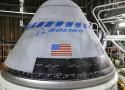
It's unlikely Boeing can fly all six of its Starliner missions before retirement of the ISS in 2030. //
Ten years ago next month, NASA announced that Boeing, one of the agency's most experienced contractors, won the lion's share of government money available to end the agency's sole reliance on Russia to ferry its astronauts to and from low-Earth orbit.
At the time, Boeing won $4.2 billion from NASA to complete the development of the Starliner spacecraft and fly a minimum of two, and potentially up to six, operational crew flights to rotate crews between Earth and the International Space Station (ISS). SpaceX won a $2.6 billion contract for essentially the same scope of work.
A decade later, the Starliner program finds itself at a crossroads after Boeing learned it will not complete the spacecraft's first Crew Flight Test with astronauts onboard. NASA formally decided Saturday that Butch Wilmore and Suni Williams, who launched on the Starliner capsule on June 5, will instead return to Earth in a SpaceX Crew Dragon spacecraft. Put simply, NASA isn't confident enough in Boeing's spacecraft after it suffered multiple thruster failures and helium leaks on the way to the ISS. //
On Saturday, senior NASA leaders decided it wasn't worth the risk. The two astronauts, who originally planned for an eight-day stay at the station, will now spend eight months on the orbiting research lab until they come back to Earth with SpaceX. //
So why did NASA and Boeing engineers reach different conclusions? "I think we’re looking at the data, and we view the data and the uncertainty that’s there differently than Boeing does," said Jim Free, NASA's associate administrator and the agency's most senior civil servant. "It’s not a matter of trust. It’s our technical expertise and our experience that we have to balance. We balance risk across everything, not just Starliner."
The people at the top of NASA's decision-making tree have either flown in space before or had front-row seats to the calamitous decision NASA made in 2003 to not seek more data on the condition of Space Shuttle Columbia's left wing after the impact of a block of foam from the shuttle's fuel tank during launch. //
Now, it seems that culture may truly have changed. With SpaceX's Dragon spacecraft available to give Wilmore and Williams a ride home, the decision was relatively straightforward. Ken Bowersox, head of NASA's space operations mission directorate, said the managers polled for their opinion all supported bringing the Starliner spacecraft back to Earth without anyone onboard.
However, NASA and Boeing need to answer for how the Starliner program got to this point. //
SpaceX, which NASA has tapped to rescue the Starliner crew, has now launched eight operational long-duration crew missions to the International Space Station to date, plus an initial piloted test flight of the Dragon spacecraft in 2020 and several more fully private human spaceflight missions. SpaceX has finished all of its work in its initial commercial crew contract with NASA and is now working off of an extended contract to carry the program through 2030, the planned retirement date for the ISS. //
Right now, the prime route is through SpaceX. NASA continues to fly one astronaut on each Russian Soyuz spacecraft in exchange for a seat for a Russian cosmonaut on each SpaceX crew mission. //
Assuming the investigation doesn't uncover any additional problems and NASA and Boeing return Starliner to flight with astronauts in 2026, there will not be enough time left in the space station's remaining life—as it stands today—for Starliner to fly all six of its contracted missions at a rate of one per year. It's difficult to imagine a scenario where NASA elects to fly astronauts to the space station exclusively on Starliner, given SpaceX's track record of success and the fact that NASA is already paying SpaceX for crew missions through the end of this decade.
Notably, NASA has only given Boeing the "Authority To Proceed" for three of the six potential operational Starliner missions. This milestone, known as ATP, is a decision point in contracting lingo where the customer—in this case, NASA—places a firm order for a deliverable. NASA has previously said it awards these task orders about two to three years prior to a mission's launch.
The commercial crew contracts are structured as Indefinite Delivery/Indefinite Quantity (IDIQ) agreements, where NASA can order individual missions from SpaceX and Boeing as needed. If SpaceX keeps performing well and the space station is actually decommissioned in 2030, it may turn out that NASA officials decide they just don't need more than three operational flights of Starliner. //
Lone Striker Smack-Fu Master, in training
7y
62
accdc said:
Thank you Stephen, and Eric, for your fantastic coverage of this issue.Here’s what I (as a layman with little technical expertise) don’t get:
How does SpaceX make it look so easy, and Boeing make it look so, well, ridiculous?
SpaceX designs, manufactures and integrates most components themselves. In Boeing's case, the thruster manufacturer is Aerojet. In order to make changes or redesign the components, there is a huge bureaucratic barrier in place. They have to jump through extraordinary hoops, not only engineers but also procurement, legal, and any number of departments. In SpaceX's case, it's a walk down the corridor to talk to engineers to discuss the problem and design the fix.
Boeing is also in the dark ages in terms of software development (my field.) SpaceX has a more Silicon Valley/Agile software design methodology where you make many, faster, smaller changes and test them extensively with small unit tests all the way through to hardware-in-the-middle testing to ensure things work as intended. Every tiny change gets rigorously tested to ensure there are no defects or regressions. Boeing's ancient software development process was one of the primary factors in their first Orbital Flight Test failure where they nearly lost the vehicle twice due to software bugs with the mission clock and reentry procedures.
Boeing relies partially on paperwork to validate their spacecraft (whether it's contracts with sub-contractors or studies in place of actual testing) and they've lost the engineers and the engineering culture from the early spaceflight era. //
HiWayne! Smack-Fu Master, in training
1y
50
Ten years they’ve been tinkering with Starliner. That’s crazy. The first crewed Mercury flight and Apollo 15 spanned ten years.
Yeah I know, I know. NASA had an insane budget back then, but damn. Boeing had the benefit of half a century of spaceflight experience and they’re struggling this much to get to LEO. //
Dachshund Wise, Aged Ars Veteran
4y
110
accdc said:
Thank you Stephen, and Eric, for your fantastic coverage of this issue.Here’s what I (as a layman with little technical expertise) don’t get:
How does SpaceX make it look so easy, and Boeing make it look so, well, ridiculous?
Having worked for or with these companies as an engineer, the most concise explanation I have is culture.
Boeings culture is not technically focused, nor mission focused. Boeings culture is Boeing focused with a particular emphasis on shareholders. The overwhelming majority of managers I’ve worked with at Boeing view engineers as a plug and play commodity and are woefully ignorant of the general subject matter they manage. Many I know at Boeing have an exceptionally difficult time taking responsibility for mistakes that Boeing makes. Whether it’s commercial planes or crew capsules, it’s somebody else’s fault and Boeing knew best. Hubris is rampant across Boeing. What’s fascinating there is that there isn’t a damn thing worth being proud of in recent years, but the cognitive dissonance remains strong.
SpaceX culture is mission focused. Their managers tend to understand what it is they are managing. Their workforce is rather young, however, they test things and are willing to publicly fail in a way that Boeing and others will not stomach. When SpaceX does fail, they tend to take full responsibility, learn from the issue and solve the problem.
SpaceX is more or less doing what NACA and subsequently NASA did in their infancy. It’s nothing new, but it’s a major difference as compared to what NASA and its ecosystem have evolved to since those early years. //
Malmesbury Wise, Aged Ars Veteran
3m
341
TLStetler said:
A big part of the problem is Boeing put too many thrusters in too small a space and operated them at a duty cycle which caused everything to overheat. Said overheating caused vapor lock in the propellant lines, and Teflon seals to soften and swell.On the other hand, if you've seen images of Dragon with the aeroshell off the thrusters are distributed spatially, not crowded together. Plumbing and control lines are not near the throats of said thrusters.
This is not even rocket science, any decent Hot Rodder knows not to place propellant/fuel lines etc. in a "hot box."
The problems are inherent in the development methods and company structures.
SpaceX insources - mostly because of cost, but also control. There are, deliberately, few barriers between the engineers working on various parts of the system.
The Boeing/Aerojet relationship is a key counter example - because of a arguments over money they started treating each other as the enemy.
Boeing is attempting to design to perfection, then test. If anything goes wrong at the test stage, they are actually in interactive hardware development. Without the hardware, or low cost basis to do the large number of physical tests required. SpaceX assumed they are in iterative development from the start.
ridley
So to be able to use their spacesuits they need to fit a square peg into a round hole?
Best give Mr Lovell a call. //
Avoiding standard docking and space suit adapters seems like a good way of wasting money and time
The thing that most surprises me about this whole mess is why NASA would ever consider that having a different design of docking adapter and space suit for each type of American vehicle that is to dock with the ISS was a good idea..
That the Soviet G2S vehicles would use different docking adapters and space suit connectors is expected: the two parts of the original ISS design were always intended to use differing docking ports and space suit connectors from the get-go.
However, it beggars belief that NASA would not have specfied a common set of docking adapters for all American spacecraft as well as common space suit interface(s), if only to save costs and re-implementation effort by basing these interfaces on than the well-tested Shuttle docking and space suit connectors. AFAIK those never caused problems throughout their useful life. //
Re: Avoiding standard space suit adapters seems like a good way of wasting money and time
No, giving money to SpaceX was seen as a good way of wasting money and time.
REMEMBER: when this all started, Boeing was the shoo-in, and that goofy SpaceX startup was the complete waste of time and money.
Nobody expected SpaceX to actually ever reach Station.
It never entered anyone's mind that SpaceX would eventually have to rescue a Boeing crew.
The American docking adapters ARE standard.
https://www.internationaldockingstandard.com/
https://www.nasa.gov/missions/station/meet-the-international-docking-adapter/
American spacecraft, INCLUDING Shuttle, either dock to this, or are berthed by the robot arm to a standard pressure door, which allows larger cargo. //
Re: other good ways of wasting money and time
To ensure SLS block 1 would launch by 2016 congress decided to use an upper stage (Interim Cryogenic Propulsion Stage) based on Centaur which has been flying since the 60s. The wimpy ICPS massively restricts SLS capabilities so a new Exploration Upper Stage was ordered for SLS block 1B. SLS is assembled on a mobile launch platform in the vertical assembly building and the rocket and platform are carried out together to the launch site by the crawler/transporter. The MLP includes a tower to fill the core stage and upper stage with propellants. The solid rocket boosters have grown an extra segment each since the space shuttle so the combined mass of SLS and MLP are now sufficient damage the crawler transporter's tracks and they path the travel to the launch site. EUS is longer than ICPS so the propellant connections are at a different height. A whole new MLP is required otherwise SLS block 1B would be delayed because modifications to MLP1 would not be able to start until after Artemis III.
Clearly this situation is untenable. What if MLP2 was completed before EUS? Boeing would look bad for delaying Artemis IV. The solution was simple: do not decide what height the propellant connections will be at until the last possible minute. Bechtel cannot start design of MLP2 without that. Moving the connections also moves the fans that blow hydrogen leaks away before the concentration gets big enough for an explosion. Designing the MLP for a choice of connection heights is also tricky. The platform must be optimized for mass so it does not go much further over the limits of the crawler transporter.
If Boeing and SpaceX had to agree on a flight suit connector US astronauts would now have a choice of rides to the ISS: Soyuz or Shenzou.
Believe it or not there is a worse solution. NASA could decide the shape of the flight suit connectors. Congress would then have an opportunity to help like they did with SLS. Giving Boeing and SpaceX the freedom to work independently of congress (and each other) saves a huge amount of time and money. It also means a flight suit design issue does not ground both crew transport systems at the same time.
The space agency also confirmed key elements exclusively reported by Ars over the last week, chiefly that NASA has quietly been working for weeks with SpaceX on a potential rescue mission for Wilmore and Williams, that the Crew-9 mission launch has been delayed to September 24 to account for this possibility, and that Starliner is unable to undock autonomously with the current software configuration on the vehicle. //
FabioLx Seniorius Lurkius
6y
10
Subscriptor++
Makes you think that maybe, just maybe, they found issues in the autonomous software back in 2022, but didn't tell anyone because they weren't visible if you couldn't get access to detailed data, and they were banking on not needing it anymore. //
Ajax81611 Smack-Fu Master, in training
3y
50
Subscriptor
NASA's rules for human space flight require less than a 1 in 270 chance of LOM, LOC, or serious injury to the crew. I wish someone had asked, "What is the current risk level assessment? One in what number?" //
Ajax81611 Smack-Fu Master, in training
3y
50
Subscriptor
Why on Earth (pun?) would you on a TEST flight not leave in BOTH options, manual or automated return? I can't fathom that. If the answer is, "this spacecraft isn't capable of that," then I have a bunch of other questions. ///
Quite probably the hardware is different and they would need to test that integration before having confidence in the autonomous mode

BadSuperblock Ars Praefectus
15y
3,125
rbtr4bp said:
I think there is an argument that SpaceX, as a new and agile company with something to prove, is going to do things better. People who are willing to accept more risk are attracted to the new "startup" and willing to work harder for the same or less money because of the adventure and excitement.
...
No, it doesn’t necessarily follow that this incompetence was a consequence of "maturing." It is not a foregone conclusion. For one thing, what is your definition of "mature"? We think of technology companies like Microsoft, Apple, and Intel to be "mature" because they are now going on 40 years old. Well, since Boeing was founded in 1916, by the time they were 50 years old in 1966, Boeing was taking some of the biggest, most rewarding, and most admired engineering risks and innovations of their entire history: Projects like components for the Apollo moon program, and the absolutely revolutionary and widely loved 747 airliner. This company, half a century old, was creating these exciting, "startup" quality projects. At that time, they were more "mature" than the companies we now call mature, but they had not lost their innovative spirit, engineering discipline, and quality control.
It is generally agreed that the root cause of the Boeing malaise was not the age of the company, but the decision of one CEO and board to allow McDonnell Douglas management to take over Boeing, instituting the changes that poisoned the company. In other words, it was not a rot from within, but a culture change imposed by outsiders.
"Risk remains that we may record additional losses in future periods." //
Boeing announced another financial charge Wednesday for its troubled Starliner commercial crew program, bringing the company's total losses on Starliner to $1.6 billion. //
These losses have generally been caused by schedule delays and additional work to solve problems on Starliner. When NASA awarded Boeing a $4.2 billion contract to complete development of the Starliner spacecraft a decade ago, the aerospace contractor projected the capsule would be ready to fly astronauts by the end of 2017.
It turns out the Crew Flight Test didn't launch until June 5, 2024. //
When NASA selected Boeing and SpaceX to develop the Starliner and Crew Dragon spacecraft for astronaut missions, the agency signed fixed-price agreements with each contractor. These fixed-price contracts mean the contractors, not the government, are responsible for paying for cost overruns. //
It's instructive to compare these costs with those of SpaceX's Crew Dragon program, which started flying astronauts in 2020. All of NASA's contracts with SpaceX for a similar scope of work on the Crew Dragon program totaled more than $3.1 billion, but any expenses paid by SpaceX are unknown because it is a privately held company.
SpaceX has completed all six of its original crew flights for NASA, while Boeing is at least a year away from starting operational service with Starliner. In light of Boeing's delays, NASA extended SpaceX's commercial crew contract to cover eight additional round-trip flights to the space station through the end of the 2020s. //
cyberfunk Ars Scholae Palatinae
12y
824
Blaming fixed price contracts is rich. They're basically admitting incompetence by blaming the cost structure they agreed to.. either because they agreed to it, or because they can't properly estimate cost and deliver quality product on budget. Either way they look like idiots. I'm glad they're holding the bag this time and not the taxpayer. //
BigFire Ars Scholae Palatinae
3y
985
SpaceX will not bid on Cost Plus contracts because the company isn't setup with the kind of extra layers of auditing to justifying everything that will trigger the cost overrun payments. Frankly Boeing Space isn't setup to do anything other than Cost Plus (witness ISS and SLS center core). Nevermind the same ballpark, they're not even playing the same sports, quoting Jules Winnfield from Pulp fiction. //
Dachshund Smack-Fu Master, in training
4y
99
You could see this shift happening within Boeing a little over two decades ago. I had the privilege of learning from some of the last grey beards whose work had given Boeing their stellar reputation before they retired. Those grey beards were worn thin and got zero respect from the hot shot, tassel loafer MBAs hustling them to do things “better, faster, cheaper”.
Internally we knew it was all going to hell, we just weren’t sure when the public would see it for themselves. I thank the space exploration Gods for SpaceX - if it weren’t for them Boeing and every other crook company could keep playing the “space is hard” card and the cost plus buffet open. //
Transmission Integrity Seniorius Lurkius
5y
8
Subscriptor
RickVS said:
The bean counters deserve this. If instead of shareholder value they had focused on top-notch engineering, they probably would have already flown crew to the ISS at least a couple of times.
And as a result it would probably have been cheaper/profitable. //
SpaceX returned its first 21 Dragon cargo missions to splashdowns in the Pacific Ocean southwest of Los Angeles. When an upgraded human-rated version of Dragon started flying in 2019, SpaceX moved splashdowns to the Atlantic Ocean and the Gulf of Mexico to be closer to the company's refurbishment and launch facilities at Cape Canaveral, Florida. The benefits of landing near Florida included a faster handover of astronauts and time-sensitive cargo back to NASA and shorter turnaround times between missions.
The old version of Dragon, known as Dragon 1, separated its trunk after the deorbit burn, allowing the trunk to fall into the Pacific. With the new version of Dragon, called Dragon 2, SpaceX changed the reentry profile to jettison the trunk before the deorbit burn. This meant that the trunk remained in orbit after each Dragon mission, while the capsule reentered the atmosphere on a guided trajectory. The trunk, which is made of composite materials and lacks a propulsion system, usually takes a few weeks or a few months to fall back into the atmosphere and doesn't have control of where or when it reenters. //
In May, a 90-pound chunk of a SpaceX Dragon spacecraft that departed the International Space Station fell on the property of a "glamping" resort in North Carolina. At the same time, a homeowner in a nearby town found a smaller piece of material that also appeared to be from the same Dragon mission.
These events followed the discovery in April of another nearly 90-pound piece of debris from a Dragon capsule on a farm in the Canadian province of Saskatchewan. SpaceX and NASA later determined the debris fell from orbit in February, and earlier this month, SpaceX employees came to the farm to retrieve the wreckage, according to CBC. //
This means SpaceX can no longer splash down off the coast of Florida because the trajectory would bring debris from the trunk down over populated areas in the United States or Mexico.
When recoveries shift to the West Coast, the Dragon capsule will fire its Draco thrusters to slow down, and then once on course for reentry, release the trunk to burn up in the atmosphere on a similar trajectory. Any debris from the trunk that doesn't burn up will impact the Pacific Ocean while the capsule deploys parachutes for a slow-speed splashdown. //
“One benefit of the move to the West Coast is much better weather," Walker said. "We have a number of sites in Florida, that we feel like we’re sometimes threading hurricanes a lot. When we look at the flight rules for wind, rain, wave height, all of the criteria that determine our flight rules for return, we actually saw that the West Coast sites that we’re looking at have much better weather, which allows us to have much better return availability.”

We're standing by for news on NASA's decision on what to do about Orion's heat shield. //
The central piece of NASA's second Space Launch System rocket arrived at Kennedy Space Center in Florida this week. Agency officials intend to start stacking the towering launcher in the next couple of months for a mission late next year carrying a team of four astronauts around the Moon.
The Artemis II mission, officially scheduled for September 2025, will be the first voyage by humans to the vicinity of the Moon since the last Apollo lunar landing mission in 1972. NASA astronauts Reid Wiseman, Victor Glover, Christina Koch, and Canadian mission specialist Jeremy Hansen will ride the SLS rocket away from Earth, then fly around the far side of the Moon and return home inside NASA's Orion spacecraft. //
NASA's inspector general reported in 2022 that NASA's first four Artemis missions will each cost $4.1 billion. Subsequent documents, including a Government Accountability Office report last year, suggest the expendable SLS core stage is responsible for at least a quarter of the cost for each Artemis flight.
The core stage for Artemis II is powered by four hydrogen-fueled RS-25 engines produced by Aerojet Rocketdyne. Two of the reusable engines for Artemis II have flown on the space shuttle, and the other two RS-25s were built in the shuttle era but never flew. Each SLS launch will put the core stage and its engines in the Atlantic Ocean. //
Artemis III's launch date is highly uncertain. It primarily hinges on SpaceX's progress in developing a human-rated lunar lander and Axiom Space's work on new spacesuits for astronauts to wear while walking on the Moon.
NASA spent $11.8 billion developing the SLS rocket, and its debut was delayed five years from an original target date in 2017. But for Artemis II, the readiness of the Orion spacecraft is driving the schedule, not the rocket.

Boeing won't start flying operational crew missions with Starliner until a year from now. //
The astronauts who rode Boeing's Starliner spacecraft to the International Space Station last month still don't know when they will return to Earth.
Astronauts Butch Wilmore and Suni Williams have been in space for 51 days, six weeks longer than originally planned, as engineers on the groundwork through problems with Starliner's propulsion system.
The problems are twofold. The spacecraft's reaction control thrusters overheated, and some of them shut off as Starliner approached the space station June 6. A separate, although perhaps related, problem involves helium leaks in the craft's propulsion system. //
MHStrawn Ars Scholae Palatinae
11y
1,142
Subscriptor
Emon said:
The competent engineers and managers were driven out long ago, or they bailed because they were sick of the nonsense.
They're probably working at a variety of competitors or other companies in and around aerospace.
Brain drain is real and Boeing's useless manchild execs either don't understand, don't care, or more likely, both.
So much this.
Boeing going from a company run by engineers whose purpose was to build safe, reliable aircraft to a company run by MBAs whose purpose is to maximize shareholder value was one of the worst developments of the last 50 years in the aerospace industry.
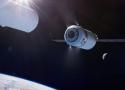
The space agency did consider alternatives to splashing the station. //
NASA has awarded an $843 million contract to SpaceX to develop a "US Deorbit Vehicle." This spacecraft will dock to the International Space Station in 2029 and then ensure the large facility makes a controlled reentry through Earth's atmosphere before splashing into the ocean in 2030.. //
"This decision also supports NASA’s plans for future commercial destinations and allows for the continued use of space near Earth."
NASA has a couple of reasons for bringing the space station's life to a close in 2030. Foremost among these is that the station is aging. Parts of it are now a quarter of a century old. There are cracks on the Russian segment of the space station that are spreading. Although the station could likely be maintained beyond 2030, it would require increasing amounts of crew time to keep flying the station safely.
Additionally, NASA is seeking to foster a commercial economy in low-Earth orbit. To that end, it is working with several private companies to develop commercial space stations that would be able to house NASA astronauts, as well as those from other countries and private citizens, by or before 2030. By setting an end date for the station's lifetime and sticking with it, NASA can help those private companies raise money from investors. //
The station, the largest object humans have ever constructed in space, is too large to allow it to make an uncontrolled return to Earth. It has a mass of 450 metric tons and is about the size of an American football field. The threat to human life and property is too great. Hence the need for a deorbit vehicle. //
volcano.authors Smack-Fu Master, in training
6y
73
flerchin said:
The idea that SpaceX wouldn't even bid unless it was fixed price, and then came in well under the estimates for cost-plus is wild.
It's almost as though the cost-plus era has some political baggage that challengers like to point out.
RTWAP Smack-Fu Master, in training
1y
12
afidel said:
I assume SpaceX prefers the firm fixed price contract because it reduces the army of paper pushers needed and the amount of time that engineers and technicians need to waste documenting their work on the contract? I guess if you can actually execute correctly it's more profitable to just submit a bill and get paid than to do the old cost plus change order malarkey.
My speculation is that it enforces a certain discipline in the requirements. SpaceX isn't going to just happily go down every rabbit hole of dithering on requirements and possible changes because unless it's a costed and signed change order they'd be losing money on it. And anyone at NASA looking to change things knows it requires a highly visible contract change ($$$), not just a larger bill from the contractor. //
Tridus Ars Tribunus Militum
17y
2,189
Subscriptor
afidel said:
I assume SpaceX prefers the firm fixed price contract because it reduces the army of paper pushers needed and the amount of time ....
Yeah, exactly. They're not paying people handle the paperwork end of cost-plus.
Also if they think they can do it for significantly under that, the potential profit margin is higher since they'll get paid that no matter what it actually costs them to do it. It takes a high degree of confidence to want to go this way, but if any space company has the experience with this type of contract to make it work, it's SpaceX.
It REALLY showcases the differing mindset and abilities between them and a company that won't bid on fixed price contracts like Boeing, though.

It is about 3,000 light-years from Earth, but it can be witnessed with the naked eye. //
NASA predicts a nova will occur sometime this summer, about 3,000 light-years from Earth, but it can be witnessed with the naked eye.
The nova reoccurs once every 80 years. //
The nova should happen in a dark spot among the seven stars of Corona Borealis, known as the Northern Crown.
The dark spot contains “two stars that are bound to and in orbit around each other,” known as T Coronae Borealis or T CrB. NASA nicknamed it the Blaze Star:
Anders - who was a lunar module pilot on the Apollo 8 mission - took the iconic Earthrise photograph, one of the most memorable and inspirational images of Earth from space.
Taken on Christmas Eve during the 1968 mission, the first crewed space flight to leave Earth and reach the Moon, the picture shows the planet rising above the horizon from the barren lunar surface.
Anders later described it as his most significant contribution to the space programme.
The image is widely credited with motivating the global environmental movement and leading to the creation of Earth Day, an annual event to promote activism and awareness of caring for the planet.
Speaking of the moment, Anders said: "We came all this way to explore the Moon, and the most important thing that we discovered was the Earth."

NASA's senior leaders in human spaceflight gathered for a momentous meeting at the agency's headquarters in Washington, DC, almost exactly 10 years ago. //
Now, with the shuttle's retirement, these princely figures in the human spaceflight community were tasked with selecting a replacement vehicle to send astronauts to the orbiting laboratory.
Boeing was the easy favorite. The majority of engineers and other participants in the meeting argued that Boeing alone should win a contract worth billions of dollars to develop a crew capsule. Only toward the end did a few voices speak up in favor of a second contender, SpaceX. At the meeting's conclusion, NASA's chief of human spaceflight at the time, William Gerstenmaier, decided to hold off on making a final decision.
A few months later, NASA publicly announced its choice. Boeing would receive $4.2 billion to develop a "commercial crew" transportation system, and SpaceX would get $2.6 billion. It was not a total victory for Boeing, which had lobbied hard to win all of the funding. But the company still walked away with nearly two-thirds of the money and the widespread presumption that it would easily beat SpaceX to the space station.
The sense of triumph would prove to be fleeting. Boeing decisively lost the commercial crew space race, and it proved to be a very costly affair. //
So what happened? How did Boeing, the gold standard in human spaceflight for decades, fall so far behind on crew? This story, based largely on interviews with unnamed current and former employees of Boeing and contractors who worked on Starliner, attempts to provide some answers. //
The problem is that while a company might do something that unlocks a payment, the underlying work may not actually be complete. It's a bit like students copying homework assignments throughout the semester. They get good grades but haven't done all of the learning necessary to understand the material. This is only discovered during a final exam in class. Essentially, then, Boeing kept carrying technical debt forward so that additional work was lumped onto the final milestones.
Ultimately, the flight software team faced a reckoning during the initial test flight of Starliner in December 2019. //
The bottom line is that Boeing technically earned the flight software milestones in its commercial crew contract. But by not putting in the work for an end-to-end test of its software, the company failed its final exam. As a result, Boeing had to take the disastrously expensive step of flying a second uncrewed flight test, which it did in May 2022. //
All of Boeing's struggles with Starliner played out against a much larger backdrop of the company's misfortunes with its aviation business. Most notably, in October 2018 and March 2019, two crashes of the company's relatively new jet, the 737 MAX 8, killed 346 people. The jets were grounded for many months.
The institutional failures that led to these twin tragedies are well explained in a book by Peter Robison, Flying Blind. Robison covered Boeing as a reporter during its merger with McDonnell Douglas a quarter of a century ago and described how countless trends since then—stock buybacks, a focus on profits over research and development, importing leadership from McDonnell Douglas, moving away from engineers in key positions to MBAs, and much more led to Boeing's downfall.
It's estimated that, in addition to paying customers and the families of victims, the grounding of the 737 Max for nearly two years cost Boeing $20 billion since 2019. This critical loss of cash came just as Boeing's space division faced crunch time to complete work on Starliner.
There were so many other challenging issues, as well. The onset of the COVID-19 pandemic in the spring of 2020 occurred when Boeing was dealing with the fallout from all the software issues on Starliner's debut flight. Additionally, the pandemic accelerated the retirement of experienced engineers who had brought spaceflight experience from the shuttle program. Boeing's best people were focused on the aircraft crisis, and the experienced space hands were leaving.
So it was all a pretty titanic struggle. //
In hindsight, it seems obvious that the strain of operating in a fixed-price environment was the fundamental cause of many of Boeing's struggles with Starliner and similar government procurement programs—so much so that the company's Defense, Space, & Security division is unlikely to participate in fixed-price competitions any longer. In 2023, the company's chief executive said Boeing would "never do them again."
A Boeing spokesperson pushed back on the idea that the company would no longer compete for fixed-price contracts. However, the company believes such contracts must be used correctly, for mature products.
"Challenges arise when the fixed price acquisition approach is applied to serious technology development requirements, or when the requirements are not firmly and specifically defined resulting in trades that continue back and forth before a final design baseline is established," the spokesperson said. "A fixed price contract offers little flexibility for solving hard problems that are common in new product and capability development.". //
The surprise is not that Boeing lost to a more nimble competitor in the commercial space race. The surprise is that this lumbering company made it at all. For that, we should celebrate Starliner’s impending launch and the thousands of engineers and technicians who made it happen. ///
Except it still hasn't succeeded
July 20, 2018
Website Notice
Note: This website (moonviews.com) has not been regularly updated since 2014. Now that the project’s data has been submitted to NASA, this website will no longer be updated but will be maintained as an online archive of the LOIRP’s prior activities. Thank you for your interest in – and support of – our project. //
The Lunar Orbiter Image Recovery Project (LOIRP) is a project to digitize the original analog data tapes from the five Lunar Orbiter spacecraft that were sent to the Moon in 1966 and 1967; it is funded by NASA, SkyCorp, SpaceRef Interactive, and private individuals.[1]
The first image to be successfully recovered by the project was released in November 2008. It was the first photograph of the Earth from the Moon, taken in August 1966. On February 20, 2014, the project announced it had completed the primary tape capture portion of the project.[2] One medium resolution image, most of one high resolution image and parts of three others are missing, apparently due to lapses at the time they were being recorded.[3] The rest of the Lunar Orbiter images have been successfully recovered[2] and have been published in NASA's Planetary Data System.
This image (click on image to enlarge) shows the sequence of images that were read out during what is termed “priority” readout vs the “final readout”. The priority readout was an opportunistic scanning of processed photos on the lunar orbiter before all of the images were taken. The photo process with the 70mm film began with an image being simultaneously taken by the 610 mm high resolution camera and by the 80 mm medium resolution camera. In a process remarkably similar to the old polaroid dry process instamatic cameras, the film was dry processed by a “bimat” dry processor. The bimat would separate from the film (most of the time) but would sometimes due to the timing would leave artifacts on the image, which are readily identified on the film.
The film would then be fed into the readout looper where it could be scanned and the images sent back to the Earth. During the mission when photographs were still being taken the film would run one direction through the looper. After all of the images were taken a command would be sent to cut the bimat and then the film could be read in the opposite direction.
Thus when we start with a low numbered tape, the first images that come off are from the priority readout in ascending order. However, the ascending order is not linear, jumping because images are still being taken and the film advancing while the spacecraft cannot transmit.

At 12.56 pm on 21 July 1969 Australian Eastern Standard Time (AEST), mankind took its 'one giant leap' and 600 million people watched as Neil Armstrong walked on the Moon.
Our Parkes radio telescope, Murriyang, famously supported receiving the television signals on that momentous day. Although many people think the Parkes telescope was the only station receiving the signal, it was the 26-metre antenna at NASA's Honeysuckle Creek space tracking station near Canberra that was the prime station assigned with receiving the initial TV pictures from the Moon and Neil Armstrong's first steps on the lunar surface. (The Tidbinbillla deep space tracking station, today known as the Canberra Deep Space Communication Complex, provided support to the command module in lunar orbit.)
Eight and a half minutes after those first historic images were broadcast around the world, the television signal being received by the larger 64-metre Parkes radio telescope, Murriyang, was then selected by NASA to provide the images for the following two hours and 12 minutes of live broadcast as the Apollo 11 astronauts explored the Moon surface.