There are many great free and open-source alternatives to closed source and/or paid photo libraries. This project aims to track and compare the feature set between the many different options with a focus on ‘Gratis’ (free as in free beer) open source photo libraries. ‘Libre’ (free as in free speech) projects are also welcome, but will likely need to be submitted via a pull request since the time in testing each different project is significant.


Easily back up, organize, and manage your photos on your own server. Immich helps you
browse, search and organize your photos and videos with ease, without sacrificing your privacy
FreeScout is the perfect help desk solution for those who need to provide a professional customer support, but who can not afford to pay for Zendesk or Help Scout. FreeScout is a pure open source PHP/MySQL application, so it can be easily deployed even on a shared hosting.
Actual Budget is a super fast and privacy-focused app for managing your finances. At its heart is the well proven and much loved Envelope Budgeting methodology.
You own your data and can do whatever you want with it. Featuring multi-device sync, optional end-to-end encryption and so much more.
listmonk is a self-hosted, high performance one-way mailing list and newsletter manager. It comes as a standalone binary and the only dependency is a Postgres database.

listmonk is a self-hosted, high performance one-way mailing list and newsletter manager. It comes as a standalone binary and the only dependency is a Postgres database. //
Simple API to send arbitrary transactional messages to subscribers using pre-defined templates. Send messages as e-mail, SMS, Whatsapp messages or any medium via Messenger interfaces.
Manage millions of subscribers across many single and double opt-in one-way mailing lists with custom JSON attributes for each subscriber. Query and segment subscribers with SQL expressions.
Use the fast bulk importer (~10k records per second) or use HTTP/JSON APIs or interact with the simple table schema to integrate external CRMs and subscriber databases.
Write HTML e-mails in a WYSIWYG editor, Markdown, raw syntax-highlighted HTML, or just plain text.
Use the media manager to upload images for e-mail campaigns on the server's filesystem, Amazon S3, or any S3 compatible (Minio) backend.
QTTabBar is a Shell-Extension to add Tab functionality to Windows Explorer - folder window.
Besides, QTTabBar provides various features that certainly help you deal with files and folders.
What can it do?
Most of the functionalities are activated when you enable the toolbars offered by QTTabBar in a folder window.
Tab Bar realizes ... the tabbed browsing of folders. Command Bars offer various command buttons including ones added by Plug-Ins. Extra Views show extra folder view in a folder window.
Once you enable them, QTTabBar installs some kind of hooks into the folder window and change the behavior of the Explorer to suit the need of advanced users.
For example, a new tab will be opened by middle-clicking on a folder icon. Preview tooltip is displayed when you point image, text, and movie file by mouse cursor. Do you want to mark an important file? Change the color of the name of it. When you move mouse cursor over folder icons, you'll see a square with blue arrow. Click and access to contents of the folder instantly!

Migrating didn’t hurt as much as I thought it would—and dynamic DNS still works!
Navigating the 3D view in FreeCAD can be achieved using various inputs including a mouse, a Space Navigator device, keyboard shortcuts, a touchpad, or any combination thereof. FreeCAD offers a range of navigation modes that define how the three fundamental viewing operations—pan, rotate, and zoom—are executed. Additionally, these modes govern how objects are selected within the workspace. To access and switch between these navigation modes, you can navigate to the Preferences screen or simply right-click in the 3D view. Additionally, there is a third, more immediate option for altering the navigation style directly from the user interface located in the lower-right part of the screen.
Radiologik is a system suitable for both live DJing and 24/7 radio automation on the Mac that uses the Music app (or iTunes in previous macOS versions) as its database and those playlists as the logical building blocks for sophisticated programming.
Radiologik was developed for and is used in LPFMs, NCE-FM, college and high school stations, and online stations. It's also used by radio and live venue DJs, Sirius/XM channels, and is licensed to users in over 60 countries. Fully automated and unmanned stations use Radiologik to pick content by date, intro and outro artists and titles, announce the time, station ID, play podcasts, manage and play advertising by a separate schedule that integrates with the programming schedule, all completely autonomously. //
- Radiologik DJ Download here
- Radiologik DJ can be used by itself as a DJ program for live events. It is also the player Radiologik Scheduler uses to make a full-time automated radio station.
Equally good: Live or full automation
- Radiologik is meant to be an equally good live assist and full automation DJ for radio so you can walk right in and take over and leave as you wish.
3 hot changeable audio outputs and 1 preview
- Radiologik DJ's primary is the program queue which essentially uses the first 2 players and the third for tight fits and voiceovers. It has 3 on-air players which can be sent directly to 3 distinct audio outputs with the right hardware. You get one more 4th audio output meant for off air used by the library player for previewing and properties player for editing ramp, start, stop, overlap, etc. //
- Radiologik Scheduler Download here
-
You can use the scheduler to run a 24/7 automated terrestrial or internet station. Basic and Advanced features are the same download and can be switched from the application menu.
-
It uses iTunes/Music as its database utilizing playlists and particularly smart playlists for song selection with its own top logic using a weekly schedule.
-
Radiologik Scheduler Basic is Free with DJ. It supports picks and fills from iTunes/Music playlists with time instructions, artist separation, unique track checking, and best fit exact time searching for top of the hour placement for station IDs or other arbitrary times.
-
Radiologik Scheduler Advanced is a mode for scheduler which further supports voiceover intros and outros for specific tracks, artists, albums. It includes support of scheduling spot/ad flight runs, podcast subscribe and play, silence sensor, date matching track titles, and time announcements and sells for just $96.00.
AcuteFinder will help you to find duplicate files on your system and delete them. It's simple, easy, and safe to use, and costs as little as $14 to buy.
AcuteFinder not only takes into account items like file name, size or timestamp, but reads through possible duplicates and calculates their checksums. This way, it is guaranteed that the files are really identical, and you can delete the extra copies with full confidence.
AcuteFinder can find files that have different names, like "my.doc" and "Copy of my.doc". Basically, if files are of the same size and have the same checksum, they are considered identical. AcuteFinder uses by default CRC32, a 32-bit checksum, but you can choose to use MD5 hash (128-bit) as a final step in file comparison for even more accuracy.

PeaZip is a free file archiver utility, similar to WinRar, WinZip, and 7-Zip (or File Roller, and Ark on Linux), based on Open Source technologies of 7-Zip / p7zip archiver, Facebook Zstandard compressor, FreeArc, Google Brotli compressor, PAQ family of compressors, PEA (archiving and encryption) project, and other Free Software file compression tools. //
When browsing a filesystem the file browser can show file checksum / hash value on demand in last column, allowing to identify binary identical files which have same checksum/hash value.
Clicking the name of the function (after rightclicking the file manager colum header) PeaZip file manager will display hash or checksum value for all (or selected) files. Clicking "Find duplicates" PeaZip file manager will work as duplicate finder utility, displaying size and hash or checksum value only for duplicate files - same binary identical content featured in two or more distinct files - and will report the number of non-unique files identified.

This is the project site for Evergreen, highly-scalable software for libraries that helps library patrons find library materials, and helps libraries manage, catalog, and circulate those materials, no matter how large or complex the libraries.
Evergreen is open source software, licensed under the GNU GPL, version 2 or later.

Chevereto is a powerful image and video hosting script that allows you to create a beautiful media hosting website with all the features you need.
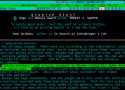
"Compared to it, Microsoft Word is pure madness"—Anne Rice. //
WordStar's most recent claim to fame might be that it's the word processing application on which George R.R. Martin is still not finishing A Song of Ice and Fire.
But many writers loved and still love WordStar, a word processor notably good for actual writing. As computers moved on from DOS to Windows, and word programs grew to encompass features that strayed far from organizing words on a page, WordStar hung back, whether in DOS emulation or in the hearts of its die-hard fans.
One of those fans is Robert J. Sawyer, an award-winning science fiction author still using the program last updated in 1992. Deciding that the app is now "abandonware," Sawyer recently put together as complete a version of WordStar 7 as might exist. He bundled together over 1,000 pages of scanned manuals that came with WordStar, related utilities, his own README guidance, ready-to-run versions of DOSBox-X and VDosPlus, and WordStar 7 Rev. D and posted them on his website as the "Complete WordStar 7.0 Archive."
https://sfwriter.com/ws7.htm //
original_mds Ars Tribunus Militum
10y
1,517
comingInFromCold said:
I like sticking with the stuff I'm comfortable with, but I can't for the life of me understand why anyone can put up, let alone love those dos, command based word editor. I mean, the advent of mouse and GUI was an improvement (IMO). If one must avoid 21st century bloatware, even something like notepad++ could do the job. Ah well different strokes for different folks i guess
Mouse motion is limited to a couple of fixed finger inputs, a scroll wheel and wrist motion. Keeping both hands on the keyboard lets you parallelize more of the input - key when most of the input is alphanumeric with a smattering of punctuation. Adding in key sequences that manipulate the cursor or activate functions can make a fast typist blindingly fast at input and editing.
If you take someone who types at 120 wpm and can keep both hands on the keyboard continuously, they can whip out a page in literally two minutes. If not interrupted, that means they could literally do a manuscript for a 250 page novel in a day.
Get The World’s Most Popular Customer Support Software
We believe in helping you Make. Happy. Customers. Easily scale and streamline your customer service and drastically improve your customer’s experience.
Plasma Bigscreen is an open-source user interface for TV's. Running on top of a Linux distribution, Plasma Bigscreen turns your TV or setup-box into a fully hackable device. A big launcher giving you easy access to any installed apps and skills. Controllable via voice or TV remote.
Folder2Iso is a portable Window and Linux application that creates an ISO from any folder. The root folder can contain sub-folders.
It's a GUI of mkisofs.
Works under Windows XP, Vista, 7, 8, 10 and Linux.
Folder2Iso is compiled for 32 and 64bit systems.
TNG is a powerful way to manage and display your family tree on your own website, without the hundreds of HTML pages you get with other programs. All you need is a website, your data and TNG!
Start your own family tree website today! Purchase $35

Legacy Family Tree 10 genealogy software empowers you to build, grow, research, and improve your family tree.
Download Now (It’s Free!)