New Google agreement could boost development of small modular reactors—if they work.


He even takes the step that I rarely see from even the most reasonable of “reasonable” nuclear critics and concedes that “nuclear still has important uses — in particular, where land and sunlight are scarce.” He concedes so much that I’m not always entirely sure what it is we’re disagreeing about.
But a big part of the difference, I think, is probably that Noah lives in California and hangs out with a lot of tech/engineering types for whom all the points about nuclear that he’s conceded are conventional wisdom, and he’s annoyed that a lot of these people have an image of solar (and especially batteries) that’s stuck in the 1980s, rather than seeing these as dynamic, forward-thinking economic sectors. I live in DC, and I hang out with lots of people who work in or adjacent to Democratic Party politics. And among the people I know, the conventional wisdom is toward much too much complacency about the current state of renewables. Many people think that because photovoltaic panels are now cheap, all the problems are solved and the big issue is that you need to say you’re pro-fracking to win Pennsylvania, and they’re looking for linguistics gurus to help them defeat fossil fuel propaganda.
I think that this is all wrong, that the world will remain much more dependent on fossil fuels for the foreseeable future than a lot of progressives want to admit, that there are a bunch of difficult and outstanding problems that need to be solved, and that nuclear policy may provide important solutions to some of those problems. There is, of course, no way of knowing exactly what the future of any technology may hold. But I think nuclear fission remains extremely promising if — and it’s a big if — we change Nuclear Regulatory Commission rules to allow for more innovation.
Following a major earthquake, a 15-metre tsunami disabled the power supply and cooling of three Fukushima Daiichi reactors, causing a nuclear accident beginning on 11 March 2011. All three cores largely melted in the first three days.

In 1971, the AEC proposed a radically new regulatory philosophy requiring all nuclear plants be designed to hold all radioactive emissions to levels such that "exposures were as low as practicable". In other words, there is no limit. And the criteria is not whether the benefit of further reduction outweighs the cost. The criteria is: can you afford the reduction?
This was such a departure from standard regulation that, despite their desperation to get plants on line, it did produce push back from industry. But after considerable debate the policy was formally adopted in 1975 with the wording changed slightly to "as low as reasonably achievable" or ALARA.
In practice, As Low As Reasonably Achievable is interpreted by the regulators to mandate any regulation that allows nuclear to remain competitive with alternate sources of power.

On Tuesday, Google announced that it had made a power purchase agreement for electricity generated by a small modular nuclear reactor design that hasn't even received regulatory approval yet. Today, it's Amazon's turn. The company's Amazon Web Services (AWS) group has announced three different investments, including one targeting a different startup that has its own design for small, modular nuclear reactors—one that has not yet received regulatory approval.
Unlike Google's deal, which is a commitment to purchase power should the reactors ever be completed, Amazon will lay out some money upfront as part of the agreements. We'll take a look at the deals and technology that Amazon is backing before analyzing why companies are taking a risk on unproven technologies. //
X-energy's technology is based on small, self-contained fuel pellets called TRISO particles for TRi-structural ISOtropic. These contain both the uranium fuel and a graphite moderator and are surrounded by a ceramic shell. They're structured so that there isn't sufficient uranium present to generate temperatures that can damage the ceramic, ensuring that the nuclear fuel will always remain contained.
The design is meant to run at high temperatures and extract heat from the reactor using helium, which is used to boil water and generate electricity. Each reactor can produce 80 megawatts of electricity, and the reactors are designed to work efficiently as a set of four, creating a 320 MW power plant. As of yet, however, there are no working examples of this reactor, and the design hasn't been approved by the Nuclear Regulatory Commission. //
SetsChaos Smack-Fu Master, in training
28d
4
I'm excited at the prospect of having new nuclear energy in the US. There's been a huge NIMBY push since at least TMI that's seen a lot of regression in the field, despite the science clearly showing advantages for nukes as a base load power source. As much as I want LLM and AI to go the way of NFTs, I am happy to see something revive nuclear.
SMRs are a step in the right modernization direction, but it'd be really cool to get some thorium mixed in here, too. //
Unimportant Wise, Aged Ars Veteran
5y
154
I am optimistic about the nuclear renaissance but I am concerned about labor shortages in the supply chain and among operators.
The premier modular reactor operator, the U.S. Navy, faces a critical shortage of skilled shipyard workers. Repair backlogs can run into year. New construction isn't meeting its goals. Subcontractors that make low volumes of critical parts are affected as much if not more.
It didn't use to be this way but capacity was cut back over the years after the Cold War. Shipyards were closed.
There's a public-private nonprofit entity receiving millions to recruit workers:
buildsubmarines.com
Join the Team Building the Next Generation of U.S. Naval Submarines
Take the first step to join our mission of constructing advanced U.S. Naval submarines. Discover numerous career opportunities across various disciplines and make your mark in this new era of manufacturing.
They have a comprehensive job board with jobs across the supply chain. They're advertising nationally.
New reactors will need the same people. //
The US Nuclear Regulatory Commission issued a construction permit on September 16, 2024 to Abilene Christian University (ACU) to build a molten salt research reactor. This marked the first university research reactor approval in 30 years. It is the first liquid fuel reactor ever approved for construction by the NRC and only the second advanced reactor approved since the NRC was created in 1974.
Aside: The first advanced reactor construction permit was issued to Kairos for its Hermes in December 2023. End Aside
Natura Resources is the technology supplier for the important new facility. Andrew Harmon, Natura Resources Vice President of Operations and Business Development visited the Atomic Show to fill in some of the backstory about the project origins, the decision to pursue a research reactor as a step towards their ultimate goal of supplying a large number of factory-produced 100 MWe molten salt reactors, some of the major successes and challenges along the way and the level of community support that the project has attracted.

While active, the natural reactor generated fission waste byproducts similar to those produced by modern nuclear reactors at power plants. This provided some useful evidence for the scientists, who found that the radioactive waste products created by this natural process, including those with million year half lives, have decayed away. The byproducts have also barely moved - according to the US Department of Energy, the plutonium “has moved less than 10 feet from where it was formed almost two billion years ago.”
This means that when the Oklo reactor was discovered in 1972, the fission products had been harmlessly lying in the same place for around a billion years.
Also, in the hundreds of thousands of years it has operated as a nuclear reactor, Oklo has never had a meltdown or explosion. Scientists found that “the combination of aluminium phosphate grains to trap radioactive materials and the groundwater to regulate the reaction allowed for an extremely safe reactor.” Mother Nature knows best.
So next time someone tells you that solar and wind are the only ‘natural’ forms of energy generation, tell them about the natural reactors in Gabon. I’ve yet to hear about solar panels and wind turbines sprouting up naturally and generating electricity without human intervention anywhere in the world in the history of our planet. The blunt truth is that nature created fission well before humans were capable of building nuclear reactors. If that isn’t a clear definition of ‘natural’ energy, I don’t know what is.
The REPOWER plan rests on four pillars:
1) Replacing all subsidies and mandates with a CO2 fee, which shall be set by Congress.
2) A grid of ratepayer owned coops which provide local power distribution and backup power.
3) Coops or consortia of coops contracting with merchant providers for the bulk of their power, or possibly building their own base load plants.
4) Unshackling nuclear from a regulatory system based on the Two Lies. Nuclear's remarkable energy density, combined with competition will drive the cost of nuclear down to its should-cost of less than 3 cents per kilowatt-hour.
The end result will be a largely nuclear grid, backed up by local fossil generation and supplemented in some areas by hydro, wind, or solar. //
The REPOWER plan has been criticized on the grounds it not only does not get rid of fossil fuel, it requires extensive expansion of fossil fuel capacity. The goal here is reducing CO2 emissions, not eliminating fossil fuel capacity. And we must reduce CO2 emissions in a way that uses the planet's resources efficiently. If we end up in a situation where we could have both less CO2 and less cost, we are being criminally stupid.
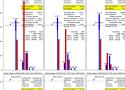
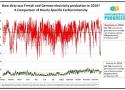
REPOWER will result in nuclear at a naive LCOE of less than 3 cents/kWh. That makes drastically reducing grid CO2 emissions so easy it's almost automatic. Figure 1 summarizes the results of a study of the German grid in which nuclear's overnight CAPEX was set at $2000/kW. (In the 1960's, we were building nuclear plants at less than $1000/kW in today's money.) //
Currently, the grid is producing about 25% of man-made CO2 emissions. If we cut that by a factor 20 with should-cost nuclear, we are down to about 1% of the total. At that point, we are far better off going after the other 99%, then expending resources on further reducing the 1%.
Takeaway
Unless we have cheap electricity, decarbonization in going nowhere. The Good News is we can have both very low grid emissions and cheap electricity. All we have to do is:
a) Put the ratepayer in charge of the grid.
b) Let the underwriters balance nuclear safety and cost.

The likely cause is the plant is essentially fully-depreciated //
CGNP's key finding was obtained by dividing PG&E's DCPP net cost forecast of $418,407,000.00 by the number of megawatt-hours (46,519,200 MWh) the plant would be producing if it ran 100% the time during this period. (PG&E must supply the replacement power any time the plant is not producing power, such as during an outage.) The net result was $8.9858 / MWh. Since there are 1,000 kilowatt-hours (kWh) in a MWh, this corresponds to only 0.8958 net cents per kWh. This net cost is similar to the cost of running a large hydroelectric dam, the least-expensive means of grid-scale electric power production. //
Finally, DCPP's owners are not economically compensated for providing substantial synchronous grid inertia (SGI) to the California power grid. CGNP located a relevant 2018 filing from ERCOT, the Texas grid operator that underscores the economic value of nuclear power plants. Nuclear power plants contribute substantial capacity and SGI. ERCOT considers SGI so important that they post the current SGI value at their overview dashboard. CAISO should emulate ERCOT in properly valuing DCPP for its abundant capacity and SGI contribution to stabilize the California grid.
Without sufficient synchronous grid inertia, the grid becomes unstable and a blackout occurs.
Inertia refers to a system’s capability to resist change. For a power grid, greater synchronous inertia confers greater ability to resist frequency changes. //
In contrast to gigantic 2,256 megawatt nuclear power plants such as Diablo Canyon Power Plant (DCPP) near San Luis Obispo, California which provide very large amounts of synchronous grid inertia, so-called inverter-based resources (IBRs) such as solar powered generators, wind power generators, and batteries supply negligible amounts of synchronous grid inertia. //
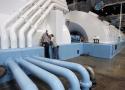
Prior to the introduction of significant penetrations of IBRs, each power grid's synchronous generators (coal and natural gas-fired generators, large hydroelectric dams, geothermal plants, and nuclear power plants) had sufficient synchronous grid inertia to assure power grid stability. The synchronous generators have a large amount of rotational inertia as a consequence of having massive rotating turbines and massive rotating generator rotors. (See photograph below.)
As a simplified example, each of the pair of DCPP’s generators have rotating components which weigh in excess of a million pounds (500 tons.) DCPP’s turbines rotate 30 times per second. The rotating magnetic field induces the 60 cycle per second (Hertz) AC voltage (25,000 Volts) and AC current (45,120 Amperes) in the stator windings of each unit. In response to perturbations in grid frequency, the rotational kinetic energy can be instantaneously converted to changes in the output power of the generator which tend to stabilize the generator’s output frequency and voltage.
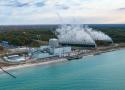
The Biden administration has announced plans to reignite a shuttered Michigan nuclear power plant with a $1.5 billion loan that, combined with other nuclear announcements yesterday, suggests the US federal government is right now all in on nuclear energy.
The 800-megawatt Holtec Palisades plant, located on Michigan's southwest coast in a relatively low-populated area, shut down in 2022 mainly due to it struggling to afford to stay operational while competing against cheaper fossil fuels.
Liquid Fluoride Thorium Reactors: An old idea in nuclear power gets reexamined
Robert Hargraves, Ralph Moir
American Scientist, Vol. 98, No. 4 (July-August 2010), pp. 304-313 (10 pages)
https://www.jstor.org/stable/27859537
By Robert F. Hargraves, Ralph Moir
An old idea in nuclear power gets reexamined
What if we could turn back the clock to 1965 and have an energy do-over? In June of that year, the Molten Salt Reactor Experiment (MSRE) achieved criticality for the first time at Oak Ridge National Laboratory (ORNL) in Tennessee.
The Swiss government said on Wednesday it plans to overturn a ban on building new power plants to strengthen local energy supply at a time of increased geopolitical tension.
Energy Minister Albert Roesti said the government would submit a proposal to amend nuclear legislation by the end of 2024 so it can be debated in parliament next year.
"Over the long term, new nuclear power plants are one possible way of making our supply more secure in a geopolitically uncertain time," Roesti told a press conference.
Failure to retain the option could be seen as a betrayal by future generations, Roesti argued.
Construction is underway on a new nuclear power plant in Tennessee – the first officially approved fourth-generation nuclear reactor in the U.S.
Kairos Power has begun building the Hermes Low-Power Demonstration Reactor in Oak Ridge, the first Gen IV reactor approved for construction by the U.S. Nuclear Regulatory Commission. The Hermes reactor utilizes a fluoride salt-cooled, high-temperature reactor design, differing from conventional light-water reactors. //
The reactor is set to employ TRISO-coated particle fuel and high-purity fluoride salt coolant, known as FLiBe, a mixture of lithium fluoride and beryllium fluoride. This design is intended to produce affordable nuclear heat rather than electricity, showcasing the potential of a factory-built small modular reactor to revolutionize nuclear construction.
"Kairos will combine the molten salt coolant... with a novel form of nuclear fuel called TRISO, where the fuel is in tiny (<1 mm) particles coated in layers of graphite (both as a moderator and to give the fuel strength and structure)," said Peel.
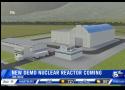
Construction has started on the new facility in iconic Oak Ridge, Tennessee. //
According to Interesting Engineering, the new Hermes reactor will be the first one built in the United States in 50 years that won’t be cooled by light water. Instead, it will use a system of molten fluoride salt, and a TRISO (tri-structural isotropic particle) fuel pebble bed design will power the generator.
Molten fluoride salts have “excellent chemical stability and tremendous capacity for transferring heat,” per the report, meaning it stays cooler and dissipates heat much faster than the light water that has been used for so long in American reactors.
The fuel bed consists of hundreds of millimeter-sized particles of uranium encased in multiple layers of special ceramic, which allows each individual piece of fuel to have its own containment and pressure vessel, per Ultra Safe Nuclear. The ceramic casing is stronger and more resilient than the typical zirconium alloy, meaning it can withstand higher temperatures and neutron bombardment past the failure point of other types of fuel. //
To be classified as Generation IV, a system must meet, or at least have the ability to meet, the following criteria:
(1) it is much more fuel-efficient than current plants;
(2) it is designed in such a way that severe accidents are not possible, that is, plant failure or an external event (such as an earthquake) should not result in radioactive material release to the outside world;
[3] the fuel cycle is designed in such a way that uranium and plutonium are never separated (“diverged”) but only present in a mix and with other elements. This makes it more difficult to create nuclear weapons. //
The Swiss government said on Wednesday it plans to overturn a ban on building new power plants to strengthen local energy supply at a time of increased geopolitical tension.
"At last a book that comprehensively reveals the true facts about sustainable energy in a form that is both highly readable and entertaining."
Joe Swyers
2 hours ago edited
"the cost to Germans for being forced to rely on alternative energy sources is estimated to be $1 million per day."
Germans need to build over a hundred nuclear power plants to replace that 110,000,000,000 cubic meters per year of natural gas all four Nordstream pipelines could transport.
35,300 BTU per cubic meter
110,000,000,000 cubic meters per year
3,883,000,000,000,000 BTU per year
3,412 BTU per KWH
1,137,995,510,149 KWH
8,760 hours per year
129,908,163 KW
130 GW
1 GW average per nuclear power plant
130 Nuclear Power Plants needed by Germany.
France has 18 power plants with 56 operable reactors.
Germany will need ten times that number by the time they actually get them built and bring them online.
Better get cracking -- atoms, that is.
mopani Joe Swyers
3 minutes ago edited
If Germany had spent $580 billion on nuclear power instead of Energiewiend green energy they would have the cheapest, most reliable, lowest carbon footprint energy in the world.
With Nuclear Instead of Renewables, California and Germany Would Already Have 100 percent Clean Electricity
https://environmentalprogress.org/big-news/2018/9/11/california-and-germany-decarbonization-with-alternative-energy-investments //
California and Germany could have mostly or completely decarbonized their electricity sectors had their investments in renewables been diverted instead to new nuclear, a new Environmental Progress analysis finds.
In 2017, Germany generated 37 percent of its electricity from non-carbon sources.[1] In pursuing the Energiewende, Germany will have invested $580 billion in renewable energy and storage by 2025.
If Germany had invested in nuclear instead, it could have built 46 1.6 GW EPR reactors at the $12.5 billion per reactor cost of the U.K.’s Hinkley Point C. German companies assisted with the design of the EPR and the reactor was explicitly planned to meet the strictest European regulations.
In this scenario, EP assumes that a Germany pursuing nuclear power would maintain the same level of nuclear generation as it produced annually before implementing its nuclear phase-out in 2011, about 133 TWh per year.
With 46 EPRs operating at 90 percent capacity factor, Germany could first eliminate all coal, gas, and biomass electricity, then make up for today’s 150 terawatt-hours per year of wind and solar from its renewables investment, all while exporting 100 terawatt-hours of electricity to its neighbors (double 2017’s actual exports). Finally, with the remaining 133 terawatt-hours, Germany could decarbonize its entire light vehicle fleet including all 45 million of its passenger vehicles.[2]

With resounding bipartisan, bicameral support that also achieved enthusiastic support of the Executive Branch, the US has enacted a new law announcing its support of nuclear energy. It has the potential to make an even larger impact on global atomic energy use than the combination of the Atomic Energy Act of 1954 and President Eisenhower’s Atoms for Peace program of international nuclear energy expansion.
Seventy years ago, that earlier combination of law and policy partially removed the blanket of tight security that had locked up fission energy in the years immediately following WWII. President Eisenhower’s clearly stated goal in enabling commercial atomic energy was to develop “the greatest of destructive forces” into a “great boon, for the benefit of all mankind.”
The “great boon” produced a wave of nuclear power plants that now produce the energy equivalent of Saudi Arabia’s oil production. That energy comes at a low marginal cost without air pollution or greenhouse gases, but nuclear power’s contribution to world energy production leveled off at roughly 2600 TWh/yr 20 years ago.
A growing fraction of the world’s science, engineering, environmental and political leaders agree that the situation needs to be changed. In November 2023, the United States led a coalition of two dozen nations in a promise to take action to triple world nuclear energy production by 2050.
Even before the U.S. signed that declaration of intent, House and Senate Republicans and Democrats began holding hearings, listening to constituents, debating with colleagues and engaging in what used to be considered the normal order of business to produce the ADVANCE Act of 2024. ///
Does this change anything about ALARA or LNT guiding regulations? Then I don't see it as anything more than a response to strong criticism of both. Changing the "mission" of the NRC without changing either of those is just more of the same, just "better". Which is not better for energy availability.
The mission of the NRC is still "avoid accidents", not balancing the tradeoff of "energy is dangerous, lets make sure its both available and safe."
Joe Swyers
2 hours ago edited
"the cost to Germans for being forced to rely on alternative energy sources is estimated to be $1 million per day."
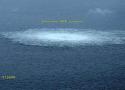
Germans need to build over a hundred nuclear power plants to replace that 110,000,000,000 cubic meters per year of natural gas all four Nordstream pipelines could transport.
35,300 BTU per cubic meter
110,000,000,000 cubic meters per year
3,883,000,000,000,000 BTU per year
3,412 BTU per KWH
1,137,995,510,149 KWH
8,760 hours per year
129,908,163 KW
130 GW
1 GW average per nuclear power plant
130 Nuclear Power Plants needed by Germany.
France has 18 power plants with 56 operable reactors.
Germany will need ten times that number by the time they actually get them built and bring them online.
Better get cracking -- atoms, that is.
mopani Joe Swyers
3 minutes ago edited
If Germany had spent $580 billion on nuclear power instead of Energiewiend green energy they would have the cheapest, most reliable, lowest carbon footprint energy in the world.
With Nuclear Instead of Renewables, California and Germany Would Already Have 100 percent Clean Electricity
https://environmentalprogress.org/big-news/2018/9/11/california-and-germany-decarbonization-with-alternative-energy-investments