
The Tax Poem
Tax his land, Tax his bed, Tax the table at which he's fed.
Tax his tractor, Tax his mule, Teach him taxes are the rule.
Tax his work, Tax his pay, He works for peanuts anyway!
Tax his cow, Tax his goat, Tax his pants, Tax his coat. Tax his ties, Tax his shirt, Tax his work, Tax his dirt.
Tax his tobacco, Tax his drink, Tax him if he tries to think.
Tax his cigars, Tax his beers, If he cries tax his tears.
Tax his car, Tax his gas, Find other ways to tax his ass.
Tax all he has, Then let him know, That you won't be done till he has no dough.
When he screams and hollers, Then tax him some more, Tax him till he's good and sore.
Then tax his coffin, Tax his grave, Tax the sod in which he's laid.
Put these words Upon his tomb, 'Taxes drove me to my doom...'
When he's gone, Do not relax, Its time to apply the inheritance tax.


Trump officials are fleeing their homes in the face of left-wing threats, but The Atlantic says the problem is actually Trump’s rhetoric.

10 states across the country have enacted legislation to permanently observe daylight saving time. They are Maine, Florida, Alabama, Georgia, Louisiana, Tennessee, Delaware, Colorado, Texas, and Wyoming.
However, they need congressional approval to begin observing that change.
According to The Hill, “states do have the ability to lock their clocks, current federal regulations limit their decision to year-round standard time only.”
Arizona and Hawaii are currently the only two states that observe year-round standard time.
California voters approved a measure to do away with daylight saving time in 2018, but it has not yet come into effect.
Americans are split on the issue, but support for scrapping daylight saving time is growing, meaning people prefer more light in the morning and less in the evening. //
Poll found 54% of Americans are ready to do away with the practice.
Meanwhile, just 40% say they are in favor of observing daylight saving time — the lowest level in recorded history.

A decades old consent decree has been lifted against the Republican National Committee's so-called "ballot security" measures. It's a big victory in the RNC's efforts to monitor polling activity and it's a sobering moment for activists who fear this could accelerate voter suppression — especially among minorities.

From this, he looked at its software and operating system, and that’s where he discovered the dark truth: his smart vacuum was a security nightmare and a black hole for his personal data. First of all, it's Android Debug Bridge, which gives him full root access to the vacuum, wasn't protected by any kind of password or encryption. The manufacturer added a makeshift security protocol by omitting a crucial file, which caused it to disconnect soon after booting, but Harishankar easily bypassed it. He then discovered that it used Google Cartographer to build a live 3D map of his home.
This isn’t unusual, by far. After all, it’s a smart vacuum, and it needs that data to navigate around his home. However, the concerning thing is that it was sending off all this data to the manufacturer’s server. It makes sense for the device to send this data to the manufacturer, as its onboard SoC is nowhere near powerful enough to process all that data. However, it seems that iLife did not clear this with its customers. Furthermore, the engineer made one disturbing discovery — deep in the logs of his non-functioning smart vacuum, he found a command with a timestamp that matched exactly the time the gadget stopped working. This was clearly a kill command, and after he reversed it and rebooted the appliance, it roared back to life.

Most countries stopped testing nuclear weapons after they signed the global Comprehensive Nuclear-Test-Ban Treaty (CTBT) starting from 1996. The treaty emerged amid growing concerns about human health and the environment above the ground, underground and underwater, from nuclear pollution.
The US conducted its first nuclear test in 1945. In all, the US has conducted 1,032 nuclear tests, according to the United Nations. The US last tested nuclear weapons in 1992. It signed the CTBT in 1996 but never ratified it.
The Soviet Union conducted 715 nuclear tests, the last of them in 1990. Since the USSR’s dissolution in 1990, Russia – which inherited the former superpower’s nuclear arsenal – has not conducted any nuclear tests. In 1996, Russia signed the CTBT, ratifying it in 2000. But Putin revoked Russia’s ratification of the treaty in 2023.
China last tested nuclear weapons in 1996. //
France last tested nuclear weapons in 1996. It conducted 210 tests between 1945 and 1996.
The United Kingdom conducted 45 nuclear tests from 1952, with the last one conducted in 1991.
Since the CTBT came into effect, 10 nuclear tests have taken place.
In 1998, India and Pakistan conducted two nuclear tests each. India and Pakistan have never signed the CTBT.
According to the UN, North Korea has conducted nuclear tests in 2006, 2009, 2013, 2016 and 2017. It conducted two tests in 2016. North Korea has also not signed the CTBT.
Nine states have nuclear arms, including the US, Russia, the UK, France, China, India, Pakistan, North Korea and Israel.
For decades, Israel has maintained nuclear ambiguity, also known as “opacity”. It has never publicly confirmed or denied the presence of its nuclear weapons programme.

Weddings at Notre-Dame are exceedingly rare because the cathedral is not a parish church and does not normally conduct sacraments for individual couples.
As the seat of the Archbishop of Paris and a national monument, it serves primarily as a site for major religious and state ceremonies — Masses, funerals and national commemorations — rather than private events.
Only the archbishop can authorize a wedding there, and such dispensations have been granted just a handful of times in its 860-year history.
Lorentz, who hand-cut oak beams using 13th-century tools and methods, had asked the archbishop earlier this year for permission to wed in the cathedral he helped save.
“It’s the happiest day of my life,” Lorentz told reporters.
“I want to share my love — our love — with the whole world, with everyone who needs it.”

Not getting off “Scott” free.
An Alabama police force playfully exacted revenge against a group of high schoolers who had covered their department headquarters — along with the rest of the town — with toilet paper as part of an elaborate senior prank.
Heflin Police Chief Ross McGlaughn vowed to get back on the Class of 2026 when the students launched their overnight TP attack across the small Alabama city.
The ScriptureEarth.org website is managed by SIL Global. SIL’s service with ethnolinguistic minority communities is motivated by the belief that all people are created in the image of God, and that languages and cultures are part of the richness of God's creation.
The purpose of this site is to provide access to Scripture products for the languages of the world. Individual copyright and licensing information is indicated on each product by its contributing organization.
Enter the domain name or IP address of the NTP server you want to measure.

Data from PMM, Percona's open source database management tool, shows that 58 percent of MySQL and MariaDB (a MySQL fork) instances are running MySQL 8.0, while 18.8 percent are running 5.7, which went out of support in 2023.
While users might put off database migration because of the disruption involved, they should be aware that the upgrade from MySQL 8.0 to 8.4 – the most recent stable version – is not nearly so onerous as the upgrade from 5.7 to 8.0. "It was a very big and painful jump," Zaitsev told us.
Fred Duck Ars Tribunus Angusticlavius
13y
6,614
Nate Anderson said:
But those who value both thought and expression will see the AI “easy button” for the false promise that it is and will continue to do the hard work of engaging with ideas, including their own, in a way that no computer can do for them.
Some people liken LLM to typewriters. They say that just as with typewriters, instead of labouriously hand writing messages out, the end result is what's important and this new technology helps distill that as quickly as possible.
However, typewriters dispense with the metadata of handwriting. Emotion can be displayed differently in handwriting, all of which is lost when merely presenting the text of the message. More crucially, in the modern LLM case, the ideas presented aren't even those of the submitter but they claim the ideas are close enough that they should be treated as such, which is a load of dingos' kidneys.
People will try to justify LLM by citing people with poor communication skills or physical disabilities which limit their ability to craft messages quickly and easily. However, communication is a skill and vanishingly few people are born knowing how to communicate perfectly. Everyone needs to put some work into skills to improve them and it boggles the mind that so few people realise that's what coursework is: practice for when you need to do something to accomplish a real goal, not simply marks for a course.
Unfortunately, modern life is at odds with thinking. We're constantly being bombarded by information, adverts, entertainment, news, comments from random internet yahoos, etc. So many messages come to us crafted to sway our opinions and shape our thoughts yet in the modern age, we tend to silo ourselves, content to seeking out echo chambers to self-validate our "vibes" instead of engaging with other ideas to see if they're sound or not.
Some people claim LLM are, as with calculators, something that are simply going to be with us so fighting them is meaningless. This skirts the issue that a calculator won't automatically generate answers for multistep procedures whereas an LLM will.
Perhaps what needs to be done is explain to the youth what exactly is expected of them. We put so much emphasis on finding the right answers but do we ever stop to emphasise it's the journey, not the destination that's of greater importance? As a young person, I don't believe anyone ever told me directly.
I imagine such a concept is too difficult for many to grasp but I still feel we should try. As the old saying goes, you can lead a duck to bread but you can't make him eat.
AI can be an amazing tool that can assist with coding, web searches, data mining, and textual summation—but I’m old enough to wonder just what the heck you’re doing at college if you don’t want to process arguments on your own (i.e., think and read critically) or even to write your own “personal reflections” (i.e., organize and express your deepest thoughts, memories, and feelings). Outsource these tasks often enough and you will fail to develop them.
I recently wrote a book on Friedrich Nietzsche and how his madcap, aphoristic, abrasive, humorous, and provocative philosophizing can help us think better and live better in a technological age. The idea of simply reading AI “summaries” of his work—useful though this may be for some purposes—makes me sad, as the desiccated summation style of ChatGPT isn’t remotely the same as encountering a novel and complex human mind expressing itself wildly in thought and writing.
And that’s assuming ChatGPT hasn’t hallucinated anything.
So good luck, students and professors both. I trust we will eventually muddle our way through the current moment. Those who want an education only for its “credentials”—not a new phenomenon—have never had an easier time of it, and they will head off into the world to vibe code their way through life. More power to them.
But those who value both thought and expression will see the AI “easy button” for the false promise that it is and will continue to do the hard work of engaging with ideas, including their own, in a way that no computer can do for them.

Nvidia recently made headlines by announcing that one of the companies it is partnering with, Starcloud, plans to build a 5-gigawatt orbital data center with “super-large solar and cooling panels approximately 4 kilometers in width and length.”
To put that into perspective, the eight main solar arrays on the International Space Station—the largest ever assembled in space, requiring many space shuttle launches and spacewalks—span about 100 meters and produce a maximum of about 240 kW. That’s about 0.005 percent of the power Starcloud intends to generate. //
However, it sounds a little more feasible if such an array could be assembled autonomously. And on Thursday morning, Starcloud, along with a new in-space assembly company, Rendezvous Robotics, announced an agreement to explore the use of modular, autonomous assembly to build Starcloud’s data centers.
➤ You, the consumer, purchased your Android device believing in Google’s promise that it was an open computing platform and that you could run whatever software you choose on it. Instead, starting next year, they will be non-consensually pushing an update to your operating system that irrevocably blocks this right and leaves you at the mercy of their judgement over what software you are permitted to trust.

Shortly after our post was published, Google aired an episode of their Android Developers Roundtable series, where they state unequivocally that “sideloading isn’t going anywhere”. They follow-up with a blog post:
Does this mean sideloading is going away on Android? Absolutely not. Sideloading is fundamental to Android and it is not going away.
This statement is untrue. The developer verification decree effectively ends the ability for individuals to choose what software they run on the devices they own.
It bears reminding that “sideload” is a made-up term. Putting software on your computer is simply called “installing”, regardless of whether that computer is in your pocket or on your desk. This could perhaps be further precised as “direct installing”, in case you need to make a distinction between obtaining software the old-fashioned way versus going through a rent-seeking intermediary marketplace like the Google Play Store or the Apple App Store.
Regardless, the term “sideload” was coined to insinuate that there is something dark and sinister about the process, as if the user were making an end-run around safeguards that are designed to keep you protected and secure. But if we reluctantly accept that “sideloading” is a term that has wriggled its way into common parlance, then we should at least use a consistent definition for it. Wikipedia’s summary definition is:
the transfer of apps from web sources that are not vendor-approved
By this definition, Google’s statement that “sideloading is not going away” is simply false. //
You, the consumer, purchased your Android device believing in Google’s promise that it was an open computing platform and that you could run whatever software you choose on it. Instead, starting next year, they will be non-consensually pushing an update to your operating system that irrevocably blocks this right and leaves you at the mercy of their judgement over what software you are permitted to trust. //
As a reminder, this applies not just to devices that exclusively use the Google Play Store: this is for every Android Certified device everywhere in the world, which encompasses over 95% of all Android devices outside of China. Regardless of whether the device owner prefers to use a competing app store like the Samsung Galaxy Store or the Epic Games Store, or a free and open-source app repository like F-Droid, they will be captive to the overarching policies unilaterally dictated by a competing corporate entity. //
Developer verification is an existential threat to free software distribution platforms like F-Droid as well as emergent commercial competitors to the Play Store. We are witnessing a groundswell of opposition to this attempt from both our user and developer communities, as well as the tech press and civil society groups, but public policymakers still need to be educated about the threat.
To learn more about what you can do as a consumer, visit keepandroidopen.org for information on how to contact your representative agencies and advocate for keeping the Android ecosystem open for consumers and competition.
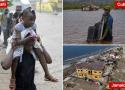
Melissa made landfall Tuesday in Jamaica as a Category 5 hurricane with top winds of 185 mph (295 kph), one of the strongest Atlantic hurricanes on record, before weakening and moving on to Cuba, but even countries outside the direct path of the massive storm felt its devastating effects.

A 9-year-old child was attacked by a coyote that snagged a sock off the youngster who was playing a game of hide-and-seek in Oregon, according to authorities.
The 9-year-old and a 3-year-old were “playing hide-and-seek in their yard” when a wayward coyote approached them and chomped on the older child’s foot last week in Alameda, the Oregon Fish and Wildlife Department said in a press release.
The coyote then chased the 9-year-old until the child’s father, who was on the front porch, yelled at the rogue animal and scared it off, authorities said. //
Dave Keiter, a district wildlife biologist for the Oregon Department of Fish and Wildlife, told KATU the attack was a “very unusual incident.”
“The vast majority of encounters with coyotes are entirely benign,” Keiter told the outlet.
Alameda residents have been “strongly encouraged” to supervise their young children playing outside and to scare away coyotes by yelling, using airhorns, and creating other loud noises.

The Issue: Bill Gates’ revision of his former stance on the urgency of fighting climate change.
Well, well, well — Microsoft founder and climate-change zealot Bill Gates has had a change of heart (“Gates: OK, sky not falling,” Oct. 29).
He knows he’s milked the climate-change cow for all its worth, and now he’s on to the next big money-maker: artificial intelligence.
He’s acutely aware of the tremendous need for electricity to power Microsoft’s development and deployment of AI.
He’s also aware that this energy won’t come from windmills and solar panels, but from gas, coal and nuclear power plants.
If necessity is the mother of invention, then greed is the father.

Way back in the 1870s — when global temperature were supposedly ideal — approximately 50 million people died globally related to extreme weather, particularly related to an extreme El Nino event of 1877-88.
The 1870s also saw the Great Midwest Wildfires of 1871 which killed as many as 2,400 people, the massive 1872 Baltic Sea flood, a 1875 midwestern locust swam of an estimated 12.5 trillion locusts, the 1878 China typhoon that killed as many as 100,000 people, and the U.S. experienced 6 landfalling major hurricanes in the 1870s, compared to just 3 in the 2010s.
It is not widely appreciated, but 2025 (still with two months to go), is currently on track for the lowest global death toll from extreme weather in all of human history. Part of that is good fortune to be sure — for instance, the Northern Hemisphere is well below average in terms of tropical cyclone activity.