
When chlorine gas, bleach or other chlorine-containing disinfectant contacts water, it becomes hypochlorous acid. This acid readily reacts with organic matter contained in the water to form trihalomethanes.
These compounds are carcinogenic, meaning they are known to lead to cancer. In 1974, these effects were first acknowledged and in 1979, the US Environmental Protection Agency (EPA) began regulating allowable concentrations of THMs in drinking water, limiting it to 100 parts per billion.


adiation. Should I be concerned about it? Is it safe? Is it harmful? How do I know when it is okay and when it isn’t? Some people say it is nothing to be concerned about, but others say even a little is too much—what should I believe?
We all have questions about radiation and it isn’t easy to sort through the available material to find answers. Sometimes the information is too technical or it is too hard to find just the answer you’re looking for. The purpose of the information on this Web site is to help you find answers quickly and easily.
The radiation warning symbol should not be confused with the civil defense symbol designed to identify fallout shelters. For more information about the latter, view the collection item Civil Defense Fallout Shelter Sign.
Radiation Warning Symbol (Trefoil)
Radiation warning symbol
The civil defense symbol for a fallout shelter consists of a circle divided into six sections, three black and three yellow. The general form is very similar to the above however there is no central circle. The Office of Civil Defense originally intended fallout shelters to use the radiation warning symbol with the circle in the center and the three blades, but this idea was rejected because a fallout shelter represents safety whereas the radiation warning symbol represents a hazard.
The three-bladed radiation warning symbol, as we currently know it, was "doodled" out at the University of California Radiation Laboratory in Berkeley sometime in 1946 by a small group of people. This event was described in a letter written in 1952 by Nels Garden, head of the Health Chemistry Group at the Radiation Laboratory: "A number of people in the group took an interest in suggesting different motifs, and the one arousing the most interest was a design which was supposed to represent activity radiating from an atom."
The first signs printed at Berkeley had a magenta (Martin Senour Roman Violet No. 2225) symbol on a blue background. In an earlier letter written in 1948, Garden explained why this particular shade of magenta color was selected: "it was distinctive and did not conflict with any color code that we were familiar with. Another factor in its favor was its cost... The high cost will deter others from using this color promiscuously." Explaining the blue background, he said, "The use of a blue background was selected because there is very little blue color used in most of the areas where radioactive work would be carried out." //
Despite Garden's view to the contrary, most workers felt that a blue background was a poor choice. Blue was not supposed to be used on warning signs, and it faded, especially outdoors. The use of yellow was standardized at Oak Ridge National Lab in early 1948. At that time, Bill Ray and George Warlick, both working for K.Z. Morgan, were given the task of coming up with a more suitable warning sign, a blue background being too unacceptable. Ray traveled to Berkeley and picked up a set of their signs. Back in Oak Ridge, Ray and Warlick had their graphics people cut out the magenta symbols and staple them on cards of different colors. Outdoors, and at a distance of 20 feet, a committee selected the magenta on yellow as the best combination.
The Office of Civil Defense originally intended fallout shelters to use the radiation warning symbol (yellow background with a magenta circle in the center of three magenta blades) but this idea was rejected because a fallout shelter represents safety whereas the radiation warning symbol represents a hazard. The above version of the national fallout shelter sign was introduced to the public by the Defense Department on December 1, 1961. It was intended to only be used with federally approved shelters. Unlike this example, these signs often had yellow arrows below the words "fallout shelter" to indicate the direction to the shelter. In 1962, contracts were negotiated for the production of 400,000 aluminum outdoor signs and one million steel signs for indoors.

Yesterday, in his periodic letter to the world, Bill Gates shared three truths about climate change — and shook up the climate discussion. While the longer term implications of his letter are uncertain, early signs are that Gates has injected a welcome dose of climate realism into the discussion.
Here are his three truths (and I encourage everyone to read his whole letter):
- Climate change is a serious problem, but it will not be the end of civilization;
- Temperature is not the best way to measure our progress on climate;
- Health and prosperity are the best defense against climate change.
For most THB readers, these truths will be well understood, even common sense, and will seem neither shocking nor scandalous.
But for some steeped in climate advocacy grounded in visions of “existential threat” or a looming apocalypse, Gates’ truths have rocked their world.
The document concentrates accurate information about radiation into a a tri-fold that can be read and understood in just a few minutes. It is a valuable presentation handout, would be a useful addition to the material offered in doctor’s offices, and should be a part of any classroom discussion about radiation.
Robert Hargraves, who has lived a life of achievement including writing a well received book titled Thorium: Energy Cheaper than Coal, founding a business, serving as Chief Information Officer for Boston Scientific, serving as an assistant professor and associate director of the computation center at Dartmouth College, publishing numerous peer-reviewed articles on a variety of topics and earning a PhD in Physics from Brown University, researched and produced “Radiation: The Facts” as a “labor of love”.
Hargraves tapped a deep pool of expertise by requesting reviews and comments from his extensive contact list that includes radiation biologists, health physics professionals, and nuclear engineers. Though space on a brochure is obviously limited, Robert has provided the references supporting the statements on the brochure on his web site and given creative commons license for others to republish his work.
We are writing to express our concerns with a January 30, 2014 article by Rita F. Redberg and Rebecca Smith-Bindman. The article is alarmingly titled, “We Are Giving Ourselves Cancer”, and is accompanied by a frightening cartoon that appears to be a doctor holding an X-ray film, and wearing a gas mask and helmet. The picture and title are the first clues that sensational claims follow, and the article does not disappoint in that regard, though it falls far short in offering prudent medical advice to frightened patients and parents.
The authors only mention in passing that medical imaging can save lives, and quickly move on to assert that there is little evidence of better health outcomes from current scanning practices. They do not mention, for example that the National Lung Screening Trial recently found that former smokers who received CT screening were 20% less likely to die from lung cancer and 7% less likely to die from any cause, compared to those who were screened with lower dose chest radiography. They do not mention the studies demonstrating the clear clinical benefits of mammography, bone mineral densitometry, and CT colonography. They do not mention the hundreds of studies that suggest that the body’s natural defense systems are quite capable of dealing with very low doses of radiation – like those that have existed on our planet since its beginning and those associated with modern medical imaging.
This essay responds to an article by Stanford Professor Mark Z. Jacobson et al, 100% Clean and Renewable Wind, Water, and Sunlight (WWS) All-Sector Energy Roadmaps for 139 Countries of the World. Their controversial WWS roadmap has several interesting features and benefits. //
Several authors have pointed out the impossibility of this Stanford WWS roadmap. Jesse Jenkins and Samuel Thernstrom published Deep Decarbonization of the Electric Power Sector. Mathijs Beckers wrote The Non-Solutions Project of Mark Z. Jacobson.
Misled by Jacobson, climate activists such as Bill McKibben of 350.org calls for world war-like mobilization of nations to effect the $125 trillion WWS roadmap.
This present essay describes a doable, affordable liquid fission (LF) power roadmap to solve the multiple issues of climate change, air pollution, and poverty reduction.

In August 2025, Google announced that starting next year, it will no longer be possible to develop apps for the Android platform without first registering centrally with Google. //
➤ You, the consumer, purchased your Android device believing in Google’s promise that it was an open computing platform and that you could run whatever software you choose on it. Instead, starting next year, they will be non-consensually pushing an update to your operating system that irrevocably blocks this right and leaves you at the mercy of their judgement over what software you are permitted to trust.

Starting next year, Google plans to require all apps installed on certified Android devices, including sideloading, to come from developers it has verified. Many Android developers see the move as a power grab and have started a movement to "Keep Android Open." //
On Tuesday, via the F-Droid blog, he renewed his challenge to Google's assertions about its verification program, specifically the company's claim that "Sideloading is fundamental to Android and it is not going away."
"This statement is untrue," he wrote in his post. "The developer verification decree effectively ends the ability for individuals to choose what software they run on the devices they own.
"It bears reminding that 'sideload' is a made-up term. Putting software on your computer is simply called 'installing,' regardless of whether that computer is in your pocket or on your desk."
Both Google and Apple [PDF] use the term "sideloading" as a pejorative, possibly because they have a commercial interest in running app store toll booths.
Prud'hommeaux proposes the term "direct installing," in case you need to make a distinction between obtaining software the old-fashioned way versus going through a rent-seeking intermediary marketplace like the Google Play Store or the Apple App Store.
Pointing to The Register's recent report about 77 malicious apps on Google Play that amassed more than 19 million downloads, Prud'hommeaux questions both Google's ability to catch malicious apps and its lack of evidence to support the claim that it "found over 50 times more malware from internet-sideloaded sources than on apps available through Google Play."

To get this new Start menu, you must be running build 26100.7019 or 26200.7019 or newer versions of Windows 11. Make sure you have all the latest updates installed by going to Settings->Windows Update and clicking the Check for updates button. You can check your Windows build number by hitting Windows+R to open the run prompt and running winver. //
If you have the right build number, it’s possible that the new Start menu will appear on its own. But, if not, you can use the ViveTool, a utility that enables hidden Windows features, to turn it on.
First, download the ViveTool and unzip it to C:\vive. Then open a command prompt as an administrator and change into that directory.
cd c:\viveFinally, issue the following command:
vivetool /enable /id:57048231,47205210,56328729,48433719
Can Britain be saved from itself? The latest example of submission to Muslims took place in London, where a British lawyer wearing a Star of David necklace near a pro-Palestinian protest outside the Israeli Embassy was arrested for his provocative behavior. After all, the mere sight of that necklace could cause the mob to become angry, even violent, and instead of protecting the lawyer from possible violence by the mob, the Metropolitan Police arrested him. More on this absurdity can be found here: “London police detain Jew for wearing Star of David, ‘antagonizing’ pro-Palestine protesters,” Jerusalem Post, October 19, 2025: //
He was there not to provoke — after all, he could have been in real trouble from a maddened mob — but to record that mob’s behavior and what he believed were its violations of the law, including laws against hate crimes. Instead the police chose to arrest him, handcuff him, and hold him for ten hours, as they tried to figure out they could charge him with, but came up empty and had to let him go.
A mob’s yelling and screaming against Israel and Jews is apparently okay, according to the British police. A single man, wearing a Star of David neckless and silently recording that mob’s behavior, deserves to be arrested.
Are GPTs the way to AGI, probably not
In an opinion piece for the NY Times Gary Marcus indicates why he has reservations on the future of LLM GPT AI systems.
Silicon Valley Is Investing in the Wrong A.I.
“Buoyed by the initial progress of chatbots, many thought that A.G.I. was imminent.
But these systems have always been prone to hallucinations and errors. Those obstacles may be one reason generative A.I. hasn’t led to the skyrocketing profits and productivity that many in the tech industry predicted. A recent study run by M.I.T.’s NANDA initiative found that 95 percent of companies that did A.I. pilot studies found little or no return on their investment. A recent financial analysis projects an estimated shortfall of $800 billion in revenue for A.I. companies by the end of 2030.
If the strengths of A.I. are truly to be harnessed, the tech industry should stop focusing so heavily on these one-size-fits-all tools and instead concentrate on narrow, specialized A.I. tools engineered for particular problems. Because, frankly, they’re often more effective.”
Points I’ve also been making here several times over the past few months, along with others about the perilous state of the current US economy and how the “Current AI Hype Bubble” could be a disaster for it.
But the question of what is “Artificial General Intelligence”(AGI) is something that has at best had an elusive answer akin to “Shoulder shrug handwaving” and impossible “What ever you want it to be” type statements. It’s something that a group of 33 specialists from 28 institutions have got together to try and address more reasonably,
They come up with,
Definition : AGI is an AI that can match or exceed the cognitive versatility and proficiency of a well-educated adult.”
Which although it sounds profound is actually not that useful.
Because the use of,
“match … Well-educated adult.”
Is not actually a useful measure.
It’s been pointed out that the “use of aids” “dumbs us down” in that it causes us to “loose skills”. I first heard this when I was in school. With first electronic calculators and whilst still in school computers.
Whilst many would argue that it’s not important or even irrelevant, it is true that certain skills are not developed because of the use of aids.
What most do not realise is that those traditional skills that are seen as nolonger worth teaching due to the ubiquitous use of aids, are actually important. Not for what they directly teach, but indirectly teach. That is they give new viewpoints that are force-multiplier tools that enable us to reason in either new ways or to levels we otherwise might not.
At the end of the day the two things that have moved humans forwards over many thousands of years are,
- Stored Knowledge.
- Use knowledge to reason.
They were and still should be the foundations of becoming “Well-educated”.
Sadly as gets often observed these days, producing “Well-educated adults” appears to be nolonger a goal of the education system in a number of Western Nations.
RSAT tools can be installed using the built-in Windows DISM tool. As an example, run the following command in an elevated command prompt to install the RSAT Group Policy Management Tools, RSAT Active Directory Domain Services and Lightweight Directory Services Tools and RSAT DNS Server Tools.
dism /online /add-capability /CapabilityName:Rsat.GroupPolicy.Management.Tools~~~~0.0.1.0 /CapabilityName:Rsat.Dns.Tools~~~~0.0.1.0 /CapabilityName:Rsat.ActiveDirectory.DS-LDS.Tools~~~~0.0.1.0 To administer Active Directory (AD) from Windows, use the Microsoft Remote Server Administration Tools (RSAT). The tools are available for all platforms, Microsoft actively supports.
admin-tools is available as an AppImage which means "one app = one file", which you can download and run on your Linux system while you don't need a package manager and nothing gets changed in your system. Awesome!
AppImages are single-file applications that run on most Linux distributions. Download an application, make it executable, and run! No need to install. No system libraries or system preferences are altered. Most AppImages run on recent versions of Arch Linux, CentOS, Debian, Fedora, openSUSE, Red Hat, Ubuntu, and other common desktop distributions.

Maxwell Meyer
@mualphaxi
·
Follow
Bill Gates has jumped ship on climate alarmism.
He says it’s not the end of the world, that temp isn’t the most important metric, and that money is being spent poorly (wow, really??)
This is a white flag from someone who fought hard for an insane set of ideas, and lost.
9:27 AM · Oct 28, 2025 //
Bill Gates has been a key enabler of the climate grift, although hardly the most powerful proponent of it. Despite his reputation as an innovator, he is and always has been more inclined to ride a wave than create one. If he is calling off the climate catastrophe talk, you can be sure that he is merely voicing what many people in his orbit are thinking.
There’s a doomsday view of climate change that goes like this:
In a few decades, cataclysmic climate change will decimate civilization. The evidence is all around us—just look at all the heat waves and storms caused by rising global temperatures. Nothing matters more than limiting the rise in temperature.
Fortunately for all of us, this view is wrong. Although climate change will have serious consequences—particularly for people in the poorest countries—it will not lead to humanity’s demise. People will be able to live and thrive in most places on Earth for the foreseeable future. Emissions projections have gone down, and with the right policies and investments, innovation will allow us to drive emissions down much further.
Unfortunately, the doomsday outlook is causing much of the climate community to focus too much on near-term emissions goals, and it’s diverting resources from the most effective things we should be doing to improve life in a warming world.
It’s not too late to adopt a different view and adjust our strategies for dealing with climate change. Next month’s global climate summit in Brazil, known as COP30, is an excellent place to begin, especially because the summit’s Brazilian leadership is putting climate adaptation and human development high on the agenda.
The idiocy of climate alarmists has been obvious to anybody who paid attention for years, and it is infuriating that people like us have to fight against disastrous policies for years or decades before we are proven right. We don't even get thanks or credit for being right, and the idiots don't get punished for being perpetually wrong. As with COVID, it's forgive and forget for the elites.
Imagine if we had built a hundred more nuclear power plants, or two hundred, since the 1980s. But no, the fearmongers stopped us, and the result is that we have spent decades trying to restart an industry that we killed for no reason other than alarmism.
It's not until the damage is done, is obvious, and the bill is outrageously high that people move on. Germany, soon enough, will do an about-face on energy or simply wither away, but if and when they do, they will have to rebuild the nuclear plants they destroyed and work mightily to lure back any industries that might take the risk.
The damage was completely avoidable. We told them so. We jumped up and down. Showed the evidence. Took apart the models. Put things in context. Held conferences. Endured ridicule and censorship. //
So yes, we are winning this battle. But we will have to fight the dead-enders for years and rebuild what they have destroyed.

In my USAF C-141 flying years, I often flew NASA support missions to Ascension Island. It’s a joint RAF/USAF base deep in the South Atlantic. It’s a spit of an island whose landscape looks like the Moon — pockmarked volcanic rock and beaches, an undulating runway often populated with sheep or cattle, a mountain peak reaching into the clouds named “Green Mountain” — with some locals and some military/NASA personnel. It’s a beautiful little island with some amazing history. We’d typically fly from Charleston AFB, SC, to Patrick AFB, FL, then on to Antigua for gas (and a cheeseburger), and then the long flight south to the remote island. We called it “the world’s longest straight in.” After takeoff, you flew the same course all the way to the runway. Often late at night.

It’s still legal to pick locks, even when you swing your legs.
“Opening locks” might not sound like scintillating social media content, but Trevor McNally has turned lock-busting into online gold. A former US Marine Staff Sergeant, McNally today has more than 7 million followers and has amassed more than 2 billion views just by showing how easy it is to open many common locks by slapping, picking, or shimming them.
This does not always endear him to the companies that make the locks. //
Wheels Of Confusion Ars Legatus Legionis
16y
73,932
Subscriptor
The company claimed to have this case locked up from the start, but it was picked apart embarrassingly quickly.
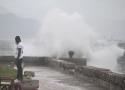
By any measure, Melissa is an extraordinary and catastrophic storm.
By strengthening overnight and then maintaining its incredible intensity of 185 mph, Melissa has tied the Labor Day Hurricane of 1935 as the most powerful hurricane to strike a landmass in the Atlantic Basin, which includes the United States, Mexico, Central America, and the Caribbean islands.
Melissa also tied the Labor Day storm, which struck the Florida Keys, as the most intense storm at landfall, measured by central pressure at 892 millibars.
Overall, Melissa is tied for the second strongest hurricane, measured by winds, ever observed in the Atlantic basin, behind only Hurricane Allen and its 190 mph winds in 1980. Only Hurricane Wilma (882 millibars) and Gilbert (888 millibars) have recorded lower pressures at sea. //
Robin-3 Ars Scholae Palatinae
3y
953
Subscriptor
Hurricane Melissa made landfall in southwestern Jamaica, near New Hope, on Tuesday at 1 pm ET with staggeringly powerful sustained winds of 185 mph. [...] The only mitigating factor is that the storm’s strongest winds are blowing across a relatively confined area, about 20 miles across.
Sustained winds of 185 mph (or nearly) in a 20-mile-wide swath.
For comparison, that's the speed you'd see in a mid-level EF-4 ("devastating") tornado... across a 20-mile-wide path. (I imagine the sustained winds will decrease after landfall, but that's a high enough starting point that a significant reduction can still leave them incredibly high.)